
Did you know the exterior surface of your home’s entrance can reach a staggering 180°F during a typical Arizona summer? This extreme heat acts as a relentless torture test for your property’s most significant architectural asset. You likely selected a premium wood door to establish a sense of luxury, so it’s frustrating to watch that investment succumb to the drying, cracking, and peeling caused by intense UV radiation. Professional wood front door refinishing Phoenix offers a sophisticated alternative to the high cost of replacement, delivering an artisanal finish that is often superior to the original factory coating.
We understand that a home of your caliber deserves more than a temporary fix. This guide promises to show you how meticulous restoration protects your grand entrance from the Sonoran sun while dramatically elevating your property value. We will preview the latest shift toward natural matte stains, the impact of 2026 VOC regulations, and the specific high-performance engineering required to ensure your door remains a durable masterpiece of curb appeal for years to come.
Key Takeaways
- Learn to combat the “Phoenix Kiln Effect” that dehydrates wood fibers and discover the engineering required to withstand 180°F surface temperatures.
- Master the distinction between temporary fixes and professional wood front door refinishing Phoenix, where complete finish removal is the hallmark of a master craftsman.
- Identify why marine-grade coatings and low-sheen matte finishes are the premier choice for desert durability and 2026 luxury aesthetics.
- Use the “Water Bead Test” to diagnose finish failure early and protect your architectural investment from the destructive power of the Sonoran sun.
- Understand the psychological impact of a restored entrance and how it functions as a high-value asset for your property’s overall market valuation.
The Impact of the Phoenix Climate on Wood Front Doors
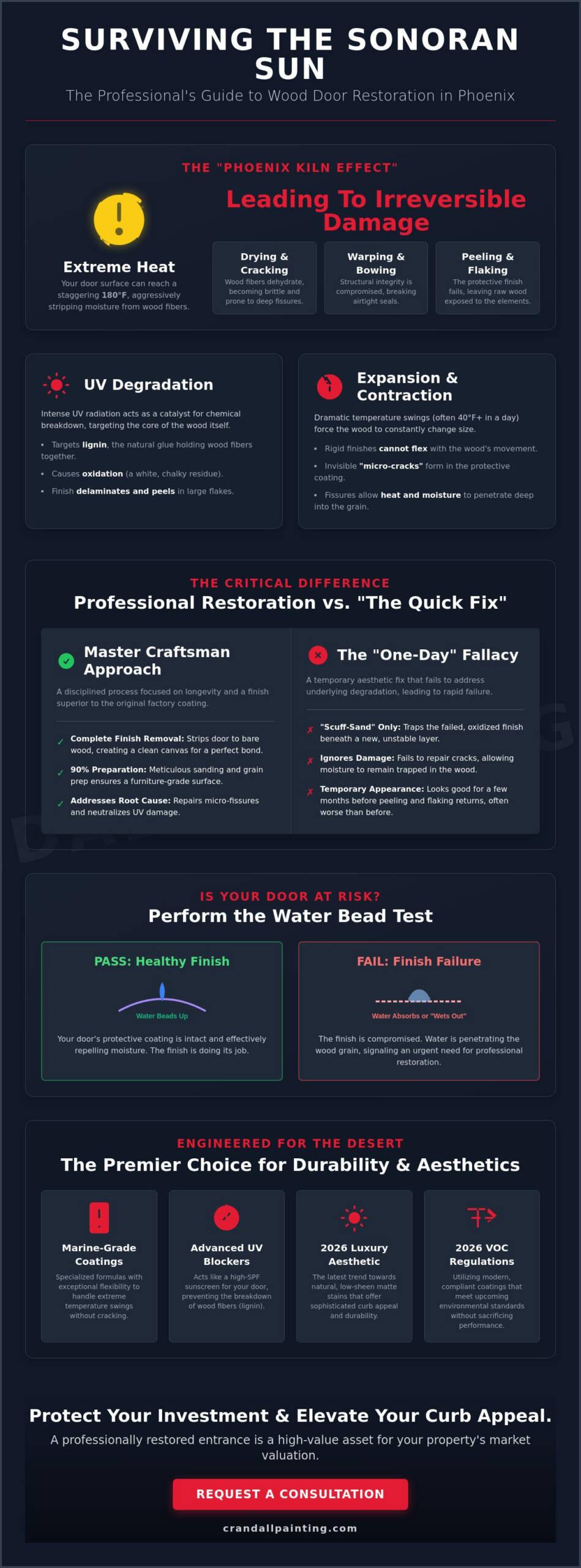
The Phoenix sun is a relentless force. It doesn’t just heat the wood; it transforms it. In the Sonoran Desert, we experience what professionals call the “Phoenix Kiln Effect.” While a traditional kiln is used to dry lumber in a controlled setting, the Arizona environment does this aggressively to your finished door every single day. It strips the essential moisture from the wood fibers, leading to structural warping and bowing that can eventually break the airtight seals of your entryway. Investing in professional wood front door refinishing Phoenix is about more than aesthetics; it’s about essential structural preservation.
Understanding the chemistry behind this environmental damage is vital before beginning the process of wood finishing. For homes with southern or western exposures, the sun is a constant, uncompromising adversary. These doors often reach surface temperatures of 180°F, causing a specialized level of degradation that standard products simply can’t withstand. This is why wood front door refinishing Phoenix requires a master’s touch and premium, climate-specific materials. Our wood staining and refinishing services are engineered to counteract these desert-specific stressors before they become permanent defects.
Doors facing south or west receive the brunt of this solar bombardment. These exposures are essentially in the direct line of fire for the most intense hours of the day. Without a specialized restoration approach, a standard finish on these faces might fail in as little as twelve months. A properly engineered solution, however, can last significantly longer by using specialized UV blockers that act as a high-SPF sunscreen for your timber.
UV Degradation and Finish Failure
The intense UV radiation in the Valley of the Sun acts as a catalyst for chemical breakdown. It targets lignin, the natural glue that holds wood fibers together. When lignin fails, the bond between the timber and the protective coating vanishes. You’ll first notice a white, chalky residue on the surface. This is oxidation, a clear sign that your varnish has been “cooked” by the sun. Once the bond is compromised, the finish begins to peel in large flakes, leaving the raw wood vulnerable to the next monsoon season.
The Expansion and Contraction Cycle
Phoenix is famous for its dramatic diurnal temperature swings. It’s not uncommon to see a 40-degree difference between a crisp morning and a blistering afternoon. This constant fluctuation forces the wood to expand and contract rapidly. Rigid, interior-grade polyurethanes can’t keep up with this movement. Instead, they develop “micro-cracks” that are invisible to the naked eye at first. These fissures allow moisture and heat to penetrate deep into the grain. To ensure longevity, we prioritize finishes with exceptional flexibility that move with the wood rather than fighting against it.
The Anatomy of Professional Wood Front Door Refinishing
In a market where many contractors promise a “one-day” refresh, a true master craftsman understands that speed is often the enemy of longevity. Luxury wood front door refinishing Phoenix is a disciplined process that prioritizes preparation above all else. While a simple scuff-sand might temporarily improve a door’s appearance, it fails to address the underlying degradation caused by the desert climate. We believe that 90% of a superior finish is achieved before the first drop of stain ever touches the wood. This commitment to meticulous preparation ensures that your home’s grand entrance doesn’t just look “better than new” but is chemically prepared to stay that way.
Achieving a furniture-grade surface requires returning the timber to its baseline state. Complete finish removal is non-negotiable for high-end restoration. By removing every trace of failed varnish, we can properly assess the effects of temperature and humidity on the wood’s structure. This step allows us to repair micro-fissures and ensure the new protective layers bond directly to the wood fibers rather than an unstable, oxidized base. It’s a methodical approach that transforms a weathered door into a clean canvas, ready for a bespoke transformation.
Precision Stripping and Grain Preparation
We utilize a sophisticated combination of mechanical sanding and chemical stripping to preserve the integrity of your door’s architectural details. While mechanical sanding is ideal for leveling large, flat panels, chemical stripping is essential for removing old coatings from intricate moldings and recessed panels without damaging the delicate wood grain. Once the old finish is gone, we use a progressive grit sanding technique. By moving from coarse to ultra-fine abrasives, we open the wood pores just enough to accept deep-penetrating pigments while ensuring a surface that is glass-smooth to the touch. We also meticulously neutralize all stripping agents to prevent any chemical interference with the new finish adhesion.
Custom Staining and Color Matching
Color selection for a luxury estate is never a “one-size-fits-all” decision. We focus on creating a custom aesthetic that complements your home’s unique architectural trim and stonework. For the intense Phoenix environment, we prioritize pigment-based stains over dyes. Pigments offer significantly better UV stability, acting as a shield against the sun’s bleaching effects. Our hand-rubbed application technique ensures a uniform distribution of color, highlighting the natural beauty of the grain while avoiding the blotchiness or “lapping” marks common in DIY attempts. If you’re ready to restore the character of your entryway, a consultation for wood restoration can help define the perfect palette for your property.
This level of detail is what separates a standard paint job from a true artisanal restoration. If your entrance has lost its luster, reaching out for expert refinishing advice is the first step toward reclaiming your home’s curb appeal.
Selecting the Right Finish: Durability vs. Aesthetics in the Desert
Choosing a finish for a luxury estate in the Valley is a high-stakes decision that balances visual depth with chemical resilience. You likely desire a look that highlights the organic warmth of the timber, yet the environment demands a shield capable of withstanding relentless solar bombardment. Professional wood front door refinishing Phoenix necessitates a shift in thinking from standard home improvement toward high-performance engineering. We often look to “Marine Grade” standards for our projects, as boat-building technology is uniquely suited to survive the extreme exposure found in the Arizona desert.
To understand the complexity of these coating choices, the USDA guide to finishing wood exteriors provides an exhaustive technical foundation on how different chemical compositions interact with timber in hostile environments. While high-gloss finishes are visually striking, they often fail prematurely in direct southern sun. Glossy surfaces can act like a magnifying glass for heat and highlight every expansion crack. In 2026, we are seeing a sophisticated trend toward satin and matte finishes. These low-sheen options provide a modern, “natural” aesthetic while handling intense heat without the rapid clouding or “alligatoring” common in high-lacquer products.
Marine Spar Varnish vs. Standard Polyurethane
Standard “Indoor/Outdoor” polyurethanes are often too rigid for the Phoenix climate. They dry into a hard, brittle shell that cannot accommodate the wood’s movement, eventually leading to hairline fractures. We prioritize Marine Spar Varnish, which is formulated with a high concentration of tung oil and phenolic resins. This specific chemistry allows the finish to remain flexible, expanding and contracting alongside the door’s structure as temperatures fluctuate. From a maintenance perspective, these oil-rich finishes are far easier to “refresh” with a simple maintenance coat every few years, which prevents the need for a total strip-and-sand project in the future.
UV Absorbers and Transoxide Pigments
Think of modern protective coatings as “sunscreen for wood.” High-end finishes contain specialized UV absorbers that dissipate radiation before it can reach the wood fibers. While clear coats are popular, darker stains actually provide superior protection because they contain more solid particles to block light. Our wood staining and refinishing process utilizes the latest in pigment technology to ensure longevity. Transoxide pigments are microscopic particles that effectively block destructive UV rays while remaining small enough to let the natural beauty of the wood grain shine through with total clarity. This technology allows us to provide deep protection without masking the artisanal character of your door.
When to Refinish: Signs of Failure and Maintenance Schedules
Proactive stewardship is the hallmark of a discerning homeowner. Because the Phoenix climate serves as a relentless torture test for timber, waiting for visible peeling often means the damage has already reached the wood fibers. The “Water Bead Test” remains the most reliable diagnostic tool for assessing your door’s integrity. Simply flick a few drops of water onto the surface. If the water beads and rolls off, your protective seal is functioning. If the water soaks in and darkens the wood, the finish has become porous and requires immediate attention to prevent deep-seated rot or structural warping.
Maintaining a regular schedule for wood front door refinishing Phoenix ensures that your entrance remains a point of pride rather than a source of concern. In our region, even high-performance finishes typically require a professional maintenance evaluation every 2 to 3 years. This preventative approach is the “wash and wax” equivalent for architectural woodwork, involving a deep cleaning and a fresh top-coat to replenish UV absorbers before the base layers fail. Neglecting this cycle can lead to sticking, binding, and broken seals, which directly impact your home’s energy efficiency and security.
Identifying Early Warning Signs
Visual cues often appear long before the finish begins to flake. A loss of luster is usually the first indicator that the sun has oxidized the top layers of the coating. You should also pay close attention to the bottom edge of the door, where rain splash and irrigation moisture tend to wick into the end-grain. Other critical signs include:
- Graying Wood: This indicates that UV radiation has successfully broken down the lignin in the wood fibers.
- Blistering: Small bubbles under the surface suggest the finish is delaminating from the heat.
- Checking: These are fine, hairline cracks that run along the grain, signaling that the wood is becoming dangerously dehydrated.
The Cost of Delay vs. Preventative Care
There is a significant financial advantage to early intervention. A timely maintenance coat is a streamlined process that is far more efficient and cost-effective than a full, multi-day restoration. Once the finish has completely failed, the labor required to strip, sand, and neutralize the wood increases substantially. Furthermore, the extreme 100-degree temperature swings we experience annually can cause neglected wood to bow or warp beyond repair, necessitating an expensive total replacement.
Scheduling your refinishing project during the temperate windows of Spring or Fall is ideal. These periods provide the stable humidity and moderate temperatures necessary for modern, low-VOC coatings to cure with maximum durability. If you’re noticing a loss of luster or fine cracks in your entrance, requesting a professional evaluation for wood restoration is the best way to safeguard your architectural investment.
Why Professional Restoration is an Investment in Curb Appeal
Your front door serves as the “handshake of the home,” establishing the first impression for every guest and potential buyer who approaches your property. In the competitive 2026 Phoenix real estate market, curb appeal remains a primary driver of property valuation and buyer interest. A weathered, sun-bleached entrance suggests a lack of maintenance, whereas professional wood front door refinishing Phoenix signals a meticulously cared-for estate. This transformation creates immediate psychological impact and financial equity. It’s not just a cosmetic upgrade; it’s a strategic investment that reinforces the architectural integrity of your entire residence.
Elevating Architectural Character
Our expertise extends beyond simple staining. We utilize advanced faux finishing techniques to add depth to plain timber or even provide fiberglass doors with the rich, organic appearance of natural mahogany or walnut. This level of aesthetic coordination is vital when updating your exterior painting palette. We also believe that high-end hardware restoration is the essential finishing touch of any project. Meticulously polishing or refinishing handlesets and hinges ensures that every element of your entrance reflects the Crandall Painting & Stucco standard of excellence.
The Crandall Painting & Stucco Master Craftsman Approach
We respect the sanctity of your home and the investment you’ve made in your lifestyle. Our “dustless” sanding protocol utilizes HEPA-filtered extraction to ensure your entryway remains pristine throughout the restoration process. This disciplined, clean approach is why we are the preferred choice for wood restoration in both historic districts and modern luxury estates across the Valley. We view every project as a significant contribution to your home’s longevity. If you’re ready to transform your home’s grand entrance into a durable masterpiece of wood front door refinishing Phoenix, we are here to guide the way. Schedule a professional consultation for your Phoenix home today and experience the difference of true artisanal mastery.
Secure the Longevity of Your Architectural Masterpiece
Your front door is a high-value asset that endures some of the most extreme environmental conditions in the country. By prioritizing marine-grade flexibility and rigorous UV protection, you ensure your entrance remains a durable symbol of luxury rather than a victim of the desert sun. Meticulous preparation and artisanal technique are the only ways to achieve a result that truly stands the test of time. As we’ve explored, proactive maintenance isn’t just about appearance; it’s a necessary safeguard for your home’s energy efficiency and structural integrity.
Choosing professional wood front door refinishing Phoenix is a strategic investment in your property’s long-term curb appeal and market value. Since 2004, our family-owned and operated team has served as the premier choice for high-end Scottsdale and Paradise Valley estates. We bring unmatched expertise in both technical wood restoration and decorative faux finishing to every project we undertake, ensuring a “white-glove” experience from start to finish. Request a Master Craftsman Consultation for Your Front Door to begin the transformation of your home’s grand entrance. We look forward to helping you restore the natural beauty of your property with the precision and care it deserves.
Frequently Asked Questions
How much does wood front door refinishing cost in Phoenix?
The investment for professional wood front door refinishing Phoenix depends on several variables, including the door’s dimensions, the intricacy of its carvings, and its current level of sun damage. A door requiring complete chemical stripping and structural repairs involves a different scope than a well-maintained surface needing a fresh top-coat. We recommend a bespoke consultation to evaluate your entryway’s specific needs and provide a detailed plan for its artisanal restoration.
Can a severely sun-damaged or grayed wood door be saved?
Most grayed or sun-bleached doors can be successfully reclaimed if the underlying timber hasn’t suffered from extensive rot or deep structural warping. Graying is a chemical reaction where UV rays break down the lignin in the wood’s surface fibers. A master craftsman can meticulously sand away these dead fibers to reveal the healthy, vibrant grain beneath, essentially resetting the wood’s biological clock before applying a new protective shield.
How long does the refinishing process take for a standard front door?
A high-end restoration typically requires two to four days of on-site work to ensure each phase is executed with precision. This timeline allows for thorough stripping, progressive grit sanding, custom color matching, and the necessary curing time between multiple protective coatings. We prioritize a methodical, steady rhythm over speed to ensure the new finish bonds perfectly and can withstand the 180°F surface temperatures common in our region.
Is it better to refinish the door on-site or take it to a shop?
We perform our luxury refinishing services on-site to maintain your home’s security and ensure the finish cures in its natural environment. This approach allows us to coordinate the door’s new aesthetic perfectly with your existing architectural trim and stonework. Our “dustless” sanding technology and protective masking protocols ensure your entryway remains pristine and usable while we work, providing a seamless experience for your household.
What is the best type of wood for front doors in the Arizona climate?
Mahogany, Teak, and White Oak are premier choices for the desert because their density and natural oil content provide superior resistance to warping. These species are less prone to the “Phoenix Kiln Effect” than softer woods like Pine or Alder, which can dehydrate and bow rapidly under intense heat. Regardless of the species, the longevity of any wood door in Phoenix depends entirely on the quality of its protective UV-shielding finish.
How often will I need to maintain my door after a professional refinish?
In the harsh Sonoran environment, we recommend a professional maintenance evaluation every two to three years. Doors with direct southern or western exposure face the most significant stress and may require a proactive maintenance coat to replenish UV absorbers before the base layers fail. This preventative stewardship is significantly more cost-effective than waiting for the finish to peel, as it avoids the need for another full strip-and-sand restoration.
Does a refinished door increase the resale value of my Phoenix home?
A professionally restored entrance acts as a high-value asset that dramatically enhances your home’s marketability. In the luxury real estate market, first impressions are paramount, and a pristine front door signals that the entire property has been maintained to a “white-glove” standard. Investing in wood front door refinishing Phoenix can provide a significant return by attracting discerning buyers who value architectural character and meticulous property care.
Can you change the color of my door from dark to light during refinishing?
Transitioning from a dark stain to a lighter tone is a complex process that requires returning the door to its raw, baseline state. We utilize precision stripping and specialized sanding techniques to remove deep-seated pigments from the wood’s pores. Once the original timber is revealed, we can apply a custom lighter stain or a clear, high-performance coating that showcases the wood’s natural warmth while providing the necessary protection against desert heat.