
A well-executed interior repaint in Phoenix may recoup 107% of its cost, making interior painting for home resale in Phoenix a potentially valuable pre-listing improvement. The return isn’t automatic: the condition of the home, the quality of the preparation, and the finish all shape how buyers respond.
A fresh, carefully finished interior can make rooms feel brighter and more move-in ready, but resale painting is most effective when it addresses visible wear rather than adding unnecessary upgrades. You’ll learn what painting may contribute to resale appeal, why Phoenix-specific preparation matters, how project timelines are shaped, and how to compare local painters by the work they include. The goal is a practical way to decide what to paint, what to prepare, and how to present your home with care.
Key Takeaways
- Prioritize visible wear and buyer-facing rooms so painting effort focuses on the areas most likely to shape a first impression.
- Sound preparation, including repairing damaged surfaces and protecting adjoining finishes, helps create a cleaner, more durable result in Phoenix homes.
- Plan around the project’s scope: a single room may take one day, while a full-home repaint can require several days.
- Compare painters by how clearly they explain surface preparation, repairs, paint coverage, and the work included in the project.
- For paid work disturbing paint in housing built before 1978, the U.S. Environmental Protection Agency says the work must be performed by someone certified and trained in lead-safe work practices.
Does Interior Painting Increase Home Value?
A well-executed interior repaint may strengthen a Phoenix home’s first impression and resale appeal. For sellers considering interior painting for home resale Phoenix, start with the home’s visible condition, not an automatic room-by-room repaint.
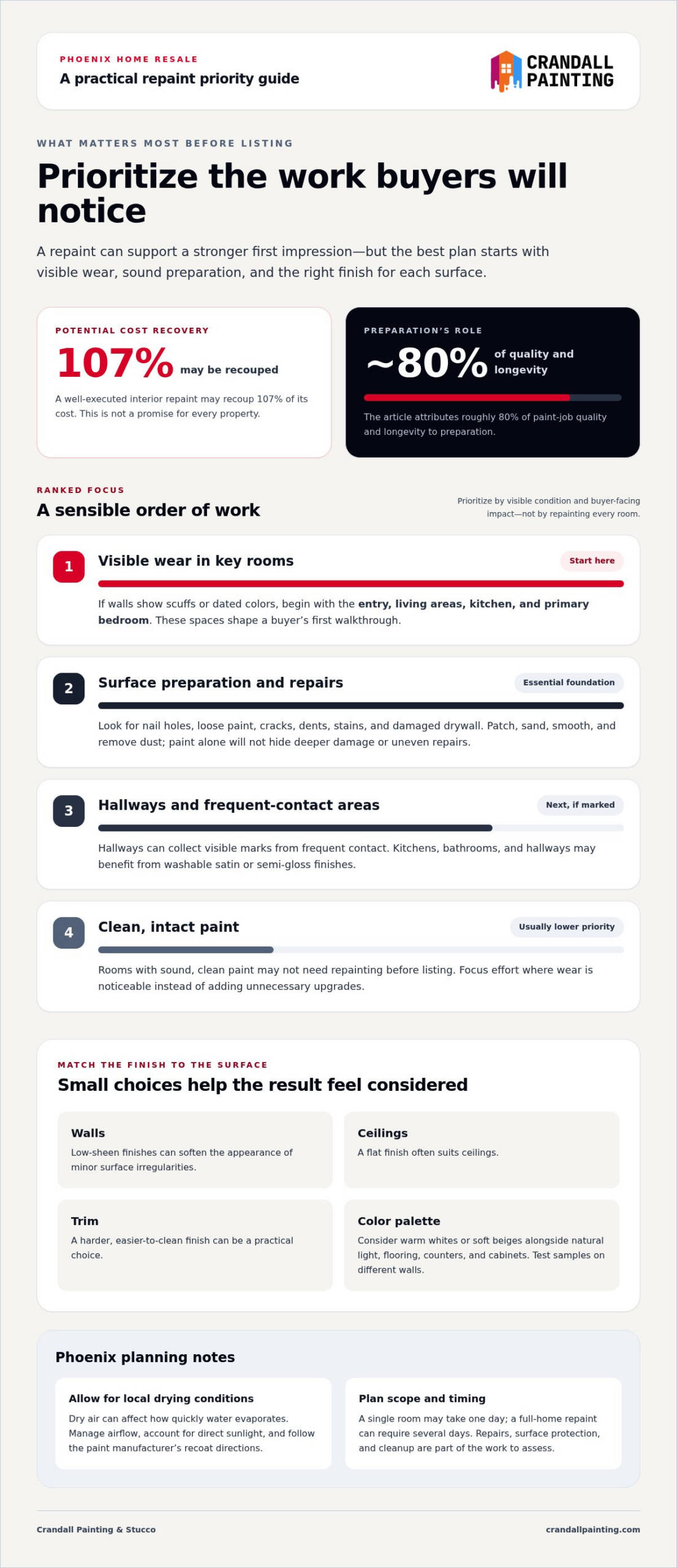
Well-executed interior painting jobs may recoup 107% of their cost, though that figure isn’t a promise for every property. A fresh finish can make scuffed walls feel more cared for, but it cannot correct deeper damage or replace updates to worn cabinets, floors, or exterior areas. Focus first on marks buyers are likely to notice during a walkthrough. A second coat of thoughtfulness, not paint, is what helps set priorities.
Surface Preparation and Drywall Repairs
Inspect walls in daylight, especially near windows, doorways, and furniture. Note nail holes, loose paint, cracks, and dents before moving belongings. Sanding and patching create a more even base, while drywall repair addresses damaged sections that paint cannot conceal.
After repairs, smooth patched areas and remove dust before painting. Check each surface from different angles, since uneven patches may show through a fresh finish. For example, a repaired corner beside a hallway can still stand out if its texture differs from the surrounding wall. Include those repairs when planning interior painting for home resale Phoenix.
Colors and Rooms to Address Before Listing
For walls, low-sheen finishes can soften the appearance of minor surface irregularities. Satin and semi-gloss finishes are easier to wash in high-contact areas such as kitchens, bathrooms, and hallways. Ceilings often suit a flat finish, while trim benefits from a harder, easier-to-clean finish. Consider how colors and sheens work together in adjoining rooms.
Start with the entry, living areas, kitchen, and primary bedroom if their walls show scuffs or dated colors. These rooms shape a buyer’s first walkthrough. Then consider hallways, where frequent contact can leave visible marks. Rooms with clean, intact paint may not need repainting before listing.
HOA rules vary by community, so review the governing documents for any interior-color restrictions. For the sale itself, follow the listing agreement and disclose known issues accurately. Paint color does not replace those steps.
Hire a professional when the work involves extensive drywall repairs, multiple rooms, or detailed finishes. A DIY repaint may suit one small room with sound walls and straightforward edges. Compare the preparation and cleanup required, not just the time spent applying paint.
Before painters arrive, remove small décor and clear access to walls, doorways, and trim. Move fragile items away from work areas, and group furniture toward the room’s center when practical. Label touch-up paint by room and make a written list of repair locations for the final walkthrough.
At completion, inspect corners, trim lines, patched areas, and switch plates in daylight. Carefully remove protective coverings, collect dust and debris, and return furniture when surfaces are ready. A room-by-room walkthrough can catch missed spots before staging begins, helping Phoenix sellers prepare their homes with care.
Why does prep work matter so much for Phoenix painting?
Preparation shapes the finish long before the first coat reaches a wall. Roughly 80% of paint-job quality and longevity comes from preparation, so careful surface work matters in Arizona homes.
An on-site painting consultation can turn a vague refresh into a room-by-room plan. Walk through the kitchen, hallways, and living areas, noting peeling paint, uneven texture, stains, and damaged drywall. Discuss colors alongside existing flooring, counters, and kitchen cabinets. This helps clarify which surfaces need repair, which need paint, and which can remain untouched.
Use the walkthrough to identify causes as well as visible marks. A recurring stain may need attention before painting, while a small dent calls for patching and sanding. Record each location, the surface involved, and the expected finish. This simple inventory clarifies the scope and helps prevent missed details during preparation.
Which interior paint colors help homes sell in Phoenix? Consider restrained neutrals that work with the home’s natural light and fixed finishes, such as warm whites or soft beiges. Test samples on different walls, since lighting and nearby materials can change how a shade looks.
Phoenix’s dry climate can affect how quickly water evaporates from paint. Manage airflow, don’t assume a dry-to-touch surface is ready for another coat, and follow the paint manufacturer’s recoat directions. Direct sunlight through a window can also make one wall behave differently from a shaded area, so consistent application and timing matter.
A useful consultation covers more than color selection. Review wall condition, trim, ceilings, repair needs, furniture access, and the order of work. Ask for the proposed scope in writing, including which surfaces will be protected and how cleanup will be handled. These details make it easier to compare the plan with your listing priorities.
Before the visit, clear a path to the walls and gather paint details or photographs of areas needing attention. Point out past repairs and any finish you want preserved. For example, showing a cabinet color alongside a wall sample helps you assess whether the palette feels cohesive, rather than choosing each shade in isolation.
Preparation also means protecting floors, fixtures, and furnishings, then removing dust after sanding. A final walkthrough should cover patched areas, edges, and cleanup. A great result depends on these deliberate details, not color alone. For help understanding the process, review painting and surface preparation.
Interior painting project timelines
In Phoenix, an interior painting project typically takes 2 to 5 days. A single room can often be completed in one day, while a full-home repaint may take several days. The schedule depends on the rooms included, surface repairs, ceilings, trim, and the time needed between coats.
Use the scope to understand the work sequence, not just the final day. The process may begin with protecting floors and furnishings, followed by surface preparation, primer where needed, painting, and a final inspection. Discuss how the plan accounts for rooms that remain in use. A staged schedule can keep access open as work moves through the home.
- A single room can often be painted in one day.
- Interior painting projects in Phoenix typically take 2 to 5 days.
- A full-home repaint may take several days.
A featured Paradise Valley interior refinish covered a 3,400-square-foot home and took 4 days. That example offers context, not a fixed timetable for every home of similar size. Room count, ceiling height, wall condition, furniture access, and finish details all affect how quickly a crew can move from preparation to final inspection.
Clarify whether the project includes ceilings, baseboards, doors, or only walls. Each added surface changes the work sequence, since edges and trim require careful cutting in and protection. Primer can also affect scheduling when repairs or existing stains call for it. Ask for the expected room order and the steps that must be complete before furniture returns.
Labor accounts for 75% to 95% of a professional interior painting project’s total cost. The amount of preparation, number of coats, room layout, and detailed trim work influence the labor involved. Add-ons can also alter the scope: an accent wall may increase an interior painting budget by 20% to 30%, while textured walls can increase it by up to 50%.
Before scheduling, list each room and surface you want included. Mark areas needing drywall repair, identify furniture that must be moved, and note tight access points. For example, a hallway with several doors requires more edge work than a clear wall. These details help plan a realistic sequence and make the written scope easier to compare.
Build flexibility into the listing schedule. A repair discovered during preparation can affect the next painting step, and access to a kitchen or bedroom may shape the daily work order. Confirm which rooms will be unavailable during each phase, when cleanup will happen, and when the final walkthrough is planned. A clear schedule connects the project with staging and photography.
Interior painting services for Phoenix homes
A well-planned interior painting scope connects surface condition, room use, and finish selection. In Phoenix, begin by listing the rooms, ceilings, trim, and repairs you want addressed. That inventory helps distinguish a targeted refresh from broader house painting. It also gives you a practical way to set priorities, such as refreshing a sunlit living room while leaving sound bedrooms untouched.
Interior painting services can include wall preparation, patching, priming where needed, and finish coats. A complete scope should identify which surfaces receive paint and which remain protected. Phoenix projects typically use two full coats of paint. Ask how the plan accounts for existing color, surface texture, and transitions between adjoining rooms. These details affect the finished appearance and the work sequence.
- List each room and surface, including walls, ceilings, doors, and trim.
- Mark drywall damage, stains, peeling areas, and previous repairs.
- Note furniture that must move or remain protected during painting.
- Identify decorative details that need careful cutting-in or touch-up.
Attention to detail shows in edges, corners, and transitions. For example, crisp lines around a doorway help a newly painted hall feel deliberate. A patch beside an older repair may need careful blending so the repaired area doesn’t draw the eye. Include those locations in the scope rather than describing the project only as “painting the walls.”
Furniture access also shapes room preparation. Clear small items and open a path to each wall before the scheduled work. If a large piece will stay in place, identify it during planning so the work area can be protected. This helps painters reach baseboards and corners without overlooking sections hidden behind furniture.
For Phoenix-area coverage, the company says it serves more than 30 cities across the Valley. That broad coverage can matter when preparing a property outside central Phoenix, including a home in Paradise Valley or another Valley community. Share the property location and the rooms involved when arranging project details. The location, access, and scope help establish what the work needs to cover.
Before approving a written scope, compare its room list with your own. Check that patching, surface preparation, coats, trim, ceilings, and cleanup are clearly described. For example, a kitchen plan might include walls and ceiling while excluding cabinets. Clear boundaries prevent confusion about which areas are part of the painting project.
Interior painting can also coordinate with decorative painting in homes with distinctive architectural details. Keep specialty finishes focused and balance them with simpler surrounding surfaces. The result should feel cohesive from room to room. A careful scope, clear preparation steps, and a final walkthrough help these details stand out without distracting from the home’s overall presentation.
Finding and comparing Phoenix interior painters
Compare Phoenix painters by the work described, not by a polished estimate alone. A useful proposal identifies rooms, surfaces, preparation, coats, repairs, protection, and cleanup. For example, “living room walls” leaves important questions about ceilings, trim, and damaged drywall unanswered. For interior painting for home resale Phoenix projects, a clearly defined scope helps keep the work aligned with your listing priorities.
Use the same room list to compare estimates. Note whether each scope includes sanding, patching, primer, and repairs before painting. The plan should explain how it addresses peeling paint or uneven texture, rather than treating every wall as ready for a finish coat. Clear details make proposals easier to compare and show whether they include the same preparation.
Paid work that disturbs paint in housing built before 1978 must be performed by someone certified and trained in lead-safe work practices, according to the U.S. Environmental Protection Agency. If your home predates 1978, include its age when discussing preparation. This requirement matters when sanding or other paid work disturbs existing paint.
Ask each painter to describe the project sequence and what happens at completion. A well-defined plan covers furniture and floor protection, preparation, application, cleanup, and a final walkthrough. For example, check that the estimate identifies rooms where drywall repair is included and explains how patched areas will be finished. These details show whether the scope addresses the home’s actual condition.
Compare the finish plan, too. The proposal should identify the areas to be painted and clarify whether ceilings, baseboards, doors, or accent walls are included. If you are also considering exterior painting, keep that work clearly separate from the interior scope. Different surfaces require distinct preparation, and separate descriptions help prevent indoor tasks from being overlooked.
Price varies with room count, surface condition, repairs, and finish choices. Compare estimates by matching those factors, not by assuming two totals cover identical work. For interior painting for home resale Phoenix homes, a detailed estimate helps distinguish essential preparation from optional finish work.
Before work begins, confirm the written scope reflects your room-by-room priorities. During the final walkthrough, inspect edges, patched drywall, and areas where paint meets trim. Note any missed spots by location so the completion review addresses specific areas rather than general impressions.
For an estimate shaped around your Phoenix home’s interior surfaces and preparation needs, request an interior painting estimate.
Crandall Painting & Stucco: Exterior Painting
Crandall Painting & Stucco can prepare a home’s painted surfaces for presentation, inside and out. If interior updates reveal a broader need to refresh the property, consider coordinating the interior work with exterior painting or stucco repair. Addressing damaged stucco and worn exterior finishes can complement freshly painted rooms without combining the projects into one scope.
For resale preparation, outline the areas that need attention, such as interior walls, exterior surfaces, or wood that needs staining and refinishing. A focused project plan keeps the work aligned with your home’s condition and priorities.
Explore Crandall Painting & Stucco’s painting and restoration services online.
Make Your Next Move With a Clear Plan
Before scheduling work, decide how the finished rooms should support your listing presentation. Coordinate paint choices with staging, photography, and the home’s fixed finishes so the result feels intentional in person and on screen. A concise priority list can keep decisions focused as you prepare to sell.
For interior painting for home resale in Phoenix, align the scope with the property’s needs. Crandall Painting & Stucco offers interior painting, exterior painting, and stucco repair, so you can discuss interior updates alongside visible exterior concerns. Choose the areas you want addressed, note any repairs, and explain how the home will be presented to buyers.
Thoughtful preparation can make the selling process feel more manageable and help your home present with care. Contact Crandall Painting & Stucco to discuss your painting and restoration needs.
Frequently Asked Questions
How much do painters cost?
The cost depends on the rooms, surfaces, repairs, and finish details included. Painting walls alone differs from a scope that also includes ceilings, trim, or drywall repair. Crandall Painting & Stucco provides a free, no-obligation estimate, with price upon request. For a useful estimate, describe the rooms, visible damage, previous repairs, and any surfaces you want excluded.
Can you help with color selection?
Choose colors by comparing paint samples with the finishes that will remain, such as flooring, counters, and cabinetry. View samples in daylight and evening light, since the same wall can look different throughout the day. For a Scottsdale or Phoenix home, consider how connected rooms look together from the entry. Keep sample labels so your selected shades can be matched accurately.
How long does a painting project take?
A Phoenix interior painting project typically takes 2 to 5 days, depending on its scope and surface condition. A schedule may change if rooms need substantial repair, multiple finishes, or extra time between coats. Before work begins, identify rooms that need to stay accessible, such as a bathroom or kitchen. That helps organize the work sequence around daily household needs.
How long does it take to paint a room?
A single-room interior painting project in Phoenix can often be completed in one day. The room’s condition and included surfaces shape the plan: a clear room with sound walls is simpler than one requiring drywall repair, ceiling work, and detailed trim. Remove small items beforehand and identify furniture that must remain. This gives the painter clearer access to corners and edges.
How much do interior painters charge per hour?
Crandall Painting & Stucco provides project pricing upon request rather than stating an hourly charge here. Its free, no-obligation estimate is based on the work involved, including room scope, surface condition, repairs, and finish details. For an estimate that reflects your home, describe what you want painted and whether the project includes ceilings, doors, or trim.
What should I expect from a painting contractor?
The process runs from initial consultation through a detailed project estimate, scheduling, material ordering, job coordination, quality control, and customer-service follow-up. Before work starts, make sure the agreed scope reflects the rooms and surfaces you want addressed. Crandall Painting & Stucco is fully licensed, bonded, and insured. You don’t need to be present during the work; the crew protects furniture and flooring.
How much does interior painting cost for a Phoenix home before resale?
The price depends on the home’s scope and condition, including the rooms selected, preparation, repairs, and finish choices. Crandall Painting & Stucco provides a free, no-obligation estimate, with price upon request. To define resale priorities, list visible marks, damaged areas, and rooms that will appear in listing photographs. This helps shape a project around the home’s presentation rather than painting every surface automatically.
How long does interior painting take for an average Phoenix home?
Interior painting projects in Phoenix typically take 2 to 5 days, while a full-home repaint may take several days. The timeline depends on how many rooms and surfaces are included, their condition, and the preparation required. In a home being prepared for sale, coordinate painting with cleaning and staging so freshly finished rooms are ready for photography and showings.