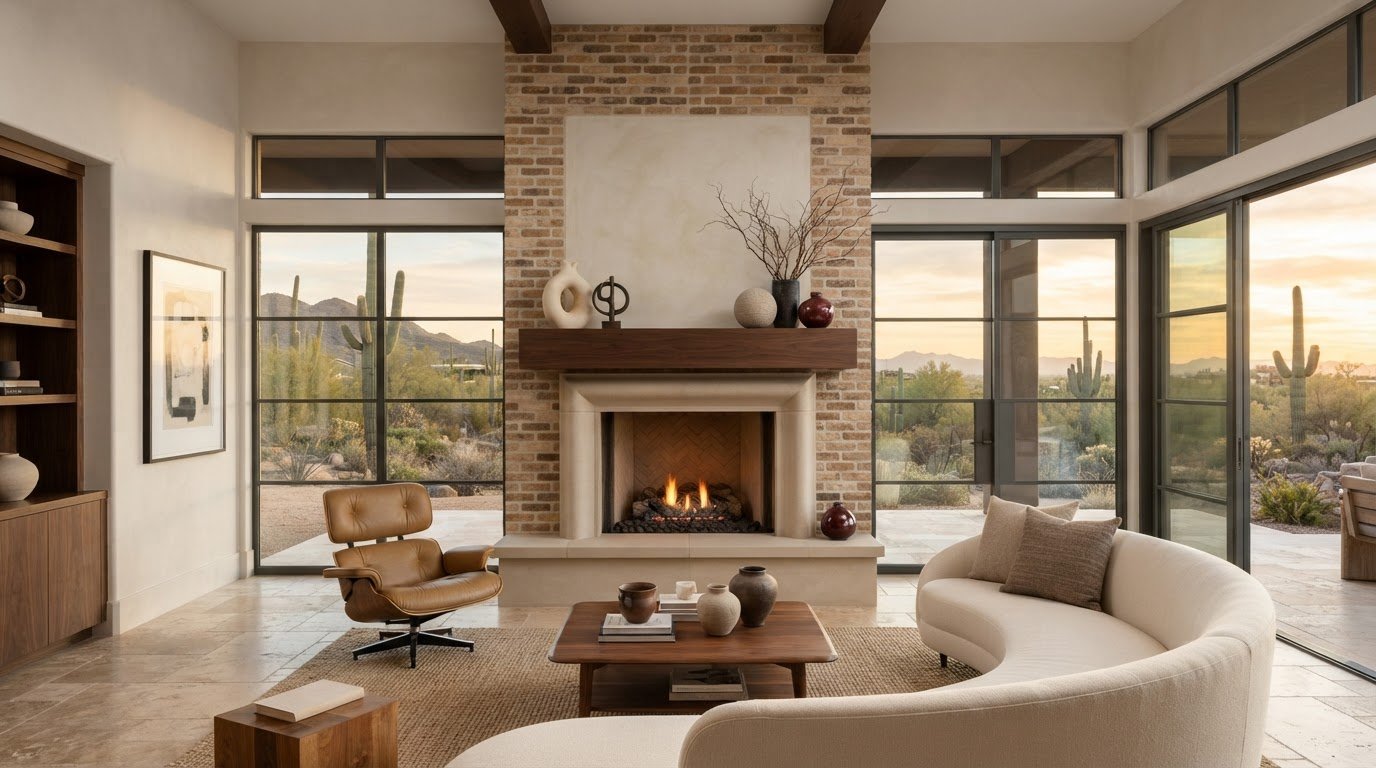

Brick doesn’t need to disappear for a fireplace to feel renewed. A decorative painter for fireplace mantels in Scottsdale Mountain can help create a cohesive look by considering the brick, mantel, and surrounding wall together. First decide whether to preserve the brick’s natural character or soften its appearance, then choose a mantel finish and decor that support that direction.
Brick’s color and texture already shape the room, so a considered finish can complement rather than compete with it. The right choice depends on the effect you want: warm and rustic, clean and contemporary, or a balance of old and new.
This guide covers ways to decorate brick surrounds, compare mantel materials and finishes, and create a balanced display. It also explains practical styling considerations and how decorative painting or a carefully chosen surface treatment can bring the overall design together.
Key Takeaways
- Compare brick, wood, cast stone, and other finish directions by how their color and texture will work with the room.
- Use Scottsdale project examples to identify decorative details and finish choices that suit your home’s character.
- Choose paint and surface treatments with the fireplace’s heat exposure and the material being finished in mind.
- Arrange mantel decor with varied heights and textures, while keeping the display balanced with the fireplace surround.
- Learn when decorative finishes can refresh a fireplace and when related painting or wood-refinishing work may better support the overall design.
2. Fireplace materials and finishes
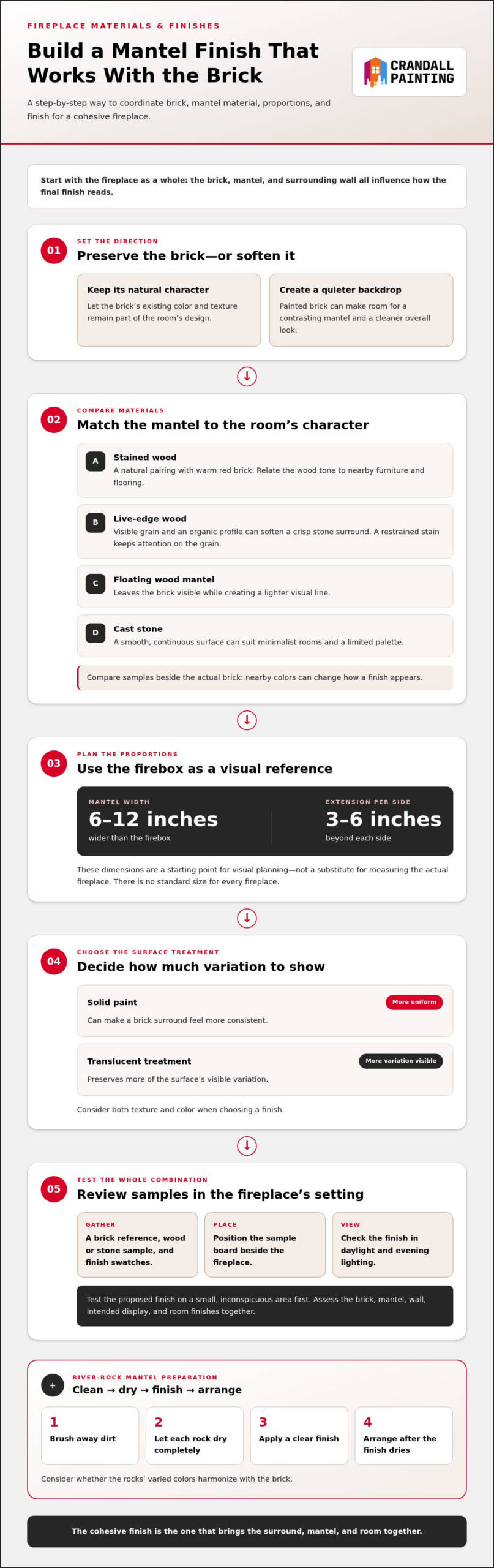
Choose a mantel material that complements the brick. Warm red brick pairs naturally with stained wood, while painted brick can create a quieter backdrop for a contrasting mantel. In a contemporary room, a floating mantel or seamless cast-stone surround creates a cleaner outline. Compare samples beside the actual brick, since nearby colors can affect how each finish looks.
Live-edge wood introduces an organic profile and visible grain. The Spruce describes live-edge wood as a way to add authentic character to a fireplace mantel. In a Scottsdale Mountain home, a natural wood edge can soften a crisp stone surround, while a restrained stain keeps attention on the grain. Consider how the mantel’s tone relates to nearby wood furniture and flooring.
Cast stone offers a more continuous surface than a mantel made from separate pieces. Its smooth appearance suits minimalist rooms, particularly when the wall and surround use a limited palette. A floating wood mantel creates a different effect: it leaves the brick visible and gives the display a lighter visual line. Compare both options with the room’s existing architectural details.
For a mantel made with river rocks, prepare the stones before applying a finish. Brush away dirt, then let each rock dry completely before applying a clear finish. This preserves the stones’ natural shape while giving them a finished appearance. Arrange the rocks only after the finish has dried, and consider whether their varied colors harmonize with the brick.
Size affects the relationship between mantel and firebox. A mantel is usually 6 to 12 inches wider than the firebox, with 3 to 6 inches extending beyond each side. There is no standard size for every fireplace, so use these dimensions as a starting point for visual planning, not as a substitute for the fireplace’s actual measurements.
Choose a finish with texture as well as color in mind. Solid paint can make a brick surround feel more uniform, while a translucent treatment preserves more visible variation. Test the proposed finish on a small, inconspicuous area first. View it in daylight and evening lighting, then compare it with the mantel material and the room’s permanent finishes.
Before settling on a combination, make a sample board with a brick reference, wood or stone sample, and finish swatches. Place it beside the fireplace and assess the whole arrangement, including the intended display. This helps reveal whether a finish brings the surround, mantel, and room together or draws attention to only one element.
Comparing finishes can guide both the design and the preparation of river rocks.
For river rocks, brush them clean and let them dry before applying a clear finish. Follow the steps in order: clean first, dry completely, then apply the finish. This gives the preparation a clear sequence.
3. Examples and reviews of decorative mantel painting projects in Scottsdale
A Scottsdale fireplace can take several visual directions, depending on the brick, room, and desired finish. For example, a red-brick surround can retain its varied tones while a painted mantel adds a quieter contrast. A white-brick fireplace can pair with a similarly light mantel and restrained greenery. These are design examples, not claims about specific completed homes or customer reviews.
In a traditional Scottsdale living room with dark wood furniture and exposed brick, a muted, complementary painted mantel could define the fireplace without concealing the brick’s character. In a contemporary interior, a smooth, simple finish can create a clean transition between the surround and wall. Look for design examples with materials and a room palette similar to yours.
Decorative painting can add visual depth without changing the mantel’s shape. A controlled glaze, for instance, can create subtle variation across a plain surface. A restrained faux finish may suggest aged wood or stone while complementing the surrounding brick. These approaches suit homeowners who want a distinctive surface rather than a uniform coat of color.
When reading reviews, look for details about the work, not just the final impression. Useful specifics include preparation, consistent finishes, care around surrounding surfaces, and how the result relates to the original room. A review mentioning a brick surround or painted wood mantel offers more relevant context than a general comment about interior painting.
Photographs can help you assess a project, but examine them closely. Compare before-and-after views, look for even coverage across edges and corners, and note whether the brick remains a deliberate part of the design. Lighting affects how a finish appears, so a photograph alone may not show its exact tone in your Scottsdale home.
Before planning a similar transformation, record the mantel material, existing color, visible wear, and preferred look. Gather reference images that show the finish and surrounding brick together. This gives a decorative painter a clearer starting point for discussing color, texture, and preparation. If the goal is a custom surface treatment, decorative painting services can help shape the finish around the fireplace’s existing features.
When reviewing a project, consider whether the finished mantel suits the room and whether the details match your needs. A polished result should feel intentional beside the brick, not like an isolated painted feature. Scottsdale homeowners can use these examples as a design framework, then adapt the color and finish to their fireplace materials, furnishings, and preferred atmosphere.
4. Heat-resistant paint requirements for fireplace mantels and surrounds
First identify which surface you plan to paint: the mantel, brick surround, or firebox interior. These areas can experience different heat exposure, so one paint type may not suit every surface. Paint intended for a decorative wood mantel, for example, should not automatically be treated as suitable for masonry beside a firebox.
Read the paint label before choosing a finish. Look for wording that identifies the intended surface and heat exposure, then follow the stated preparation and application directions. A product described for ordinary interior walls may not suit a surface that becomes warm during fireplace use. The label, not the color name, guides the choice.
Material matters, too. Brick and other masonry have pores and uneven textures, while a wood mantel has grain, joints, and edges. Before painting brick, remove loose dust and residue so they don’t interfere with adhesion. Prepare wood according to its existing coating and condition. A small test area can show how the finish looks and applies.
Keep the firebox interior separate from the decorative surround. The inner firebox is exposed to direct flame and intense heat, unlike a mantel’s outer face. Don’t extend a decorative finish into that area unless the product is specifically identified for that use. This helps prevent choosing a coating based only on appearance.
Heat exposure can vary across one fireplace. A mantel shelf above the opening, a side trim piece, and brick beside the firebox may not warm in the same way. Note where the finish will go and compare that location with the product’s stated use. Don’t assume adjacent surfaces share identical conditions.
Preparation affects the final appearance. Carefully clean soot and surface residue, allow the area to dry, and address peeling or damaged coatings before applying a new finish. On textured brick, use an application method that reaches recessed mortar lines without leaving heavy buildup. On wood trim, protect crisp edges and joints from uneven coverage.
Fireplace safety involves installation and placement, not paint alone. Installing a mantel requires approved fasteners and attention to its height above the hearth opening to avoid fire hazards. Since a universal clearance dimension does not apply to every fireplace, don’t infer a safe distance from paint specifications or a decorative example.
For a polished result, match the coating to the precise substrate and heat exposure, then follow its directions from preparation through curing. Keep the fireplace unused for the period stated by the coating manufacturer, and avoid placing decor against a freshly finished surface. This helps preserve the intended color while accounting for heat exposure.
4. Decorative painter service areas near Scottsdale Mountain and travel fees
For a fireplace project in Scottsdale Mountain, the property address helps define the service area and project scope. A neighborhood name alone may not describe the route, access, or work involved. For example, a hillside home may require different arrival planning from a property near a main road. The project location and mantel’s condition both help clarify the work.
Nearby service boundaries should be described by actual location, not assumed from a general Scottsdale label. Map the home’s address and note the most direct approach, gated entry, parking arrangements, and distance from the work area to the fireplace. Those details help distinguish a straightforward visit from one requiring additional coordination. They also give a clearer picture of how the project fits into a painter’s working area.
Travel fees don’t have one universal amount for every Scottsdale Mountain property. Crandall Painting & Stucco provides free, no-obligation estimates, with price upon request. The project scope and location help shape the estimate. For example, a mantel finish at an easily reached home may involve different logistics from a project requiring repeated visits or careful material handling.
Separate access considerations from the painting work itself. A decorative mantel project may involve surface preparation, sample review, finish application, and drying time between stages. The visits and materials needed depend on the selected finish and the mantel’s condition. Access and arrival arrangements relate to the property, not the color or style chosen.
Before planning, gather these details for the Scottsdale Mountain property:
- The complete street address and any gate or parking instructions.
- Whether the fireplace is on the main level or requires carrying materials upstairs.
- Clear photographs of the mantel, brick surround, and nearby walls.
- The finish goal, such as a color change, faux effect, or touch-up.
These specifics make it easier to describe the work accurately. A photograph of the whole fireplace provides useful context, while close views reveal peeling paint, cracks, or uneven surfaces. Mentioning a restricted driveway or a long walk from parking also helps explain access before work is scheduled.
When comparing decorative painters around Scottsdale Mountain, distinguish a defined service area from a broad city reference. A useful project description names the property location, exact surface, and desired finish. With those details, the work and access considerations can be discussed together, without treating every Scottsdale address as identical.
Your fireplace
Start styling by deciding what should draw the eye: the brick, mantel, or a focal object. A stone fireplace already has strong texture, so a minimal, orderly display lets its natural pattern stand out. For a white-brick fireplace with a white mantel, greenery can add contrast while preserving a clean, comfortable effect. Let the surround guide the arrangement, and if you want expert guidance on color palettes and finishes, consulting a professional decorative painter for fireplace mantels Scottsdale Mountain can elevate your living space.
For a classic red-brick fireplace with a dark wood mantel, pair restrained accessories with rustic materials. A simple centerpiece can stand out against the brick without crowding the shelf. Traditional styling often places one large centerpiece between two matching accessories, with an extended object directly beneath it. This creates structure while leaving the mantel’s finish visible.
Varying heights and textures makes a display more dynamic. Pair a low ceramic bowl with a taller vase, then add a smaller object with a distinct surface. On a broad mantel, framed prints can lean and overlap to create depth, but keep each image partly visible. This layered approach gives the eye several points of interest without hiding the fireplace.
Natural accents can bring softness to brick and stone. Arrange river rocks in groups of 3, 5, or 7, and make sure the mantel can support their weight. For a hearth display, 3 to 5 sculptural baskets can add useful texture. Keep heavier objects stable, and choose placements that don’t obstruct the fireplace opening or its operation.
Greenery and mirrors offer different ways to refresh a focal point. A mirror centered above the fireplace can reflect light and create an impression of greater height and space. Trailing ivy or a potted snake plant can introduce foliage. Real eucalyptus may grow toward a fireplace and become a fire hazard, so keep it away from heat.
Use a few deliberate steps to keep the arrangement composed:
- Choose one centerpiece, such as a mirror, framed artwork, or sculptural vase.
- Add accessories with varied heights, textures, and shapes.
- Leave open space so the brick or stone remains visible.
- Rotate seasonal decor to give the display a fresh look throughout the year.
Built-in LED lighting can add soft ambient highlights around a minimalist mantel. Keep the effect subtle so the lighting supports the display rather than competing with it. For a small change, switch the artwork or accessories seasonally while keeping the main arrangement consistent. This refreshes the room without requiring a complete redesign.
Before placing a final object, step back and assess the whole fireplace from the main seating area. Check that the centerpiece feels balanced, the accessories don’t overwhelm the brick, and greenery stays clear of heat. A carefully edited display connects the mantel to the room while preserving the fireplace’s character.
Keep stone visible by limiting accessories, and let overlapping artwork add depth without fully concealing each piece. A vintage mirror can serve as a focal point without taking up shelf space, complemented by expert finishes from Crandall Painting & Stucco.
Crandall Painting & Stucco: Exterior Painting
Crandall Painting & Stucco can incorporate decorative finishes into a broader home refresh. For a fireplace mantel or surround, its decorative painting and faux finishing can complement the room’s existing materials. Interior painting, drywall repair, or wood staining and refinishing can also support related updates, such as coordinating nearby walls or renewing a wood mantel.
Exterior painting and stucco repair can address needs beyond the living room. Planning these separately from an interior update can help you choose work that fits your property and priorities.
To discuss decorative finishes or related painting needs, contact Crandall Painting & Stucco or visit crandallpainting.com.
Shape the Fireplace Into a Room-defining Feature
Decide how the fireplace should feel within your home, not simply which color to apply. A warm, expressive mantel can become a focal point, while a restrained finish can let the furnishings take precedence. Gather reference images and note what you want the finished space to express. That gives a decorative painter for fireplace mantels in Scottsdale Mountain a thoughtful starting point for discussing the look.
Consider the surrounding rooms, too. A fireplace update may accompany plans for interior painting, while exterior painting or stucco repair can address separate needs elsewhere on the property. Crandall Painting & Stucco offers these services, helping homeowners plan finishes that suit their home.
When you’re ready to discuss your project, contact Crandall Painting & Stucco. A clear vision and a well-chosen finish can help your fireplace feel distinctly at home.
Frequently Asked Questions
Which decorative painters specialize in fireplace mantels in Scottsdale Mountain, Arizona?
Crandall Painting & Stucco offers decorative painting and faux finishing for homeowners in Scottsdale Mountain. If you’re looking for a decorative painter for fireplace mantels in Scottsdale Mountain, describe the mantel’s material, current finish, and the effect you want. A plain wood mantel, for example, could become a more distinctive focal point with a tailored decorative finish. These details help frame the project around your home’s character.
Are decorative fireplace mantel painting and faux finish services available near Scottsdale Mountain?
Yes. Crandall Painting & Stucco offers Decorative Painting and Faux Finishing & Touch-Up in Scottsdale Mountain and nearby local areas. A decorative finish can add character to a mantel, while touch-up work can address localized marks or worn areas. For example, a homeowner updating a living room might coordinate a mantel treatment with nearby interior painting for a more unified look.
How should I choose a faux finish or decorative paint for a fireplace mantel?
Choose a finish that suits the mantel’s shape and the room’s existing style. A simple mantel can support a more expressive faux effect, while ornate trim often looks balanced with a quieter treatment. Consider how the finish will appear beside flooring, furnishings, and wall color. If the room already has prominent patterns, for example, a restrained mantel treatment can preserve visual focus without adding another competing feature.