
What if those subtle, spider-web lines on your exterior walls are more than just an eyesore? In the harsh Arizona climate, these fissures act as dynamic expansion joints that can invite moisture into your home during the intense monsoon season. You’ve likely wondered if a fresh coat of paint will truly hide these defects or if they’ll simply return after the first week of 110-degree heat. It’s a common concern for homeowners who value both the aesthetic beauty and the long-term structural integrity of their property.
This professional guide will show you how to repair hairline cracks in stucco before painting to achieve a flawless, invisible restoration. By mastering these techniques, you’ll ensure your exterior transformation isn’t just a temporary fix, but a durable shield against the desert sun. We’ll examine the specific high-performance elastomeric sealants that remain flexible under extreme thermal stress and provide a preview of the meticulous preparation required for a finish that blends perfectly with your existing texture. Through this disciplined approach, you can move forward with the confidence that your home’s structural envelope is fully protected and ready for a premium finish.
Key Takeaways
- Understand why the unique Arizona climate causes hairline cracks and how to differentiate between minor cosmetic fissures and deeper structural concerns.
- Discover the precise steps of how to repair hairline cracks in stucco before painting, including the professional “V-Groove” technique for superior material adhesion.
- Learn why flexible elastomeric patches are the non-negotiable choice over standard caulk for managing the desert’s extreme thermal expansion and contraction.
- Master the “Spot Prime” method to eliminate unsightly flashing and ensure your repairs blend seamlessly with your home’s existing texture.
- Gain professional insights into maintaining your estate’s structural envelope against monsoon moisture through disciplined surface preparation and material selection.
Understanding Stucco Hairline Cracks in the Arizona Desert
Hairline cracks are narrow fissures, typically measuring under 1/16 of an inch, that emerge from the natural lifecycle of a home’s exterior. While they may appear insignificant, these small openings represent a break in your home’s protective barrier. Understanding Stucco and its cementitious nature is vital; it is a rigid material tasked with protecting a structure that is constantly in motion. In the high-end residential landscapes of Scottsdale and Paradise Valley, these cracks are often the first sign that the environmental stress of the desert is beginning to take its toll on your property’s aesthetic and structural integrity.
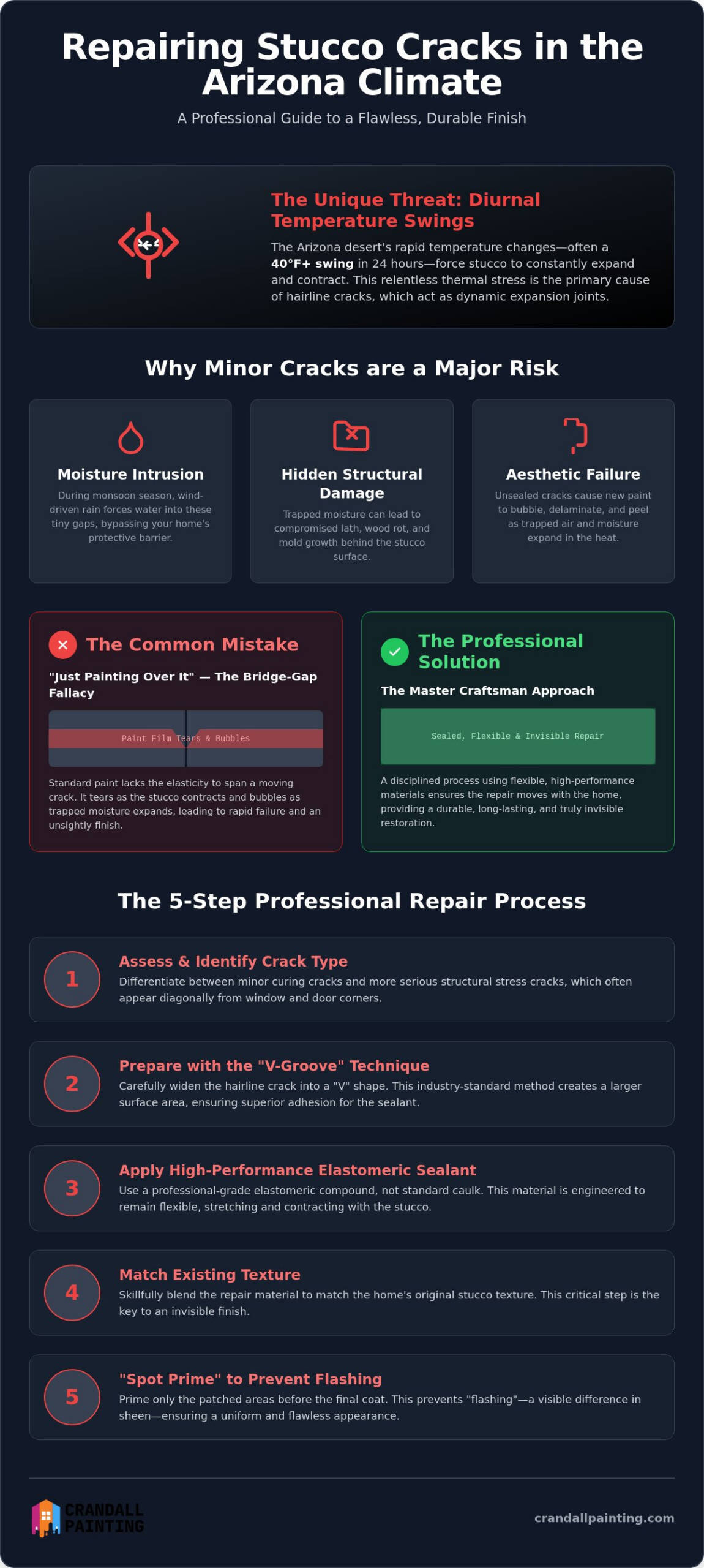
The Arizona desert presents a unique challenge known as the diurnal temperature swing. It is not uncommon for our region to experience temperature fluctuations of 40 degrees or more within a single twenty four hour period. This rapid cycle forces the stucco to expand under the intense afternoon sun and contract as the desert floor cools at night. Because of this, hairline cracks are rarely static; they are dynamic expansion joints that “breathe,” widening and narrowing throughout the day. When homeowners research how to repair hairline cracks in stucco before painting, they must account for this constant movement to ensure a lasting restoration.
Neglecting these minor openings is a risk that often leads to significant restoration costs later. During the intense monsoon season, wind driven rain can force moisture into these tiny gaps. Once water penetrates the stucco shell, it can compromise the lath and paper barrier behind it, leading to hidden wood rot or mold. A proactive approach to maintenance preserves the value of your estate and prevents a simple cosmetic touch up from becoming a major structural repair.
Shrinkage vs. Settlement: Identifying the Cause
Determining the origin of a crack is essential for a successful repair. Curing cracks are frequent in newer builds where the stucco dried too rapidly in the intense heat, while structural stress cracks often appear diagonally near the corners of windows and doors, signaling natural foundation shifting. Map cracking serves as a distinct symptom of improper base coat application, signaling that the material was likely applied too thinly or dried too rapidly. If you notice cracks wider than a nickel or those that seem to be growing, it may be time to review our professional stucco repair services to ensure the underlying cause is addressed before the finish is applied.
Why ‘Just Painting Over It’ Always Fails
The “bridge-gap fallacy” is a common mistake where homeowners assume a thick layer of paint will seal a crack. Standard exterior coatings lack the inherent elasticity required to span a moving fissure. When the stucco contracts in the cool evening, the paint film, which has no structural support across the gap, will simply tear. Furthermore, trapped air and moisture within an unsealed crack can expand during the 110-degree summer days, causing the new paint to bubble, delaminate, and peel. Learning how to repair hairline cracks in stucco before painting correctly is the only way to avoid these unsightly failures and maintain the sophisticated silhouette of your home.
Essential Materials for Professional Stucco Restoration
Achieving a flawless result begins with selecting materials engineered for the desert’s unique environmental demands. When learning how to repair hairline cracks in stucco before painting, the distinction between professional-grade products and standard consumer options becomes immediately apparent. High-quality Essential Materials for Professional Stucco Restoration ensure that your repairs don’t just look polished today; they remain intact through years of intense thermal cycling. A disciplined selection process is the foundation of our “Master Craftsman” approach to home maintenance.
Standard painters’ caulk often fails in the Phoenix heat because it lacks the necessary elongation properties to handle significant movement. Professionals favor elastomeric patching compounds because these materials can stretch and contract without losing their bond to the substrate. These compounds act as a flexible bridge over the dynamic cracks that characterize Arizona homes. Using an elastomeric sealant, such as Mor-Flexx, is a preferred choice because it remains flexible after drying and can stretch without cracking, which is ideal for our local temperature fluctuations.
Matching the existing grit of your walls is the secret to an invisible finish. Sanded compounds work best for traditional heavy textures, while unsanded versions are reserved for smooth, contemporary finishes. To apply these materials with precision, you’ll need two essential tools: a flexible putty knife to drive the material deep into the fissure and a dampened high-density sponge to feather the edges into the surrounding wall. This meticulous blending process ensures the repair is felt but never seen.
Selecting the Right Sealant for 2026 Standards
Advanced acrylic-urethane hybrids represent the current gold standard for UV resistance and longevity. These hybrids offer the ease of application found in acrylics combined with the superior durability of urethanes. For a Paradise Valley stucco repair, where architectural standards are exceptionally high, using a “paintable” guaranteed sealant is vital. This prevents the oils in the sealant from leaching through the topcoat, a common issue that causes permanent discoloration or “shiners” on high-value estates.
Primers: The Secret to Long-Term Adhesion
High-solids acrylic primers provide the necessary “bite” for the final paint layer to adhere to the repair site. We specifically utilize alkali-resistant primers to neutralize the high pH levels often found in fresh cementitious patches, preventing “hot spots” from burning through your finish. It’s crucial to choose a primer that is breathable yet waterproof to allow internal vapors to escape. Oil-based primers are generally avoided for exterior stucco in Arizona because they become brittle under constant UV exposure and can trap moisture behind the paint film. If you’re planning a comprehensive home transformation, our professional exterior painting services integrate these high-performance materials into every stage of the project.
The Professional Process for Hairline Stucco Repair
Restoring a high-value exterior requires more than a simple surface application. It demands a disciplined, five-step methodology that addresses the root cause of the fissure while preparing the surface for a seamless finish. When professionals approach how to repair hairline cracks in stucco before painting, they view the process as a restoration of the home’s structural envelope rather than a mere cosmetic touch up. This methodical sequence ensures that the repair survives the desert’s environmental stressors.
- Step 1: Preparation and Cleaning. We begin by removing accumulated desert dust, mineral deposits, and loose debris using a stiff bristled brush. A clean substrate is non-negotiable for material adhesion; even a fine layer of Phoenix silt can cause a patch to delaminate within months.
- Step 2: Widening the Crack (The ‘V’ Groove). This step is often overlooked by novices. By slightly widening the crack into a “V” shape with a small tool, we create more surface area for the sealant to bond. This ensures the repair isn’t just a thin film on the surface but a deep, structural fill.
- Step 3: Precision Application. We inject the elastomeric sealant deeply into the groove. Rather than smearing the material across the surface, we ensure it reaches the full depth of the stucco layer to provide a robust bridge across the gap.
- Step 4: Tooling and Texturing. This is the artisanal stage where the repair is integrated into the existing wall. We use specialized tools to mimic the original craftsmanship of your home, ensuring the patch is physically integrated into the wall’s profile.
- Step 5: Controlled Curing. Scottsdale’s low humidity and high evaporation rates can cause materials to dry too quickly, leading to shrinkage. We manage the curing environment to ensure the repair remains stable and flexible before any primer is applied.
The Art of Tooling: Making Repairs Vanish
A flawless repair should be felt but never seen. We utilize a damp sea sponge to carefully feather the edges of the patch into the surrounding stucco. This technique prevents the “flat spot” effect that often plagues DIY repairs on textured walls. Whether your home features a traditional sand finish or a more complex lace texture, our goal is to recreate those specific patterns within the repair zone. This level of meticulousness is what separates a standard paint job from a professional restoration of a luxury estate.
Environmental Timing for Best Results
Timing is as critical as the materials themselves. A master craftsman avoids performing repairs in the direct mid-afternoon sun, as surface temperatures can exceed 140 degrees, causing sealants to “skin over” before they can be properly tooled. We target the cooler morning hours when Phoenix temperatures are between 60 and 90 degrees for optimal curing. Additionally, we closely monitor the “monsoon window” to ensure all patches are fully cured before the heavy summer rains arrive. If you’re concerned about the timing of your project, our stucco repair experts can help schedule your restoration during the most favorable conditions.
Achieving an Invisible Finish: Texture and Paint Integration
Achieving a truly invisible restoration is the hallmark of a master craftsman. Many homeowners find that even after learning how to repair hairline cracks in stucco before painting, their efforts remain visible due to “flashing.” This phenomenon occurs because the new repair material has a different absorption rate than the aged, sun-weathered stucco surrounding it. Optical flaws ruin results. Without proper intervention, the patch often appears darker, shinier, or more matte than the rest of the wall, drawing the eye exactly where you want it least.
To combat this, we utilize the “Spot Prime” method. This technique involves applying a high-solids primer specifically to the repaired areas before the final topcoat is applied. This step stabilizes the surface porosity, ensuring the finish coat dries at a uniform rate across the entire elevation. It is a disciplined approach that prevents the patch from “sucking” the resin out of the paint, which is a primary cause of aesthetic failure in desert environments. Reliability is built through these small, meticulous steps.
Matching the sheen is equally critical to the final outcome. The intense Arizona sun naturally dulls paint over time; this means a “satin” finish from five years ago may now resemble a “flat” finish today. We meticulously evaluate the current sheen level to ensure our new mix aligns with the weathered reality of your home. While a “patch and dash” approach might seem efficient, we advocate for a full wall-to-wall repaint. This ensures a cohesive, unbroken field of color that preserves your estate’s curb appeal and long-term value.
Texture Matching for High-End Estates
Matching complex textures like “heavy lace” or “skip trowel” requires a steady hand and an artistic eye. While aerosol texture sprays offer a quick fix for minor blemishes, they rarely achieve the depth and variation of hand-troweled mud used on luxury builds. We take pride in our ability to simulate these intricate patterns, ensuring the repair site is indistinguishable from the original masonry. You can explore our Our Services page for more details on our specialized texture restoration techniques.
Selecting the Final Topcoat
For the demanding Scottsdale climate, 100% acrylic paints remain the industry standard for durability and color retention. As we move into 2026, we are seeing an increased preference for heat-reflective coatings. These advanced formulations can reduce exterior wall temperatures by up to 20 degrees, offering a tangible benefit to your home’s thermal performance and cooling costs. Choosing the right color also plays a role; lighter tones with a high Light Reflectance Value (LRV) not only stay cooler but also do a superior job of masking the shadows cast by future micro-fissures. For a comprehensive look at protecting your investment, read our exterior painting Scottsdale guide. If you are ready to restore your home facade to its original glory, schedule a professional stucco consultation today.
Restoring Your Estate’s Exterior with Crandall Painting & Stucco
At Crandall Painting & Stucco, our philosophy centers on the belief that a home’s exterior is only as strong as its smallest detail. We treat every hairline crack as a critical restoration point because we understand that these micro-fissures are the primary entry points for environmental degradation. While many view how to repair hairline cracks in stucco before painting as a secondary concern, we elevate it to a foundational step in our “Master Craftsman” process. This disciplined approach ensures that your home remains a sanctuary of beauty and structural stability.
Our “Desert-Proof” methodology is the result of years spent navigating the specific challenges of the Arizona climate. We don’t just apply patches; we engineer solutions that account for the 40-degree diurnal temperature swings and intense UV exposure discussed throughout this guide. Beyond our mastery of stucco, we provide a holistic suite of restoration services. Whether you require meticulous drywall repair Phoenix AZ to perfect your interior or high-end wood restoration for your custom entryways, our team delivers a consistent level of excellence across every surface of your estate. This commitment to longevity is backed by a professional, warrantied finish that protects your investment for years to come.
Why Scottsdale Homeowners Trust Our Precision
Our reputation is built on a history of serving the most discerning residents in luxury communities such as DC Ranch and Desert Mountain. We recognize that your property is a significant investment, and our “white-glove” service reflects that reality. Meticulous job site cleanliness is a hallmark of our presence; we treat your home with the same reverence we would our own. This includes proactive measures to protect your delicate desert landscaping and custom hardscaping from dust or debris throughout the repair and painting phases. We believe the process of transformation should be as polished as the final result.
Start Your Transformation Today
The best time to address the integrity of your home is before the next extreme summer heatwave or monsoon season arrives. A professional exterior assessment can identify subtle vulnerabilities that may not be apparent to the untrained eye. By choosing a partner who understands how to repair hairline cracks in stucco before painting with technical precision, you gain the peace of mind that comes with a high-performance finish. We invite you to experience a process where craftsmanship meets concierge-level service. Contact Crandall Painting & Stucco for your professional consultation today and begin the journey of renewing your home’s architectural legacy.
Securing Your Home’s Architectural Legacy
Protecting a luxury estate in the Arizona desert requires a commitment to meticulous preparation and superior material selection. By prioritizing flexible elastomeric sealants and disciplined texture matching, you ensure your home’s facade can withstand the relentless thermal cycles of our region. Mastering how to repair hairline cracks in stucco before painting isn’t just a maintenance task; it’s a strategic investment in the longevity and curb appeal of your property.
Since 2004, Crandall Painting & Stucco has served the Scottsdale community as specialists in high-end, desert-durable finishes. As a family-owned and operated firm, we bring a level of precision and “white-glove” care that generic services simply cannot replicate. We view every project as a partnership in preserving your home’s structural integrity against the elements. Your home deserves a finish that is as resilient as it is beautiful.
Ready to transform your exterior? Schedule Your Professional Stucco Assessment and Exterior Painting Quote today to ensure your estate remains protected through the next decade of desert sun. We look forward to guiding you through a seamless restoration process.
Frequently Asked Questions
Can I just use standard interior caulk for my exterior stucco cracks?
No, interior caulk lacks the UV resistance and flexibility to withstand the desert sun. Interior formulas become brittle and fail quickly when exposed to the intense temperatures common in Phoenix. For a lasting restoration, you must use high-performance elastomeric sealants. Understanding how to repair hairline cracks in stucco before painting requires selecting materials that can expand and contract with the wall’s movement without losing their bond.
How long should I wait for the stucco repair to dry before I start painting?
You should typically wait 24 to 48 hours for the repair material to cure fully before applying primer or paint. While our low humidity speeds up surface drying, the internal layers need time to stabilize to prevent the patch from shrinking or cracking later. Rushing this stage often results in poor adhesion and visible flashing on your final topcoat, compromising the sophisticated look of your estate.
Is it normal for a newly built home in Phoenix to have hairline cracks?
Yes, hairline cracks are extremely common in new Arizona builds due to the rapid curing of the stucco and natural house settling. The intense heat often causes the material to dry too quickly, leading to minor shrinkage fissures. While common, these openings should still be addressed as part of a professional guide on how to repair hairline cracks in stucco before painting to prevent future moisture issues.
Will painting over the cracks stop water from leaking into my home?
Paint alone is not a waterproofing solution and won’t prevent moisture intrusion if the underlying crack isn’t properly sealed. Standard exterior coatings aren’t thick or flexible enough to bridge the gap of a moving fissure. Proper restoration requires injecting an elastomeric compound into the crack to create a watertight barrier before the aesthetic topcoat is applied. This disciplined approach is essential for long-term protection.
How much does it typically cost to have a professional repair stucco cracks in Scottsdale?
Industry averages for professional stucco crack repair often depend on the linear footage and the complexity of the existing texture. In Arizona, any construction project exceeding $1,000 in labor and materials requires a contractor licensed by the Arizona Registrar of Contractors. We recommend a professional assessment to determine the specific needs of your estate rather than relying on generic estimates that may overlook underlying structural concerns.
What happens if I ignore hairline cracks for another year?
Ignoring these fissures invites moisture to penetrate the protective stucco shell during the monsoon season, which can lead to wood rot or mold. Over time, the constant thermal expansion and contraction will cause small hairline cracks to widen into more significant structural gaps. Proactive maintenance is always more cost-effective than a total system failure that requires extensive remediation or expensive lath and paper replacement.
Do I need to repaint the entire house if I only have a few small cracks?
While you can technically spot-paint repairs, a full wall-to-wall repaint is the only way to ensure a perfectly seamless and invisible finish. Because the Arizona sun fades paint at a rapid rate, new paint rarely matches the weathered color of an older wall. Repainting the entire elevation eliminates the risk of patchy appearances and restores the uniform elegance and market value of your high-end property.
What is the best time of year to perform stucco repairs in Arizona?
The ideal window for stucco restoration is during the spring or fall when temperatures are mild and humidity is low. We typically avoid the peak summer months for detailed work because extreme heat causes repair materials to dry too rapidly, which can lead to premature cracking. Performing these repairs before the summer monsoons ensures your home’s structural envelope is fully protected against seasonal moisture and wind-driven rain.