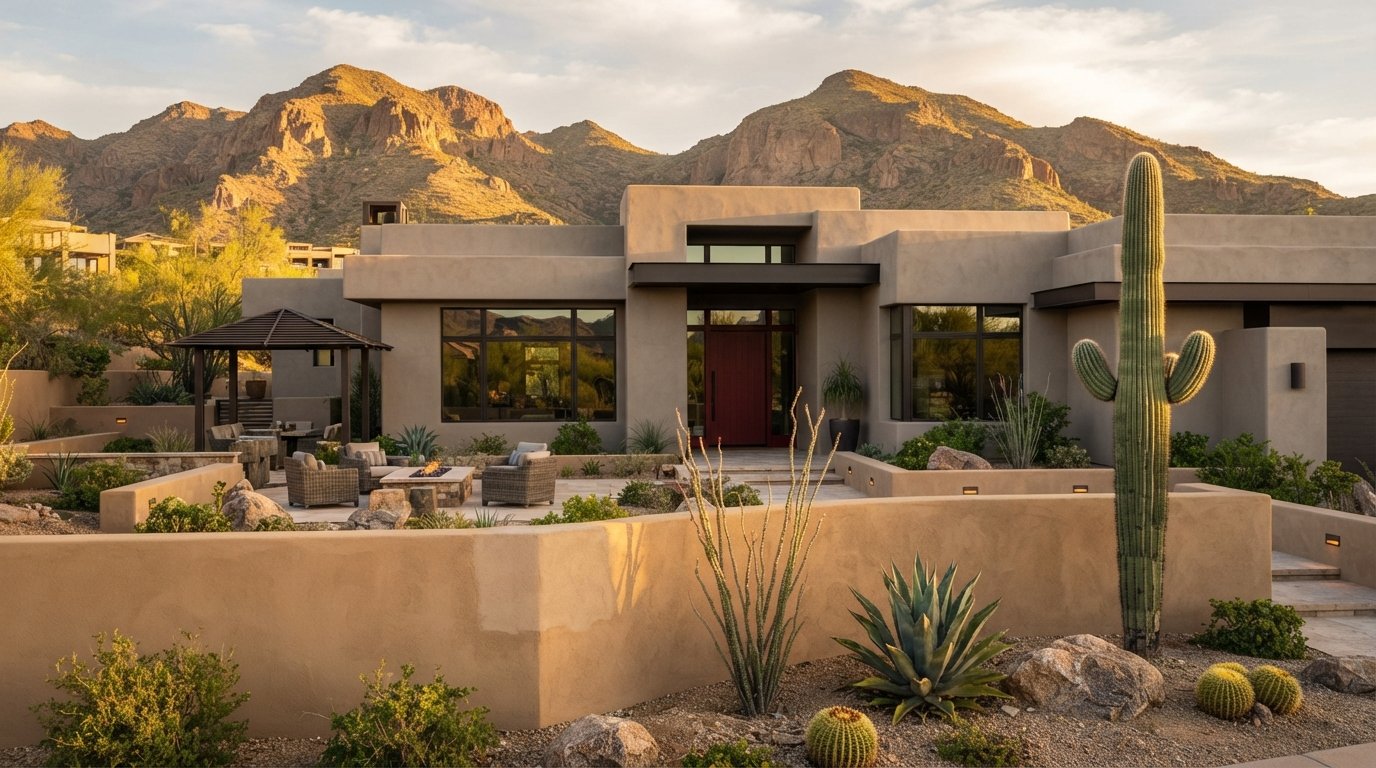

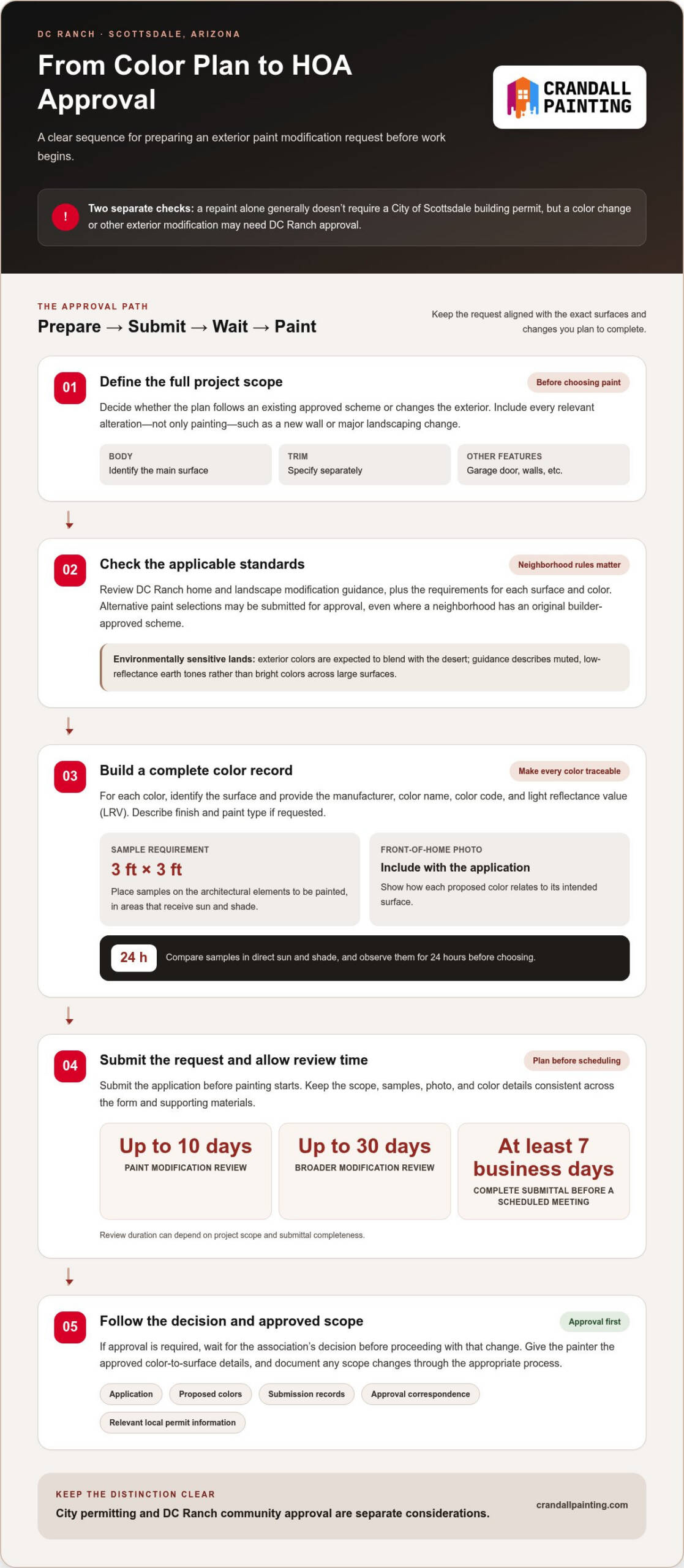
A fresh coat of paint can be permit-free and still require HOA approval. Exterior painting for HOA compliance in DC Ranch generally doesn’t require a City of Scottsdale building permit when it’s a repaint alone, but a color change or other modification may need association review. DC Ranch paint modification review and approval can take up to 10 days.
It’s easy to assume that refreshing a home’s exterior with the same type of paint means there’s no approval process to consider. The key is to distinguish city permitting from community rules, then confirm what your specific paint plan requires before work begins.
This guide explains when approval may apply, what to include in a DC Ranch modification request, and how to review community paint standards. It also covers how to plan the project, from documenting proposed colors and surfaces to choosing a painter who can follow the approved scope.
Key Takeaways
- A repaint alone generally doesn’t require a City of Scottsdale building permit, but a color change or other modification may need DC Ranch approval.
- Allow time for review: paint modifications can take up to 10 days, while broader modification reviews can take up to 30 days.
- Prepare a complete application with paint details, a front-of-home photo, and required samples before scheduling work.
- Review rules for each surface and color, since requirements can differ for body paint, trim, garage doors, walls, and masonry.
- Choose a contractor who can carry out the approved scope carefully and address exterior surface preparation as part of the repaint.
1. Do Scottsdale repaints need permits or outside approval?
A repaint alone generally doesn’t require a City of Scottsdale building permit. That doesn’t settle the separate question of DC Ranch approval. Before choosing colors or scheduling work, determine whether the plan changes the exterior or follows an existing approved scheme. DC Ranch residents may submit alternative paint selections, even in neighborhoods with original builder-approved schemes. The community’s modification process determines whether a proposed change can proceed.
For a DC Ranch paint modification, allow time for review before setting a start date. Paint modification review and approval can take up to 10 days. The broader Ranch Association modification review and approval process can take up to 30 days, depending on project scope and submittal completeness. A complete modification submittal must arrive at least 7 business days before a scheduled meeting. These timelines make early preparation useful, especially when the project includes several exterior changes.
Approval is especially relevant when a project changes the color scheme or alters another part of the property. Major landscaping changes in DC Ranch also require approval through the modification process. A repaint that includes landscaping, a new wall, or another exterior alteration should be treated as part of the overall proposal, not just as a paint job. Keep the application scope aligned with the work you intend to do.
Architectural review considers how proposed colors fit the community’s standards and palette. An existing builder-approved scheme is not the only option: DC Ranch residents can submit alternative paint selections for approval. Specify which surfaces will receive each color rather than submitting a palette without context. For example, distinguish the body color from trim or garage-door paint. This gives reviewers a clearer picture of the complete exterior treatment and helps keep the approved scheme aligned with the work.
Start by reviewing the applicable DC Ranch home and landscape modification guidance, then prepare the required submission before painting begins. If the work needs approval, wait for the association’s decision before proceeding with that change. Keep a project file with the application, proposed colors, submission records, approval correspondence, and any relevant local permitting information. If the scope changes after approval, document the revised plan and follow the appropriate process. These records connect the approved design to the finished exterior.
For Scottsdale projects beyond a straightforward repaint, permit requirements depend on the scope and local regulations. Determine whether the work requires a local permit before starting, and keep related records with your HOA correspondence. City permits and community approval are separate considerations: one does not replace the other. A compliant plan accounts for both the proposed exterior changes and the community’s review requirements, including its palette, standards, and modification process.
2. Submitting color swatches and paint details to the HOA
Careful color selection is central to exterior painting for HOA compliance in DC Ranch. Before buying paint, review the HOA’s requirements for approved colors, finishes, and brands. If the association doesn’t provide a paint list or online guidance, it may ask homeowners to submit swatches. DC Ranch applications require applicants to identify where each color will go and provide the manufacturer, color name, color code, and light reflectance value (LRV). Keep these details consistent across the form and supporting materials.
Make the samples large enough for reviewers to assess against the home. DC Ranch requires paint samples measuring 3 feet by 3 feet on the architectural elements to be painted, placed in areas that receive sun and shade. Include a photograph of the front of the home with the application. If the proposal includes body, trim, and garage-door colors, show how each sample relates to its intended surface rather than submitting an unexplained set of colors.
Scottsdale heat and sun affect how exterior paint colors appear on a home. Compare samples in direct sun and shade, and observe them for 24 hours before choosing. A color viewed indoors or on a small chip can look different across a broad exterior wall. Testing on the actual architectural surface helps homeowners judge the color against the home’s materials and the changing light.
In Scottsdale’s environmentally sensitive lands area, exterior colors are expected to blend with the surrounding desert. In practice, that means muted, low-reflectance earth tones rather than bright colors across large surfaces. This guidance applies to that area; homeowners should also consider the standards for their own DC Ranch neighborhood. Exterior painting for HOA compliance in DC Ranch means presenting colors that meet the applicable community rules for the surfaces being painted.
Describe the finish and paint type for each surface if the HOA requests those details. For example, identify the body color separately from the trim, then state whether the garage door or another feature is included. Specific descriptions help reviewers understand the complete scheme and give the painter a clear reference for following the submitted plan.
Unapproved colors can lead to an architectural review violation if the finished work differs from community standards. Submit the application before painting starts and keep the association’s decision with your project records. If the HOA requests a revision, update the color information and surface descriptions before proceeding. A precise application helps reviewers assess the intended finish and gives homeowners a clear record of the approved exterior plan.
3. Selecting an experienced HOA painting contractor
A professional painter can help carry out approved plans, and some HOAs require a professional or a specified contractor. Before deciding between DIY and hiring a painter, read the association’s rules and consider the project’s demands. Even a small, straightforward repaint must meet approval conditions. Extensive exterior work, stucco repairs, or several distinct surfaces can make professional preparation and coordination especially useful.
Following the approved colors is only one part of compliance. The work should also match the submitted paint types and surface descriptions. For example, if the application distinguishes body paint from trim, the work plan should preserve that distinction. A painter familiar with HOA projects can use the approved application as a reference to help prevent unplanned substitutions or changes during the job.
Use a practical selection process. Review the association’s requirements first, then consider whether the painter can carry out the approved scope carefully.
- Relevant experience: Look for familiarity with HOA review and exterior painting requirements.
- Credentials: Homeowners are advised to look for licensing and insurance.
- Work history: Consider positive reviews and examples of comparable painting projects.
- Property protection: Choose an approach that protects neighboring property during the work.
These criteria connect workmanship with compliance. A careful painter follows the approved colors and surface descriptions while protecting nearby landscaping, walkways, and neighboring property from paint and debris. The proposal and project documents should clearly describe the intended work, so homeowners can compare the planned scope with the HOA submission.
Coordination starts before work begins. Share the association’s approval documents and applicable standards with the person directing the painting. Confirm that the work plan reflects the reviewed surfaces and color choices. If the HOA sets contractor requirements, work hours, signage rules, or neighbor-notification steps, include them in the project schedule. This helps prevent avoidable conflicts with community procedures.
Keep an organized project record with the approved application, color and paint details, painter’s scope, and relevant HOA communications. Use it as a reference if the planned work changes. A revised color, added surface, or additional repair may fall outside the submitted scope, so pause the change until it has gone through the appropriate association process. This makes it easier to compare the finished work with the approval and promptly identify discrepancies.
Discuss a revised color, added surface, or other change to the approved scope before work proceeds. A painter familiar with compliance requirements can help keep the project aligned with applicable guidelines. Ask how the crew will follow the approval and what they will do if site conditions require an adjustment. Clear communication helps address questions before a change becomes part of the finished job.
When choosing a painting contractor, consider HOA experience, licensing and insurance, customer reviews, and how the contractor will protect neighboring property. Ask how communication with you and the crew will work and how nearby areas will be protected. Clear expectations can help you select an approach that supports careful workmanship and compliance with the association’s requirements.
4. Checking community exterior-paint rules
Use DC Ranch’s current community standards to check which materials may be painted and which colors apply to each surface. Start with the Home & Landscape Changes guidance, then compare your proposed work with the relevant home standards and paint form. A rule for the main house may not cover block walls, precast details, or mounted equipment. Identify every surface before selecting paint or planning the repaint.
For applicable precast elements, DC Ranch requires a light reflectance value between 50 and 60. Its paint form also specifies that the garage door should be darker than the house body. Treat these as separate checks: confirm the precast element’s LRV, then compare the garage-door selection with the body color. A color that fits one requirement doesn’t automatically satisfy the other.
Wall materials have their own guidelines. On masonry block walls, the inside area may match the house color or DC Ranch common wall color, while the outside area must use the common wall color. Shotcrete walls must not be painted; owners are directed to stain them and contact the Ranch Association for the process. Cantera, travertine, tile, and stone used on a home or walls cannot be painted.
Check attached details as well as broad surfaces. DC Ranch requires wall-mounted equipment to match the wall it’s mounted on. The stated examples exclude plastic and metal tags and satellite dish eyes. These distinctions matter when an exterior repaint includes utility equipment, since treating every item as ordinary trim could conflict with the applicable standard.
For a direct answer about paint modifications, call the DC Ranch Community Standards Specialist at 480.977.1299 and press 3. Before calling, note the surfaces involved, proposed colors, and any material questions. This helps focus the conversation on the relevant guidelines, such as a block wall’s inside and outside faces or whether a shotcrete wall can be painted.
If DC Ranch issues a community-wide standards violation or penalty, homeowners may appeal it to the Ranch Association board of directors by written request. Homeowners may also appeal community standards matters to the Arizona Department of Real Estate. Keep the notice, photographs, application, and HOA communications together so a written appeal can address the specific decision and property feature at issue.
Before work begins, compare the approved plan with the actual surfaces and materials. For example, a proposal to paint house stucco doesn’t authorize painting stone accents or shotcrete. Record questions and answers with the project documents, then use the applicable DC Ranch standards to guide the final scope. Reviewing each surface helps distinguish an approved repaint from work that requires a different treatment or association process.
5. Modification request materials
Begin with DC Ranch’s Home & Landscape Changes guidance. It explains how residents submit modifications and which guidelines govern their homes and neighborhoods. Use the current modification application and describe the proposed paint work in enough detail for reviewers to understand the full scope. A request for new exterior colors should identify every surface and the color assigned to it.
DC Ranch requires applicants to identify where each requested color will be applied and provide the paint manufacturer, color, color code, and light reflectance value (LRV). Keep these details consistent across the form, paint labels, and supporting materials. For example, don’t use one color name on the application and another on the manufacturer’s sample. Clear, matching descriptions help reviewers assess the proposed scheme.
Include the required photograph of the front of the home and the paint samples specified for the application. DC Ranch requires samples measuring 3 feet by 3 feet on the architectural elements to be painted, placed in areas receiving sun and shade. Show which sample represents the body, trim, or another feature. This gives the review a clearer view of how the selections relate to the home’s existing finishes.
Identify the type of color proposal before submitting. DC Ranch charges a $150.00 submittal fee to review changes to an alternate-neighborhood builder-approved color scheme or alterations to a builder-approved scheme. A custom color scheme using the DC Ranch Master Color Palette or another proposed custom scheme carries a $300.00 submittal fee. Modifications over 100 square feet require a design review fee. Match the application to the appropriate proposal type and account for applicable fees.
Timing and eligibility can affect the application process. A complete modification submittal must be received at least 7 business days before a scheduled meeting. The Ranch Association modification review and approval process can take up to 30 days, depending on project scope and submittal completeness. DC Ranch owners with outstanding covenant or Transfer/Disclosure infractions cannot submit modification applications to the Modifications Committee. Resolve submission barriers before planning work around a review date.
Keep a copy of the completed form, photograph, color information, samples record, and submission correspondence. If the application covers several changes, separate the paint scope from other property modifications so each request remains easy to assess. Once the decision arrives, retain it with the submitted materials and compare the approved details with the planned work. For exterior painting that follows an approved scope, plan your exterior repaint around the association’s decision and project documents.
Make sure each part of the request is easy to understand. Keep the description focused on the proposed exterior changes, and ensure the supporting materials describe the same work. Use the Home & Landscape Changes section as a reference when deciding what to include with the modification request and which guidelines apply. If the proposed work changes, update the description and supporting details so they still reflect the scope before submitting the request.
Crandall Painting & Stucco: Exterior Painting
Crandall Painting & Stucco provides exterior painting for homeowners ready to put an approved color plan into practice. Once the HOA’s decision and project scope are clear, its painting service can refresh the home’s exterior. Stucco repair can address damaged stucco surfaces before painting.
Share the approved colors, identified surfaces, and relevant project documents when discussing the work. This helps keep the repaint aligned with the reviewed scope. If the project also includes interior painting or wood staining and refinishing, Crandall Painting & Stucco offers those services for related updates to your home.
For details about exterior painting services, visit Crandall Painting & Stucco’s website or contact the company to discuss your project.
Carry Your Approved Plan Through to the Finish
Once your exterior plan is ready, carry it through the work itself. In Scottsdale’s strong sun, the finished color can look different on exposed and shaded elevations. Keep the approved palette and the home’s existing materials in view as the project moves from preparation to the final coat. A measured approach helps create a cohesive appearance across the exterior.
Crandall Painting & Stucco provides Exterior Painting for homeowners planning an approved repaint, along with Stucco Repair for exterior surfaces that need attention. Interior Painting is also available for homeowners coordinating updates inside. The right scope depends on the surfaces and work your project requires.
When you’re ready to discuss your painting project, contact Crandall Painting & Stucco. A carefully planned exterior painting for HOA compliance in DC Ranch can move your home toward a refined finish that reflects your approved vision.
Frequently Asked Questions
Do Scottsdale repaints need permits or outside approval?
A straightforward repaint generally doesn’t require a City of Scottsdale building permit, but DC Ranch association approval may apply to proposed colors or other exterior changes. Treat city permitting and community review as separate steps. If painting is part of a broader project, such as adding or altering exterior features, include the full scope when determining which approvals may be needed. Keep the approved plan available during the work.