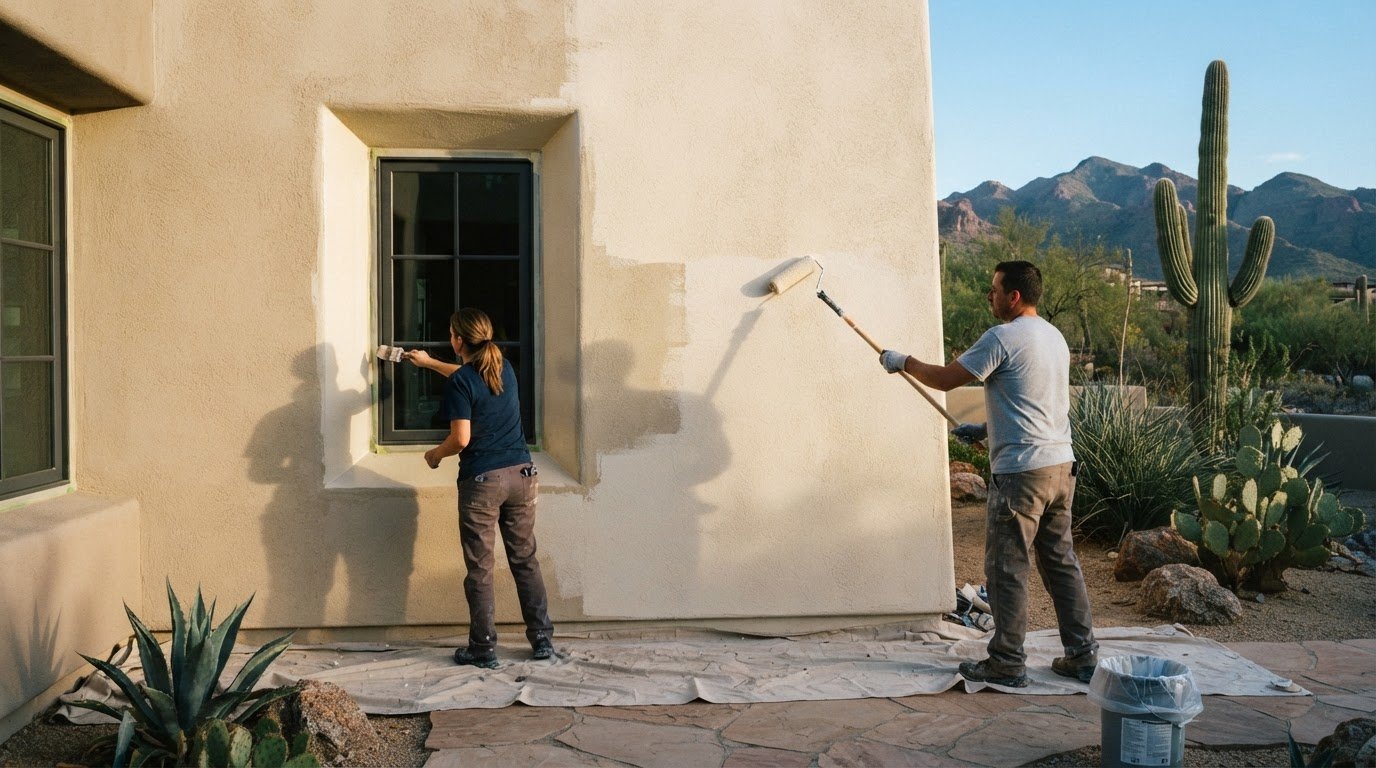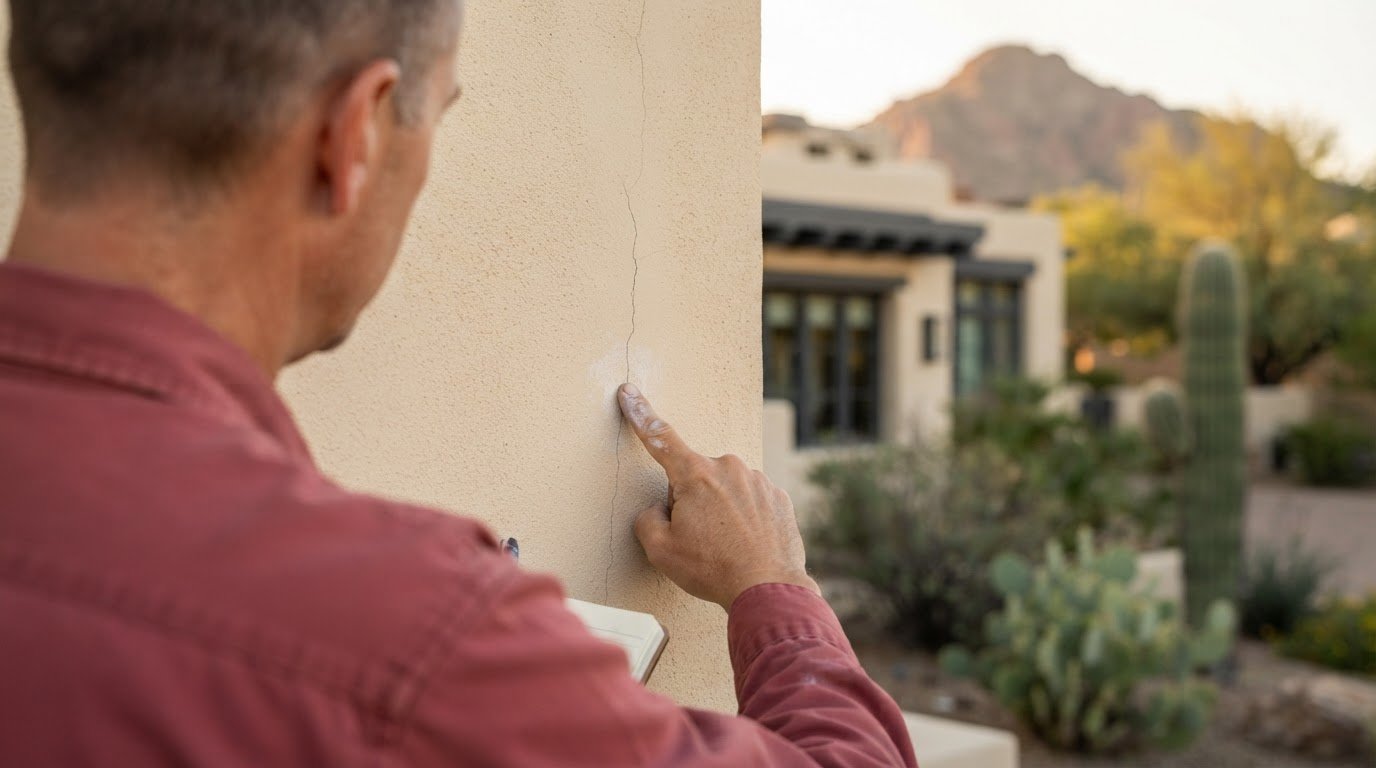

A stucco patch and color match service in Phoenix can repair cracks, replace damaged stucco, and blend the repaired area with the surrounding finish. Hairline cracks may develop as homes settle and stucco expands and contracts in desert heat, while larger or spreading cracks can signal a deeper problem. A lasting repair addresses the cause as well as the visible damage.
Even a sound patch can stand out if its texture or color differs from the existing finish. Phoenix sunlight and temperature swings contribute to exterior wear, while moisture behind stucco can cause staining, bubbling, or soft spots. Matching the finish takes careful attention to the surrounding surface, not just the damaged area.
This guide explains how cracks and damaged sections are assessed and repaired, when moisture concerns need attention before patching, and how texture and color matching help the repair blend in. It also covers what can affect an estimate and what information helps clarify the project scope.
Key Takeaways
- Learn how the size and pattern of a crack can help distinguish a surface patch from damage that needs deeper attention.
- See why a successful blend depends on matching both the stucco texture and its color, then feathering the finish into the surrounding area.
- Understand why addressing the source of water intrusion matters before repairing damaged stucco.
- Discover which project details and photos can help make a Phoenix stucco repair estimate more accurate.
- Explore how local stucco painting and repair can refresh the exterior while bringing patched areas into visual harmony with the home.
Stucco crack repair and damaged-area replacement
In Phoenix, hairline cracks can develop as homes settle and stucco expands and contracts in desert heat. Repair starts by distinguishing a surface crack from damage that reaches weakened stucco or conceals moisture.
When choosing a stucco repair contractor in Arizona, ask about their experience with the type of damage and how they plan to address it. Compare the written scope: it should explain how the crack, damaged material, and any moisture concerns will be addressed.
Crack and Surface-Damage Assessment
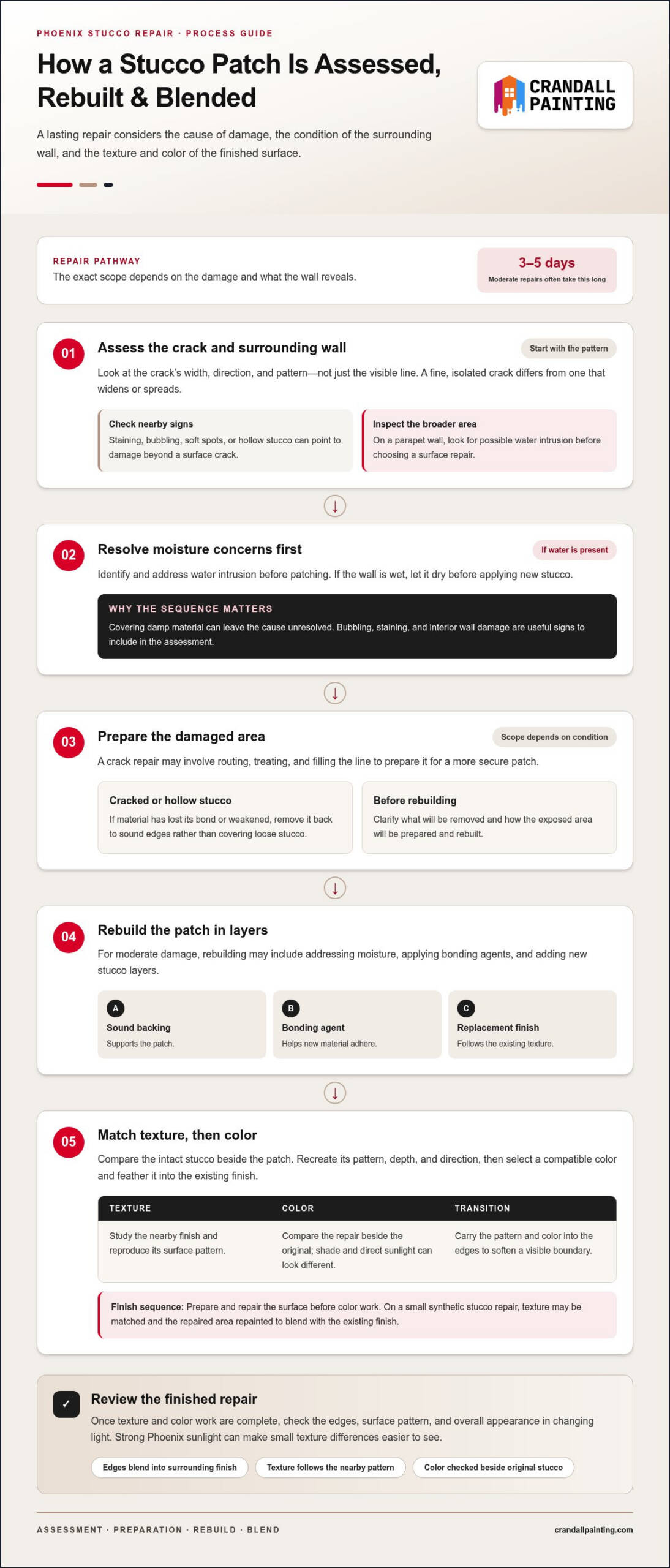
Start by observing the crack’s width, direction, and pattern. A fine, isolated line differs from a crack that widens, spreads, or appears alongside staining and soft spots. These signs can indicate deeper stucco or installation concerns, so assess the surrounding wall, not just the visible line. On a parapet wall, look for signs of water intrusion before choosing a surface repair.
A repair may involve routing, treating, and filling the crack. This prepares the damaged line for a more secure patch and helps reduce the chance of the crack showing through again. If the wall is wet, let it dry before applying new stucco. Covering damp material can leave the cause unresolved.
Removing Cracked and Hollow Stucco
Cracked or hollow sections may need removal if the material has lost its bond or weakened around the damaged area. The repair should extend to sound edges, rather than leaving loose stucco beneath a new surface layer. Ask for a clear explanation of what will be removed and how the exposed area will be rebuilt.
For moderate damage, the process may include removing weakened stucco, addressing moisture issues, applying bonding agents, and rebuilding with new layers. Each step has a distinct purpose: sound backing supports the patch, while bonding agents help new material adhere. The replacement finish should follow the existing texture so the repair integrates with the wall.
Settlement cracks can reflect movement as a home and its stucco respond to desert conditions. The pattern still matters: an isolated hairline crack may call for a different repair than a spreading line or an area with soft spots. A careful assessment connects the visible symptom to the condition of the surrounding stucco.
Moisture changes the repair sequence. If water has entered a Phoenix parapet wall, identify and address the intrusion before patching the exterior surface. Otherwise, new stucco may cover the damage without resolving its cause. Bubbling, staining, or interior wall damage are useful signs to include in the assessment.
Matching stucco color and texture
Phoenix contractors match a repair by recreating the surrounding texture, selecting a compatible color, and feathering new color into the existing finish. Moderate stucco repairs often take 3-5 days, depending on project size; the time for a particular patch depends on its preparation, layers, and finish.
Matching Stucco Textures by Hand
Texture matching starts with close observation of the intact stucco beside the patch. Note the finish’s pattern, depth, and direction, then reproduce those qualities across the repaired area. In Arizona, strong sunlight can make small texture differences more visible as shadows shift across a wall.
Hand-applied texture requires control of the material and tool movement. A finish with distinct ridges, for example, calls for a different motion than a fine-grained, even surface. Matching the surrounding pattern at the edges helps the patch look like part of the wall rather than a separate panel.
Ask how the repair will meet the existing finish. The transition matters: abrupt edges can draw attention even when the central texture looks similar. Careful application carries the pattern into the boundary and avoids leaving a sharply outlined patch.
Patching and Matching Timeline
A moderate stucco repair in Phoenix is often described as taking 3-5 days, depending on project size. That timeframe applies to moderate repairs, not every small patch or color-matching task. The damaged area, the preparation required, and the number of repair layers all shape the work sequence.
Color matching follows the surface repair, so the finish must be ready for the next step. For a small synthetic stucco repair, the texture may be matched and the repaired area repainted to blend with the existing finish. Coordinate these stages instead of applying paint before the surface is properly prepared.
Color also depends on how the existing wall looks in its setting. A sample viewed in shade may look different under direct Phoenix sunlight. Compare the repaired color beside the original stucco and consider how the wall looks from a normal viewing distance. A close match accounts for the full surface, not just a small sample.
Age and exposure also affect the comparison. The original finish may have weathered, while fresh material has a different appearance. Feathering the new color into the old finish softens the transition and reduces a visible boundary. On synthetic stucco, repainting the repaired area can create a more cohesive appearance.
Review the patch after both texture and color work are complete. Check the edges, surface pattern, and overall appearance in changing light. A considered match brings these elements together so the repair sits naturally within the surrounding Arizona stucco.
Stucco repairs after impact, settling, storms, or water damage
Impact, soil movement, and monsoon water can damage Phoenix stucco in different ways. The repair scope depends on whether the exterior has a surface defect, detached material, or moisture behind the wall.
Common Causes and Signs of Damage
Desert heat and shifting soil can make residential exteriors expand and contract, contributing to cracks around walls and openings. Monsoon water can enter behind faulty flashing and remain there. Look for bubbling, staining, soft spots, or interior wall damage, which may indicate moisture behind the stucco rather than a surface-only flaw.
Record where the damage appears and what surrounds it. A stain below flashing, for example, offers different clues from an isolated chip caused by impact. These details help distinguish settling cracks from water-related deterioration and guide the repair sequence.
Impact Damage and Hole Patching
An impact hole needs more than a smooth surface covering. Assess loose or broken stucco around the opening, and remove damaged material until the patch can meet sound edges. Replacement material rebuilds the area and recreates the existing finish, helping the repair sit naturally on the exterior.
For a small impact mark, note whether cracks extend beyond the visible hole or the surrounding surface feels soft. A larger affected area may need removal and rebuilding instead of filling alone. These observations help define the work and cost, which depend on the damage, weakened material, moisture issues, and finish requirements.
Delamination, Chipping, and Water Damage
Delamination occurs when stucco separates from the layer beneath it. Chipping can expose the separation, while bubbling or staining may point to water behind the finish. Patching over damp or detached material can leave the underlying cause unresolved. Identify and address water intrusion before restoring the surface.
Permit requirements in Phoenix depend on the project scope and applicable city rules. A surface patch differs from work affecting building components, so describe the planned repair clearly when determining permit requirements.
Before repair, photograph the damaged area and move items away from the work zone. Afterward, protect the patch from impact and follow the care instructions while the material cures. Crandall Painting & Stucco provides a two-year warranty on its work. Review the warranty terms for covered work, exclusions, and the process for reporting workmanship concerns.
Because movement and moisture can affect the same area, consider the conditions behind a visible defect before treating it as a cosmetic patch. Bull Plastering says extreme heat and shifting desert soil in the Phoenix Valley cause residential exteriors to expand and contract. That context helps explain why a crack may need to be considered alongside the surrounding material, rather than judged by its visible width alone.
For water-related damage, fix the source of water intrusion behind the wall before patching the surface. Addressing the source first keeps the repair focused on the cause as well as the finish. When exterior damage and moisture threaten underlying framing or invite pests, coordinating with a specialist like Hughes Termite Control can help resolve pest and home improvement concerns before completing surface restoration.
Local stucco painting services in the Phoenix metro area
Phoenix’s intense sunlight and temperature swings affect stucco and exterior paint preparation. Distinguish surface wear from hairline cracks, separated caulking, or damaged stucco, as each calls for different steps. Painting over a crack or compromised area may conceal its appearance without addressing the underlying surface. Assess the wall first, then plan repairs and painting in the right order.
Exterior caulking can dry out, crack, or separate under Phoenix sunlight and extreme temperatures. Check joints and transitions before painting, especially where a visible gap interrupts the finish. Address deteriorated caulking and stucco damage before applying paint. This provides a sounder surface and avoids treating a visible symptom as the whole problem.
For hairline cracks, an elastomeric coating is a thick, flexible option that can bridge fine cracks and shed monsoon rain. It is not a substitute for repairing weakened or moisture-damaged stucco. The surface condition determines the approach: a fine line differs from a crack with loose edges or water-related staining. Identifying the difference helps match the repair and coating to the wall.
New stucco installation typically uses three coats: scratch, brown, and finish. In hot, dry Phoenix weather, contractors may mist the stucco more frequently while coats cure. The curing intervals also shape the schedule. New stucco generally allows 24-48 hours between coats, while paint is typically applied after the finish coat cures, estimated at about 7-14 days.
These intervals matter when planning an exterior refresh. A fresh-looking finish coat does not mean the wall is ready for paint immediately. Each layer needs time to cure, and local heat and dryness influence how contractors manage the process. Ask for a clear sequence covering surface repair, stucco layers, curing, and final paint, so essential stages are not skipped.
For existing stucco, distinguish a localized patch from a broad painting project. A small repair may need texture matching and repainting around the repaired area; a larger project may call for attention across more of the exterior. Compare the repaired section with nearby walls in direct sun and shade. This review can reveal texture or color differences that are not apparent from one viewing angle.
A suitable Phoenix exterior finish depends on the wall’s condition, repair scope, and weather during application and curing. Identify the affected areas before work begins, and note whether cracks, separated caulking, or water marks appear elsewhere. A written sequence clarifies how each issue will be handled, when curing takes place, and how the stucco will be prepared for paint.
Stucco patch and color match contractors in Phoenix AZ
A clear repair plan helps you assess the work beyond its appearance. Look for a process that considers the visible patch, the surrounding wall, finish matching, and moisture concerns. Photos showing the crack, nearby features, and full affected section can help explain the scope. For a stucco patch and color match service in Phoenix, clear project details help define the work from the outset.
Describe what you see, such as a hairline crack, chipped corner, bubbling, or stain near flashing. Include when you noticed it and whether the area changes after monsoon rain. These details help distinguish an isolated surface repair from work involving weakened stucco or water intrusion. Photos of the affected wall and a wider view show how the damage relates to nearby features.
Ask for a written estimate that defines the repair area and sequence. It should clarify whether the work includes removing loose material, addressing moisture concerns, rebuilding the stucco, matching texture, and painting the repaired section. Phoenix homes may have different finishes on separate elevations, so identify the wall and finish you want matched. Describe the project specifically rather than calling it only a patch.
- Scope: Identify the damaged section and how far the repair extends.
- Cause: Note whether the plan addresses visible moisture or suspected intrusion.
- Finish: Specify whether texture matching and paint are included.
- Estimate: Review any stated minimum charges or extra fees before approving work.
The cost depends on the project and is provided in a free, no-obligation estimate. Factors include the damage area, weakened material, moisture remediation, access, and finish or paint requirements. A surface patch differs from a repair involving wet or detached stucco. The written estimate should make those distinctions clear, so you understand how the proposed work relates to the visible condition of your wall.
Review the proposed color and texture approach alongside the repair method. The existing finish should guide how new texture transitions into the surrounding stucco. For synthetic stucco, matching the texture and repainting the repaired area can help it blend with the existing finish. For a stucco patch and color match service in Phoenix, compare the estimate’s finish details with what you see on the wall.
Before work begins, share clear photos and move outdoor items away from the affected area. Point out any interior staining opposite the exterior damage. Afterward, follow care instructions for the new material and protect the area from impact while it cures. These steps provide useful context and keep the repair area accessible.
Use the written scope to compare the repair method, finish matching, and paint coverage. Discuss your stucco repair project when you’re ready to plan the next step.
Crandall Painting & Stucco: Exterior Painting
Crandall Painting & Stucco is a natural next step when stucco damage needs repair or an exterior finish refresh. Its Stucco Repair addresses damaged stucco, while Exterior Painting can complete an update after repairs. Discussing both needs in the same project helps align the repair scope with the surrounding painted surface.
Consider reaching out when you’ve identified cracks, impact damage, or areas where the finish looks uneven. Sharing photos and describing where the damage appears helps explain the work you have in mind. For walls affected by moisture, describe the visible signs so the repair discussion accounts for the surface condition.
For stucco repair or exterior painting, contact Crandall Painting & Stucco to discuss your project, or visit crandallpainting.com.
Plan a More Cohesive Finish for Your Home
A stucco patch and color match service in Phoenix can start a more considered exterior update. Before work begins, decide how you want the repaired area to relate to the rest of the home. A focused patch may suit a contained blemish, while a broader finish plan can create a more consistent appearance across adjoining walls. Keeping that vision in mind helps guide where repair ends and painting begins.
Crandall Painting & Stucco offers Stucco Repair and Exterior Painting for projects that need both surface restoration and a finished exterior. Interior Painting is also available if your plans extend beyond the outside of the home. The right scope depends on the areas you want to address and how they connect visually.
Share your project goals and explore a considered next step with Crandall Painting & Stucco. A well-planned repair can help you move toward a home exterior that feels renewed and thoughtfully finished.
Frequently Asked Questions
Can a stucco patch be matched exactly to existing stucco?
A patch can be blended to closely resemble surrounding stucco, but an exact match is not a dependable expectation. Existing color changes with age and exposure, while fresh material has a new finish. Matching texture and color, then feathering the color into adjacent stucco, creates a more cohesive transition. A weathered wall, for example, may need broader blending than a recently finished surface to make the repair less noticeable.
What causes stucco cracks and when does damage need professional repair?
Stucco cracks can develop as a home settles and the exterior expands and contracts in desert heat. Impact, spreading cracks, or damage near a recurring stain warrant professional assessment, especially if the surrounding surface chips or feels soft. A fine, isolated line differs from a crack that widens or returns after repair. Describe when the damage appeared and whether nearby doors, windows, or interior walls show related changes.