
In the Arizona desert, a fresh coat of paint is less about aesthetics and more about a high-stakes battle against the most unforgiving UV environment in the country. You likely recognize that your estate’s exterior is its first line of defense, yet the sight of hairline stucco cracks or sun-bleached wood can be deeply unsettling for any discerning property owner. Achieving a result that lasts requires more than just a brush and a bucket; it demands a rigorous exterior painting preparation process designed to combat extreme thermal expansion and surface degradation.
We understand that your home is a significant investment in your lifestyle and property value. By following this professional checklist, you’ll master the essential steps needed to protect your residence from the relentless sun and ensure a flawless, enduring finish. We will walk you through the meticulous restoration techniques used by master craftsmen to address dust, wood rot, and monsoon-related contamination before the first drop of premium paint ever touches the surface. This methodical approach ensures your home remains a pristine sanctuary for years to come.
Key Takeaways
- Understand why meticulous preparation serves as the structural foundation for protecting your estate against extreme desert UV exposure and thermal expansion.
- Learn to distinguish between minor hairline cracks and significant stucco failure to ensure a seamless, architecturally sound restoration.
- Discover the importance of low-pressure environmental remediation to remove Arizona mineral deposits without compromising the integrity of your home’s substrate.
- Master the professional exterior painting preparation steps required to safeguard high-value masonry, such as travertine and flagstone, during the restoration process.
- Explore how specialized priming and artisanal wood restoration techniques ensure a flawless, long-lasting finish for your home’s most prominent architectural features.
The True Cost of Neglect: Why Preparation Defines Exterior Longevity in 2026
Your estate’s exterior is far more than a simple aesthetic choice; it’s a sophisticated protective barrier against one of the harshest environments in North America. Professional exterior painting preparation is the structural foundation of any high-end finish. It is the most labor-intensive and critical phase of the Exterior Painting Scottsdale restoration process. While the final application of color captures the eye, the invisible work performed beforehand determines whether that beauty endures or dissolves under the desert sun. Quality starts here.
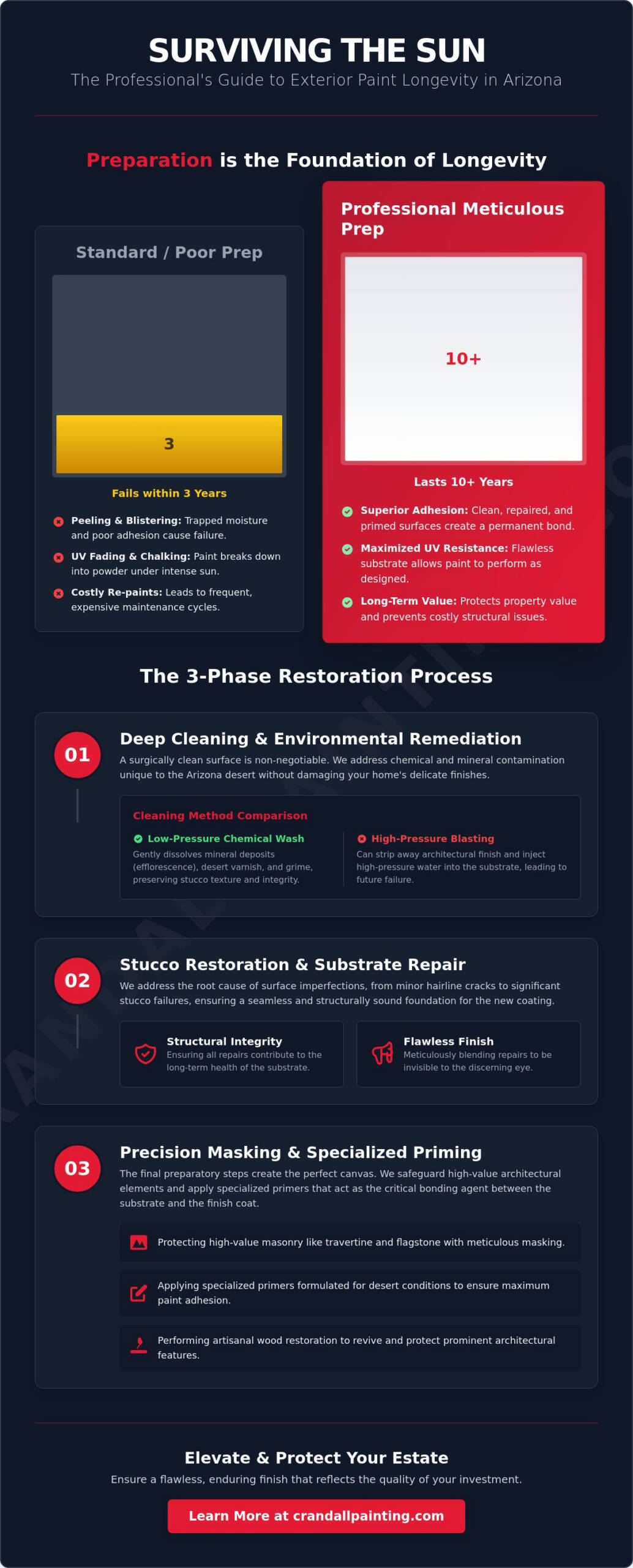
The “Arizona Factor” is a reality every local homeowner must face. In this region, extreme UV radiation and relentless heat cause standard paint jobs to fail prematurely if prep is neglected. There’s a dramatic contrast in longevity to consider. A project with poor preparation often fails within three years, leading to peeling, fading, and cracking. In contrast, a professional restoration focuses on substrate health, often providing a lifespan of ten years or more. This meticulous approach ensures your investment is protected rather than wasted on a temporary fix. It’s a matter of long-term value.
Understanding UV Degradation and Substrate Health
The desert sun acts as a chemical catalyst that slowly breaks down the resin bonds of old paint. This process leads to “chalking,” a condition where the paint surface turns into a fine powder. If new paint is applied over this residue, it won’t bond; it will simply sit on top of the dust. This failure is a primary reason for premature peeling. Additionally, skipping the preparation phase creates a significant risk for moisture trapping. During the intense monsoon season, unsealed stucco cracks allow water to penetrate the substrate. When temperatures inevitably climb back above 110 degrees, that moisture expands into vapor, forcing the paint to blister and detach from the wall.
The ROI of Meticulous Preparation
Investing in a “white-glove” preparation process offers a substantial return by reducing long-term maintenance cycles. By identifying and repairing minor stucco defects and wood rot during the prep phase, we prevent these issues from evolving into costly structural failures. This level of care is essential for maintaining property value in exclusive Arizona communities. A core component of this process involves understanding paint primers and how they serve as a vital bonding agent for different materials. You can view our comprehensive list of restoration capabilities by visiting Our Services. We treat every home as a significant asset, ensuring our work reflects the quality of your lifestyle.
Phase One: Deep Cleaning and Environmental Remediation
Before the first drop of paint is ever applied, the substrate must be surgically clean. In Arizona, this means addressing more than just surface dust. A critical first step in exterior painting preparation involves inspecting for efflorescence. These white, powdery mineral deposits are common in Scottsdale soil and can migrate through stucco; if they aren’t neutralized, they’ll push new paint right off the wall. We look for these salty signatures early to ensure the surface is chemically stable.
Most homeowners assume a standard pressure wash is sufficient. However, high-pressure blasting often does more harm than good on delicate stucco finishes. It forces water deep into the substrate and can strip away the fine architectural texture of your estate. A master craftsman prefers low-pressure chemical cleaning. This method uses specialized solutions to break down contaminants without compromising the home’s structural integrity. It’s a gentler, more effective way to preserve the masonry while achieving a pristine surface.
Chemical Cleaning vs. Mechanical Washing
Professional remediation often requires TSP substitutes to eliminate stubborn grease or soot near outdoor kitchens and driveways. While mechanical washing relies on brute force, chemical cleaning focuses on dissolving “desert varnish.” These are the dark manganese and iron oxide streaks often found on shaded northern walls. Protecting your investment also means protecting your environment. We take great care to shield sensitive desert landscaping, ensuring that cleaning agents don’t harm your saguaros or custom stonework. If you’re looking for a team that respects every detail of your property, you might consider a professional exterior restoration consultation.
The Essential Drying Window
Even in the arid climate of the Sonoran Desert, moisture is a hidden enemy. We mandate a strict 48-hour dry time after any aqueous cleaning. Skipping this window is a common mistake that leads to catastrophic failure of elastomeric coatings. These high-performance paints are designed to be waterproof; however, if moisture is trapped behind the film, the heat will cause it to expand and create unsightly bubbles. It’s a avoidable tragedy that costs thousands in rework.
To ensure total readiness, professionals use digital moisture meters to test the substrate. We don’t rely on visual cues or guesswork. A surface might look dry to the naked eye but still hold significant humidity within the porous stucco. Verifying these levels is a non-negotiable pillar of our restoration services. This disciplined approach guarantees that the bond between the primer and the wall is permanent and resilient against the coming monsoon season.
Phase Two: Stucco Restoration and Substrate Repair
In the Southwest, stucco isn’t a static material; it’s a dynamic substrate that breathes and moves. The intense Arizona sun creates significant thermal expansion and contraction, where surface temperatures can fluctuate by over 40 degrees in a single day. Meticulous exterior painting preparation requires a deep understanding of these shifts. If you apply paint over compromised stucco, the finish will inevitably crack as the building moves. True restoration begins by stabilizing the surface and ensuring every square inch is structurally sound.
Addressing “spalling” and delamination is a non-negotiable step before any primer is applied. Spalling occurs when the finished coat of stucco separates from the underlying base, often due to trapped moisture or age. We identify these hollow areas by “tapping” the walls, listening for the distinct sound of separation. By integrating professional stucco repair directly into the painting workflow, we ensure the new coating bonds to a solid, unified surface rather than a crumbling facade.
Hairline Cracks vs. Structural Damage
Not all cracks are created equal. While hairline fractures are often a result of normal thermal stress, wider gaps can signal deeper issues that require more than a simple patch. The table below outlines the differences and the professional approach required for each.
| Crack Type | Primary Cause | Professional Fix |
|---|---|---|
| Hairline (< 1/16″) | Thermal expansion or minor settling | High-build elastomeric sealant |
| Structural (> 1/8″) | Foundation movement or water intrusion | Full-depth patch and mesh reinforcement |
| Spiderwebbing | Rapid drying during original application | Surface skim coat and texture blending |
It’s a common mistake to use standard caulk for these repairs. While caulk is convenient, it often creates a “smooth” stripe that stands out against textured stucco. Furthermore, many retail caulks don’t possess the breathability required for Arizona’s climate. We utilize specialized masonry sealants that remain flexible, allowing the home to move without breaking the seal.
Texture Matching: The Mark of a Professional
The true difficulty in stucco restoration lies in the artistry of the finish. In exclusive enclaves like Paradise Valley, homes often feature complex “Spanish Lace,” “Heavy Dash,” or fine “Sand” textures. A poorly executed patch is an eyesore that even the highest quality paint cannot hide. Our master craftsmen take pride in their ability to blend new repairs seamlessly into the existing architectural finish. This process involves a keen eye for depth and pattern, ensuring that once the final topcoat is applied, the repair becomes invisible. This level of detail is what separates a standard paint job from a true estate restoration.
Phase Three: Precision Masking and Specialized Priming
Precision is the defining characteristic of a master craftsman. Once the substrate is cleaned and repaired, the focus of exterior painting preparation shifts to the protection of your estate’s most valuable non-paintable features. This phase isn’t merely about blocking out areas; it’s about creating a controlled environment where the restoration can proceed without risk to your property’s architectural integrity. A disciplined approach here ensures that the final result is as clean as it is durable.
Mechanical bonding is the secret to longevity in the Sonoran Desert. Old, sun-baked paint becomes brittle and loses its grip on the substrate over time. Without thorough scraping and sanding, new coatings are essentially being applied to a failing foundation. We meticulously sand every wood surface to reveal fresh fibers, allowing specialized primers to penetrate and lock into the material. This creates a stable surface that can withstand extreme thermal expansion. It also ensures that the transition between your stucco walls and decorative wood trim remains sharp and distinct.
Masking for High-End Estates
Protecting high-end Scottsdale landscapes and hardscaping requires more than a simple drop cloth. Travertine and flagstone are highly porous materials; a single paint spill can lead to permanent, unsightly staining. We utilize heavy-duty, multi-layered protection and plastic sheeting to ensure zero overspray reaches your custom stonework or expensive desert plantings. For a truly professional result, we prioritize removing hardware, such as house numbers, sconces, and door handles, rather than simply masking around them. This allows for a complete coating behind the fixtures and eliminates the risk of jagged edges or visible tape lines.
Selecting the Right Primer for the Desert
Selecting the correct primer is essential for the desert climate, as different substrates have vastly different chemical needs. Many homeowners are misled by “self-priming” products, which often fail on porous Arizona stucco because they lack the necessary depth of penetration. High-tannin wood doors and decorative trim require specialized stain-blocking sealers to prevent natural oils from bleeding through and ruining light-colored topcoats. Adhesion promotion is the primary goal of the priming phase. By choosing a primer specifically formulated for high-heat environments, we ensure the topcoat has a permanent bond to the masonry. If you want to ensure your home receives this level of meticulous care, explore our full suite of restoration services.
Elevating Your Estate: The Crandall Difference in Exterior Restoration
A masterpiece is only as good as the surface beneath it. At Crandall Painting & Stucco, we view exterior painting preparation as a rigorous restoration process rather than a preliminary chore. Our “white-glove” philosophy means that we treat your estate with the reverence it deserves, ensuring every architectural detail is preserved and protected. This disciplined, methodical approach provides more than just a beautiful home; it offers the peace of mind that comes from knowing your investment is shielded by the highest standards of craftsmanship.
Precision defines our work. While others might overlook a minor blemish or a weathered corner, our team focuses on artisanal wood restoration and precision touch-ups that others simply ignore. We understand that a luxury home in Scottsdale requires a level of care that goes beyond the surface. By addressing the unique environmental challenges of the Sonoran Desert with seasoned expertise, we ensure that the final finish is both flawless and resilient against the elements. We don’t just apply paint; we renew the integrity of your property.
A Legacy of Craftsmanship in Scottsdale
Trust is built through years of consistent excellence. With over 20 years of experience serving the Phoenix metro area, we’ve developed a deep understanding of the regional nuances that affect high-end residential finishes. Our expertise in decorative arts allows us to handle complex textures and bespoke wood staining with a level of mastery that is rare in the industry. This commitment to quality extends to every facet of our service. For example, we recognize the vital synergy between professional drywall repair and overall exterior integrity. Ensuring that interior and exterior surfaces are handled with equal precision prevents moisture migration and maintains the structural health of your home. It’s this holistic view of property maintenance that distinguishes our work from standard contractors.
Your Consultation for a Lasting Transformation
Every estate has a unique story and a specific set of needs. We invite you to schedule a professional site evaluation where we can provide a thorough project narrative tailored to your home’s requirements. Our communication is transparent and detailed, moving through the “why” and “how” of our process so you feel confident in every decision. This consultation is the first step toward a transformative experience that elevates your lifestyle and protects your property value for the long term. If you’re ready to see the difference that meticulous exterior painting preparation and master craftsmanship can make, we’re here to guide the way. Contact Crandall Painting for an Exterior Consultation and begin the journey toward a flawless, enduring finish.
Secure the Future of Your Architectural Investment
A flawless exterior is the result of a disciplined, prep-first philosophy that respects the unique demands of the Sonoran Desert. By prioritizing meticulous exterior painting preparation, you ensure that your home’s finish remains resilient against intense UV exposure and seasonal monsoons. This methodical approach transforms a standard maintenance task into a lasting act of property preservation that safeguards your estate for years to come.
Established circa 2004, Crandall Painting & Stucco has served as a premier choice for high-end Scottsdale estates. As expert stucco and wood restoration masters, we understand that true quality lies in the details that others often overlook. Our commitment to excellence guarantees a bespoke experience that protects both your lifestyle and your home’s long-term value. We treat every project as a significant investment in your property’s legacy and aesthetic beauty.
When you’re ready to experience a superior level of craftsmanship, we invite you to take the next step. Request Your Professional Exterior Restoration Quote to begin your home’s transformation. We look forward to providing the white-glove service and professional consultation your residence deserves.
Frequently Asked Questions
How long does professional exterior painting preparation take?
Professional preparation typically spans two to four days for a standard luxury estate. This duration allows for a methodical progression through deep cleaning, stucco restoration, and precision masking. Larger properties or those with significant sun damage may require additional time to ensure the substrate is perfectly stabilized. We prioritize a disciplined pace to ensure every detail meets our “white-glove” standards before the application phase begins.
Can I skip pressure washing if my house looks clean?
Skipping the cleaning phase is not recommended, as microscopic dust and mineral deposits often cling to surfaces even when they appear clean. These contaminants act as a barrier that prevents the paint from bonding to the substrate. A low-pressure chemical wash is essential to neutralize efflorescence and remove “desert varnish.” This step is a non-negotiable part of thorough exterior painting preparation that ensures the longevity of your investment.
What is the best temperature for exterior painting in Scottsdale?
The ideal temperature range for application is between 50 and 90 degrees Fahrenheit. In Scottsdale, this “golden window” typically occurs from late February through April when the air is dry and temperatures are mild. Extreme heat can cause paint to dry too quickly, preventing it from leveling and curing properly. We monitor local weather patterns closely to ensure the environment supports a flawless, enduring finish for your residence.
Do I need to repair small stucco cracks before painting?
Addressing even the smallest hairline cracks is vital to prevent moisture intrusion during the monsoon season. While they may seem purely aesthetic, these fractures allow water to seep behind the stucco, leading to delamination or spalling as temperatures fluctuate. We utilize high-build elastomeric sealants to bridge these gaps during the restoration process. This proactive maintenance preserves the structural integrity of your estate and prevents costly future repairs.
What happens if it rains during the preparation phase?
If rain occurs, all preparation work must pause until the substrate is completely dry. We mandate a minimum 48-hour drying window after any significant moisture exposure to prevent trapping humidity behind the new coating. Trapped moisture can lead to blistering and catastrophic paint failure when the Arizona sun returns. Our team uses digital moisture meters to verify that substrate levels are safe before resuming any restoration activities.
Why is my exterior paint peeling only on the south-facing side?
South-facing walls endure the most intense UV radiation and thermal stress in the Phoenix metro area. This constant exposure breaks down the chemical bonds of the paint resin faster than on shaded sides of the home. Without rigorous exterior painting preparation and high-quality UV-resistant coatings, these surfaces are the first to show signs of chalking and peeling. We often apply specialized primers to these high-exposure areas to enhance adhesion.
Is it better to roll or spray paint on Arizona stucco?
A combination of spraying and “back-rolling” is the superior method for Arizona’s porous stucco. Spraying provides an even, consistent layer of coverage, while back-rolling uses a roller to force the paint into the deep pits and textures of the masonry. This technique ensures a mechanical bond that a spray-only application cannot achieve. It results in a thicker, more protective film that better resists the harsh desert environment.
How do I know if my house has lead-based paint before prep begins?
Homes built before 1978 are legally presumed to contain lead-based paint under EPA regulations. If your estate was constructed during this period, a professional lead test is required before any scraping or sanding begins. Our master craftsmen follow strict safety protocols to contain and dispose of any hazardous materials during the restoration process. You should verify that your contractor is EPA Lead-Safe Certified to ensure the protection of your property.