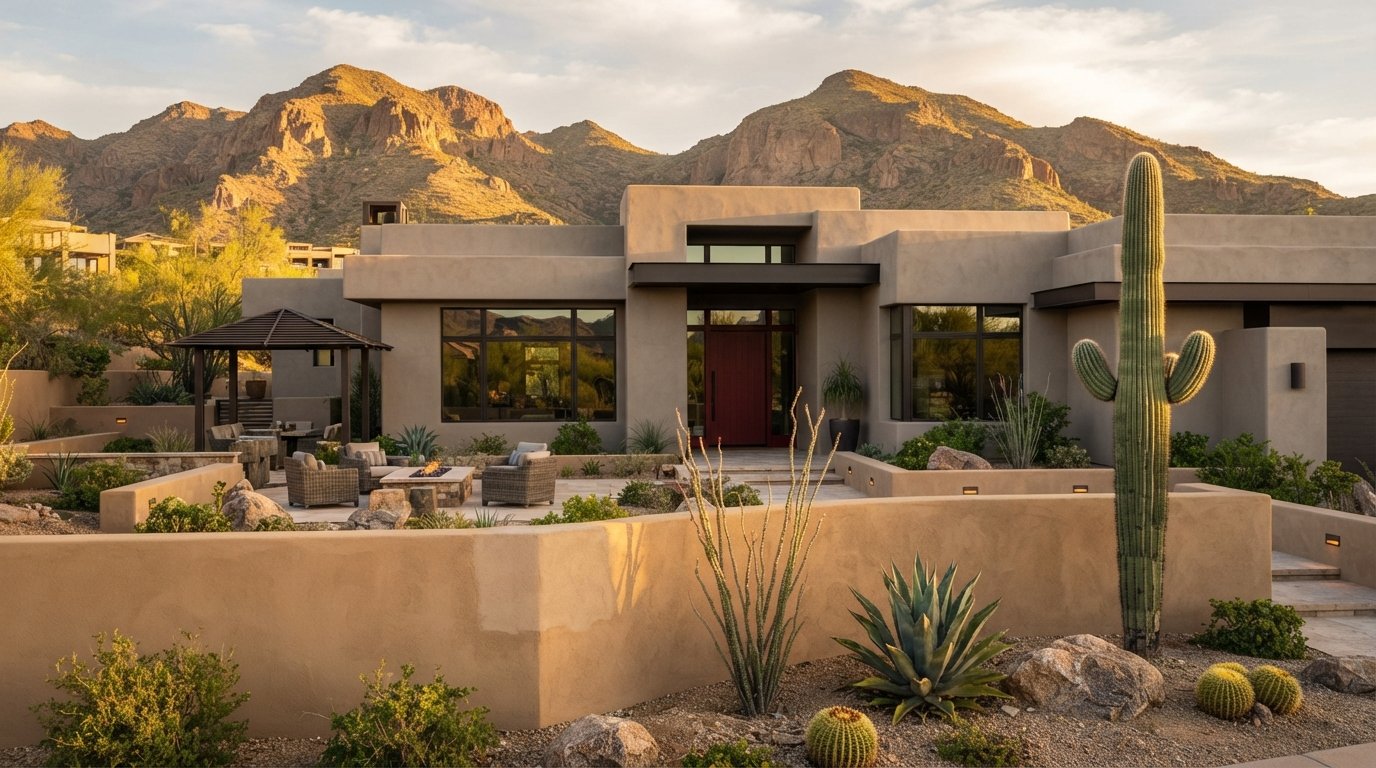

The right stain starts with the wood, not the color chart. For wood staining for garage doors in Paradise Valley, the door’s condition and existing finish help determine whether it is ready for a new stain or needs refinishing first. That assessment matters in Arizona’s strong sun, which can affect a wood door’s appearance over time.
A garage door is a prominent part of a home’s exterior, so the finished look matters. Choosing a suitable finish also means considering the wood, its current surface and the home’s architectural palette. This guide explains how those factors shape a staining project, how to compare finish directions, and what to prepare before work begins. You’ll also learn what to expect from professional staining, door refinishing and wood restoration.
Key Takeaways
- Wood staining refreshes a door’s appearance while preserving natural character, but it is separate from mechanical garage-door repair.
- For wood staining for garage doors in Paradise Valley, the existing surface, whether bare wood, stain, paint or varnish, helps shape the preparation and finish plan.
- Compare finish options by grain visibility and color intensity. Wood species and existing finishes can affect the final appearance.
- Prepare photos, known finish history, preferred appearance and notes about visible concerns to help define the project scope.
- Crandall’s process moves from consultation and a free, no-obligation estimate through scheduling, coordination, quality control and follow-up.
Paradise Valley Garage Door Wood Staining Services
A wood garage door adds warmth and texture to a home’s exterior. Staining can refresh its color while leaving the grain visible, depending on the finish selected. It is a finish service, separate from work on the door’s opener, tracks, springs or other mechanical components. Wood finishing changes the door’s appearance; mechanical repair addresses how the garage door operates.
For wood staining for garage doors in Paradise Valley, begin with the surface rather than a preferred color. The door may have existing stain, paint, varnish or no finish, and each surface affects the preparation needed before a new finish can be applied. Crandall Painting & Stucco provides staining and varnishing, door refinishing and wood restoration for residential properties in Paradise Valley. These services help shape a plan around the door’s condition and the appearance you want. An overview of wood stain can also help explain how stains differ from other wood finishes.
When does a Paradise Valley wood garage door need refinishing?
Fading, a worn finish or uneven color can be reasons to arrange an assessment. For example, one area may look lighter beside panels that still appear richer, or the finish may look inconsistent across the door. Those signs alone do not determine the work required. The wood’s condition and existing finish help establish whether staining is suitable on its own or whether refinishing or restoration is appropriate.
An assessment also helps set realistic expectations. Staining changes the finish, but it is not a remedy for every concern with the wood. The project scope should reflect the door’s actual condition rather than assume that a new color will resolve every visible issue.
Staining, varnishing, and door refinishing: how do they differ?
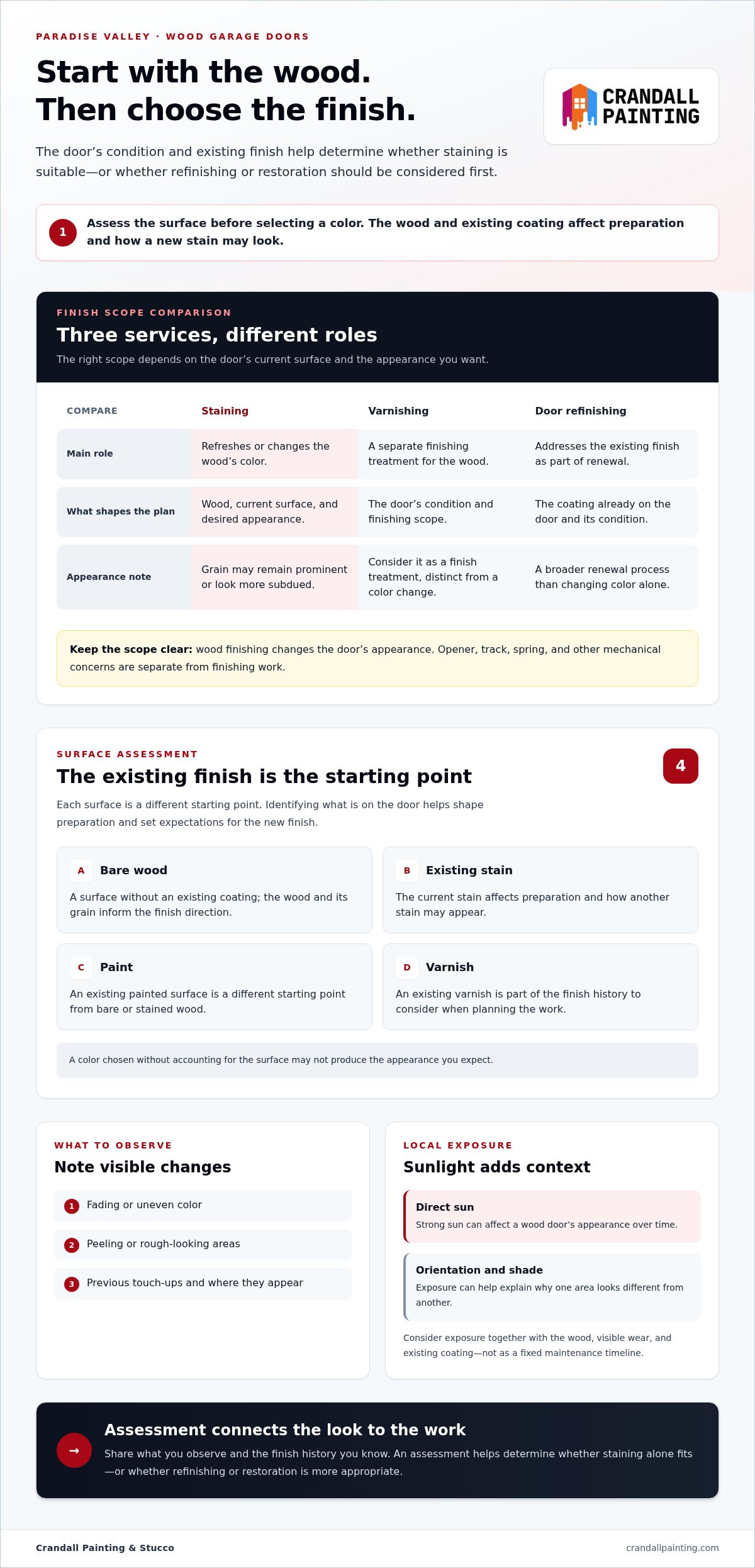
Staining changes or refreshes the wood’s color. The grain may remain prominent or appear more subdued, depending on the finish and the wood beneath it. Varnishing is a separate finishing treatment. Door refinishing is broader: it addresses the existing finish as part of preparing the door for a renewed appearance.
These services may be considered together when the current coating or the door’s condition calls for more than a color change. Crandall’s staining and refinishing work connects the desired look with the preparation and finishing scope the door needs.
- Staining: refreshes or changes the wood’s color.
- Varnishing: adds a separate finishing treatment to the wood.
- Door refinishing: addresses the existing finish as part of the renewal process.
Knowing the difference makes it easier to describe your goals and discuss the appropriate scope. Next, consider how the wood, current finish and home exterior inform the finish direction.
How Paradise Valley Conditions and Existing Finish Shape a Staining Project
A staining plan should start with the door’s surface, not a color sample. Paradise Valley’s intense sun is a local consideration because exposure can influence how exterior wood finishes age. The door’s orientation and amount of direct sunlight may help explain why one area looks different from another. These details inform an assessment, but they do not establish a precise fading rate or fixed maintenance schedule.
Assess the existing finish before selecting a color: the surface beneath it helps determine preparation needs and how a new stain may look. Bare wood, existing stain, paint and varnish each provide a different starting point. A color selected without accounting for the surface may not produce the appearance you expect. For wood staining for garage doors in Paradise Valley, a project-specific assessment connects your preferred finish with the door’s actual condition.
What should homeowners inspect before choosing a stain?
Before a consultation, note what you can see without trying to diagnose the cause. Look across the panels and around the edges for fading, uneven color, peeling, rough-looking areas or previous touch-ups. Record where each concern appears and whether it is limited to one section or visible across the door. These observations help guide an assessment of the surface.
Photos can help show what you’ve noticed, but they may not capture every detail of the finish or establish the full preparation scope. A closer assessment helps determine how the existing surface should inform the work.
How does desert exposure affect finish planning?
Consider direct sun alongside the door’s finish history. A door with strong sun exposure may look different from a more shaded surface, and its orientation gives useful context during assessment. Rather than assuming every door in Paradise Valley needs the same treatment, consider exposure together with visible wear, the wood and the existing coating. This provides a more useful basis for planning the finish.
Keep a short record of what you observe and share it during the consultation. The assessment can account for the door’s present condition and its exposure without relying on a blanket maintenance timeline or a promise about finish performance.
Crandall Painting & Stucco can assess the door and discuss the appropriate staining, refinishing or restoration scope. A free, no-obligation estimate outlines the proposed work before you plan the next steps.
Choosing a Garage-Door Stain: Match the Look to the Wood and Home
A stain color on a swatch is only a starting point. Wood species, grain, surface preparation and existing finish all influence how a color appears on a garage door. A warm brown may look different on different woods, or on bare wood compared with a previously finished surface. Choose a direction by considering the desired appearance alongside the door’s character and the home’s exterior palette.
Use these comparisons to clarify your preferences. They describe general visual effects, not specific products or guaranteed results.
| Visual direction | Grain visibility | Color intensity | Considerations |
|---|---|---|---|
| Transparent-looking | Grain and natural variation remain prominent | Subtle, with the wood’s own color still influential | Most suited to a door whose natural character you want to emphasize |
| More color-forward | Grain may remain visible, but can appear less pronounced | More noticeable and visually consistent | Consider how the selected color relates to existing finishes and surrounding materials |
| More opaque-looking | Natural grain may be less visible | More uniform in appearance | May create a stronger shift from the door’s current look |
Should the stain show the wood grain or create a more uniform look?
Decide whether you want the grain to take visual priority or prefer a more even-looking color. A transparent-looking result generally keeps more of the wood’s variation in view, while a more opaque appearance emphasizes color consistency. Neither direction is automatically right. The wood’s natural character and the selected finish affect how much grain remains visible.
How can the garage-door finish complement the home?
Consider the home’s exterior colors, entry door, trim and architectural character together. The garage door might echo a warm accent, sit quietly among neutral tones or provide contrast, depending on the overall design. For a multi-panel or multi-bay door, consider how the finish will read across the full set. Discussing samples can help clarify preferences before settling on a direction.
A color name alone does not determine the finished appearance. Existing coatings and wood species can shift how a tone reads, and differences in surface condition can affect consistency across panels. Bring reference images or note tones already used on the home, then discuss how they relate to the actual door. Crandall’s staining and refinishing work considers both the surface and the desired look when shaping a finish direction for the project.
Classic wood tones such as walnut, cherry and oak can suggest warmth, while cooler gray, slate or driftwood tones may feel more contemporary. Treat these as starting points, not fixed formulas. A considered choice respects the wood, the door’s existing appearance and the home as a whole.
How to Prepare for Wood Staining on a Paradise Valley Garage Door
A little preparation makes it easier to describe the project and plan the next steps. For wood staining for garage doors in Paradise Valley, useful details include the door’s material if known, its current finish, visible concerns and the appearance you have in mind. You do not need to diagnose the cause of wear or decide the preparation work yourself. These details help frame a professional assessment and project-specific estimate.
What information helps define the project scope?
Before the consultation, gather a few practical details. Photos can show the door’s overall appearance and areas you want assessed. Notes add context that pictures may not capture. Include any finish history you know, such as a previous stain or touch-up. If you are unsure about a detail, simply say so.
- Door and finish: Record the material if known and whether the surface appears stained, painted, varnished or unfinished.
- Visible concerns: Note fading, peeling, rough areas, uneven color and previous repairs or touch-ups.
- Desired appearance: Describe whether you prefer a more natural-looking grain or a more uniform color direction.
- Related doors: Mention multiple matching panels, adjacent garage doors or other features that should look coordinated.
This information is a useful starting point, not a substitute for assessing the surface in person. If you’re also considering wood restoration services, mention what prompted your interest so the project scope can account for the door’s condition.
What should homeowners expect around scheduling and the work area?
Scheduling follows the detailed estimate, and timing depends on the door and project requirements. The proposed scope helps set expectations, so do not assume every door needs the same preparation or follows the same schedule. Homeowners do not need to be present during the work, but access arrangements should be clear in advance.
Keep the garage and exterior work area accessible as agreed during scheduling. Share relevant access details and note whether anything nearby needs to be moved or considered. This helps the project start in an orderly way and prevents avoidable access questions on the scheduled day.
Crandall Painting & Stucco provides a free, no-obligation estimate. Share your notes, preferences and visible concerns during the consultation; the assessment and detailed estimate clarify the planned work before scheduling.
Plan Your Paradise Valley Garage-Door Staining Project with Crandall
A well-planned project connects the door’s condition with the appearance you want, then sets out the work and coordination needed. Crandall Painting & Stucco provides Staining & Varnishing, Door Refinishing and Wood Restoration for residential properties in Paradise Valley, AZ 85253. Its staining and varnishing services are part of a broader wood-finishing approach, tailored to each door’s condition and project requirements.
What does the project process look like?
The process begins with a consultation about the door, its current appearance and your preferences. That discussion informs a detailed, project-specific estimate, making the proposed scope clear before scheduling. Once the work is planned, scheduling and coordination organize the project, including material ordering and arrangements for the work area.
Quality control and customer follow-up are part of the process. The scope, materials and timing depend on the door and project requirements, so there is no assumed completion date or one-size-fits-all plan. Sharing known finish history, visible concerns and reference images during the consultation can help focus the discussion and clarify the estimate.
Crandall Painting & Stucco has served customers since 2002 and is fully licensed, bonded, and insured. Work includes a two-year warranty and a satisfaction guarantee. These details add clarity as you consider refreshing a wood garage door.
How can Paradise Valley homeowners request an estimate?
Homeowners in Paradise Valley, AZ 85253 can begin with a free, no-obligation estimate. Price is upon request; the estimate reflects the specific door and proposed work rather than a generic price range. To make the initial discussion productive, have your preferred finish direction and notes about the door’s current surface ready to share.
A staining project is easier to plan when the steps are clear, from consultation and estimate through scheduling, coordination, quality control and follow-up. Request a free, no-obligation estimate for your garage-door staining project and discuss a finish plan suited to your home.
Take the Next Step Toward a Considered Finish
Set aside a few reference images of garage doors and exterior palettes that capture the atmosphere you want. Think about whether the door should make a quiet, natural statement or become a more defined architectural feature. These preferences can guide a focused conversation while leaving room for the wood and its condition to shape the final direction.
A thoughtful plan for wood staining for garage doors in Paradise Valley starts with what matters to you: the character of the wood, the home’s design and the finish you hope to achieve. Combine those ideas with observations of the door, then use the project assessment to establish a practical scope. You do not need every detail decided in advance. A professional discussion can help refine your preferences and map out the next steps.
Crandall Painting & Stucco offers free, no-obligation estimates, with price upon request. Request a free, no-obligation estimate for your garage-door staining project and take the first step toward a finish suited to your home.
Frequently Asked Questions
Can a previously painted garage door be stained?
A previously painted door needs an assessment before a staining plan is chosen. Paint creates a different starting surface from bare wood or an older stain, so the coating and the door’s condition affect preparation and whether staining is suitable. Peeling paint or areas touched up at different times, for example, may affect the project scope. Do not assume stain can simply be applied over paint or predict the finished look before assessment.
How often should a wood garage door be restained in Paradise Valley?
There is no single restaining interval for every Paradise Valley garage door. A door facing strong sun may show changes differently from a more shaded one, and its existing finish and condition also matter. Treat visible fading, wear or uneven color as reasons to have the surface assessed rather than relying on a calendar alone. If one panel looks noticeably different, make a note of it for the discussion.
Can a wood garage door be stained a different color?
A different color may be possible, but the final appearance depends on the wood, its current finish and the preparation the surface requires. A color reference can communicate the mood you want, such as warmer or cooler tones, but it cannot guarantee an exact match on the door. Share your preferred direction during the consultation and discuss how the wood’s character may influence the result before setting the project scope.
Does a garage door need to be removed before it is stained?
Whether removal is appropriate depends on the specific door and project requirements. Staining does not always require removal, but the right approach varies by project. The consultation and detailed estimate establish the scope and coordination needs. If removal could affect access or household routines, mention it during planning so it can be considered with the project arrangements.
Can matching garage doors be refinished to look consistent?
A coordinated appearance can be planned, but the doors need to be assessed before results can be anticipated. Two doors may differ in wood character, current finish, sun exposure or visible wear, even if they were intended to match. Discuss the doors together and describe the consistency you want, such as similar color intensity across all panels. This gives the assessment a clear visual goal while allowing the scope to reflect each door’s condition.
Is an estimate for garage-door staining in Paradise Valley free?
Yes. Crandall Painting & Stucco provides free, no-obligation estimates for garage-door staining projects in Paradise Valley, AZ 85253. The estimate is tailored to the project scope, and price is upon request. Share any known finish history, visible concerns and preferred appearance during the consultation to help frame the door-specific estimate.