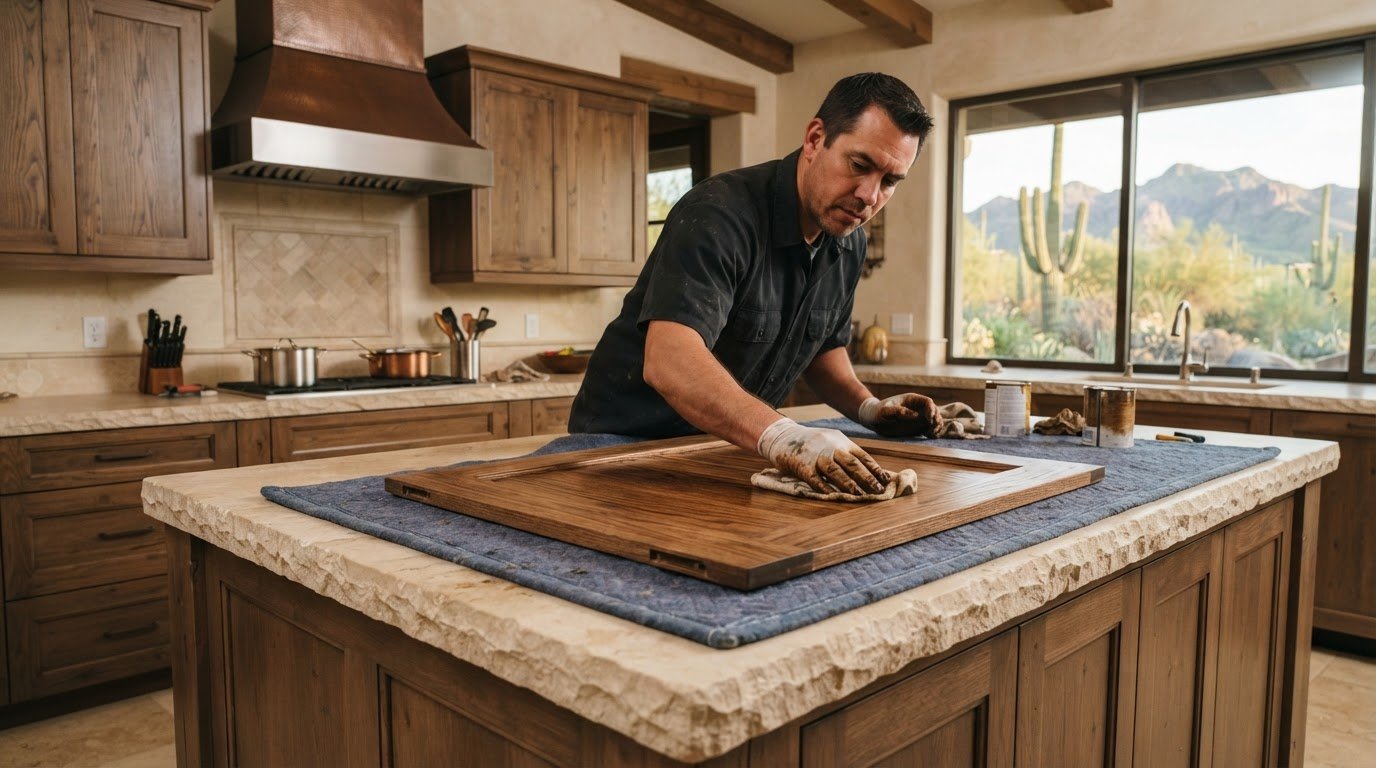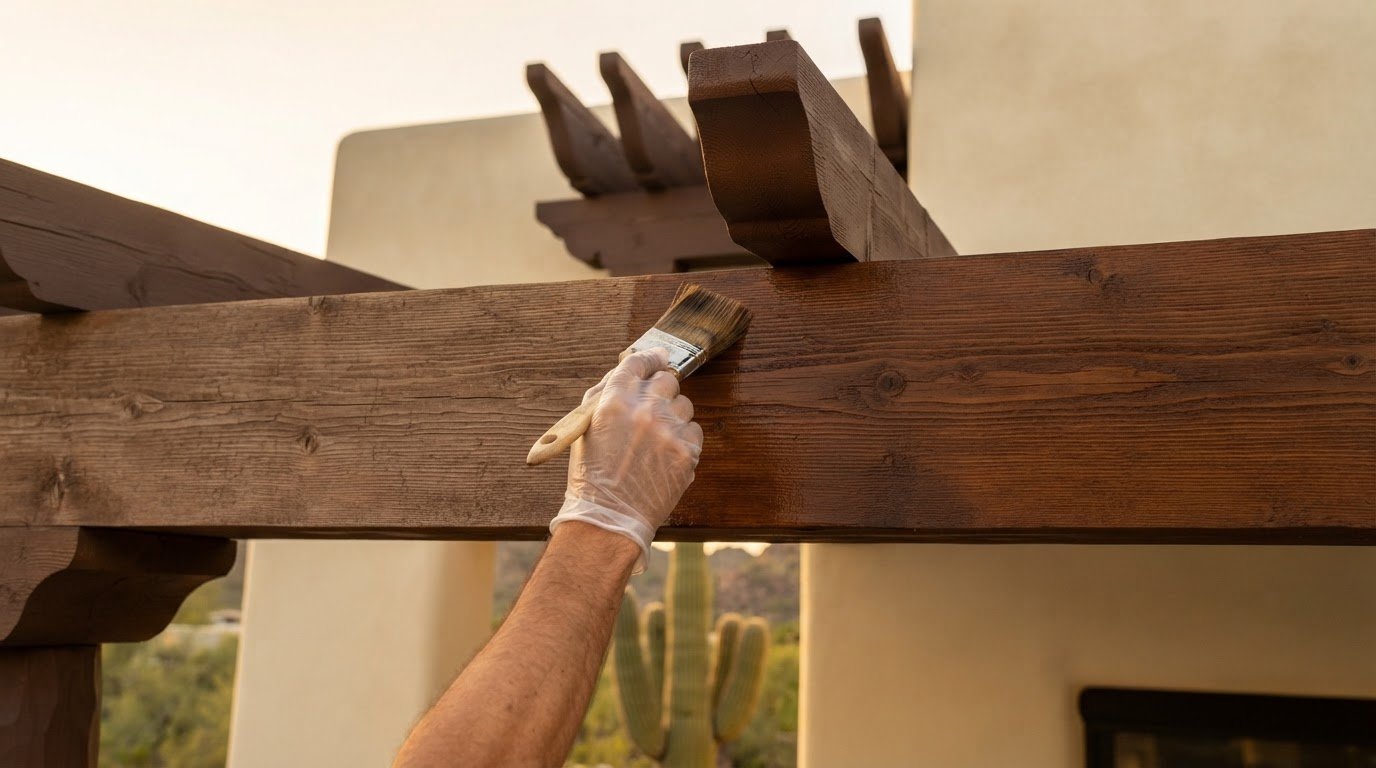

A lasting cabinet stain begins before the color goes on. Wood staining for cabinets in DC Ranch typically requires 2-4 days of preparation, while a full kitchen refinishing project may take 20-30 days depending on its size and complexity. The final cost depends on cabinet quantity and condition, preparation needs, and finish choice, with project pricing provided after a quote request.
It’s understandable to focus on the stain color, but careful surface preparation and a compatible primer are just as important to a refined, durable result. This guide explains how professionals assess cabinet surfaces, choose the right preparation and primer approach, and plan the work. You’ll also learn what shapes project cost and timing, so you can understand the decisions behind a finish that suits your kitchen.
Key Takeaways
- A surface assessment helps determine whether cabinets are suitable for staining and which existing finish or damage needs attention first.
- Primer selection depends on the cabinet material and surface condition; staining is suited to solid wood, not MDF or laminate.
- Project scope, repairs, and finish details all shape the schedule, so a clear work plan helps set realistic expectations.
- Painting and staining create different looks. Understanding the condition of the cabinets and the desired result can guide the right refinishing approach.
Cabinet preparation and surface assessment
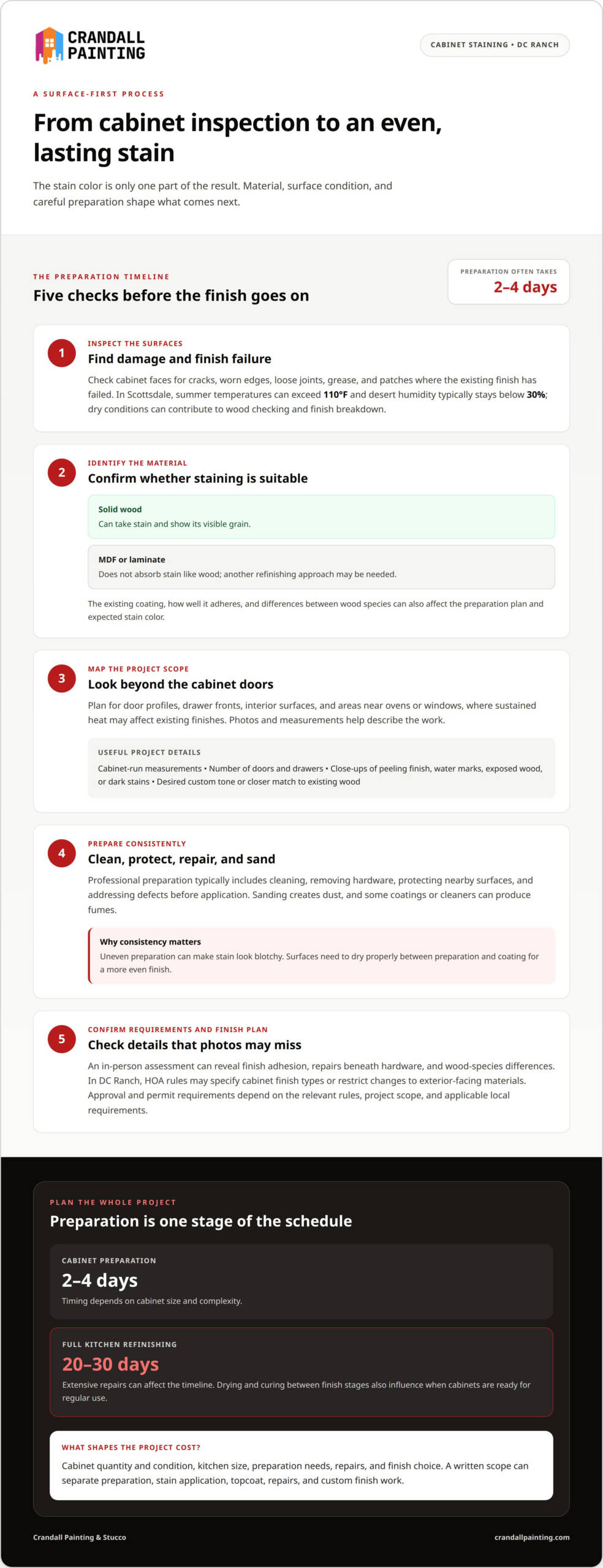
A consistent stain starts with a close inspection of every cabinet surface. In Scottsdale, summer temperatures can exceed 110°F, while desert humidity typically stays below 30%. These dry conditions can contribute to wood checking and finish breakdown. During assessment, professionals look for cracks, worn edges, loose joints, grease, and patches where an existing finish has failed.
Preparation starts with identifying the cabinet material and existing coating. Solid wood can take stain; MDF and laminate do not absorb it like wood. That distinction helps determine whether staining is suitable or another refinishing approach is needed. The work plan also considers door profiles, drawer fronts, interior surfaces, and areas near ovens or windows, where sustained heat may affect existing finishes.
For an estimate, provide clear photos of the cabinet runs, individual doors, drawer fronts, and visible damage. Include close-ups of peeling finish, water marks, exposed wood, or dark stains. Measurements of each cabinet run, along with the number of doors and drawers, help describe the project’s scope. Note whether you want a custom stain tone or a closer match to the existing wood.
Professional preparation typically includes cleaning, removing hardware, protecting nearby surfaces, and addressing defects before application. Sanding creates dust, and some coatings or cleaners can produce fumes. Uneven preparation can make stain look blotchy, so professionals work for a consistent surface and select stain-blocking materials where discoloration might show through. Allowing surfaces to dry properly between preparation and coating also supports an even finish.
Interior cabinet refinishing differs from exterior repainting. In DC Ranch, HOA rules may specify cabinet finish types or restrict changes to exterior-facing materials. Whether approval is needed depends on the relevant community rules and project scope. Permit requirements likewise depend on the work involved and applicable local requirements.
Photos help show a cabinet’s condition, but an in-person assessment can reveal details images miss. These may include how well the old finish adheres, repairs beneath hardware, and differences between wood species that can affect stain color. These checks shape the preparation plan and help determine whether staining can achieve the intended result.
Cabinet refinishing costs and project timelines
Cabinet costs depend on the wood’s condition, kitchen size, preparation, repairs, and finish. Crandall Painting & Stucco provides a free, no-obligation estimate, with price upon request. A project-specific estimate should reflect the actual scope rather than a generic figure. A written breakdown can separate preparation, stain application, topcoat, repairs, and any custom finish work.
Project size shapes the schedule. Cabinet preparation typically takes 2-4 days, depending on cabinet size and complexity. A full kitchen refinishing project may take 20-30 days, while extensive repairs can affect the timeline. These estimates cover the project as a whole, not simply the days spent applying stain. Drying and curing between finish stages also influence when cabinets are ready for regular use.
When reviewing an estimate for your DC Ranch home, look for a clear scope: cabinet count or measurements, included surfaces, preparation, materials, finish, repairs, and expected timing. Comparing the same work is more useful than comparing totals without context. Any project minimum should also be clearly stated alongside the work it covers.
A project minimum can reflect the setup and preparation involved, even for a kitchen with fewer cabinets. Smaller projects still require a surface assessment, protection for nearby interiors, and completion of each finish stage. Repairs, the chosen stain, and access to cabinet surfaces can also affect the total. Exterior painting involves different conditions, so its cost is not a direct comparison.
To request a free, no-obligation estimate, provide cabinet photos, approximate measurements, door and drawer counts, and a description of the finish you want. Include close-ups of damage or moisture marks, plus any areas needing special attention. These details help establish the scope before an in-person assessment refines it.
For a clear view of the work involved, the wood staining and refinishing services include the relevant finish category. Compare the written scope, preparation plan, materials, and schedule, rather than relying on a smooth-looking sample alone.
Kitchen cabinet painting and refinishing
Painting can refresh sound cabinets when the kitchen layout still suits the home. The right choice depends on the cabinet condition and whether you want visible wood grain or an opaque finish.
Painting Process and Quality Control
Professional cabinet painting starts with cleaning and preparing doors, drawer fronts, and cabinet boxes. The coating method affects the final appearance: spray-applied finishes can create a smooth, factory-like result, while brush-and-roll methods suit flat surfaces. Quality control includes checking coverage, edges, and consistency across each piece before hardware returns. In Arizona, application conditions also matter because coatings applied outside 50-90°F can develop lap marks, slow curing, or weak adhesion.
Staining Compared with Painting
Staining enhances the visible grain of solid wood, while painting covers it with a uniform color. Stain works on solid wood, not MDF or laminate, so the material determines whether staining is suitable. A painted finish may suit a DC Ranch kitchen seeking a particular color; a natural stain can preserve the character of suitable wood. Compare the look you want with the cabinet material before choosing.
Replacement may make more sense when doors are warped, cabinet boxes are damaged, or you want a different layout. If the boxes and door frames are structurally sound and the current layout works, painting can renew the kitchen without replacing those components. This consideration applies to homes in DC Ranch, Scottsdale Mountain, and Phoenix.
Most kitchen cabinet painting projects in Scottsdale take 4-7 working days from start to finish. Coating layers typically need 24 hours between applications in Scottsdale’s low-humidity conditions. Hardware is generally reinstalled 48-72 hours after the final topcoat, allowing additional time before normal use. Those stages explain why the work schedule extends beyond the painting itself.
Primer selection for wood, laminate, and existing finishes
Primer selection begins with the cabinet material and the planned finish. Stain is intended for suitable bare wood, while primer supports painted finishes and helps prepare surfaces for coating. In Scottsdale’s dry climate, typically below 30% humidity, professionals also consider surface condition and product application guidance when planning the work.
For previously painted or sealed cabinets, the existing coating affects adhesion and finish quality. Professionals assess whether it is sound, then prepare the surface and choose a compatible primer for the next coating. If discoloration or stains could show through paint, a stain-blocking primer can help create a more even base. The primer must suit both the surface and the intended topcoat.
Laminate requires a different approach from wood. It cannot take penetrating wood stain, so a painted finish calls for careful surface preparation and a primer suited to the material. Cabinet painting can then create a consistent color across doors, drawer fronts, and frames. This distinction matters in DC Ranch homes with mixed materials or replacement components.
Spray-applied finishes can create a smooth appearance across cabinet doors and frames, especially where brush marks might distract from a refined result. The application plan should account for edges, profiles, and recessed details, where uneven coverage can be more noticeable. Professionals also consider sheen and color in relation to surrounding surfaces.
For DC Ranch or Scottsdale kitchens, the preferred look may range from visible wood grain to an opaque painted color. Arizona’s dry conditions make proper preparation and compatible finish selection important; no single stain or topcoat suits every cabinet. The wood species, existing coating, and desired appearance all shape the recommendation.
Professional cabinet wood staining in DC Ranch, Scottsdale, includes assessing the wood, preparing it for stain, and applying a selected finish. To discuss a tailored finish plan with Crandall Painting & Stucco, request wood staining and refinishing.
Crandall Painting & Stucco: Wood Staining and Refinishing
Crandall Painting & Stucco provides wood staining and refinishing for homeowners who want to renew cabinet surfaces while retaining the character of suitable wood. This can be a good next step when a finish is worn, the color no longer suits the kitchen, or you want a professional assessment of staining versus painting. The process starts by evaluating the cabinet material and condition, then determining suitable preparation and finishing. Staining can bring out the grain of solid wood; other materials may call for a different refinishing method. The project scope and desired appearance guide the work, from preparation through finish application. To discuss cabinet refinishing in DC Ranch, request a free, no-obligation estimate from Crandall Painting & Stucco.
Shape a Finish That Feels Right for Your Home
Start by defining the look you want for your cabinets. Consider whether you want the wood grain to remain visible, how the finish should relate to surrounding colors, and whether every cabinet surface is suitable for the same treatment. With those preferences in mind, a professional assessment can turn a general idea into a clear project direction. Wood staining for cabinets in DC Ranch can refine the room while preserving the character of suitable wood.
Crandall Painting & Stucco offers wood staining and refinishing, interior painting, exterior painting, and stucco repair. If your plans extend beyond the cabinets, these services may also help with other finishes in your home. Each project is planned around its surfaces, condition, and desired appearance.
Ready to discuss the cabinet finish you have in mind? Contact Crandall Painting & Stucco today to talk through the next step. A clear vision and a thoughtful assessment can help you move forward with confidence.
Frequently Asked Questions
How much does professional cabinet staining cost in DC Ranch?
For wood staining for cabinets in DC Ranch, price is upon request after the project scope is understood. Crandall Painting & Stucco provides a free, no-obligation estimate. Cabinet quantity, wood condition, finish choice, and repair needs help shape the estimate. Share cabinet photos and approximate measurements to support an informed discussion; no general price range accounts for every kitchen’s materials and condition.
Can existing painted or stained cabinets be stripped and restained?
Restaining may be possible when cabinets are solid wood and the existing coating can be removed without compromising the surface. Stripping paint may reveal repairs, discoloration, or wood that takes stain unevenly. A professional can assess a discreet area and the overall condition before recommending restaining. MDF and laminate aren’t suitable for wood stain, so the material beneath the coating matters as much as its current appearance.
What are the steps involved in professional cabinet staining?
Professional staining follows a sequence designed to create even color and protect surrounding surfaces. Once the material is confirmed as suitable, the work generally proceeds through coating removal where needed, surface refinement, stain application, and protective finishing. A test application in an inconspicuous area can show how the wood responds before the finish is applied across visible cabinet faces. The final review checks color consistency, edges, and coverage.
How long does cabinet staining take, and how long must cabinets cure before use?
Cabinet staining may take several weeks from preparation through completion, depending on project size, repairs, and the finish schedule. Drying between coats is not the same as full curing. Before loading cabinets or cleaning the finish, allow the coating to cure according to its product instructions. Gentle handling during this period helps avoid marks as the surface develops its intended performance.
How do professionals prepare cabinets before staining, and do they need to remove the doors?
Professionals often remove doors and drawer fronts so they can finish each piece evenly and reach cabinet frames more easily. Hardware is kept organized, and nearby counters, floors, and appliances are protected. Removing doors does not replace the need to assess cabinet boxes, which also require appropriate preparation. After finishing, reinstallation requires attention to hinge placement and alignment so doors open and close properly.
How do cabinet staining, painting, and refacing compare in cost and durability?
Staining preserves visible wood grain, painting creates an opaque color, and refacing typically changes exterior components such as doors and drawer fronts. Costs depend on materials, labor, and scope, so a project-specific estimate is more useful than a general comparison. Durability depends on substrate condition, preparation, finish, and everyday use. Crandall Painting & Stucco provides free, no-obligation estimates, with price upon request.