
In the Sonoran Desert, the sun acts as a relentless sculptor, yet its touch is often more destructive than artistic. You’ve likely invested significantly in custom architectural elements, only to see them succumb to rapid silvering or deep structural cracking. Protecting wood from sun damage is not merely a maintenance task; it’s a strategic preservation effort required to defend your home’s most beautiful features.
We understand that maintaining high-value woodwork feels like a constant battle against the elements. This guide provides the professional strategies used by master craftsmen to shield your property from intense UV radiation while enhancing its natural character. You’ll discover how the right wood restoration techniques and premium finishes can prevent costly replacements and maintain your property value. We will outline the methodical approach to desert preservation, focusing on the shift toward durable, water-based finishes that provide the low-maintenance outcomes discerning homeowners expect.
Key Takeaways
- Understand how the extreme UV index of the Sonoran Desert accelerates the breakdown of standard retail sealants compared to milder climates.
- Learn the science of photo-oxidation and how UV rays destroy lignin, the vital “glue” that maintains the structural integrity of your architectural wood features.
- Discover the specific performance advantages of professional-grade water-borne alkyd resins when protecting wood from sun damage in high-heat environments.
- Master a proactive inspection routine and the simple “Water Bead Test” to accurately assess your sealant’s integrity before damage becomes irreversible.
- Explore why meticulous surface preparation, including professional sanding and pH balancing, is the essential foundation for superior stain adhesion and longevity.
The Arizona UV Reality: Why Desert Wood Faces Unique Risks
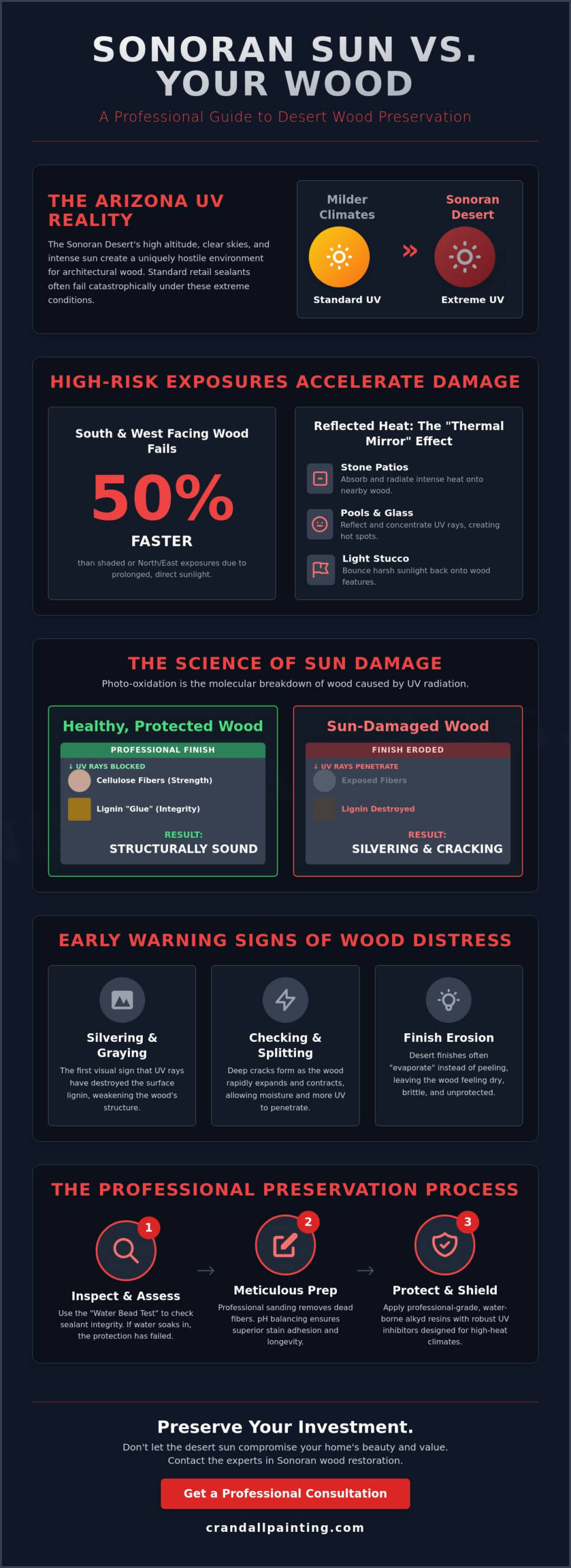
The Sonoran Desert offers a breathtaking backdrop for luxury estates, yet its climate is uniquely hostile to natural building materials. While coastal regions struggle with salt air, Arizona homes face a relentless barrage of UV radiation that remains nearly unparalleled in North America. Protecting wood from sun damage in this environment requires a departure from standard maintenance routines. High-altitude sunlight and clear skies allow UV rays to penetrate deep into wood fibers, initiating a chemical breakdown long before the first signs of wear become visible.
Standard retail sealants frequently fail when subjected to 110-degree summer days. These products often lack the robust UV inhibitors and high solids content necessary to withstand sustained thermal stress. When the mercury rises, the “Dry-Heat Cycle” takes hold. This phenomenon involves the rapid evaporation of internal moisture, followed by the contraction of wood fibers. Because Arizona’s humidity often drops into the single digits, this cycle is far more aggressive than in other climates. Local architecture in Scottsdale or Paradise Valley requires a more disciplined preservation strategy to combat this accelerated degradation.
The Role of Elevation and Exposure
Your property’s orientation plays a decisive role in its longevity. Wood features with South and West-facing exposures typically fail 50% faster than those in shaded areas. This is often exacerbated by reflected heat. Stone patios, glass pool enclosures, and light-colored stucco walls act as thermal mirrors, intensifying the UV load on nearby structures. Understanding these micro-climates is essential when selecting professional wood finishing techniques. A pergola situated over a heat-retaining travertine deck requires a far more resilient treatment than a sheltered entry door.
Common Signs of Desert Sun Damage
Recognizing early warning signs is the key to preventing total structural failure. Meticulous homeowners should look for these indicators of distress:
- Silvering and Graying: This is the visual manifestation of lignin degradation. Lignin is the organic “glue” that binds wood fibers; once it’s destroyed by UV light, the wood loses its structural integrity.
- Checking and Splitting: When the wood’s internal moisture fluctuates too rapidly, thermal expansion exceeds the material’s natural elasticity. This results in deep cracks, or “checks,” that allow further UV penetration.
- Finish Erosion: Unlike the peeling seen in humid climates, desert finishes often simply “evaporate” or erode, leaving the surface feeling dry and brittle to the touch.
Identifying these issues early allows for wood restoration rather than costly replacement. Protecting wood from sun damage is an ongoing commitment to excellence that preserves both the aesthetic and the equity of your estate.
The Science of Photo-Oxidation and Wood Decay
Protecting wood from sun damage requires understanding the molecular warfare occurring on your architectural features. The Science of Photo-Oxidation describes a process where high-energy photons dismantle the chemical bonds within the wood’s cell structure. This isn’t just a cosmetic fade. It’s a fundamental alteration of the material’s integrity. When sunlight strikes the surface, it triggers a chain reaction that breaks down complex organic polymers, leaving the wood brittle and structurally compromised.
Lignin acts as the essential binder that holds cellulose fibers together. Without it, wood loses its strength and resilience. Lignin degradation is the primary cause of wood silvering. This gray patina is actually a layer of dead, detached fibers that no longer contribute to the wood’s health. Simply washing this away won’t solve the problem. The oxidation often reaches several millimeters beneath the surface, which is why we recommend professional wood restoration to reach healthy, viable material before reapplying protection.
Once photo-oxidation creates these micro-fissures, the wood becomes a sponge for Arizona’s late-summer monsoon rains. Damaged fibers can’t repel water effectively. Moisture seeps into the cracks, causing rapid swelling and eventual rot when the heat returns. It’s a vicious cycle of expansion and contraction that destroys expensive exterior structures from the inside out.
Understanding UV Inhibitors and Translucent Pigments
Professional stains utilize translucent pigments that function like a high-SPF sunscreen for your home. These particles physically block or absorb UV rays before they reach the lignin. Chemical UV absorbers dissipate light energy as harmless heat, while physical blockers reflect it away. Clear coats lacking these specific inhibitors often act like a magnifying glass. They trap heat against the wood and accelerate the very decay they were meant to prevent. Protecting wood from sun damage effectively means choosing products with high-quality solids that remain stable under extreme thermal loads. Similarly, to provide this same level of defense for your home’s interior and glass-adjacent features, check out Coral Tint for professional window film solutions that effectively block harmful UV radiation.
Species-Specific Sun Resistance
Not all timber reacts to the Arizona sun in the same manner. Dense hardwoods like Teak and Ipe contain natural oils that provide a temporary buffer, though even they will eventually gray without intervention. Western Red Cedar is prized for its stability, yet its soft fibers are highly susceptible to erosion. In contrast, the Douglas Fir beams common in desert construction often suffer from deep checking. They lack the natural density to resist rapid moisture loss. Each species requires a bespoke preservation plan to ensure its beauty remains intact through the decades.
Selecting the Superior Shield: Professional-Grade Finishes
Choosing a finish is a high-stakes decision for any homeowner. It’s the difference between a structure that ages gracefully and one that requires constant, expensive repairs. Protecting wood from sun damage in the Southwest demands products that can withstand surface temperatures that often exceed 150 degrees. While some might suggest film-forming varnishes, these products are frequently unsuitable for exterior desert use. They lack the breathability required for our environment; they eventually trap moisture and heat, which leads to unsightly cracking and premature rot.
We prioritize advanced water-borne alkyd resins and high-solids penetrating oils for our clients. These materials don’t just sit on the surface; they migrate into the cellular structure of the timber. This creates a flexible, resilient barrier that moves with the wood as it responds to the extreme temperature swings of a typical Arizona day. For high-value architectural woodwork, this flexibility is non-negotiable. It ensures the finish won’t flake or peel when the wood naturally expands and contracts.
Solid Stains: The Ultimate UV Block
Solid stains offer the highest level of UV protection available for exterior wood. Because they contain a high concentration of opaque pigments, they act as a total block against solar radiation. This is an excellent choice for older wood that may have existing imperfections or for homeowners who desire a uniform, contemporary look. In the rugged environments of Scottsdale Mountain estates, solid finishes provide a robust defense that mimics the appearance of paint while still allowing the wood to breathe and release internal moisture. This balance is essential for long-term structural health.
Semi-Transparent Stains: Preserving the Grain
If you want to showcase the intricate patterns of Ipe, Teak, or Cedar, semi-transparent stains are the premier choice for wood staining and refinishing. The key to their performance lies in the use of Trans-Oxide pigments. These finely ground minerals provide exceptional clarity while offering significant UV defense. They allow the natural beauty of the grain to shine through without leaving the wood vulnerable to the bleaching effects of the sun. While these finishes require more frequent attention than solid stains, the aesthetic payoff is unmatched for luxury properties. Protecting wood from sun damage with these products typically requires a proactive maintenance cycle every 18 to 24 months to keep the surfaces in peak condition.
The Professional Wood Preservation Schedule
Protecting wood from sun damage is a proactive endeavor, not a reactive repair. In the Phoenix area, waiting for visible failure often means the damage has already migrated deep into the wood fibers. A disciplined inspection routine allows you to identify the early stages of finish erosion before the structural integrity of your architectural features is compromised. We recommend a comprehensive walk-through of your property every six months, specifically focusing on areas with high solar exposure.
The “Water Bead Test” remains one of the most effective ways to check your sealant’s integrity. Simply splash a small amount of water onto the wood surface. If the water beads and sits on top, your protection is still active. If it soaks in and darkens the wood, the protective barrier has failed. This simple diagnostic tool is essential for maintaining high-value elements. Before any new sealant is applied, meticulous cleaning is required. Removing desert dust, pollen, and environmental pollutants ensures that your chosen finish adheres perfectly to the grain rather than sitting on a layer of grime.
Timing is critical for the success of any refinishing project. We advise against scheduling major wood treatments during the peak heat of July and August. Extreme temperatures cause stains to dry too quickly, preventing them from penetrating the wood properly and leading to lap marks or premature peeling. The temperate windows of spring and autumn provide the ideal conditions for professional application.
Annual Maintenance vs. Full Restoration
Consistency is the hallmark of a well-maintained estate. A “Refresh Coat” applied every 12 to 18 months can indefinitely extend the life of your woodwork. This minor intervention is far more cost-effective than a full restoration. If you notice localized peeling, deep silvering, or significant checking, a full strip-and-refinish may be required. Delaying this process increases restoration costs exponentially as the labor required to sand back to healthy wood grows with every season of neglect.
Protecting Architectural Features
Unlike patio furniture, your home’s structural elements cannot be moved into a garage for protection. Custom front doors serve as the face of your home and require specialized care to prevent warping and fading. Pergolas and gazebos face unique challenges due to their horizontal surfaces, which receive direct, vertical UV rays for the majority of the day. Structural beams in desert modern designs are particularly vulnerable; they require deep-penetrating oils to maintain their load-bearing strength. For those seeking to preserve these significant investments, the team at Crandall Painting & Stucco provides expert wood restoration services tailored to the specific needs of Arizona architecture.
The Case for Professional Wood Restoration
Achieving a flawless finish on sun-scorched timber requires a scientific approach that few DIY attempts can replicate. While earlier sections highlighted the importance of routine checks, the reality of the Arizona climate often demands more rigorous intervention when those checks reveal failure. Professional wood restoration is the only way to reverse the damage caused by years of intense solar exposure. Our methodical process ensures that protecting wood from sun damage becomes a permanent part of your home’s defense system rather than a temporary cosmetic fix.
Preparation is the cornerstone of our craftsmanship. We utilize professional sanding techniques to remove oxidized, dead fibers and reach the healthy wood underneath. This step is vital because stains cannot bond to grayed, brittle surfaces. We also prioritize pH balancing. By neutralizing the wood’s surface after cleaning, we ensure maximum stain penetration and adhesion. This technical precision prevents the premature peeling and flaking that often plague standard applications. It’s a disciplined approach that guarantees the finish remains resilient against 120-degree heat and sudden monsoon moisture.
Investing in expert care provides a significant return on investment for luxury properties. Beyond the immediate aesthetic transformation, professional refinishing preserves the structural integrity of expensive architectural elements. This prevents the high replacement costs associated with custom-milled beams or hand-crafted entry doors. A well-maintained home with vibrant, healthy woodwork commands higher property value and offers an undeniable sense of curb appeal that resonates with discerning buyers.
Bespoke Solutions for Scottsdale Estates
Every home in the Sonoran Desert has a unique character, and our finishes reflect that individuality. We offer custom color matching designed to complement the sophisticated earthy palettes of local architecture. Our master craftsmen employ expert application techniques to prevent lap marks and ensure even coloring across large horizontal surfaces like pergolas. For a truly cohesive look, many clients choose to integrate their wood restoration projects with exterior painting. This holistic approach ensures that every element of your home’s facade is protected and visually unified.
Securing Your Investment
Discerning clients trust Crandall Painting & Stucco because we view every project as a significant investment in their lifestyle. We understand the nuances of high-end decorative finishes and provide a level of meticulousness that only a seasoned professional can offer. Our goal is to provide you with complete peace of mind, knowing that your property is being cared for by experts who take immense pride in their work. We invite you to experience the transformative power of quality workmanship. Schedule a professional wood assessment with Crandall Painting & Stucco today.
Preserving Your Architectural Legacy
Shielding your home from the Sonoran climate requires a strategic partnership between material science and artisan skill. We’ve explored the chemical breakdown of wood fibers and the specific finishes required to halt that decay. By moving beyond temporary retail fixes and adopting a professional preservation cycle, you ensure that your property’s most distinctive features remain as resilient as they are beautiful. Protecting wood from sun damage is ultimately an investment in the longevity and character of your estate.
With over 20 years of experience across Scottsdale and Paradise Valley, Crandall Painting & Stucco provides the specialized expertise required for high-end wood staining and restoration. Our family-owned commitment to meticulous craftsmanship ensures that every project meets the highest standards of the industry. You don’t have to settle for the inevitable graying and cracking that the desert sun imposes. Protect your home’s architectural beauty with expert wood restoration from Crandall Painting & Stucco. We’re ready to help you maintain a home that reflects your dedication to quality and excellence.
Frequently Asked Questions
How often should I stain my wood deck or pergola in Arizona?
You should plan to restain horizontal surfaces like decks every 12 to 18 months, while vertical structures like pergolas may last up to 24 months. The intense Arizona sun erodes finishes significantly faster than in milder climates. Regular maintenance prevents the wood from reaching a state of total failure. By staying on this disciplined schedule, you ensure that protecting wood from sun damage remains a manageable preservation task rather than a costly restoration project.
Can gray, sun-damaged wood be restored to its original color?
Gray, weathered wood can certainly be restored to its natural brilliance through meticulous professional intervention. The silver patina is merely a layer of dead lignin fibers that can be removed through precision sanding. Once we reach the healthy wood underneath, we apply pH-balancing treatments to prepare the grain for new stain. This process revitalizes the timber’s appearance and restores its structural resilience against the elements.
Is it better to paint or stain exterior wood in the desert?
Staining is generally superior for architectural wood because it allows the material to breathe and release internal moisture. While exterior painting provides a thick barrier, it can trap heat and eventually peel under the desert’s thermal stress. High-quality stains penetrate the grain, offering a flexible shield that moves with the wood. For those who prefer a more uniform look, solid stains provide the protection of paint with the breathability of a stain.
What is the best time of year to refinish wood in Scottsdale?
The most favorable times for wood refinishing in Scottsdale are the temperate windows of spring and autumn. You should avoid projects during the peak heat of July and August. Extreme temperatures cause finishes to dry too rapidly, which prevents proper penetration and results in unsightly lap marks. Scheduling your maintenance when temperatures are between 60 and 90 degrees ensures the most durable and aesthetically pleasing results.
Do wood covers really protect against UV damage?
Physical covers provide an excellent secondary defense, but they cannot replace the chemical protection of a high-quality finish. UV radiation is persistent and can reach wood through reflected light even under a shade structure. While covers reduce the total solar load, the wood still requires professional-grade UV inhibitors to prevent photo-oxidation. Integrating both physical shading and expert staining offers the most comprehensive defense for your outdoor living spaces.
Why is my wood stain peeling only a year after application?
Peeling usually indicates a failure in surface preparation or the use of an inappropriate film-forming product. If the wood wasn’t properly sanded to remove old finishes or mill glaze, the new stain cannot bond effectively. In the Arizona heat, wood expands and contracts significantly. Rigid varnishes or low-quality retail stains often lack the elasticity to withstand this movement, causing the finish to crack and flake away from the surface.
What is the difference between professional stains and big-box store products?
Professional-grade products contain a significantly higher concentration of solids and premium UV inhibitors compared to big-box alternatives. These specialized stains are formulated to penetrate deeper into the wood’s cellular structure, providing a more resilient barrier. Protecting wood from sun damage requires these high-performance ingredients to withstand the Sonoran Desert’s unique conditions. While retail products may seem convenient, they often lack the longevity and depth of color found in master-craftsman materials.
How does monsoon season affect sun-damaged wood?
Monsoon season turns UV-damaged wood into a vulnerable sponge for sudden, heavy moisture. The cracks and fissures created by sun exposure allow rainwater to seep deep into the wood fibers. This leads to rapid swelling, which further widens the cracks when the wood dries out again. This cycle of moisture intake and rapid evaporation is a primary driver of rot and structural decay in neglected desert woodwork.