
What if the sophisticated charcoal you selected for your Scottsdale estate actually increased your interior cooling costs while fading into a dull, chalky gray within just three summers? In the Sonoran Desert, the sun is a relentless architect that demands more than just an eye for aesthetics. Many homeowners realize too late that choosing exterior paint colors for Arizona homes is as much a matter of thermal engineering as it is of architectural style. You deserve a finish that remains as vibrant and protective as the day it was applied.
We understand that a luxury property is a significant investment in your lifestyle and your peace of mind. This 2026 guide provides the expert clarity you need to navigate the intersection of high-end design and environmental resilience. You’ll discover the sophisticated mushroom neutrals and earth-toned palettes currently dominating the luxury market. We also break down the critical technical standards, from Near-Infrared reflective technology to the Light Reflectance Value sweet spot that ensures your home stays cool. From mastering HOA restrictions to selecting pigments that defy UV degradation, this is your blueprint for a timeless desert exterior.
Key Takeaways
- Understand how Light Reflectance Value (LRV) protects your property from thermal expansion while reducing interior cooling demands.
- Master the process of choosing exterior paint colors for Arizona homes by exploring the 2026 trend toward grounded mushroom and warm taupe palettes.
- Learn to harmonize your color selection with professional wood staining and stucco textures for a polished, master-crafted finish.
- Navigate luxury HOA compliance and desert lighting challenges using proven testing methods that ensure your colors look perfect at any hour.
- Discover how a commitment to meticulous surface preparation and restoration serves as the vital foundation for long-lasting curb appeal.
The Science of Desert Color: Why LRV Matters for Arizona Exteriors
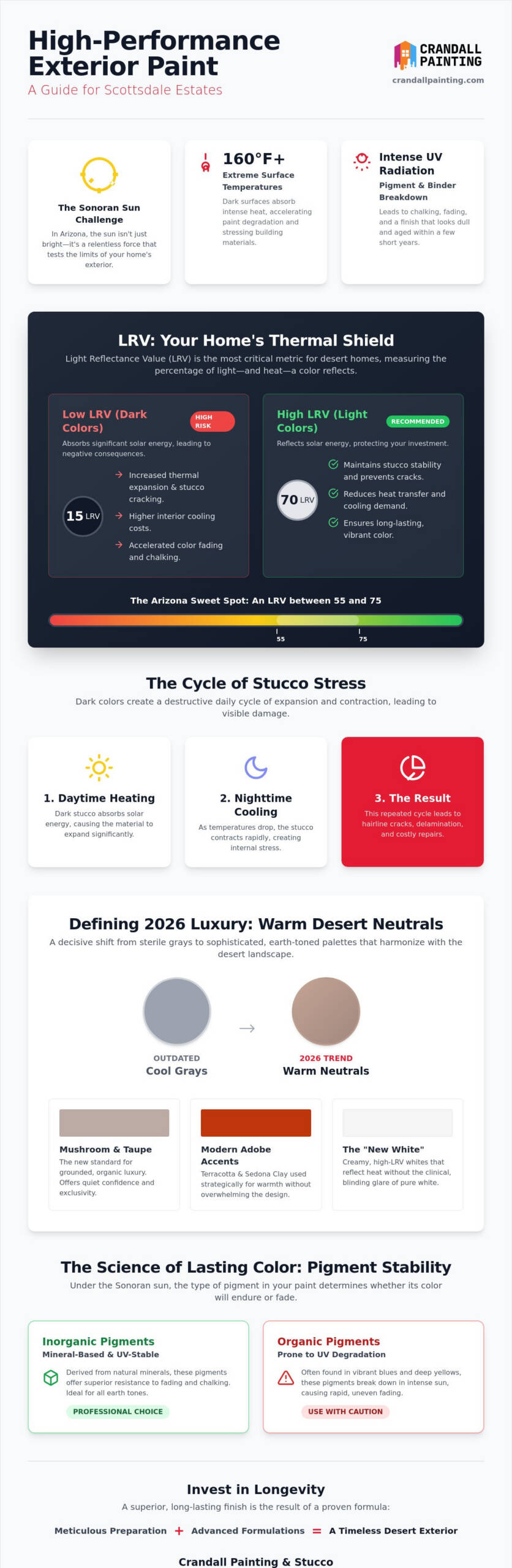
In the high-intensity light of the Sonoran Desert, color is more than a visual choice; it’s a thermal barrier. When you’re choosing exterior paint colors for Arizona homes, the most critical metric isn’t the shade itself, but its Light Reflectance Value (LRV). This scale measures the percentage of light a color reflects versus how much it absorbs as heat. In 2026, with UV indices reaching record peaks, selecting a high LRV is essential for maintaining the structural integrity of your estate.
High-grade resins act as the skeletal system for your paint. In a climate where surface temperatures can exceed 160 degrees, standard retail paints often degrade within seasons. We prioritize formulations with advanced binders that resist the intense UV radiation typical of our region. This technical approach mirrors “Cool Roof” principles, treating your vertical exterior surfaces as active heat shields rather than passive decorative elements. By utilizing these advanced materials, we provide a finish that remains flexible and vibrant despite the environmental pressure.
Understanding Thermal Expansion in Stucco
Stucco is a rigid material that reacts poorly to rapid temperature swings. Darker pigments trap solar energy, causing the underlying substrate to expand significantly during the day and contract sharply at night. This cycle of thermal stress is the primary cause of unsightly hairline cracks and delamination. Choosing a color with an LRV between 55 and 75 creates a more stable environment for your stucco, effectively extending the life of your home’s foundation. In Scottsdale, a higher LRV directly correlates to lower interior cooling costs by reflecting solar energy before it penetrates the building envelope. This deliberate selection process prevents the need for frequent stucco repair and ensures your estate retains its architectural precision.
Pigment Stability in the Sonoran Sun
Not all pigments are created equal under the desert sun. Organic pigments, often found in vibrant blues or deep yellows, tend to break down rapidly, leading to uneven fading and a loss of saturation. We recommend inorganic earth tones, which utilize mineral-based pigments for superior stability and “Chalking” resistance. Chalking occurs when the paint binder degrades, leaving a powdery white residue that dulls the original color. By selecting “High-Reflective” versions of luxury hues, you ensure your home maintains its curated aesthetic without the frequent need for restorative maintenance. This focus on pigment science is what separates a standard paint job from a true professional restoration.
Defining 2026 Luxury: The Shift Toward Warm Desert Neutrals
The aesthetic landscape of the Southwest is undergoing a profound transformation. We are seeing a decisive departure from the sterile “Cool Grays” that dominated the previous decade, moving instead toward a more grounded and organic philosophy. When you are choosing exterior paint colors for Arizona homes in 2026, the goal is to create a residence that feels like a natural extension of the desert floor. This shift favors “Mushroom” and “Taupe” tones, which offer a sophisticated middle ground between traditional beige and modern gray. These colors provide a sense of quiet confidence, grounding the property while maintaining an air of exclusivity.
A significant part of this revival includes a sophisticated reimagining of the Adobe aesthetic. Rather than the heavy, monolithic oranges of the past, modern luxury estates are utilizing Terracotta and Sedona Clay as strategic accents. These earthy reds and burnt umbers are often paired with the “New White.” These are creamy, high-LRV whites that reflect intense solar energy without looking clinical or blinding in the direct midday sun. By choosing high-reflectance neutrals, homeowners can proactively reduce urban heat island effect within their own neighborhoods. To provide a modern edge to these warm bodies, we often recommend high-contrast pairings, such as deep bronze or forged iron trim, to frame the home’s architectural lines with precision.
The Rise of “Mushroom” and Earth-Toned Palettes
Mushroom neutrals are becoming the standard for premier estates in communities like DC Ranch and Silverleaf. These shades are uniquely successful in Arizona because they remain balanced under the intense, yellow-tinted afternoon light that often makes traditional grays appear muddy or blue. These palettes coordinate beautifully with natural desert landscaping, allowing the subtle greens of agave and the deep browns of desert ironwood to take center stage. For those seeking a bespoke consultation on these evolving palettes, our comprehensive exterior services provide the artisanal guidance necessary to achieve a flawless result.
Sophisticated Accent Strategies
Luxury is often found in the details of the accent strategy. We are increasingly seeing nature-inspired greens, such as dark moss and muted teal, utilized for front doors and shutters to provide a refreshing point of interest. Contemporary desert finishes also benefit from “Earth-Tone” metallics, which add a layer of texture to gates and decorative hardware. When planning your palette, it is vital to integrate existing stone veneer colors into your primary selection. A master-crafted finish ensures that the paint, stone, and wood elements exist in a singular, harmonious narrative that elevates the entire property’s value.
Coordinating Color with Stucco and Wood Restoration
A flawless finish begins beneath the pigment. When you are choosing exterior paint colors for Arizona homes, the physical condition of your stucco and the presence of natural wood elements dictate the success of the final aesthetic. A master-crafted home relies on the seamless integration of these materials. If the stucco substrate is uneven or damaged, even the most sophisticated palette will appear fractured and unprofessional. We view the preparation of these surfaces not as a preliminary chore, but as an essential part of the artistic process.
Professional stucco repair serves as the foundation for color uniformity. Patching cracks is only the first step; the real artistry lies in matching the existing texture so that the paint absorbs evenly across the entire facade. Without this level of meticulousness, repaired areas can “flash” or show a different sheen than the surrounding wall, disrupting the monolithic beauty of your estate. By ensuring a perfectly consistent surface, we allow the chosen color to express its full depth and richness across every square foot of your home.
The Impact of Texture on Color Perception
Light behaves differently on various surfaces, and this is especially true in the harsh Arizona sun. A smooth Santa Barbara finish reflects light evenly, making colors appear truer and brighter. Conversely, heavy lace textures create deep shadows that can make a neutral tone look several shades darker than intended. Understanding this interplay is vital when mastering stucco repair in Phoenix. The repair must respect the original texture to ensure the new color remains consistent. Additionally, selecting specific earth tones can help disguise the inevitable accumulation of desert dust within these textured crevices, keeping your home looking pristine between cleanings.
Elevating Curb Appeal with Wood Staining
Contrast is the hallmark of luxury design. While your masonry provides the primary canvas, your gates, beams, and entry doors offer the opportunity for bespoke detail. Integrating deep, rich wood staining against a warm neutral body creates a sophisticated “Master Craftsman” look that feels both timeless and modern. This process requires more than a simple coat of finish. High-end wood restoration in Phoenix involves stripping back years of sun damage to reveal the natural grain, which is then preserved with UV-resistant stains. This commitment to renewal ensures that every element of your property’s exterior works in a singular, harmonious narrative that elevates your entire property value.
The Estate Selection Process: Light, Texture, and HOA Compliance
Choosing exterior paint colors for Arizona homes requires a disciplined methodology that transcends simple aesthetic preference. While digital visualizers offer a helpful preliminary glimpse, they cannot account for the atmospheric variables unique to the Southwest. We advocate for a rigorous “Three-Wall Rule.” This involves applying large-scale physical mockups to the north, south, and west facades of your property. By observing these samples at sunrise, high noon, and dusk, you can identify how the shifting solar angle interacts with your home’s specific architectural planes. This methodical approach ensures that the color you love at breakfast remains equally sophisticated during a sunset dinner on the patio.
Digital tools often fail to capture the true interaction between pigment and substrate. A screen cannot replicate how a heavy lace stucco texture creates micro-shadows that deepen a color’s appearance. Because we view every project as a significant investment in your property’s value, we prioritize physical testing on the actual surface of your home. This level of meticulousness prevents the disappointment of a finished project that looks vastly different from a small paper swatch or a computer-generated rendering. It is the only way to guarantee a result that meets our standards of excellence.
Testing Color in the Arizona Light
The high-altitude sun in Carefree possesses a different spectral quality than the light in central Phoenix. At higher elevations, the thinner atmosphere allows for greater UV intensity, which can wash out subtle tones or amplify hidden undertones. A neutral that appears as a sophisticated beige on a showroom swatch often shifts toward an undesirable pink or peach under the warm glow of a 4:00 PM desert sunset. By utilizing large-scale physical mockups, we help you identify these shifts before the first gallon is opened. This process is essential for maintaining the quiet confidence and exclusivity expected of a luxury estate.
HOA Navigation and Approval
Navigating the architectural review process is a critical step for estates within premier communities like Desert Mountain or Paradise Valley. With over 10,100 HOAs in Arizona governing approximately 892,800 homes, the regulation of color is both widespread and precise. While many luxury developments offer pre-approved palettes, achieving a sense of individuality requires a nuanced understanding of these guidelines. We assist our clients by preparing professional submittals for architectural review committees, ensuring that your vision aligns with community standards while still reflecting your personal style. For a deeper look at regional requirements, our Exterior Painting Scottsdale: The 2026 Guide offers specific insights into local luxury standards.
If you are ready to transform your property with a palette that balances community harmony and personal distinction, schedule a professional color consultation with our master craftsmen today.
Investing in Longevity: The Crandall Painting Restoration Philosophy
A sophisticated palette is only as resilient as the surface beneath it. While choosing exterior paint colors for Arizona homes is a vital step in defining your estate’s character, the true value of a luxury finish lies in the restoration of the substrate. We believe that a master-crafted home deserves a foundation that can withstand the rigors of our environment. In a climate where 115-degree summers are the standard, the bond between the paint and the stucco must be absolute. Our philosophy prioritizes a “preparation-first” approach, ensuring that your investment in high-end aesthetics is protected by superior technical execution.
The long-term ROI of a professional restoration is found in the choice of premium pigments and artisanal application methods. Low-grade paints often become brittle under intense UV exposure, leading to premature peeling and loss of color depth. By utilizing advanced resins and inorganic pigments, we create a finish that remains flexible and vibrant for years. This meticulous attention to detail ensures that your home remains a distinguished landmark in your community, reflecting both your personal style and a commitment to maintaining a high-value asset.
Precision Preparation and Surface Restoration
The integrity of your home’s exterior depends on the invisible work performed before the first drop of color is applied. We begin by identifying and repairing hairline cracks that are often the result of the thermal stress discussed earlier in this guide. A critical yet frequently overlooked step is professional power washing followed by pH balancing of the stucco. New or repaired stucco is naturally alkaline; if not properly neutralized, it can cause the paint to burn or fail prematurely. Our comprehensive restoration services include these vital steps to ensure a pristine surface that is ready for a bespoke finish.
The Artisanal Finish
Luxury is defined by the details that cannot be replicated by standard contractors. Our master craftsmen specialize in decorative painting and custom faux finishing to highlight unique architectural features, such as cast stone surrounds or intricate corbels. This white-glove service is why we are the preferred choice for Scottsdale’s premier estates. We view every project as a partnership in transformation, acting as your guide through the technical and aesthetic complexities of desert home maintenance. If you are ready to elevate your property with a finish that balances artisanal beauty and environmental protection, schedule your professional color consultation today.
Secure the Future of Your Desert Estate
Your home is a significant investment that deserves a finish as enduring as the desert itself. We’ve explored how the science of Light Reflectance Value and the shift toward warm, organic neutrals define the 2026 luxury standard. Mastering the process of choosing exterior paint colors for Arizona homes requires more than an eye for style; it demands a deep understanding of thermal engineering and material restoration. By harmonizing sophisticated palettes with meticulous surface preparation, you ensure your property remains a timeless sanctuary against the intense Sonoran sun.
At Crandall Painting, we bring a Master Craftsman approach to every project, specializing in high-end Scottsdale and Paradise Valley restorations. As a family-owned and operated business since 2004, we understand the specific nuances of stucco and wood restoration required to protect your estate’s value. We invite you to Elevate Your Estate with a Professional Color Consultation. Let us help you navigate the complexities of HOA compliance and environmental resilience with quiet confidence and professional mastery. Your vision of a perfectly restored home is within reach.
Frequently Asked Questions
How often should I repaint my home in the Arizona desert?
Homeowners in the Phoenix metro area typically need to repaint their exteriors every five to seven years. This frequency is significantly higher than the 10 to 12 year cycle seen in cooler climates due to the relentless UV exposure. Regular maintenance prevents the paint film from becoming brittle and failing, which ultimately protects the underlying stucco from moisture and heat damage.
What is the best LRV for an Arizona home to keep it cool?
The ideal Light Reflectance Value (LRV) for a desert estate falls between 55 and 75. This range provides a sophisticated aesthetic while reflecting a substantial portion of solar energy away from the structure. Staying within this “sweet spot” helps manage interior cooling costs and reduces the thermal expansion that leads to stucco cracking, ensuring your home remains both comfortable and structurally sound.
Do I need special paint for stucco surfaces in Scottsdale?
Yes, high-performance acrylic paints with specific UV inhibitors and high resin content are essential for Scottsdale properties. Standard paints often lack the flexibility required to handle the extreme temperature swings of the Sonoran Desert. We recommend premium formulations designed for masonry, as they provide superior adhesion and color retention while allowing the stucco to breathe, preventing moisture entrapment and delamination.
Can I choose a dark color for my home exterior in Phoenix?
You can certainly utilize darker tones, provided you use paints equipped with Near-Infrared (NIR) reflective technology. These “cool pigments” reflect heat even in deep shades, mitigating the risk of excessive heat absorption. However, keep in mind that many local HOAs require an NIR-reflective finish for any color with an LRV below 35 to protect the community’s overall energy efficiency and structural longevity.
How do I get HOA approval for a new exterior paint color?
The process begins with a thorough review of your community’s specific CC&Rs and architectural guidelines. With over 10,100 HOAs in Arizona, the rules can vary significantly between developments. Most luxury communities require a formal submittal packet that includes physical color swatches. We often assist our clients by preparing these professional submittals to ensure the colors harmonize with the community’s aesthetic standards while fulfilling all technical requirements.
What are the most popular exterior paint colors for 2026 in Arizona?
The dominant trend for 2026 involves a move toward grounded, warm neutrals such as “Mushroom” and sophisticated taupes like Dunn-Edwards Tundra. Creamy, high-LRV whites are also favored for their ability to look elegant without appearing sterile in the harsh sun. For accents, many homeowners are choosing exterior paint colors for Arizona homes that draw inspiration from the landscape, including muted terracotta, Sedona clay, and deep moss greens.
Will a new exterior paint color really lower my energy bills?
Yes, a strategic color choice can have a measurable impact on your home’s thermal performance. By selecting a lighter color with a higher LRV, you reflect more solar radiation, which keeps the exterior walls cooler. This reduction in surface temperature means your air conditioning system doesn’t have to work as hard to maintain a comfortable interior environment, leading to lower monthly energy expenditures during the peak summer months. Professional contractors like Brush Hour LLC can help you select and apply high-LRV palettes that maximize these energy-saving benefits for both residential and commercial properties.
How does wood restoration affect my home’s overall exterior aesthetic?
Professional wood restoration adds a layer of depth and craftsmanship that paint alone cannot achieve. By stripping away sun damage and applying UV-resistant stains to gates, beams, and entry doors, you create a rich contrast against your home’s masonry. This attention to natural materials elevates the entire property’s aesthetic, providing a bespoke, high-end finish that signals meticulous care and enhances overall curb appeal.