
In the relentless intensity of the Sonoran Desert, your home’s exterior paint serves as a sacrificial UV shield rather than a simple cosmetic layer. You likely understand the frustration of watching a vibrant Scottsdale estate lose its luster to fading and peeling within just three or four short years. It’s an exhausting cycle, especially when balancing the pressure of HOA aesthetic standards with the reality of rising cooling costs. Finding the best exterior paint for arizona sun is about more than just choosing a beautiful hue; it’s a critical investment in the structural integrity and thermal efficiency of your most valuable asset.
We promise to show you exactly how to break the cycle of frequent repainting by utilizing high-performance formulations and professional strategies designed for extreme environments. You’ll discover why certain resins withstand 180-degree surface temperatures while others crumble. This 2026 guide previews the essential technology behind 100% acrylic latex and elastomeric coatings. We also examine how specific color choices can reflect up to 80% of solar radiation, keeping your walls cooler and your interior more comfortable during the peak of summer.
Key Takeaways
- Learn how extreme UV radiation degrades standard paint binders and why your coating must be flexible enough to handle intense thermal expansion.
- Discover the technical specifications, such as high volume solids and 100% acrylic resins, that define the best exterior paint for arizona sun.
- Compare top-tier products like Dunn-Edwards EverShield and Sherwin-Williams Duration to see which formulations offer the most reliable protection for your property.
- Master the science of Light Reflectance Value to choose elegant desert tones that lower surface temperatures and comply with strict HOA guidelines.
- Understand the critical role of professional stucco repair and surface preparation in ensuring your new coating remains beautiful and functional for the long term.
The Science of the Sonoran Sun: Why Standard Paints Fail
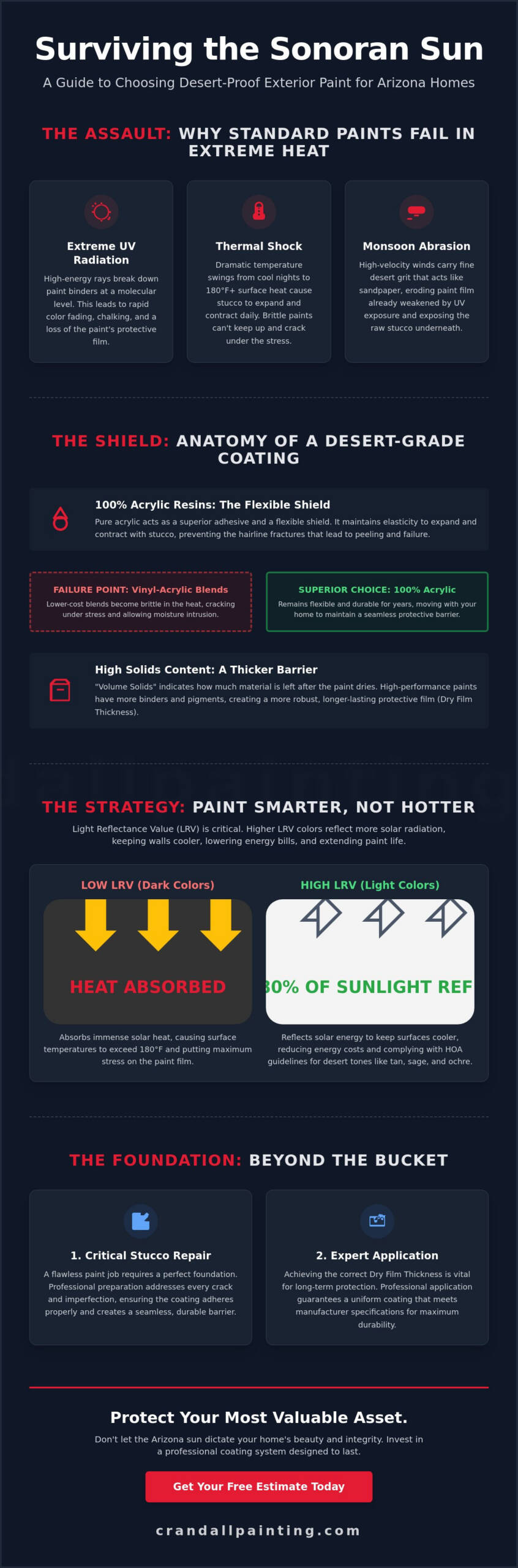
The Sonoran Desert demands a level of performance that standard coatings simply cannot provide. In the Phoenix metro area, homeowners often witness their properties’ finishes fade and peel with alarming speed. This isn’t a failure of the application in most cases; it’s a failure of the material’s molecular structure. Standard paints designed for milder climates treat UV rays as a secondary concern, but here, radiation acts as a molecular sledgehammer that relentlessly strikes your home’s exterior.
When evaluating the best exterior paint for arizona sun, one must consider how the coating interacts with extreme surface heat. High-quality formulations often incorporate insulating paint technology to reflect solar energy before it can penetrate the substrate. Without these specialized additives, surface temperatures on south-facing walls can easily exceed 120 degrees Fahrenheit. Over time, this heat cooks the paint from the inside out, leading to premature chalking and a loss of protective integrity. Our approach to professional exterior painting focuses on addressing these specific regional challenges through superior material selection and meticulous application.
Monsoon season introduces another layer of wear that many homeowners overlook. High-velocity winds carry fine desert grit that acts like sandpaper against your home’s finish. If the paint binder is already weakened by UV exposure, this grit easily erodes the remaining film. This erosion exposes the raw stucco to the elements, leading to moisture intrusion during heavy rains. A successful desert coating must be tough enough to resist this physical abrasion while remaining flexible enough to handle the environment’s thermal demands.
UV Degradation and Pigment Breakdown
High-energy UV rays possess enough power to sever the chemical bonds within low-quality resins. When these bonds break, the paint film loses its ability to hold pigments in place. You’ll notice this first with organic pigments, such as vibrant reds or yellows, which lack the molecular stability of inorganic earth tones like tan, sage, or ochre. As the binder degrades, it leaves behind a powdery residue known as chalking. This residue is a clear signal that your home’s primary line of defense has effectively died, leaving the surface vulnerable to further damage.
Thermal Shock and Surface Elasticity
The desert experiences a dramatic temperature delta between the cool nights and scorching summer afternoons. Your home’s stucco expands as it heats up and contracts as it cools; this movement happens daily. Brittle, standard paint films cannot keep up with this constant shifting. They eventually crack under the stress, creating microscopic openings for dust and moisture. The best exterior paint for arizona sun must remain flexible to accommodate this movement while maintaining breathability. This allows trapped moisture to escape the stucco without causing the coating to bubble or delaminate from the wall.
Performance Characteristics of Desert-Grade Paint
Identifying the best exterior paint for arizona sun requires looking past the marketing labels and deep into the chemical composition of the product. While many retail-grade paints use a blend of acrylic and vinyl resins to reduce costs, true desert-grade coatings rely exclusively on 100% acrylic binders. This distinction is vital for maintaining the aesthetic and structural integrity of a high-value estate in the Southwest.
The 100% Acrylic Advantage
Pure acrylic resins act as both a superior adhesive and a flexible shield. Unlike vinyl-acrylic blends that become brittle when exposed to intense heat, 100% acrylic maintains its elasticity over several years. This flexibility allows the paint film to expand and contract alongside your home’s stucco without developing the hairline fractures that eventually lead to peeling. These resins also offer exceptional adhesion to masonry surfaces, ensuring that the coating remains bonded even under the immense stress of 120-degree surface temperatures.
High-Solids Content and Film Build
A paint’s “Volume Solids” measurement tells you exactly how much material remains on your wall once the water evaporates. High-performance paints typically feature a higher ratio of pigments and binders relative to solvents, resulting in a more robust protective barrier. Professional-grade applications aim for a dry film thickness (DFT) of 3 to 4 mils per coat. Achieving this thickness ensures that the UV radiation has more material to wear through before reaching the substrate. This robust build is a hallmark of the best exterior paint for arizona sun, providing a sacrificial layer that stands up to the elements.
Beyond the resin, high-end formulations include specialized UV inhibitors and Hindered Amine Light Stabilizers (HALS). These components act like a high-SPF sunscreen for your home, neutralizing the energy from UV rays before they can bleach the color out of your pigments. Additionally, the inclusion of modern mildewcides and algaecides is essential for surviving the humid microclimates created during the monsoon season. Selecting the right materials is only half the battle; the application requires a disciplined hand to ensure these technical benefits are fully realized. If you’re ready to invest in a coating that offers genuine longevity, exploring our specialized exterior painting services is an excellent next step toward protecting your property.
Top Exterior Paint Recommendations for Arizona Homes
Selecting the best exterior paint for arizona sun is a decision that balances chemical resilience with aesthetic longevity. While many premium brands claim durability, only a select few formulations are engineered to withstand the specific oxidative stress of the Sonoran Desert. For a high-value Scottsdale or Phoenix estate, the choice often narrows down to three industry leaders that have proven their worth over decades of local exposure.
Dunn-Edwards EverShield: The Local Standard
Dunn-Edwards occupies a unique position in the market because their primary manufacturing facility is located right here in Phoenix. This local presence allows their chemists to test formulations in the actual environment where they will be used. EverShield is often considered the gold standard for Arizona stucco because it’s engineered with a 100% acrylic binder that specifically targets the high-alkalinity issues common in desert masonry.
For eco-conscious homeowners, EverShield offers an ultra-low VOC profile without sacrificing the “block resistance” required to prevent windows and doors from sticking in the heat. It has a twenty-year track record of maintaining its protective film on heavily textured surfaces, making it a reliable choice for those who value a “set-and-forget” approach to maintenance. We often recommend this line for its superior hide and its ability to bridge the microscopic voids found in traditional desert stucco.
Sherwin-Williams Duration and Latitude
Sherwin-Williams provides two distinct high-performance options that cater to different project timelines. Duration is celebrated for its “Permalast” technology, which utilizes advanced acrylic co-polymers to create a significantly thicker film than standard paints. This high-solids content allows for exceptional one-coat coverage on repaints, providing a robust shield against UV-driven chalking.
Latitude, on the other hand, is the preferred choice for projects that must proceed during the more challenging months. Its “ClimateFlex” technology allows for successful application in temperatures reaching up to 120 degrees Fahrenheit. This is a critical advantage in Arizona, where standard paints might dry too quickly and fail to level properly. Latitude ensures the coating develops a uniform, durable finish even when the desert summer is at its peak.
Benjamin Moore Aura: Premium Color Retention
When the architectural design of a home demands deep, rich colors, Benjamin Moore Aura is frequently the top recommendation. Its proprietary “Color Lock” technology embeds the pigment particles into the resin, preventing them from being washed away or bleached by intense radiation. This waterborne formula provides an incredibly thick, luxurious finish that resists fading far better than traditional tinting systems.
Many of these top-tier coatings now integrate “cool wall” technology, which uses infrared-reflective pigments to keep surface temperatures lower. This reflects the same principles found in high-end exterior painting and restoration, where the goal is to protect the underlying structure from thermal degradation. By choosing one of these verified formulations, you ensure your property remains a testament to quality craftsmanship for years to come.
Strategic Color Selection for Heat and HOA Compliance
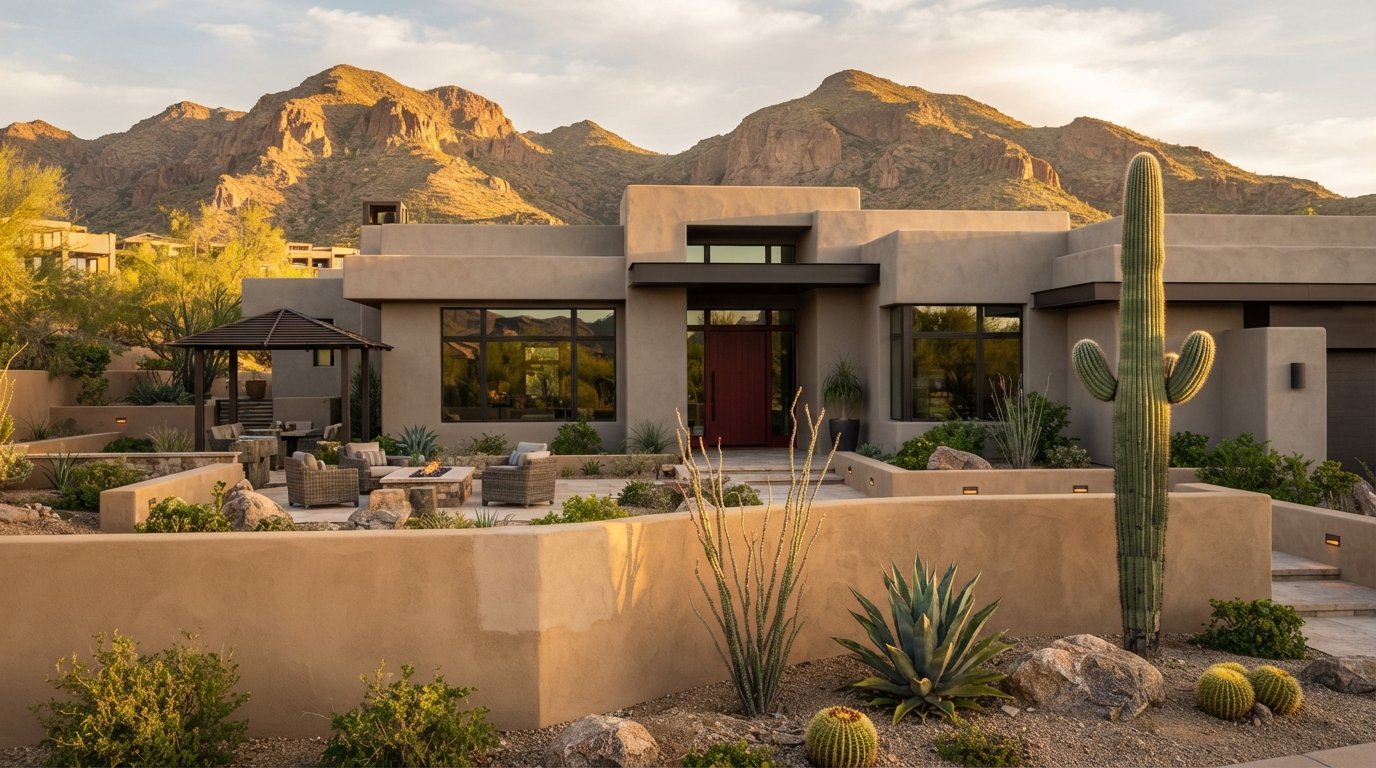
Choosing the right palette for a Scottsdale estate involves more than just aesthetic preference; it’s a strategic decision that impacts the longevity of your home’s structure. In the intense Sonoran climate, your color choice dictates how much solar energy your walls absorb. While the chemistry of the best exterior paint for arizona sun provides the necessary UV shield, the pigment itself determines the thermal load your stucco must endure. Lighter desert tones like tan, sage, and cream are not just regional traditions; they are functional choices that significantly outlast darker alternatives.
Light Reflectance Value (LRV) Explained
Light Reflectance Value (LRV) measures the percentage of light a color reflects versus how much it absorbs. For south-facing desert walls, we recommend selecting colors with an LRV above 50. High-LRV paints can reduce the surface temperature of your stucco by up to 30 degrees compared to darker shades. This dramatic reduction in heat absorption translates directly to less stress on your HVAC system. By keeping the substrate cooler, you also prevent the intense thermal expansion that leads to the cracking and delamination discussed in previous sections.
HOA-Approved Desert Palettes
Navigating the strict guidelines of Homeowners Associations in Paradise Valley or Scottsdale requires a nuanced approach. The current trend toward “Desert Modern” palettes favors sophisticated greiges and muted earth tones that harmonize with natural stone and local landscaping. These colors are popular because they satisfy HOA requirements while maintaining high LRV ratings. While associations often restrict the main body of the home to these neutrals, you can still achieve a bespoke look through carefully selected accents.
We often suggest using darker “pop” colors on trim, shutters, or front doors. This allows for architectural interest without exposing the vast surface area of your main walls to the accelerated fading associated with dark pigments. Your color choice also contributes to the local neighborhood environment by mitigating the “Heat Island” effect. Reflective tones help keep your immediate surroundings cooler, preventing your home from radiating heat back into the yard long after the sun goes down. Achieving this balance between personal style, HOA compliance, and thermal efficiency requires a master craftsman’s eye. If you are ready to transform your property with a curated color strategy, you can consult our exterior painting experts to ensure your investment is both beautiful and enduring.
Beyond the Bucket: Professional Application and Stucco Care
Even if you procure the best exterior paint for arizona sun, the investment remains vulnerable without a disciplined approach to application. The desert’s extreme conditions expose every shortcut taken during the preparation phase. Meticulous surface care is the invisible foundation that allows high-performance resins to bond effectively. A truly professional finish requires a multi-stage process that addresses the structural health of the substrate before the first coat of color is ever applied. This level of care ensures that the protective film remains intact through the most punishing summer cycles.
The Prerequisite of Stucco Restoration
Stucco is a porous, living material that reacts to the desert’s intense thermal shifts. Before painting, we must address hairline cracks and “spalling,” which is where the surface begins to flake or crumble. Ignoring these flaws allows moisture to seep behind the new paint film, leading to bubbling and delamination during the monsoon season. Patching these areas with the correct texture is essential for a seamless luxury finish that maintains the architectural integrity of your home. You can learn more about our specialized approach by reading our guide on Mastering Stucco Repair in Phoenix.
Protecting Wood and Decorative Elements
While stucco dominates the desert landscape, high-end estates often feature prominent wood beams, doors, and decorative elements. These surfaces face unique challenges, as wood expands and contracts at significantly different rates than masonry. Restoring these features requires a distinct UV-protection strategy, often involving high-solids stains that penetrate deep into the grain to prevent drying and cracking. For a comprehensive look at preserving these architectural details, explore our insights on Restoring Natural Beauty in Phoenix.
The method of delivery is just as critical as the material itself. We utilize airless spraying to achieve a uniform, consistent film build across large surface areas. However, on heavily textured desert stucco, spraying alone is often insufficient. We employ back-rolling, which is the manual process of rolling over the wet paint, to force the coating into the deep pits and crevices of the texture. This ensures total saturation and a mechanical bond that resists the abrasive desert winds. Maintaining this investment requires periodic inspections and gentle cleaning to remove the fine grit that can erode even the best exterior paint for arizona sun.
The Crandall Painting & Stucco Standard of Craftsmanship
Our “Master Craftsman” philosophy dictates that every project is a significant investment in your property’s value. This commitment involves rigorous multi-stage preparation, precision touch-ups, and clean lines that define a high-end restoration. At Crandall Painting & Stucco, we view ourselves as partners in the long-term protection of your home, providing the expertise required to navigate the Sonoran environment. If you are ready to elevate your home’s protection, we invite you to schedule a professional consultation for your exterior restoration.
Securing Your Estate’s Future in the Sonoran Desert
Protecting a high-value property in Phoenix requires a shift in perspective. You now understand that exterior paint is a functional shield against molecular degradation and thermal stress. By prioritizing 100% acrylic resins and high-solids formulations, you ensure your home’s finish remains flexible enough to handle intense temperature shifts without cracking. Integrating strategic, high-LRV color choices further reduces the cooling load on your HVAC system, providing both aesthetic beauty and long-term value.
Selecting the best exterior paint for arizona sun is only the beginning of a successful restoration. True longevity stems from the meticulous stucco repair and disciplined application methods that define a master craftsman’s work. Since 2004, we’ve specialized in the delicate art of high-end stucco and wood restoration across Scottsdale and the greater Phoenix area. Our team brings a seasoned authority to every project, ensuring your home remains a distinguished landmark in your community.
Elevate your home with a professional exterior consultation from Crandall Painting. We look forward to helping you preserve the beauty and structural integrity of your desert estate for years to come.
Frequently Asked Questions
How long does exterior paint typically last in the Arizona sun?
Exterior paint in the Arizona sun typically lasts between 5 and 7 years before showing significant signs of wear. This lifespan is considerably shorter than in cooler climates where coatings might last a decade. The high UV index and extreme surface temperatures cause binders to fail more rapidly. Using the best exterior paint for arizona sun can help push your project toward the upper end of that range by providing superior resistance to chalking.
Is there a specific time of year that is best for exterior painting in Phoenix?
The optimal window for exterior painting in Phoenix is between October and April. During these months, the moderate temperatures ensure the paint dries at a controlled rate, allowing it to level and bond properly. Applying paint during the peak summer months is generally discouraged because the extreme heat can cause the coating to dry too quickly. This often leads to poor adhesion and may even void manufacturer warranties on premium products.
Does a higher price tag always mean better paint for desert conditions?
A higher price point often reflects a greater concentration of high-quality resins and UV inhibitors. In the desert, these “volume solids” are essential for building a thick, protective film that can withstand intense radiation. While some expensive paints offer specialty features you might not need, investing in a premium 100% acrylic formulation is usually necessary to achieve the durability and color retention required for a high-value Scottsdale estate.
Can I use interior paint on my exterior if it is a high-quality brand?
You should never use interior paint for exterior surfaces because it lacks the necessary weatherproofing agents. Interior formulations are designed to be scrubbable and resist stains, but they don’t contain the UV stabilizers or algaecides required to survive the Sonoran environment. Without these specific additives, interior paint will crack and fade within months when exposed to direct sunlight, low humidity, and the moisture from the monsoon season.
Why is my paint peeling specifically on the south and west sides of my house?
The south and west elevations receive the most direct and intense sunlight throughout the day. These walls endure the highest surface temperatures, which can reach up to 180 degrees Fahrenheit in mid-summer. This relentless thermal stress causes the paint to expand and contract more aggressively than on shaded walls. Eventually, the binder becomes brittle and loses its grip on the stucco, leading to the localized peeling and flaking you see.
How do I know if my stucco needs repair before I start painting?
You can identify the need for repair by looking for hairline cracks, hollow sounds, or visible “spalling” where the finish is crumbling. If you notice localized bulging or brown stains, moisture may be trapped behind the surface. Addressing these issues is vital for a flawless finish. Fresh paint can’t bridge significant structural gaps, and applying it over damaged stucco will only mask problems that will eventually cause the new coating to fail.
What is the best paint color to keep my Arizona home cool?
Selecting a color with a Light Reflectance Value (LRV) of 50 or higher is the most effective way to keep your home cool. Light neutrals, such as warm creams, soft tans, and muted sages, can reflect between 60% and 80% of solar radiation. This keeps your wall surfaces significantly cooler than dark tones. By choosing the best exterior paint for arizona sun in a high-LRV shade, you can successfully reduce cooling costs.
Do I need a special primer for painting over old stucco in Scottsdale?
A high-quality masonry primer is often necessary when painting over aged or chalky stucco to ensure proper adhesion. Scottsdale homes with original stucco may have high alkalinity, which can cause standard paints to fail prematurely. A specialized alkali-resistant primer neutralizes the surface and creates a uniform foundation for your topcoat. This step is a hallmark of professional craftsmanship and is essential for achieving a long-lasting, luxury result on older masonry.