
The boldest color isn’t always the best accent. For decorative painting for accent walls in Carefree, professional painters consider the room’s existing décor and natural light, then choose a wall that draws attention to a focal point such as a fireplace, built-in bookcase, or artwork.
A carefully chosen accent can bring a room into balance, while a decorative finish adds depth and character beyond a solid coat of paint. The right choice depends on how the wall relates to the furnishings, light, and overall feel of the room.
Learn how painters assess color and light, identify a wall that gives the room a natural center, and select finishes that suit the space. The result is a considered design choice, not simply a striking wall chosen in isolation.
Key Takeaways
- Learn when a subtle shift in tone creates cohesion and when stronger contrast gives a room more definition.
- Use the room’s existing focal point to guide accent wall placement and keep the design feeling intentional.
- Explore how decorative finishes can add visual depth, and why each technique calls for a different surface treatment.
- Understand what professional painters consider when planning a polished accent wall, from the room’s character to finish execution.
1. How professionals select accent colors to complement décor and natural light
Painters compare an accent color with furnishings, flooring, and the room’s changing natural light. A shade a few tones lighter or darker than the surrounding walls creates contrast without introducing an unrelated palette. Cooler colors tend to recede, making a room feel more open; warmer colors tend to create a cozier impression. The best choice depends on the room’s scale, existing materials, and desired atmosphere.
Painted arches and color blocking can define a reading nook, dining area, or architectural feature. A painter considers how the shapes meet doorways, furniture, and ceiling lines before establishing crisp boundaries. In a kitchen, colors drawn from cabinetry, stone, or wood finishes help the accent feel integrated. Dining rooms can support richer choices: Benjamin Moore’s Rosy Apple 2006-30, Fernwood Green 2145-40, and York Harbor Yellow 2154-40 illustrate red, green, and yellow possibilities.
Decorative painting differs from wallpaper and wall panels because the design is painted onto the wall rather than attached as a separate covering. Painted finishes allow custom color transitions and surface effects, while wallpaper and panels have their own material and installation characteristics.
For Carefree homes, the right color and sheen depend on the décor, light, wall condition, and desired effect. A smooth, well-prepared wall supports a refined appearance; metallic finishes especially call for careful preparation and a base coat.
Interior painting permits depend on project scope, while HOA approval depends on community rules. A simple color change differs from work that alters walls or building systems, so requirements depend on the project and governing documents.
When choosing a painter in Arizona, look for a company that is fully licensed, bonded, and insured. Crandall Painting & Stucco provides painting and restoration services in Carefree and the Scottsdale-Phoenix area.
Accent wall pricing depends on wall dimensions, surface repairs, preparation, and finish complexity. Decorative effects generally require different planning and application than a single-color wall.
Durability depends on surface preparation, paint finish, room use, and sunlight exposure. A properly prepared surface and a finish suited to the room help maintain the painted appearance in Carefree’s dry climate.
Before hiring, ask which finish suits your wall, what preparation it needs, and how the painter will protect adjoining surfaces. Discuss the color plan, decorative technique, project scope, and written pricing.
2. How professionals choose an accent wall based on a room’s focal point
A focal point gives an accent wall a clear purpose: directing attention to a feature the room already supports. Professionals assess the room from its entrance and main seating area, noting whether a fireplace, built-in bookcase, or artwork naturally draws the eye. The wall behind that feature often makes the strongest candidate because color reinforces the existing visual center.
Placement matters as much as the feature itself. Consider sightlines from doorways, seating, and adjoining spaces before choosing the wall. For example, emphasizing a fireplace wall can anchor a living room, while highlighting a bookcase can define a reading area. A wall mostly hidden behind a door or large furniture may not create the intended effect.
In rooms with competing focal points, professionals decide which element should lead. A large artwork collection and a prominent window may both attract attention. The accent should support one feature without making nearby details feel crowded. Wall proportions, architectural lines, and furniture placement help determine how much visual emphasis the surface can carry.
Surface details shape the final composition, too. A wall with niches, trim, or a fireplace surround may call for color that frames those elements rather than obscures them. Clean transitions at corners and architectural edges help the accent read as intentional from connected rooms. For a considered result, professional accent wall planning can align the selected wall with the room’s focal point and layout.
3. Decorative painting for accent walls
Decorative painting for accent walls in Carefree can add movement, texture, or a crafted effect beyond a single wall color. For example, Benjamin Moore’s Casco Bay 2051-30 appears as a teal-green bedroom accent. A painter can pair a solid base with a finish chosen to complement the room’s furnishings and architectural details.
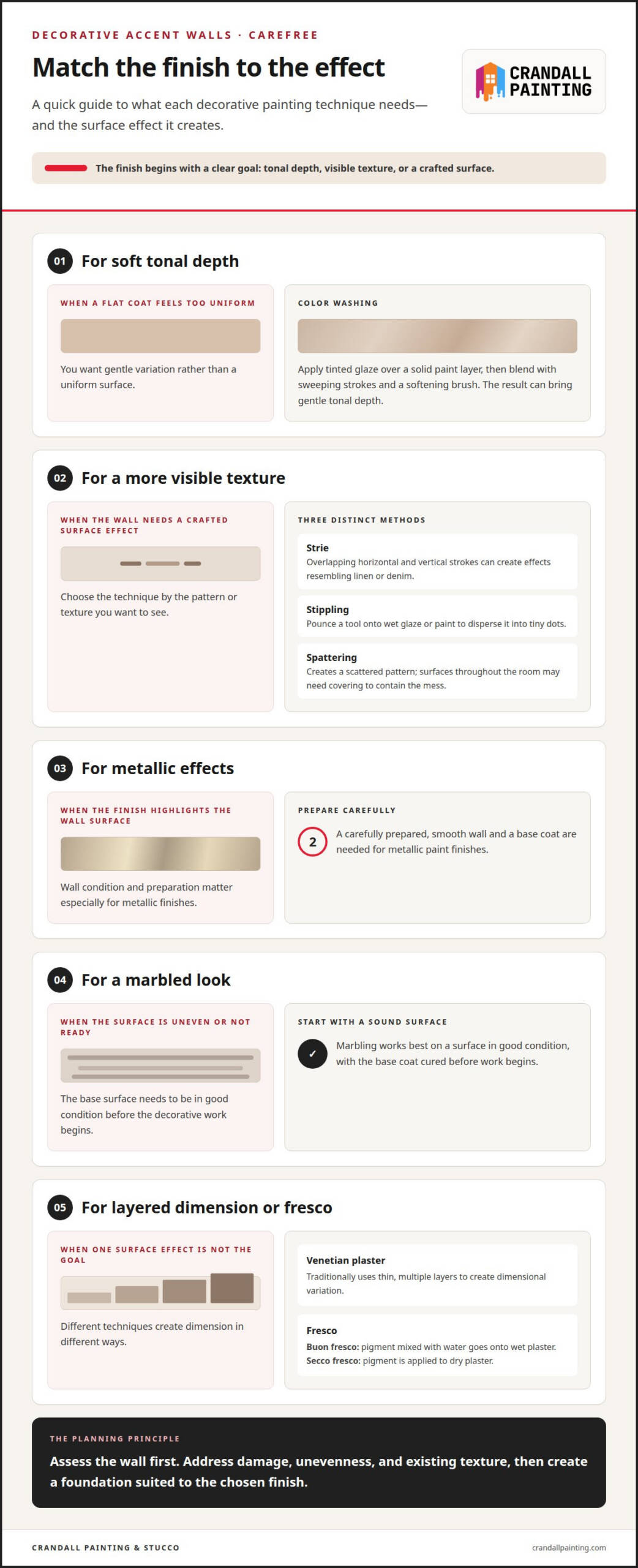
Color washing creates soft variation rather than a uniform surface. A professional applies tinted glaze over a solid paint layer, then blends it with sweeping strokes and a softening brush. Historically, color washing used oil-based products; paint companies now produce water-based glazes. The blended result can bring gentle tonal depth to a dining room or bedroom.
Strie uses overlapping horizontal and vertical strokes to create effects resembling linen or denim. Stippling creates a different texture: a tool is pounced onto wet glaze or paint, dispersing it into tiny dots. Spattering creates a scattered pattern and may require covering surfaces throughout the room to contain the mess.
Other techniques require specific surface conditions. Metallic paint finishes need a carefully prepared, smooth wall and a base coat. Marbling works best on a surface in good condition, with the base coat cured before work begins. Venetian plaster traditionally uses thin, multiple layers to create dimensional variation.
Wall preparation starts with assessing the surface for damage, unevenness, and existing texture. The painter addresses imperfections and creates a foundation suited to the finish: metallic work needs smoothness, while marbling needs a sound surface and cured base coat. These details help decorative painting for accent walls in Carefree look deliberate rather than uneven.
Traditional fresco uses two techniques: buon fresco applies pigment to wet plaster, while secco fresco applies it to dry plaster. In buon fresco, pigment mixed with water goes onto thin, fresh lime mortar or plaster. Secco fresco uses a binding medium such as egg, glue, or oil. Renaissance artists also used mezzo fresco on nearly dry plaster, allowing pigment to penetrate only slightly.
For spattering, standing closer to the wall produces finer spatter. This positioning can help control the pattern and keep the effect suited to the accent wall design.
Decorative Accent Wall Painters in Carefree, AZ
A decorative accent wall calls for a painter who can plan a custom finish, not simply apply a contrasting color. In Carefree, look for experience with effects such as color washing, strie, stippling, or faux finishing. Each technique creates a different surface character, so the intended look should guide the process.
Start by looking for examples that resemble your room’s design goals. A soft, blended glaze suits a quieter interior, while a more defined pattern can emphasize a dining area or entry. A portfolio should show finished walls clearly, including transitions at corners, trim, and architectural details. Those examples help you discuss the level of texture and contrast you want.
Ask how the wall will be assessed before a technique is selected. Surface condition influences preparation: metallic finishes need a smooth wall and base coat, while marbling requires a sound surface and cured base coat. If the home has existing wall texture or repairs, clarify how those conditions will be addressed before decorative work begins.
Clarify the project plan in practical terms. The estimate should identify the chosen wall, finish, color direction, preparation, and treatment of nearby surfaces. For example, an arch or recessed niche may need carefully planned edges to keep the painted feature aligned with the room. Discuss how the design relates to furnishings and the room’s focal point.
A clear conversation also establishes what the finished surface should look like and how the painter will achieve it. If you’re considering a custom finish in Carefree, discuss your decorative accent wall project and the effect you want the room to convey.
Crandall Painting & Stucco: Decorative Painting
Crandall Painting & Stucco can help translate your accent-wall concept into a carefully executed decorative finish. Turn to its decorative painting service when a room calls for more than a solid color, such as a custom faux effect or a refined finish suited to the home’s existing décor.
The process connects your preferred look with the wall’s condition, focal point, and surrounding colors. Whether you envision a subtle tonal effect or a more distinctive surface treatment, the finish should feel intentional within the room. Interior painting can also create a cohesive result when the accent wall needs to relate to adjoining painted surfaces.
For a decorative accent wall in Carefree, contact Crandall Painting & Stucco to discuss your project and the finish you have in mind.
Give Your Room a More Personal Finish
An accent wall can be the starting point for a broader design direction, not an isolated change. For homeowners considering decorative painting for accent walls in Carefree, start by deciding how the room should feel: calm, warm, or centered on a more expressive focal point. That intention helps shape choices that feel connected to the home rather than driven by a passing trend.
Crandall Painting & Stucco provides decorative painting and interior painting to help bring that vision into the room. For a wider refresh, its services also include exterior painting and stucco repair, addressing a home’s interior and exterior through one painting and restoration company.
Share the room, the finish you have in mind, and the effect you want the wall to create. Contact Crandall Painting & Stucco to discuss your project and take the next step toward a more considered space.
Frequently Asked Questions
What decorative painting styles are popular for accent walls in Carefree, AZ?
Popular choices include color washing, strie, stippling, metallic finishes, and faux effects. The right style depends on the room’s architecture and desired mood. In a Carefree home with natural stone or timber details, a restrained finish can complement those materials without competing with them. A painter can tailor the pattern’s scale and contrast to the wall and surrounding décor.