
A single room of interior painting typically takes 1 day, while a full interior painting project for a 3- to 4-bedroom home typically takes 3 to 5 days. For interior painting for hallways and entryways in Phoenix, the schedule depends on the surfaces included, the preparation required, and how the work fits around the rest of the home.
It’s reasonable to want a clear picture of the schedule and finish before painting begins. This guide explains what affects timing, how estimates separate walls, ceilings, and trim, and which paint sheen works well in a hallway or entryway.
You’ll also learn how surface preparation and protection contribute to a polished result, and what to consider when planning interior painting for hallways and entryways in Phoenix. These details help set expectations and guide finish choices for your home.
Key Takeaways
- Learn how preparation and careful protection of floors, furniture, and nearby finishes help keep hallway painting orderly.
- Understand how walls, ceilings, and trim are considered separately when estimating painting work.
- See why scrubbable eggshell is suited to hallways and stairwells, while trim calls for a different finish.
- Find out when professional interior painting can help bring a consistent, carefully finished look to hallways and entryways.
How long does interior painting take?
Careful protection helps limit dust and paint from reaching floors, furnishings, and nearby finishes. Plastic barriers can separate active work areas, while thorough preparation helps keep hallway access and adjoining rooms manageable.
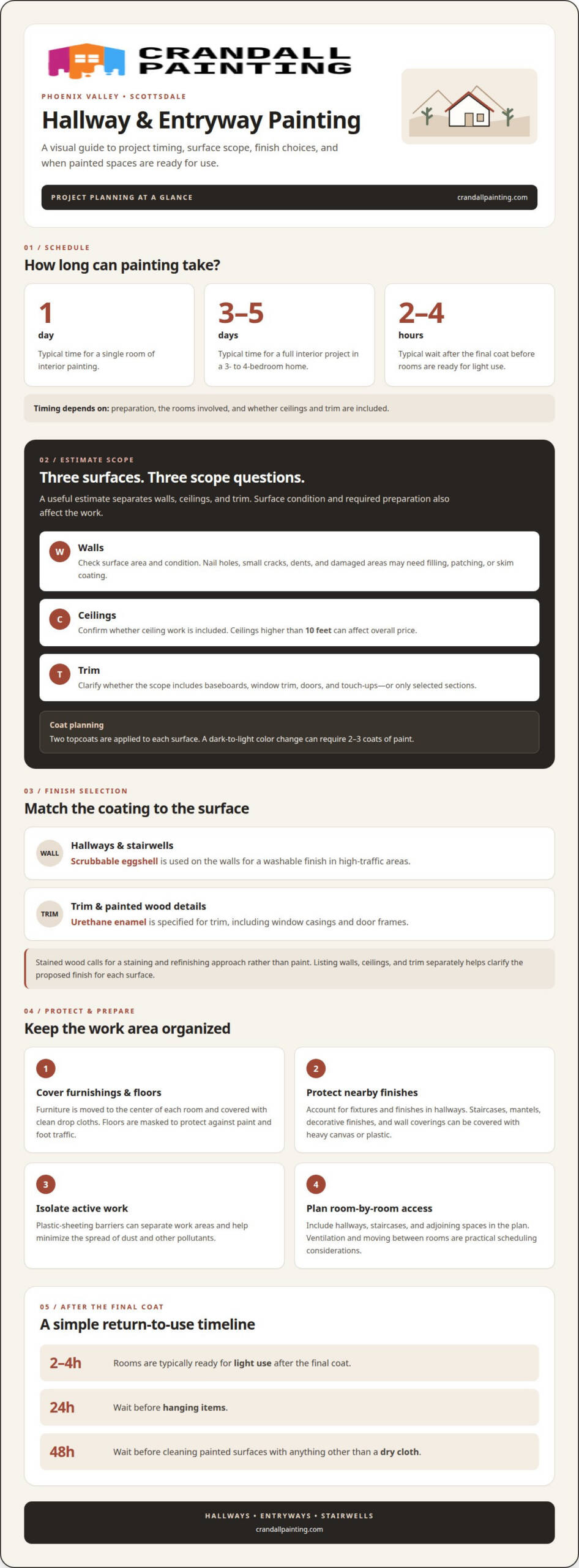
A single room of interior painting typically takes 1 day. A full interior painting project for a 3 to 4 bedroom home typically takes 3 to 5 days, depending on preparation, rooms, ceilings, and trim. Rooms are typically ready for light use 2-4 hours after the final coat.
Furniture and Surface Masking by Professional Painters
Before painting begins, furniture is moved to the center of each room and covered with clean drop cloths. Floors are masked to protect them from paint and foot traffic. In hallways, protection should also account for nearby fixtures and finishes. The U.S. Environmental Protection Agency recommends covering staircases, mantels, decorative finishes, and wall coverings with heavy canvas or plastic during project work to prevent damage.
Room-by-Room Painting by Professional Painters
Room-by-room sequencing keeps preparation and painting focused on defined areas, rather than spreading disruption throughout the home. The crew protects furniture and floors before working on each room’s walls, maintaining barriers around active work areas. The U.S. Environmental Protection Agency notes that plastic-sheeting barriers can isolate work areas and minimize the spread of dust and other pollutants. Make sure the plan covers hallways, staircases, and adjoining spaces.
These steps help keep dust from traveling into nearby rooms and reduce the risk of paint reaching floors, furniture, or decorative surfaces. They also help prevent damage when supplies are moved through narrow passages. Ventilation and access are practical considerations too: an organized work area and a plan for moving between rooms can reduce disruption during interior painting. The schedule depends on the rooms involved and the preparation they need.
Cost per square foot for walls, ceilings, and trim
A useful estimate separates wall, ceiling, and trim work so you can understand the scope. The estimate is based on the surfaces included, their condition, and the preparation required. For a hallway, the scope may change if you add ceiling work, window trim, doors, or repairs. Review each item to understand exactly what the proposed work covers.
Square footage is only one part of the calculation. A wall-only scope differs from one that also includes ceilings and trim, because each surface needs its own preparation and finish. Ceilings higher than 10 feet can affect the overall price. The estimate should identify each included surface and any repair work, rather than grouping everything under one room description.
- Walls: Surface area and condition matter. Nail holes, small cracks, dents, and damaged areas may need filling, patching, or skim coating before painting.
- Ceilings: Confirm whether the ceiling is included and whether its height affects access and preparation.
- Trim: Clarify whether the scope includes baseboards, window trim, doors, and touch-ups, or only selected sections.
Preparation influences the finish as well as the estimate. Filling cracks and repairing dents creates a smoother surface; primer may be needed when the existing color differs dramatically. Two topcoats are applied to each surface, and a dark-to-light change can require 2-3 coats of paint. These steps affect the work involved.
Trim needs a separate finish plan. Urethane enamel is used for trim, including window casings and door frames, while stained wood calls for a staining and refinishing approach rather than paint. Include small touch-ups in the written scope so transitions between trim and walls look deliberate. For details about interior painting services, explore the services available for your project.
Choosing paint sheen for each room
Sheen affects both appearance and upkeep, so the finish should suit each room’s use and surfaces. In a hallway, consider foot traffic and how often the walls need cleaning.
Professional Sheen Selection by Room
For Phoenix homes, consider how often each surface is touched, how it will be cleaned, and its condition when selecting a sheen. Scrubbable eggshell is used on hallways and stairwells, while trim is finished in urethane enamel. Listing an entryway’s walls, ceiling, and trim separately in the estimate clarifies the proposed finish for each surface.
Room type also shapes the project scope. An estimate for a single room differs from one that includes an entryway, hallway, stairwell, ceilings, and trim. The price depends on the case and is given after a quote request; surface area, condition, preparation, ceiling height, included surfaces, and finish all affect the scope. Narrow hallways and stairwells are considered through their dimensions, access, height, and preparation needs, rather than treated as identical to a broad room.
Durable Washable Hallway Paint
For a washable finish in a high-traffic hallway, scrubbable eggshell is used on the walls. Urethane enamel is the specified finish for trim, including the painted surfaces along the passage. The plan should distinguish the wall and trim coatings and account for the hallway’s use and wall condition.
Coating also affects when painted spaces can return to use. Rooms are typically ready for light use 2-4 hours after the final coat. Wait 24 hours after painting before hanging items, and 48 hours before cleaning painted surfaces with anything other than a dry cloth. These intervals help plan access to an entryway after the final coating.
A clear estimate identifies the rooms and surfaces included, along with the finish and preparation for each. This makes it easier to distinguish a hallway-only project from one that covers adjoining spaces.
Interior painting service area in the Phoenix Valley and Scottsdale
For an interior refresh in Phoenix or Scottsdale, define the full scope before work begins. A hallway may connect an entryway, stairwell, kitchen, and adjoining rooms, so the estimate should specify which spaces and surfaces are included.
Compare written quotes by their preparation and finish details, not just the room names. Look for drywall patching, treatment of cracks, wall and ceiling coverage, baseboards, paint coats, and protection of nearby finishes. For insurance, request current documentation and confirm that it applies to the work and property; don’t assume an estimate alone establishes coverage.
Before hiring a painter for an entryway, ask what the written scope covers, how damaged drywall will be handled, which colors and finishes are included, and how work will be sequenced around the kitchen. These details clarify what the refresh involves and help you assess whether the proposed plan covers your needs.
Permit and HOA requirements depend on the property and scope of work. For a straightforward interior color change, review your HOA’s rules if your home is governed by an association. If the project involves work beyond painting, ask the relevant local permitting office about applicable requirements.
In Phoenix and Scottsdale homes, a coordinated plan can carry colors from the entryway into the hallway and adjoining spaces. It should distinguish walls from ceilings and baseboards, and identify any drywall repairs before finish coats are applied. For example, a hallway with cracked drywall needs a different preparation scope from one that needs only a color refresh.
Ask how the estimate accounts for narrow passages, stairwell access, and high ceilings. These features affect access, masking, and preparation, so the written scope should identify them rather than treat every hallway like an open room. It should also state whether a connected kitchen is included.
For a tailored interior painting plan in the Phoenix area, discuss your hallway and entryway project with a professional.
Crandall Painting & Stucco: Interior Painting
Crandall Painting & Stucco provides interior painting for homeowners planning a hallway or entryway refresh in Phoenix, Scottsdale, Paradise Valley, Carefree, DC Ranch, Desert Mountain, Scottsdale Mountain, and nearby Phoenix neighborhoods. Its interior painting service can cover connected spaces, including walls, ceilings, and trim. If the project also involves damaged drywall, the company provides drywall repair.
A clear project scope aligns the areas to be painted with the finishes you want. Share which spaces are included and any surface concerns, such as cracked or dented drywall, so the work can be planned as a whole. Crandall Painting & Stucco also offers exterior painting, stucco repair, and wood staining and refinishing.
Contact Crandall Painting & Stucco to discuss your hallway or entryway painting project.
Plan a Finish That Welcomes You Home
Planning interior painting for hallways and entryways in Phoenix is an opportunity to shape the first impression of your home. Consider how the entry connects with adjoining rooms, the character of existing finishes, and whether you want a subtle transition or a more defined visual statement. A cohesive palette can make these passageways feel connected to the rest of the interior.
Discuss your preferences during the project consultation. Crandall Painting & Stucco can translate your goals into a considered scope, including the surfaces and details needed for a unified finish. The company provides interior painting and restoration services for homeowners planning interior updates.
For a thoughtful next step, contact Crandall Painting & Stucco to discuss your hallway or entryway project. A clear vision can set the stage for a finish that feels personal, polished, and welcoming.
Frequently Asked Questions
How many coats of paint are applied?
Most surfaces receive two full coats of paint. When the new color differs dramatically from the existing one, a tinted primer may go on before the two topcoats. A dark-to-light change can require 2-3 coats of paint. The painter considers the existing color and surface condition when planning the finish, so the scope can account for the coverage the chosen colors require.
How soon can I use the room after painting?
Rooms are typically ready for light use 2-4 hours after the final coat. That doesn’t mean every activity should resume immediately: wait 24 hours after painting before hanging items, and 48 hours before cleaning painted surfaces with anything other than a dry cloth. For example, you can plan to keep hallway walls clear of framed pictures until the hanging interval has passed.
What should I prepare before the painters arrive, and what preparation will they handle?
Before the crew arrives, move personal items, wall décor, and fragile belongings out of the work area where possible. Painters move furniture to the center of each room, cover it with clean drop cloths, and mask floors. Preparation may include filling nail holes, patching small cracks, repairing dents, and skim coating damaged drywall before painting.
What is the average cost to paint a hallway or entryway in Phoenix, AZ?
Crandall Painting & Stucco provides a free, no-obligation estimate, with price upon request. The estimate reflects the areas included, wall and ceiling condition, repair and preparation needs, ceiling height, trim, and selected finish. For interior painting for hallways and entryways in Phoenix, a clear scope shows how these factors shape the work.
What paint colors and finishes work best for hallways and entryways in Phoenix homes?
View color samples on your home’s walls under its actual lighting, since light and surrounding finishes affect how colors appear. Scrubbable eggshell is used for hallways and stairwells, while trim is finished in urethane enamel. If an entryway opens into a living space, compare the wall color with adjoining rooms so the transition feels considered.
How do professional painters prepare walls before painting a hallway or entryway?
Professional preparation begins with assessing the walls and identifying holes, cracks, dents, or damaged areas. Painters fill nail holes, patch small cracks, repair dents, and skim coat damaged drywall as needed. They prepare repaired areas for a smooth finish before applying paint. This is especially useful in narrow hallways, where close sightlines can make uneven patches more noticeable.