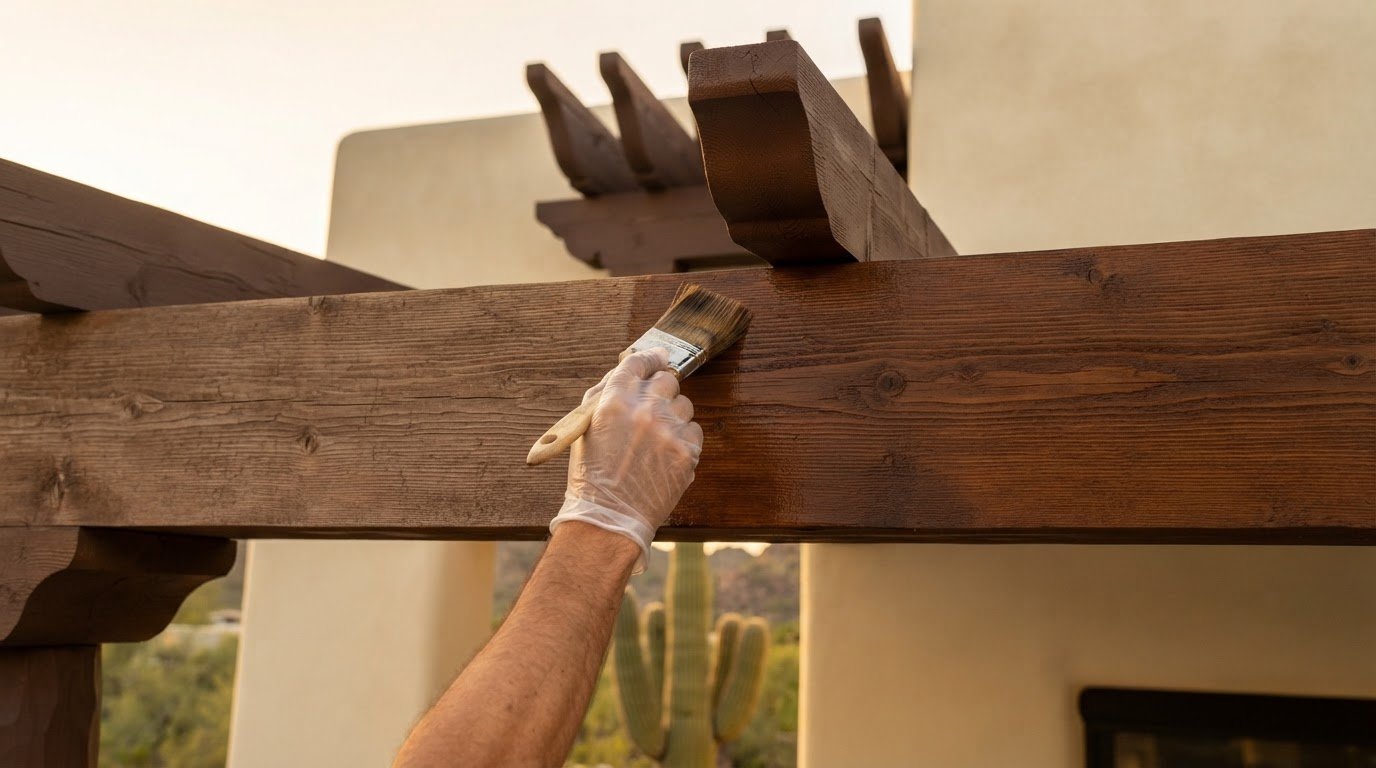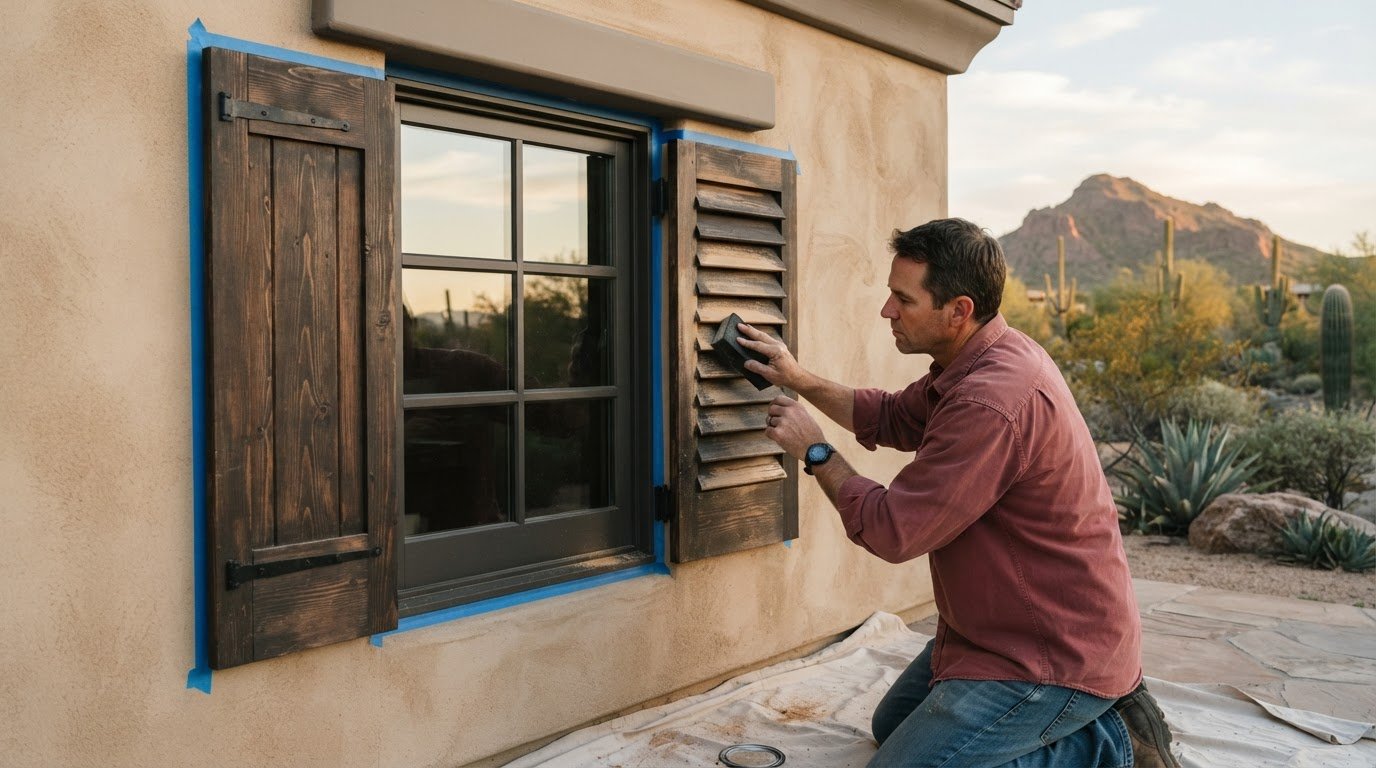

A fresh coat of paint can hide a chimney crack from view, but it can’t repair damage beneath the surface. For stucco repair for chimney cracks in DC Ranch, the key distinction is whether a crack is a fine, stable line in the finish or a sign of water intrusion or damaged stucco and masonry. Hairline cracks narrower than 1/16 inch can result from shrinkage or thermal movement and don’t automatically indicate a serious structural problem.
It’s understandable to want to restore a chimney’s clean appearance with paint. But stains, visible mildew, loose stucco, or a widening crack call for more than a cosmetic cover-up: moisture may enter behind the finish and contribute to further damage.
This article explains when paint may improve the appearance of a minor surface crack and when repair is the better choice. Learn which signs may point to trapped moisture or underlying masonry concerns, what a sound repair involves, and how Scottsdale’s sun and seasonal weather affect chimney stucco.
Key Takeaways
- Watch how cracks change over time; widening or stair-step patterns can point to movement or deterioration beneath the finish.
- Recognize that white, powdery deposits may signal moisture moving through masonry, so a cosmetic coating alone may not address the cause.
- Understand when a crack needs more than paint: its width, location, and the condition of nearby stucco and mortar all matter.
- Learn why durable repairs remove loose material and address underlying damage before new stucco is applied.
Monsoon rain and water intrusion through stucco cracks
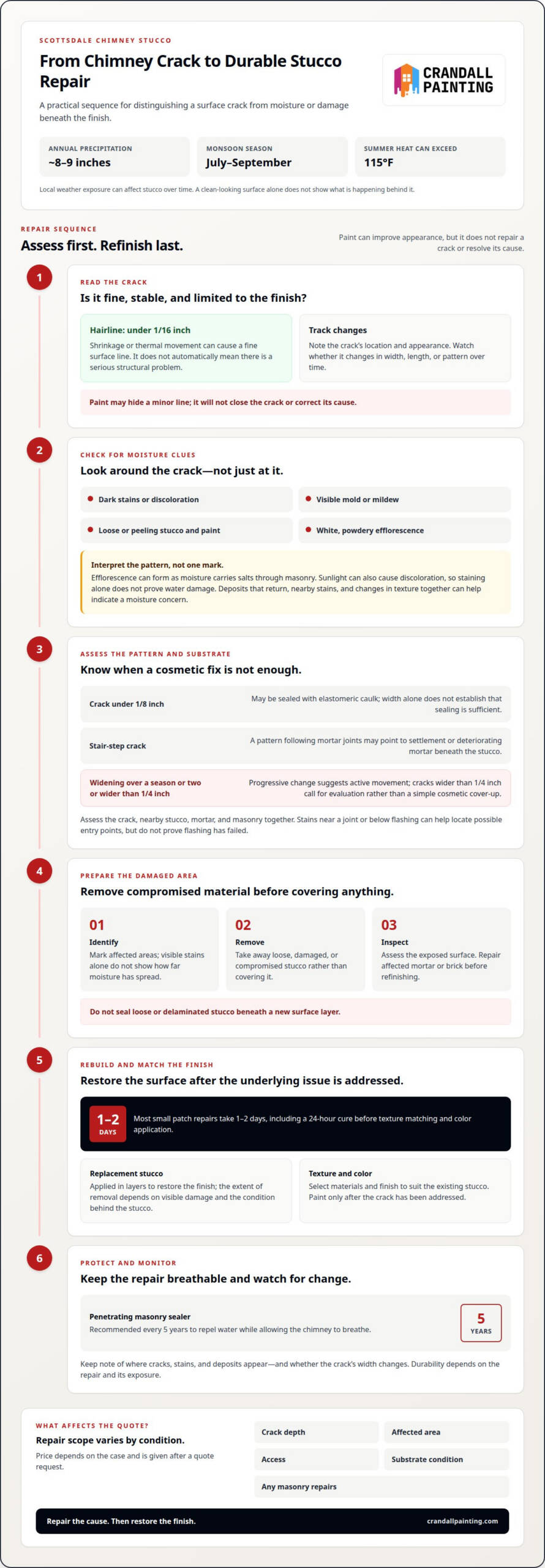
Scottsdale receives approximately 8-9 inches of precipitation annually, with intense rainfall concentrated during monsoon season from July through September. Chimney cracks can let water pass behind the stucco, so visible surface appearance alone may not reveal the full condition.
Water Damage Behind Chimney Stucco
Look for dark stains, discoloration, or visible mold and mildew around a crack; these can signal water seepage and damp conditions. White, powdery efflorescence may also appear as moisture carries salts to the surface. Sunlight can contribute to discoloration, so assess staining alongside cracks and other signs rather than treating color change as proof of water damage. In Scottsdale’s summer heat, which can exceed 115°F, repeated exposure to weather can also affect stucco over time.
For a Scottsdale chimney project, evaluate a contractor’s relevant stucco experience, license, and insurance, along with a written scope that identifies the affected areas. Permit applicability in Scottsdale or Maricopa County depends on the work and local requirements; distinguish surface stucco repairs from work involving masonry or structural changes.
Remediating Water-Damaged Stucco
Repair starts with identifying affected areas and removing compromised stucco, rather than covering loose or damaged material. The exposed surface can then be assessed before replacement stucco is applied in layers to restore the finish. The extent of removal depends on the visible damage and the condition behind the stucco. Stains alone don’t show how far moisture has spread.
Price depends on the case and is given after a quote request; key factors include crack depth, affected area, access, substrate condition, and any masonry repairs. Materials and finish should be selected to suit the existing stucco’s color and texture. Most small patch repairs take 1-2 days, including a 24-hour cure before texture matching and color application. Durability depends on the repair and exposure; a penetrating masonry sealer is recommended every 5 years to repel water while allowing the chimney to breathe.
Efflorescence and signs of trapped moisture
White, powdery deposits on a chimney’s exterior may be efflorescence, salts left behind as moisture moves through masonry and evaporates. In DC Ranch, note whether deposits return after cleaning and whether nearby stucco has dark stains, peeling paint, or a change in texture. One mark doesn’t reveal the full cause, but several signs together can help distinguish surface discoloration from moisture affecting the assembly.
Look at the pattern around the fireplace and exposed chimney surfaces. Staining beneath a crack, near a joint, or below flashing can help identify where water may be entering. Flashing is worth considering, but stains alone don’t prove it has failed. Assess the crack, surrounding finish, and masonry together rather than painting over visible evidence.
Small cracks can follow settling, weather changes, or minor impacts. Stair-step cracks that track mortar joints may indicate settlement or deteriorating mortar beneath the stucco. Watch whether a crack widens over a season or two; progressive change suggests active movement and warrants professional evaluation. Cracks wider than 1/4 inch on a chimney also call for evaluation rather than a simple cosmetic cover-up.
Repairing cracks can reduce a path for moisture entry, but the method must suit the crack and substrate. Don’t seal loose or delaminated stucco beneath a new surface layer. If damage is limited to the finish, a compatible repair can restore continuity and texture. If mortar or brick is affected, address that condition before refinishing. This helps avoid concealing stains while moisture continues to move behind the exterior finish.
For a clearer assessment, record where deposits and stains appear, whether cracks follow mortar joints, and whether their width changes over time. These observations can help distinguish moisture-related symptoms from settlement and guide the right repair approach for a Scottsdale chimney.
Hairline surface cracks
A crack narrower than 1/16 inch may be a hairline defect in the chimney’s stucco finish. Shrinkage and thermal expansion are common causes, and a fine line confined to the surface doesn’t automatically mean structural trouble. In Scottsdale, temperature shifts can repeatedly expand and contract stucco. The useful first distinction is whether the crack stays fine and isolated or changes in width, length, or pattern.
Paint can make a minor line less visible, but it won’t close the crack or correct its cause. Before choosing a finish, check the surrounding surface for loose material, stains, or a crack that continues across joints. A stable hairline confined to the finish calls for a different decision than a line that keeps growing. Note its location and appearance so you can track changes.
For stucco repair for chimney cracks in DC Ranch, hairline cracks under 1/8 inch can be sealed with elastomeric caulk. The crack’s width alone, however, doesn’t establish that sealing is sufficient: the surrounding stucco and any signs of moisture also matter. Patching should address the affected surface, while a coating is a finishing step. Applying paint directly over an open crack may conceal it without preventing water from entering.
With stucco repair for chimney cracks in DC Ranch, distinguish a finish-level crack from damage extending into the substrate. If the line widens, returns after sealing, or appears alongside loose stucco, the repair may require more than touch-up. Replacing a small finish area may make sense when the material has lost adhesion; a sound, stable surface may need only targeted sealing and finish work. Match the repair’s texture and color to the surrounding stucco, then paint only after addressing the crack.
Removal of damaged stucco and underlying masonry repairs
A lasting finish starts with assessing the chimney from top to bottom, not just the visible crack. Loose, cracked, or delaminated stucco should be removed rather than covered. Once exposed, the underlying surface can be checked for failing mortar joints, cracked bricks, or moisture damage. Sealing only the outer crack may fail within a year or two if deeper damage remains.
For a localized chip, remove loose stucco, prepare the damaged area, and fill it with new material. More extensive damage may require removing affected layers, cleaning the surface, and applying replacement stucco. This assessment shows whether the work can stay within the finish or must address masonry first. New stucco should not conceal unsound mortar or cracked brick.
Pay particular attention to mortar joints when a crack follows a stair-step pattern. This shape may indicate settlement or deteriorating mortar beneath the finish. The right repair depends on what exposed sections reveal, not on the crack’s appearance alone. Address failing mortar before applying stucco, and include cracked brick in the repair plan. A surface patch cannot correct either underlying issue.
Chimney stucco repairs generally use multiple coats rather than one thick layer. Flexible materials matter because the chimney is exposed to heat, weather, and movement; a standard patching compound may crack again within a season or two. Once the substrate and repair layers are sound, match the texture and color to the surrounding finish. This sequence helps the repair blend in without sealing over a defect. If your chimney has loose stucco or exposed masonry, explore the stucco repair process for an approach suited to the damage.
Crandall Painting & Stucco: Stucco Repair
Crandall Painting & Stucco repairs stucco cracks on chimneys when a paint touch-up won’t address loose stucco, recurring cracks, or visible signs of moisture. The work focuses on repairing the damaged finish so the chimney’s appearance can be restored without simply covering a concern beneath the surface.
Choose stucco repair when cracks widen, damaged material is exposed, or the finish has separated from the underlying surface. If discoloration is superficial and the stucco is sound, exterior painting may be appropriate. Matching the texture and surrounding color helps the repaired area blend with the home’s exterior.
If you’re ready to address chimney stucco damage, contact Crandall Painting & Stucco for a free, no-obligation estimate.
Choose a Clear Next Step for Your Chimney
Choosing stucco repair for chimney cracks in DC Ranch starts with treating the chimney as part of the home’s exterior, not as an isolated cosmetic detail. A considered repair plan takes the finish and surrounding surfaces into account, helping you decide whether painting should follow the stucco work or be handled separately.
Crandall Painting & Stucco offers Stucco Repair and Exterior Painting for exterior projects, along with Interior Painting for interior updates. If you’re planning work beyond the chimney, these services can help shape a broader approach to your home’s finishes without losing sight of the repair at hand.
Take the next step at your pace. Contact Crandall Painting & Stucco to discuss your chimney and the finish you’d like to restore.
Frequently Asked Questions
Can I just paint over chimney cracks to make them look better?
Paint can improve a chimney’s appearance, but it won’t close a crack or repair what lies beneath it. Painting over a crack that keeps widening, for example, leaves the underlying opening unresolved. First determine whether the line is stable and limited to the finish. Once the surface is sound and repaired as needed, paint can complete the visual refresh.
Can You Repair Stucco Cracks Yourself?
Small, stable cracks confined to accessible stucco are the most reasonable candidates for a careful DIY repair. A hairline crack differs from loose material, a recurring opening, or a crack crossing mortar joints. Before patching, identify the condition and choose a method suited to the stucco. A surface patch won’t correct damaged brick or mortar.
How do I know if my chimney needs repair or just maintenance?
Maintenance may be enough when the finish remains firmly attached and shows no active cracking or signs of water entry. Repair is needed for loose stucco, a crack that returns after patching, or damaged material around the chimney. Intact stucco with mild fading, for example, is different from a lifted edge exposing the layer beneath.
What causes cracks in stucco chimneys in DC Ranch, Scottsdale?
Cracks can develop from thermal movement, natural settling, weather exposure, or minor impacts. In DC Ranch, temperature changes can stress the chimney finish as materials expand and contract. A crack’s pattern offers clues: a fine line may be limited to the finish, while stair-step cracking along mortar joints may point to another underlying condition.
How can you tell whether a chimney stucco crack is cosmetic or structural?
A fine crack confined to the stucco finish doesn’t automatically indicate structural trouble. Look for changes in width, a stair-step path following mortar joints, or related damage to brick and mortar. A growing crack or one accompanied by displaced masonry deserves closer evaluation. The visible line is only one clue; its pattern and surrounding materials matter too.
What is the process for repairing stucco cracks on a chimney?
The process starts by assessing the crack and surrounding finish to define the repair area. Remove loose stucco, and address exposed masonry if mortar or brick is damaged. Then prepare the surface and repair it with suitable stucco layers. Match the final texture and color to the surrounding finish, and paint once the repair is ready.