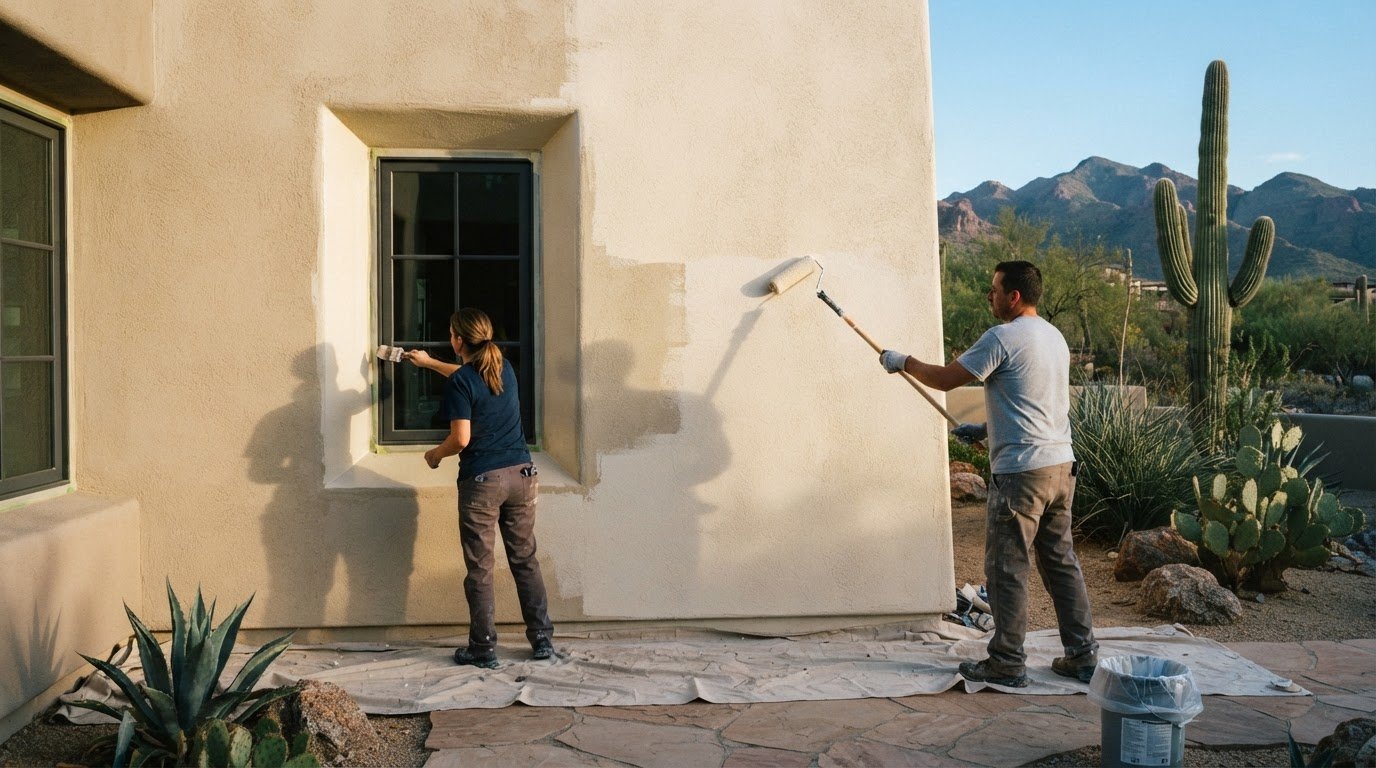

Yes, stucco can be painted in Scottsdale’s heat, but timing and surface preparation matter. Summer temperatures can reach 118°F, while applying stucco paint outside the 50-90°F range can cause lap marks, slow curing, and weak adhesion. Stucco resurfacing and painting in Desert Mountain should account for those conditions, as well as the surface’s existing cracks and signs of water exposure.
It’s reasonable to want more than a refreshed color from exterior work: in this climate, the coating and the preparation beneath it matter to the finish’s performance. This article explains how heat and UV affect painting, what shapes an estimate and warranty, and how stucco repair and flexible coatings can help address cracks and moisture exposure. You’ll also learn what resurfacing involves and which project details influence the right approach, so you can better understand the work before deciding on next steps.
Key Takeaways
- Understand which surface conditions and preparation details can shape an exterior painting estimate, and what to look for in warranty coverage.
- Learn how coating flexibility and careful stucco repair can help manage cracking and reduce moisture exposure.
- See why Scottsdale’s heat and strong sun make application timing and color choice important to a durable finish.
- Get a clearer picture of resurfacing steps, from assessing damaged areas to preparing the surface for a renewed finish.
Painting estimates and warranties
For Desert Mountain stucco, an estimate should distinguish surface renewal from deeper repairs to damaged stucco. Comparing the written scope and warranty terms helps clarify what the work covers.
Estimate Scope and Warranty Coverage
A useful estimate identifies the surfaces, preparation steps, and coating system. It should distinguish isolated crack repairs from resurfacing broader areas, since the work differs. The estimate depends on surface area, stucco condition, repair needs, and the selected coating. Crandall Painting & Stucco provides free, no-obligation estimates, with price upon request.
Review warranty terms for the work covered, coverage period, exclusions, and remedy for a covered defect. Distinguish workmanship coverage from manufacturer coverage, and check whether peeling, blistering, or coating failure is included. Clear terms specify the preparation and application conditions covered.
The work typically involves assessment, surface preparation, stucco repairs, coating application, and a final review. The timeline depends on the area, repair depth, drying conditions, and coating requirements. These factors shape how long the project takes.
No single repainting interval suits every Scottsdale home. Repaint or resurface when an inspection reveals fading, chalking, peeling, recurring cracks, or water-related deterioration, rather than relying only on the calendar.
Cost and Durability Comparisons
Resurfacing renews the stucco surface, while re-stuccoing addresses more extensive deterioration by replacing or rebuilding damaged stucco. An elastomeric coating is a flexible paint layer, not a substitute for repairing compromised material. Compare options by first assessing the depth and spread of damage, then considering preparation and finish requirements.
In Scottsdale conditions, elastomeric coatings may last 7-10 years, compared with 4-6 years for conventional paints. Those figures describe coatings, not a guarantee for each home or a lifespan comparison with re-stuccoing. Existing stucco condition, preparation, and exposure all influence performance.
To compare estimates fairly, check whether each scope covers the same repair areas, surface preparation, coating type, and finish coats. A lower total may include less restoration, while a broader scope may address surface defects before painting. For homeowners comparing exterior contractors in other regions, teams like Colorado Springs Painters similarly recommend verifying that surface preparation and coating specifications are fully detailed in the scope. Match the work to the stucco’s condition, not just the desired appearance.
Crack prevention and water protection
Controlling cracks starts with identifying movement or water entry behind the finish. In Scottsdale, both coating flexibility and sound repairs matter.
Pre-Work Inspection and Repairs
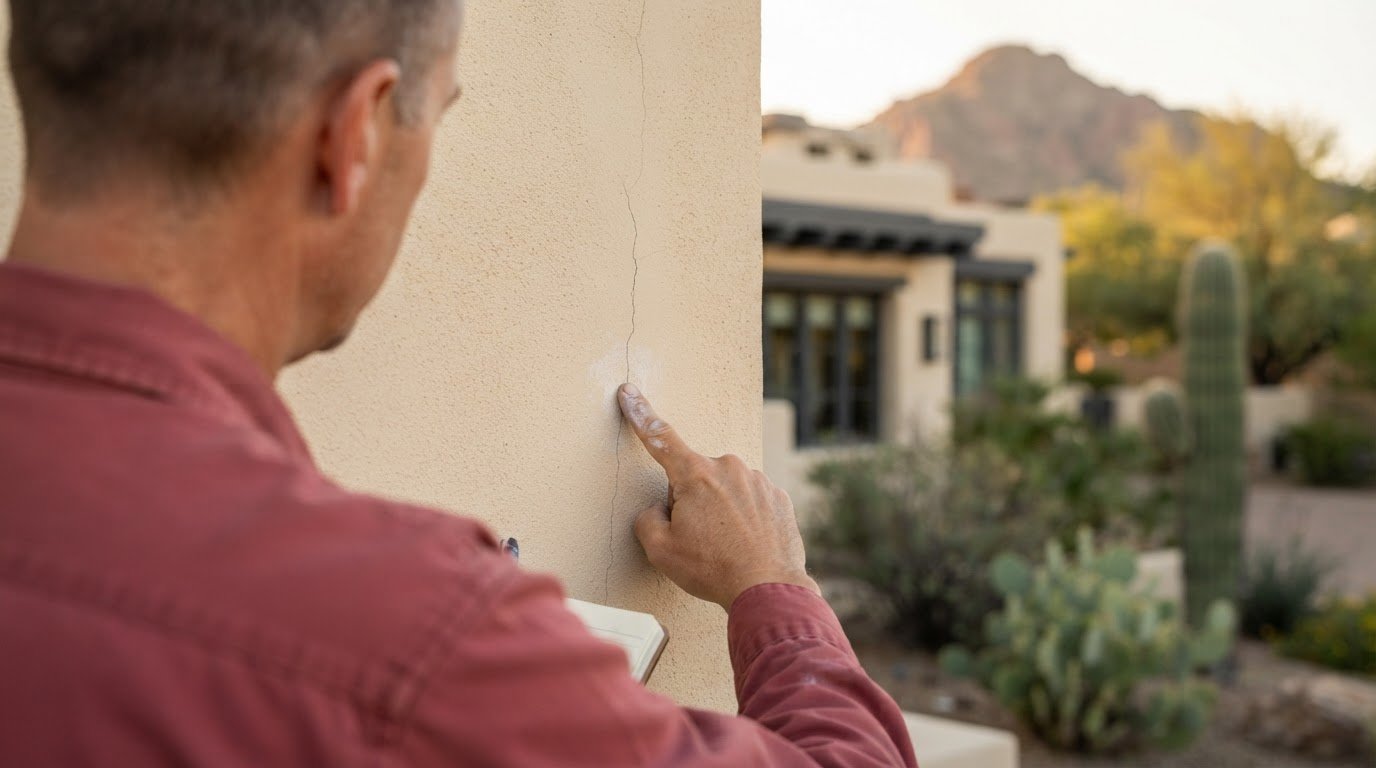
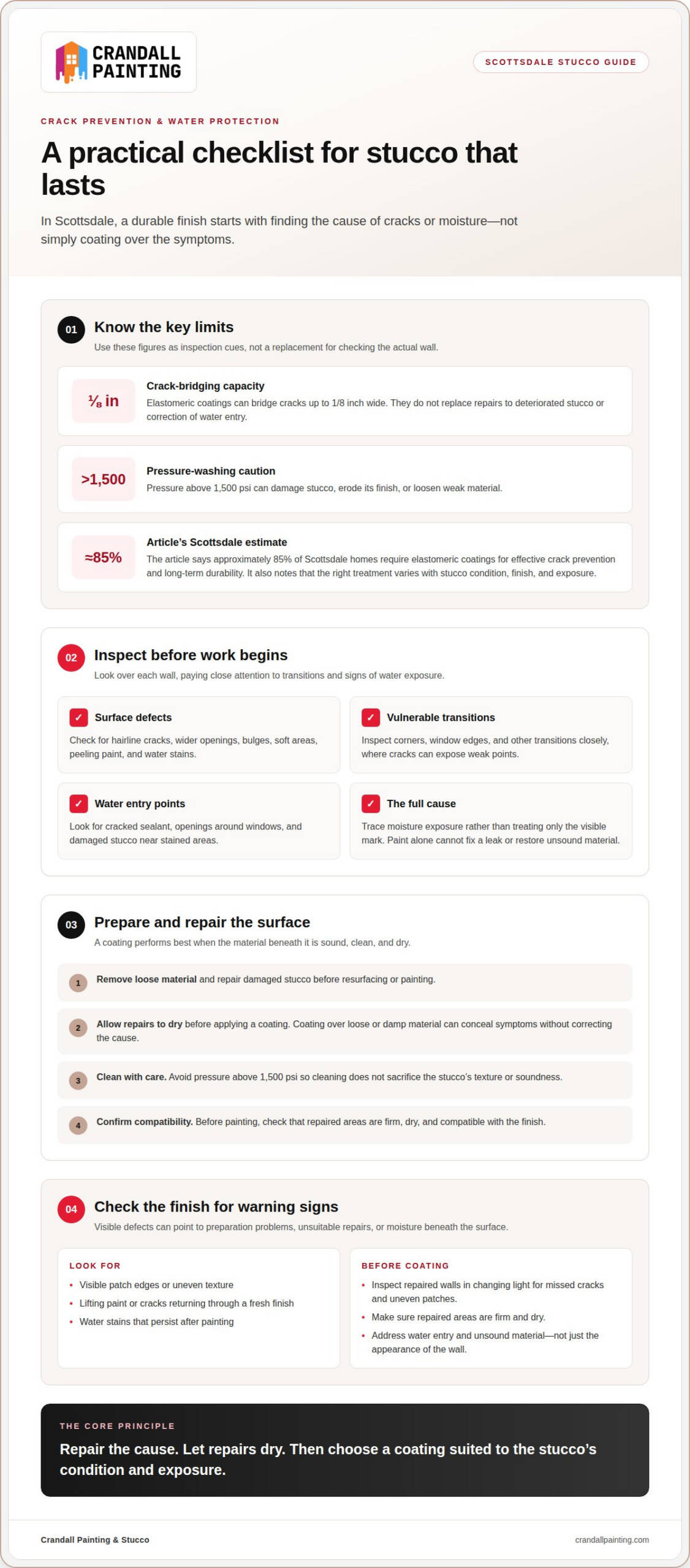
Inspect each wall for hairline cracks, wider openings, bulges, soft areas, peeling paint, and water stains. Check corners, window edges, and other transitions closely, where cracks can expose weak points. Before resurfacing or painting, remove loose material, repair damaged stucco, and let repairs dry before applying a coating.
Elastomeric coatings can bridge cracks up to 1/8 inch wide without cracking themselves. That flexibility helps with small surface cracks, but it doesn’t replace repairing deteriorated stucco or addressing water entry. A coating applied over loose or damp material can conceal symptoms without correcting the cause.
Resurfacing Risks and Workmanship Warnings
Warning signs include visible patch edges, uneven texture, lifting paint, and cracks returning through a fresh finish. Water stains that persist after painting also need attention. These problems may point to inadequate preparation, an unsuitable repair, or moisture beneath the surface.
Pressure washing requires care: pressure above 1,500 psi can damage stucco. Strong washing may erode the finish or loosen weak material, creating more repair work before coating. The surface should be cleaned without sacrificing its texture or soundness.
Approximately 85% of Scottsdale homes require elastomeric coatings for effective crack prevention and long-term durability. That figure doesn’t mean every wall needs the same treatment. The stucco’s condition, existing finish, and exposure help determine whether a flexible coating suits the surface.
To address water exposure, examine the full path rather than treating a visible mark alone. Look for cracked sealant, openings around windows, and damaged stucco near stained areas. Repairing these points before coating helps limit water entry. Paint alone can’t fix a leak or restore unsound material.
After repairs, inspect the wall in changing light for missed cracks and uneven patches. Before painting, confirm that repaired areas are firm, dry, and compatible with the finish. This final check can catch defects before a new coating makes them harder to see.
Exterior painting in Desert Mountain
A Desert Mountain exterior finish should suit both the home and Scottsdale’s climate. Plan for community design considerations, color testing, and weather-aware application.
HOA Approvals and Permit Needs
Distinguish community design review from municipal permit requirements. HOA review concerns appearance, such as an exterior color change, while permits relate to the scope of construction work. Whether either applies depends on the proposed changes and governing requirements, so define the work before planning the schedule.
For a color change, document the proposed shade and affected elevations. For stucco work, describe whether the project changes only the finish or involves more extensive construction. Keeping these scopes distinct clarifies the approval questions.
For a Desert Mountain project, look for a Scottsdale-area service that covers exterior painting and stucco repair. A clear written scope identifies the surfaces, preparation, finish, and repairs, so the planned work is understandable. Crandall Painting & Stucco provides exterior painting and stucco repair for homes in Desert Mountain and the Scottsdale area.
Finish and Color Choices for Local Climate
Choose a stucco texture that suits the home’s architecture and blends with the surrounding surface. A patch with noticeably different texture can stand out even when its paint color matches. Compare the texture with intact stucco before coating the full wall.
Test color patches in morning, midday, and evening light before deciding. Scottsdale’s strong sun changes how a shade looks throughout the day, so a sample viewed once may not represent the full exterior.
Application conditions matter as much as the selected color. Stucco paint applied outside the 50-90°F range can cause lap marks, slow curing, and weak adhesion. Plan around temperatures, not just the calendar.
Scottsdale’s monsoon season runs from July through September, and microbursts can exceed 60 mph. Wind and rain can disrupt exterior work, so schedule coating around suitable conditions and protect prepared surfaces. A deliberate weather window helps preserve an even finish and clean edges.
What does stucco resurfacing involve for homes in Desert Mountain, Scottsdale?
Resurfacing renews a stucco wall’s outer finish after assessment and necessary repairs. In Desert Mountain, careful preparation matters because Scottsdale’s heat and UV exposure challenge exterior coatings.
- Assess the wall. Map cracks, loose patches, uneven texture, and discoloration. For example, a crack that returns after patching may need more than a cosmetic surface treatment.
- Clean without damaging the stucco. Remove dirt, dust, and loose coating using a method suited to the wall’s condition. Aggressive pressure washing can erode the finish, so cleaning should preserve sound stucco.
- Remove unsound material. Scrape or otherwise clear loose areas so repairs can bond to a stable surface. Edges around a damaged patch should be firm, not flaking.
- Repair and blend. Fill damaged sections and match the surrounding texture as closely as practical. A smooth patch against a textured wall can remain visible after painting.
- Apply the resurfacing material. Use a compatible finish over the prepared surface, following its application and drying requirements. The chosen texture should suit the home’s existing exterior.
- Inspect before painting. Look for missed defects, inconsistent texture, and areas that need further preparation. A final review helps create a more uniform base for paint.
Each step affects the next. Applying a new finish over loose stucco can compromise adhesion, while incomplete repairs may show through the resurfaced wall. Preparation should address both the damage and the desired final texture.
Desert Mountain’s strong sun also makes scheduling and coating selection important. Let resurfacing material dry as directed before painting, and don’t rush between repair and finish stages. These choices support an even appearance and help the coating perform as intended.
Crandall Painting & Stucco provides stucco repair and restoration to address weathered or damaged surfaces. The right work depends on the wall’s condition.
Crandall Painting & Stucco: Exterior Painting
Crandall Painting & Stucco helps homeowners renew weathered exteriors with exterior painting and stucco repair. These services suit projects where fading, peeling, cracks, or damaged patches require more than a color change. Repairing affected stucco before painting prepares the surface for a renewed finish.
For a Desert Mountain home, start with the wall’s condition and the result you want. Distinguishing areas that need repair from surfaces ready for paint helps define the scope and match preparation to the finish. If the stucco is sound, exterior painting may be appropriate; if sections are damaged, stucco repair can address them before painting.
For stucco resurfacing and painting in Desert Mountain, contact Crandall Painting & Stucco to discuss your home’s exterior and request a free, no-obligation estimate.
Choose a Thoughtful Starting Point
Before scheduling work, decide what matters most: restoring a consistent appearance, repairing damaged stucco, or refreshing a specific area. A clear priority helps focus the discussion on the work and intended finish. For stucco resurfacing and painting in Desert Mountain, note what you see on the walls and the look you want to achieve.
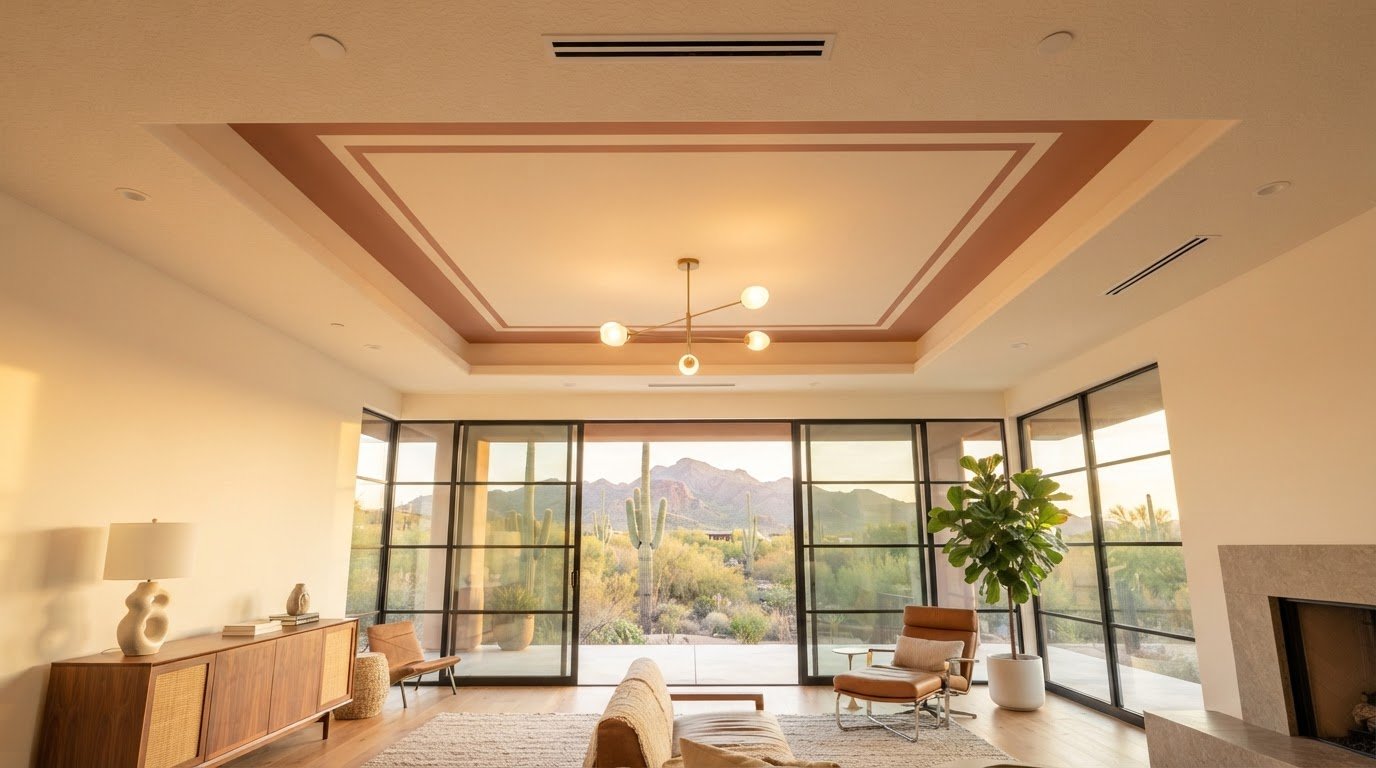
Crandall Painting & Stucco provides exterior painting and stucco repair, as well as interior painting if your plans extend indoors. Sharing which surfaces concern you and the outcome you want can help define the project. The appropriate scope depends on the property’s condition and your goals.
When you’re ready to discuss your home, contact Crandall Painting & Stucco. A considered next step can help you move toward a refreshed exterior with greater clarity and confidence.
Frequently Asked Questions
Can stucco really be painted in Scottsdale’s extreme heat and UV?
Yes, stucco can be painted in Scottsdale when the surface and weather conditions suit the coating. Heat and intense sunlight affect application and drying, so plan the work around exposure and product directions. For example, painters can schedule sun-facing walls separately from shaded elevations. Sound preparation and allowing each layer to cure properly help create an even finish.
Does painting stucco actually fix cracks and prevent water damage?
Paint can protect properly prepared stucco, but it won’t repair damaged stucco or resolve an active source of water. For example, a recurring crack beside a window or a stain that returns after rain needs attention before repainting. Treating only the visible mark may leave the underlying issue untouched. Identify the cause, repair affected areas, then apply a compatible finish.
How much does it cost to paint a stucco home in Desert Mountain?
Cost depends on paintable surface area, access, preparation, stucco repairs, and the specified coating system. A home with peeling paint and damaged patches needs a different scope from one with sound, ready-to-coat walls. Crandall Painting & Stucco provides free, no-obligation estimates, with price upon request. A written estimate clarifies which preparation and finish work the project includes.
Which exterior paints and stucco coatings best withstand Arizona heat, sun, and monsoon weather?
The suitable coating depends on the stucco’s condition, existing finish, and exposure. Flexible elastomeric coatings can accommodate small surface movement, while conventional exterior paints may suit sound stucco with compatible preparation. Consider the full system, including primer and finish coats, rather than choosing by product label alone. A color sample viewed on the home can also show how strong sunlight changes its appearance.