
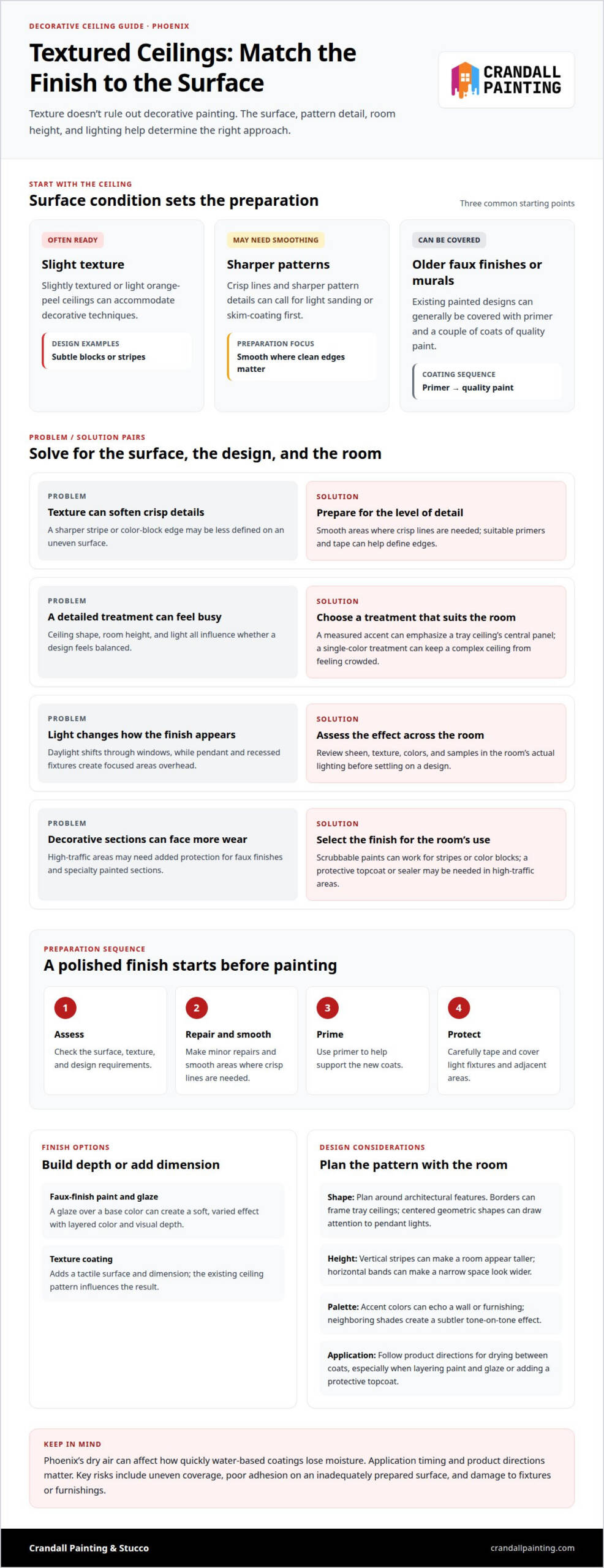
Textured walls don’t rule out decorative painting for ceilings in Phoenix. Slight texture or a light orange-peel finish can often accommodate decorative techniques, while sharper patterns and crisp lines may call for light sanding or skim-coating. Older faux finishes and murals can generally be covered with primer and a couple of coats of quality paint.
It’s understandable to wonder whether texture will soften a design or make a ceiling feel too busy. The right approach depends on the surface, the pattern’s level of detail, the room’s height, and how natural and artificial light falls across the ceiling. This guide explains how decorative finishes can work with textured surfaces, how colors and patterns influence a room, and what to consider when choosing a finish for your Phoenix home.
Key Takeaways
- Faux finishes and texture coatings can add character overhead, with the design tailored to how the ceiling surface catches light.
- Accent colors, stripes, and tone-on-tone patterns offer different ways to define a room without relying on a single bold shade.
- Ceiling shape, room height, and natural and artificial lighting all influence which decorative treatment feels balanced.
- Careful preparation and precise detailing help decorative ceiling designs look intentional and polished.
Can decorative painting be done over textured walls?
Yes. Slight texture or a light orange-peel surface can suit decorative finishes; sharper patterns may need smoothing first. For ceilings, the texture, lighting, and desired design guide preparation and finish selection.
Faux Finishes and Texture Coatings
Faux finishes create visual effects such as mottling or layered color, while texture coatings add dimension to a surface. Slightly textured and light orange-peel ceilings can accommodate decorative techniques, including subtle blocks or stripes. For a sharper pattern, light sanding or skim-coating may be needed. Older faux finishes and murals can generally be covered with primer and a couple of coats of quality paint.
Durability and Finish Selection
Choose a finish with the room’s use in mind. Scrubbable paints can work for decorative details such as stripes or color blocks, much as they do on walls. In a high-traffic area, faux finishes and specialty painted sections may need a protective topcoat or sealer. Sheen and texture also affect how a ceiling catches light, so assess the effect across the room before settling on a design.
Faux-Finish Paints and Glazes
Faux-finish paints and glazes build layered color and visual depth. A glaze over a base color can create a soft, varied effect, while a texture coating adds a tactile surface. On a lightly textured ceiling, the existing pattern will influence the result. For clean stripes or crisp color blocks, preparation matters: smoothing may be needed, and suitable primers and tape can help define edges.
Permit and HOA approval requirements depend on the property, local rules, and association regulations. Painting a ceiling does not change the building’s structure, but that alone does not determine whether approval is needed.
Project cost depends on the ceiling’s area and height, repairs, preparation, number of colors, and pattern complexity. Crandall Painting & Stucco provides a free, no-obligation estimate, with price upon request.
Phoenix’s dry air can affect how quickly water-based coatings lose moisture. Application timing and product directions matter, especially when layering paint and glaze or applying a protective topcoat.
Preparation starts with assessing the surface, then making minor repairs and smoothing areas where the design needs crisp lines. Primer helps support the new coats. Before painting, protect light fixtures and adjacent areas with careful taping and coverings.
Key risks include uneven coverage, poor adhesion over an inadequately prepared surface, and damage to fixtures or furnishings. Before work begins, clarify the project’s protection and cleanup plan and the applicable warranty terms.
Ceiling accent colors, patterns, and tone-on-tone treatments
A considered ceiling design can connect colors and patterns across an interior without making every surface compete. For decorative painting for ceilings in Phoenix, choose the palette and layout together, then assess them in the room’s actual lighting.
Accent Colors and Tone-on-Tone Treatments
A ceiling accent can repeat a wall color, echo a furnishing, or introduce contrast above a restrained palette. For example, muted blue overhead can complement blue details in an otherwise neutral room. Tone-on-tone treatments use neighboring shades for a subtler effect, such as a pale field with slightly deeper bands. Compare samples against the walls and trim, since surrounding colors influence how each shade appears.
Custom color matching can carry a chosen hue from another part of the interior onto the ceiling. Keep a record of the selected color and finish, especially when a project spans multiple rooms or includes later touch-ups. Using the same paint system across connected sections supports a consistent appearance. Allow each coat to dry according to product directions before adding another layer; rushing can affect the finished surface.
Patterns and Color-Block Designs
Patterns give a ceiling structure, while color blocks define distinct zones above seating or dining areas. A border can frame a tray ceiling; a centered geometric shape can draw attention to a pendant light. Plan the pattern around the room’s architectural features, not across them. For crisp divisions, map the edges carefully and use suitable tape to keep the design controlled.
Accent walls can share a ceiling color or pattern, creating a visual connection between vertical and overhead surfaces. For instance, a broad ceiling band can align with a wall’s color-blocked section. For decorative painting for ceilings in Phoenix, keep the number of colors purposeful and review the layout from the entrance and main seating area. More involved striping, color-blocking, or ceiling accents require time for careful application and drying between coats.
Choosing decorative techniques for ceiling height and lighting
Ceiling height and light influence whether a decorative treatment feels balanced or visually heavy. Consider the room’s shape, windows, fixtures, and furniture, then choose a finish that supports the intended atmosphere.
A cathedral ceiling rises from the walls to a roofline peak, while a tray ceiling has a perimeter soffit. A coved ceiling softens corners with a curve; a vaulted ceiling rolls into a half-barrel shape. These forms create different surfaces for color and pattern. A measured accent can emphasize a tray’s central panel, while a seamless, single-color treatment can keep a complex ceiling from feeling crowded.
Room height also affects the impression of a design. Vertical stripes can make a room appear taller, while horizontal bands can make a narrow space look wider. In Phoenix, customer reviews describe homes with ceilings measuring 12 to 14 feet, higher than 14 feet, and 17 feet. These examples illustrate why a treatment should be planned for the actual scale, not selected from a small paint sample alone.
Lighting changes how colors and finishes appear across a ceiling. Daylight shifts as it enters through windows, while pendant fixtures and recessed lights create focused areas overhead. Review the proposed color near the room’s main light sources and from the usual seating position. A glossy finish reflects more light than a matte one, so consider the ceiling’s texture and the location of each fixture.
For a smooth visual flow, coordinate the ceiling with wall colors and furniture rather than treating it as an isolated surface. In a room with exposed beams, a contrasting field can define the space; a restrained shade can instead keep the beams prominent. At a roof valley or angled transition, align pattern edges with the architecture. This keeps stripes and blocks deliberate rather than abruptly interrupted.
Before choosing a design, identify the room’s focal point, note where light falls, and decide whether the ceiling should recede or draw attention. This helps match color, pattern, and finish to the room’s height and lighting.
Faux painting professionals in Phoenix
For a ceiling project, assess both the finished detail and the planning behind it. Phoenix homes with tall ceilings benefit from clear communication about access, preparation, repairs, and design expectations.
Reviews, Portfolios, and Experience
Reviews can reveal how a painter manages communication, protects a room, and handles changes during a project. Portfolios help you assess comparable work: look for ceilings with similar height, beams, patterns, or faux finishes. Phoenix customer reviews describe ceiling projects in homes with ceilings higher than 14 feet and 17-foot ceilings, including beams and accent walls. These examples show why scale-specific experience matters.
Look beyond a single polished image. A useful portfolio shows the ceiling from different viewpoints and makes edges, transitions, and details visible. For a Paradise Valley home with a high ceiling, compare examples with similar architecture rather than relying on flat-wall work alone.
How do Phoenix decorative painters compare in reviews, portfolios, and experience? Consider documented ceiling projects, relevant finish examples, and reviews that describe communication and workmanship. The strongest match is the one whose examples align with your room and design.
Questions Before Hiring a Painter
Discuss how the ceiling will be prepared, how repairs will be handled, and how furnishings will be protected. Clarify the pattern, colors, and finish, how edges will meet beams or walls, and how the completed area will be cleaned.
Before hiring a decorative ceiling painter in Phoenix, ask about the project sequence, surface preparation, repair scope, protection, cleanup, and how design details will be reviewed before painting. Clear answers help establish expectations before work begins.
For a tailored plan, explore decorative painting options suited to your ceiling’s design and condition.
Crandall Painting & Stucco: Decorative Painting
Crandall Painting & Stucco provides decorative painting to bring considered ceiling designs into your interior. The company can help you plan a faux finish, accent color, or pattern that works with the room’s existing surfaces and lighting. Interior painting can support a broader room refresh, while drywall repair can address damaged areas before the finish is applied.
A thoughtful project starts with the ceiling’s condition, height, architectural details, and the effect you want the finished space to create. These considerations guide preparation and the choice of color and treatment, whether you’re planning a subtle tone-on-tone look or a distinctive accent.
Contact Crandall Painting & Stucco to discuss your decorative ceiling painting project.
Bring Your Ceiling Design Into Focus
A ceiling can shape a room’s mood before its furnishings or finishes come into focus. As you plan decorative painting for ceilings in Phoenix, decide what you want the overhead surface to contribute: a quiet sense of depth, a refined accent, or a distinctive focal point. That intention gives the design direction and helps connect it to how you use the space.
Crandall Painting & Stucco can bring a considered design into your home through decorative and interior painting. For broader property projects, the company also offers exterior painting and stucco repair. Discuss the room, its existing surfaces, and your preferred look to establish a thoughtful next step.
Contact Crandall Painting & Stucco to discuss your ceiling design and painting project. A carefully chosen finish can give the room a more considered character, and your vision is a strong place to begin.
Frequently Asked Questions
Are decorative finishes as durable as standard paint?
Decorative finishes can be durable when their coating and protection suit the room’s use. A glazed ceiling in a quiet sitting room has different demands from painted details in a busy family space. Surface condition, product compatibility, and careful application all influence performance. In high-traffic areas, specialty painted finishes may need a protective topcoat or sealer, and routine wear can still affect their appearance.
How long does it take to complete a custom or decorative painting project?
A smaller faux painting project may take a few days, while larger, intricate work can take weeks. Ceiling height, access, repairs, color count, and layered effects shape the schedule. Drying time between coats also affects the sequence. A ceiling with beams and detailed edges requires a different workflow from a simple treatment, so the project scope determines the practical timeline.
What decorative ceiling painting services are available in Phoenix, Arizona?
Crandall Painting & Stucco offers decorative painting, faux finishing, and touch-up for Phoenix-area projects. Interior painting can be part of a broader room refresh, while drywall repair can address damaged areas before finishing. The appropriate scope depends on whether you want a decorative effect, a coordinated interior update, or repairs completed before the ceiling receives its new finish.
Which Phoenix painters specialize in decorative ceiling finishes, murals, faux painting, or metallic details?
Crandall Painting & Stucco provides decorative painting and faux finishing and touch-up in the Phoenix area. For a ceiling design involving a mural or metallic detail, define that element as part of the project’s design scope rather than assuming it is included in every faux finish. Ceiling-specific examples can help you assess precision around fixtures, beams, and architectural edges.
What ceiling designs and finishes are popular in Phoenix homes?
Options for Phoenix homes include tone-on-tone treatments, accent colors, stripes, and color-blocked areas. Let the architecture guide the choice: a tray ceiling can frame a central field of color, while exposed beams may remain the room’s focal detail against a restrained background. Consider how furnishings and light interact with the ceiling so the design feels connected to the room.
How long does decorative ceiling painting take, and how long does it last?
Timing depends on ceiling area, height, repairs, and design complexity; smaller faux projects may take a few days, while intricate work can extend to weeks. There’s no single fixed lifespan for a decorative finish. Preparation, coating suitability, room conditions, and care all matter. In kitchens or bathrooms, choose a finish suited to moisture and cleaning demands.