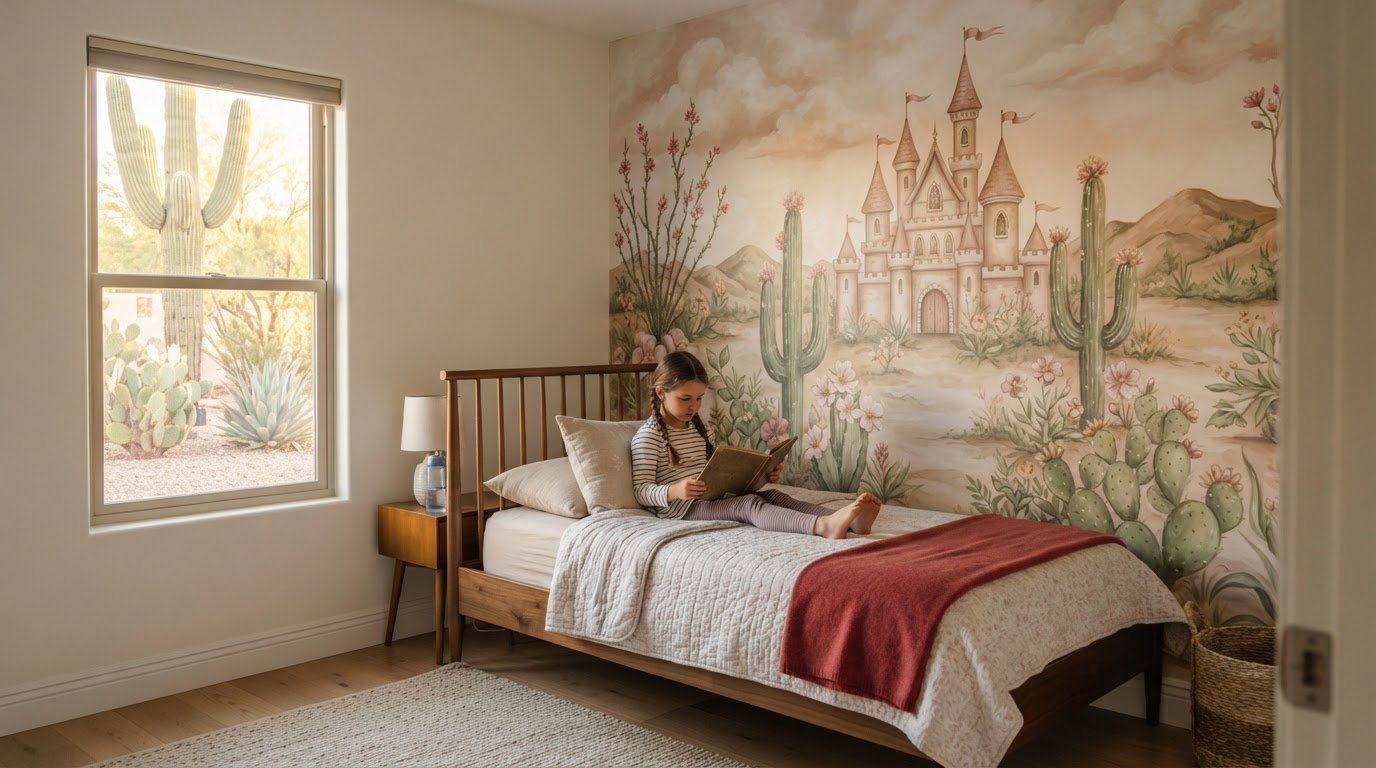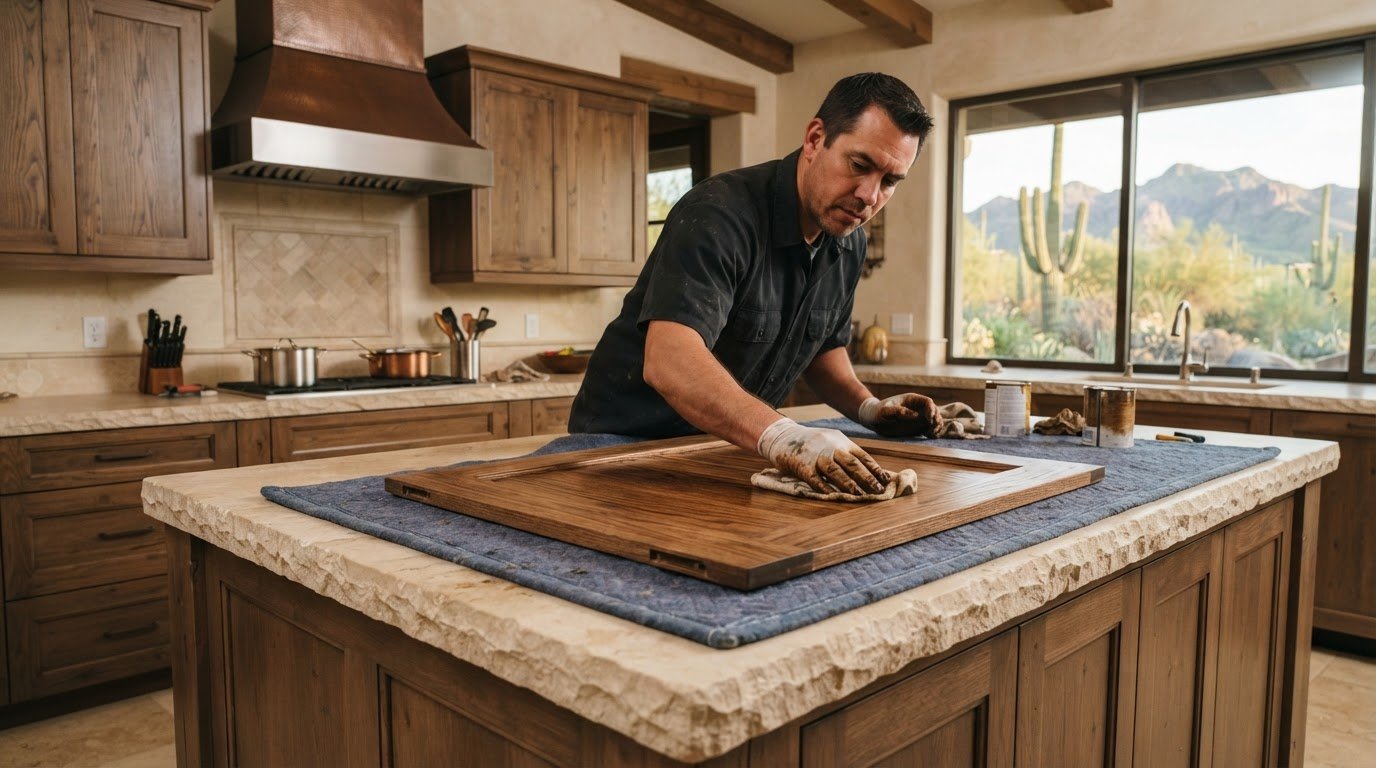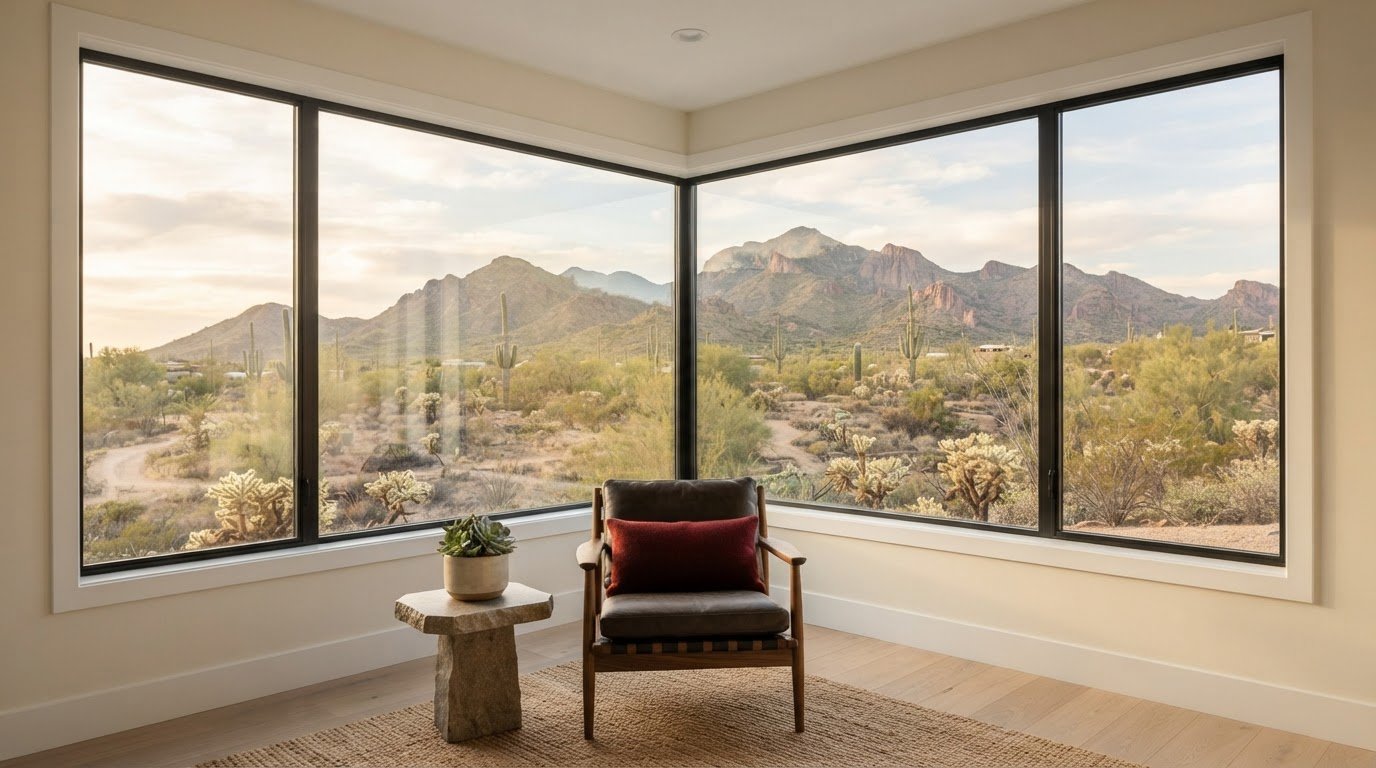

A child’s room can feel imaginative without becoming visually overwhelming. Decorative painting for kids’ rooms in Phoenix can bring a custom concept to life through a children’s room mural, a fairytale scene, or carefully placed details that complement the room’s colors and furnishings. The design works best when it reflects a child’s interests while leaving the space comfortable to live in as those interests change.
It’s natural to want a room that feels personal, polished, and welcoming, without letting a theme take over every surface. This guide explains how custom concepts, murals, and fairytale themes can shape a room, and what affects the design, project scope, and cost. You’ll also learn how professional decorative painting turns an idea into a considered design for a home in the Phoenix metropolitan area.
Key Takeaways
- Shape a custom concept around the child’s interests, the room’s existing design, and how the space needs to function.
- Explore how a mural’s placement, scale, and visual detail can create a focal point without overwhelming the room.
- Consider fairytale elements as part of a cohesive design, with thoughtful choices that keep the overall room balanced.
- See how a professional decorative painting plan can account for the room and its setting across the Phoenix metropolitan area.
Collaborating with clients on custom concepts
Before hiring a kids’ room painter in Phoenix, discuss how the concept will be developed, how the wall will be prepared, and what the project includes. Explain how your child’s ideas, room features, and preferred schedule should shape the finished design.
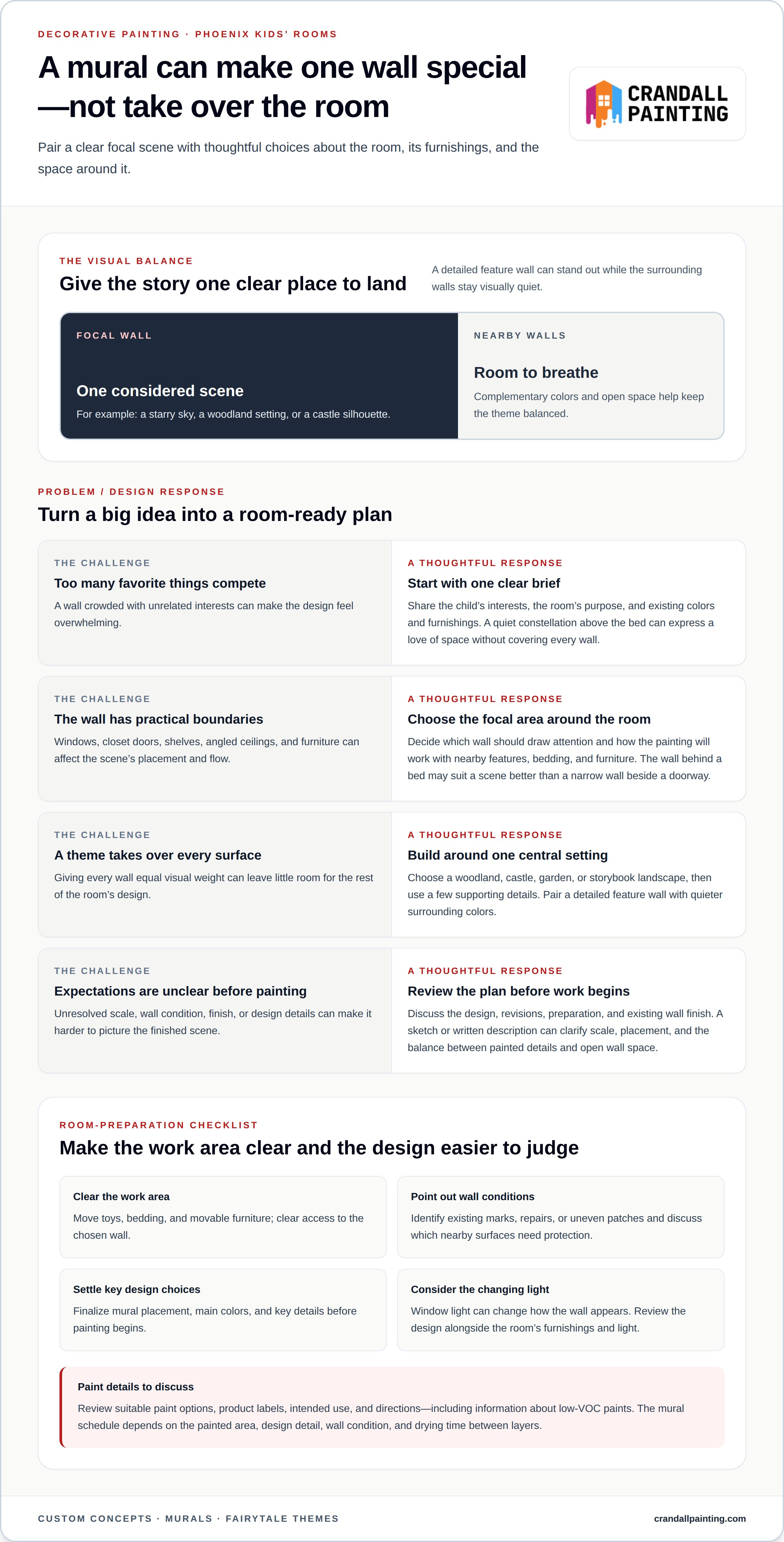
A strong concept starts with a clear brief, not a wall crowded with unrelated favorite things. Share your child’s interests, the room’s purpose, and its existing colors and furnishings. A child who loves space might inspire a quiet constellation above the bed rather than planets across every wall. This gives the painter a clear direction while leaving room for a balanced composition.
Next, identify the room’s practical boundaries. A window, closet door, built-in shelf, or angled ceiling can affect the design’s placement and flow. Decide which wall should draw attention and whether the painting should complement existing bedding or furniture. These details help the design feel at home in the room instead of competing with it.
- Describe the interest: A woodland theme could feature leaves, birds, or a single illustrated fox.
- Name the mood: Calm, playful, or storybook-inspired gives the design a useful emotional direction.
- Identify the focal area: The wall behind a bed may suit a scene better than a narrow wall beside a doorway.
- Set boundaries: Note preferred colors, elements to avoid, and furnishings the design should work around.
Discuss how the concept will be refined before painting begins. Review the design plan, revisions, and how the wall’s condition and existing finish affect preparation. A sketch or written description can clarify the scale of a tree, the placement of stars, or the balance between painted details and open wall space. Agreeing on these choices early helps set clear expectations.
Consider how the room may change as your child grows. A favorite animal or fairytale reference can feel personal without dictating every color or surface. A small castle silhouette, for example, can anchor a storybook theme while a restrained palette keeps the wider room flexible. This collaboration turns inspiration into a coherent design that suits both your child’s interests and the home’s existing details.
Custom-painted children’s room murals
For families planning decorative painting for kids’ rooms in Phoenix, a mural can make one wall a distinctive focal point. The design, paint selection, wall condition, and room preparation all influence the finished scene.
Custom Mural Design
A custom mural can reflect a child’s interests without covering every surface. A painter might place a sailing scene above the bed, for example, and keep nearby walls visually quiet. Doors, windows, shelving, and furniture all affect the composition, so account for them in the design.
Discuss the concept, suitable paint options, and wall preparation. Review product labels and intended use, including information about low-VOC paints. Ask about the specific product and its directions before painting begins, rather than assuming all paints have the same properties.
The schedule for a children’s mural in Phoenix depends on the painted area, design detail, wall condition, and drying time between layers.
Room Preparation
Before work begins, remove toys, bedding, and movable furniture from the work area. Clear access to the chosen wall and point out existing marks, repairs, or uneven patches. Agree on where supplies can go and which nearby surfaces need protection.
For example, move a crib away from the mural wall if it blocks access. Keep children’s belongings outside the immediate work area, and discuss when the room can be used again. Finalize the mural’s placement, main colors, and key details before painting begins. A decorative painting plan for kids’ rooms in Phoenix can also account for how window light changes the wall’s appearance throughout the day.
These details give the painter a clear visual direction. A starry sky, for instance, may need a different color balance beside a bright window than in a shaded corner. Reviewing the design alongside the room’s furnishings helps the mural feel considered and integrated.
Fairytale-themed rooms
A fairytale room can tell a story through painted scenery, character details, and coordinated finishes. A castle, forest, or enchanted garden gives the design a clear visual direction.
Fairytale Design Themes
Choose a central setting before adding smaller decorative elements. A woodland scene, for example, could include a winding path, leafy branches, and a fox near the lower wall. A castle theme might feature distant towers, clouds, and a painted arch behind the bed. These details create a scene without giving every wall equal visual weight.
Consider your child’s favorite stories while keeping the design flexible. A painted crown, starry sky, or forest doorway can evoke fairytales without reproducing a specific character. Decide which details matter most, then let the remaining wall space support the composition.
Popular Designs and Finishes
Popular choices for children’s rooms include woodland animals, castles, outer-space skies, gardens, and storybook landscapes. Finishes can range from clean, flat color fields to layered scenery, such as soft clouds behind a castle silhouette. The right combination depends on the room’s colors, furnishings, and desired level of detail.
Keep a themed room balanced by pairing one detailed feature wall with quieter surrounding colors. A painted garden of flowers and butterflies, for example, can sit against simple, complementary walls. A subtle border or painted canopy can offer a lighter touch than a full-wall scene.
The surface appearance also affects the mood. A matte-looking scene can feel soft and illustrative, while crisp outlines give shapes a more graphic character. Discuss the intended look alongside the design, since fine details and broad areas of color create different visual effects.
Before settling on a concept, consider the placement of the bed, shelves, and windows. A moon above a headboard or vines framing a reading corner can connect the imagery to the room’s layout. Thoughtful placement helps the theme feel integrated rather than added as an afterthought.
Murals and decorative painting in the Phoenix metropolitan area
In a Phoenix-area children’s room, decorative painting can range from a mural to smaller painted accents. The wall condition, room layout, and design all help determine the work involved.
Permit requirements vary by jurisdiction and project scope in the Phoenix metropolitan area, particularly if work goes beyond painting an existing interior wall. A mural and a project that changes the building are different scopes, so consider both when determining which requirements apply.
Decorative painting can include custom murals, themed wall designs, faux finishes, and decorative touch-ups. A painter might create a forest on one wall, add a simple border, or refresh a worn decorative detail. The best approach depends on the room and the visual effect you want.
Phoenix homes vary in room size, wall texture, natural light, and existing finishes. A mural designed for a broad, uninterrupted wall may need adjustments around a window, closet, or built-in shelf. Texture can also affect how fine details appear, so account for the wall’s condition when planning the design and preparation.
- Choose the project scope: Identify whether you want a full mural, a small accent, or a decorative finish.
- Note the wall features: Include windows, doors, shelving, and existing surface irregularities.
- Set the visual direction: Share a theme, preferred colors, and the room’s existing furnishings.
- Clarify the work area: Specify which wall or details the finished design should include.
These decisions turn an idea into a practical plan for the room. A child’s bedroom in Phoenix with a narrow wall might suit a vertical tree design, while a wider wall can accommodate a complete landscape. Proportioning the design to the available surface helps keep the result balanced.
For a tailored approach to a child’s room, explore decorative painting options suited to the space and desired finish.
Crandall Painting & Stucco: Decorative Painting
Crandall Painting & Stucco provides decorative painting for families seeking a professionally finished design in a child’s room. If you have a theme or concept, the service can translate it into a considered painted feature that works with the room’s layout and existing finishes.
A project can begin with the visual direction, such as a storybook scene, a painted accent, or a refined decorative detail. The room’s wall condition and the placement of windows, furniture, and shelving help shape the approach. For a broader view of the company’s decorative painting services, consider how the desired finish relates to the rest of the space.
For a custom room concept, contact Crandall Painting & Stucco to discuss your decorative painting project.
Turn a Room Idea Into a Thoughtful Plan
A child’s room can evolve as interests change, so consider how the design will feel beyond its first impression. For families planning decorative painting for kids’ rooms in Phoenix, start with a concept that feels personal today and fits comfortably with the home’s wider style.
Crandall Painting & Stucco also provides interior painting, exterior painting, and stucco repair for other painting and restoration needs around the property. For a child’s room, begin with the atmosphere you want to create, then discuss how decorative painting can bring that vision into the space.
Share your room concept with Contact Crandall Painting & Stucco and take the next step toward a setting your child can enjoy.