
The right stain color isn’t the first decision for a Carefree deck or patio. Start with the wood’s condition. Intense sun, dry air, monsoon rain, and temperature swings can affect exterior wood, so choosing a finish before assessing the surface may lead to the wrong approach. Effective wood staining for decks and patios Carefree begins with understanding what the wood needs.
You may already have a color in mind, but still wonder whether the existing finish should be renewed, removed, or addressed through more extensive restoration. Opacity affects how much grain remains visible, while peeling, fading, and uneven wear help determine the preparation needed for a consistent result.
This 2026 guide explains how to assess your deck or patio, compare clear, semi-transparent, and solid stain appearances, and account for local exposure. You’ll also learn how preparation shapes the project, so you can define the scope and choose a finish that complements your home. With a careful assessment, staining, refinishing, or restoration can be matched to the surface and the look you want.
Key Takeaways
- Decide whether your project is a finish refresh or involves broader wood restoration.
- Compare stain opacity by how much grain you want visible, while accounting for existing coatings and wear.
- Weigh DIY work against professional staining based on project complexity, desired finish, and available time.
- For wood staining for decks and patios Carefree, consider sun exposure, the existing finish, and how you use the space.
- A surface assessment helps shape a tailored approach to staining, refinishing, or restoration.
Wood Staining for Carefree Decks and Patios: What the Project Needs to Achieve
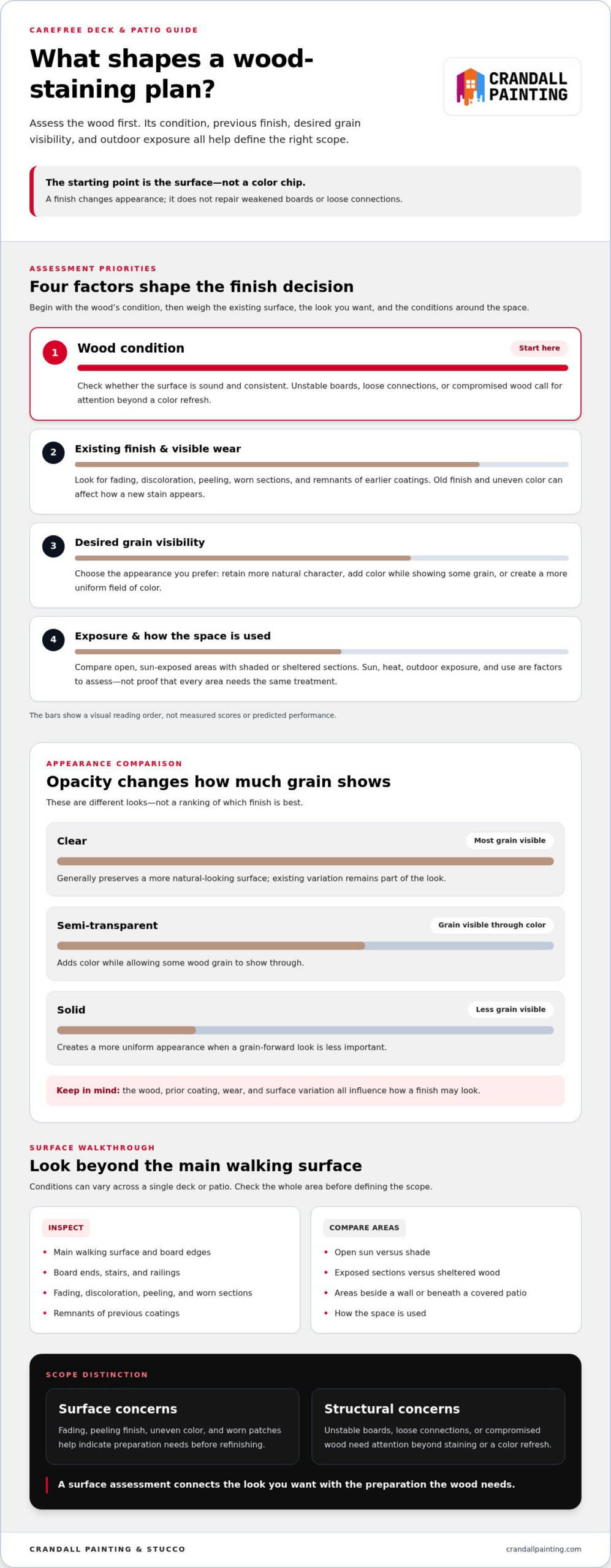
A well-planned finish starts with the surface, not a color chip or a general assumption about desert weather. A Carefree property may have open, sun-exposed decking, a shaded patio, and sheltered wood near the home. Each area can show different conditions. First decide how you want the surface to look, then assess what the wood needs to reach that result.
What should a deck or patio stain accomplish?
Wood stain changes or enhances wood’s appearance; it doesn’t repair weakened boards or loose connections. Depending on the wood and finish, the goal may be to retain visible grain and natural character or create a more uniform appearance. The right choice depends on the surface and your preferences, not a universal rule about which look is best.
Staining is different from structural repair. If boards feel unstable, connections are loose, or the wood appears compromised, those concerns need attention beyond a color refresh. In those instances, consulting dedicated timber and outdoor structure specialists like dreco-construction.com.au can help address underlying carpentry needs before applying a new finish. A sound surface that looks faded or uneven may be a candidate for refinishing, depending on its existing coating and condition. Staining, refinishing, and restoration can be considered together when planning the project.
Assess the actual wood before setting the scope
Walk the full deck or patio and look for changes from one area to another. Note fading, discoloration, peeling finish, worn sections, and remnants of earlier coatings. Check board ends, edges, stairs, and railings as well as the main walking surface. These observations help clarify whether the work is mainly a finish update or needs broader preparation and restoration.
The existing wood matters as much as the desired appearance. A finish that suits even, exposed grain may look different over a surface with inconsistent color or traces of an older coating. Assess the wood before setting the scope so the finish goal and preparation plan match the surface. The Wood Stain overview provides broader context on stain and its decorative uses.
Why Carefree exposure matters to the decision
Direct sun, heat, and outdoor exposure are relevant when planning wood staining for decks and patios Carefree properties. They’re factors to assess, not proof that every surface has the same wear or needs the same treatment. Shade, orientation, and shelter can create differences across one outdoor area. A section in full sun may look unlike one beneath a covered patio or beside a wall.
Compare those areas in person instead of choosing a finish based on location alone. Consider how the space is used, which sections receive the most exposure, and whether the existing surface looks consistent throughout. This helps define appearance and preparation priorities without assuming a particular finish or lifespan. Crandall Painting & Stucco provides wood staining and restoration based on the project and the condition of the wood.
How Wood Condition and Stain Opacity Shape the Finished Look
Opacity is a visual choice, but the surface underneath affects how the finish will look. A transparent appearance may reveal appealing grain and variation, while a solid finish can create a more consistent field of color. Neither is automatically right for every Carefree deck or patio. Consider the wood’s current appearance, any previous coating, and how much natural character you want to retain.
Clear, semi-transparent, or solid: which appearance fits?
Stain opacity determines how much natural wood grain remains visible through the finish. Clear finishes generally preserve a more natural-looking surface, subject to the product’s specifications. Semi-transparent finishes add color while allowing grain to show through. Solid finishes create a more uniform appearance, with less visible wood character. Consider how each effect will complement the home and the existing wood before choosing.
| Finish appearance | Grain visibility | Decision considerations |
|---|---|---|
| Clear | Most visible | Consider when preserving the wood’s natural appearance is a priority; existing variation will remain part of the look. |
| Semi-transparent | Visible through added color | Consider when you want to introduce color while retaining some grain character. |
| Solid | Less visible | Consider when you prefer a more uniform color and a grain-forward look is less important. |
These are differences in appearance, not a ranking. The USDA Forest Service Guide to Exterior Wood Stains offers additional context on choosing and applying exterior stains. For wood staining for decks and patios Carefree homeowners can use that general guidance alongside a close assessment of their own surface.
How existing wood changes the staining plan
Wood species, prior finish, wear, and visible deterioration influence how a stain may look and what preparation may be appropriate. An old coating can affect how evenly a new finish appears. Discoloration and worn patches may also remain visible if the surface isn’t addressed before refinishing. Preparation is part of the finish decision, not a detail to leave until after choosing a color.
Note where the color varies, whether an older finish is peeling or still present, and which areas show the most wear. These details help shape the preparation plan and opacity choice. A more opaque look may suit a preference for visual consistency, while a grain-forward finish can make surface variation more noticeable. The result depends on the wood and its condition.
Surface preparation and structural repair are different scopes. Peeling finish or uneven color signals a surface condition to address; unstable boards or loose connections need separate attention and won’t be fixed by stain. A careful assessment can distinguish refinishing from broader restoration. Crandall’s wood staining and restoration work connects finish selection with the condition of the wood.
DIY or Professional Deck Staining in Carefree: Compare the Real Scope
The right approach depends on more than the stain you select. Surface size, existing finish, preparation needs, desired consistency, and the time you can devote all shape the decision. A manageable surface in sound condition may suit a careful homeowner, while extensive wear or a highly visible outdoor area can make coordinated professional work practical. Neither route is right for every deck.
When a homeowner may consider a DIY project
A smaller, accessible area with straightforward preparation may be a reasonable DIY project if you have the time and patience to work methodically. Read and follow the product directions, including guidance on suitable working conditions and surface preparation. Leave enough time to prepare the wood and apply the finish consistently. Rushing either step can undermine the result.
Plan the full scope, not just the application. Consider:
- Surface condition: Is the existing finish uniform, and is the wood in suitable condition for refinishing?
- Preparation: Can you handle the required cleaning or finish removal carefully across the entire area?
- Consistency: Can you apply the finish evenly across boards, edges, and transitions?
- Time: Can you complete the work without leaving sections unfinished or disregarding the product directions?
DIY work gives you direct control over the process, but you’re responsible for assessment, preparation, and execution. Choosing a stain alone won’t determine the final result. The surface and the care taken at each stage matter, too.
When professional wood staining may be the better fit
A larger or highly visible deck may benefit from a coordinated approach, especially when a consistent finish is central to the desired look. Old coatings, uneven wear, or discoloration can make preparation harder to judge. An experienced assessment connects the surface condition with your finish preference and the work required, rather than treating application as an isolated step.
Professional craftsmanship brings assessment, preparation, and finish application into one considered plan. Crandall Painting & Stucco provides wood staining, refinishing, and restoration for residential properties, with an approach tailored to the wood and the home. Explore its wood staining and restoration services when planning wood staining for decks and patios Carefree.
For either route, define the result you want and be realistic about the surface. If the work appears more involved than a straightforward refresh, a professional assessment can help clarify whether staining, refinishing, or restoration best fits the project. Match the scope to your goals, the wood’s condition, and the time and skill available.
A Carefree Deck-Staining Checklist for Comparing Project Approaches
A clear project brief makes it easier to compare finishes and decide whether the work is a refresh or part of broader restoration. Before choosing a stain or approach, gather observations about the wood, its exposure, and how you use the space. These details are more useful than choosing a product based only on general descriptions of Carefree conditions.
Five questions to clarify before selecting a finish
- What wood surface is being treated, and what condition is it in? Identify whether it’s decking, a patio feature, or another outdoor wood element. Note worn or uneven areas.
- How much natural grain should remain visible? Decide whether you prefer a natural-looking surface, visible grain beneath added color, or a more uniform appearance.
- What existing coating, wear, or discoloration is present? Look for peeling finish, faded patches, and areas that differ from surrounding boards.
- Which areas receive direct sun or remain sheltered? Note changes in exposure, including shade from the home, overhead cover, or nearby landscaping.
- How is the outdoor area used? Consider walking routes, furniture placement, and which sections are most visible from inside or elsewhere on the property.
Together, these answers establish priorities without assuming one stain or method suits every surface. Product suitability and application details depend on the wood and the specific product directions. Use those directions when planning rather than relying on a general rule that ignores the surface in front of you.
How to describe the desired result clearly
Reference photos or finish examples can help translate “natural” or “more even” into a shared visual preference. Choose examples with comparable wood character and note what appeals to you: the color, visible grain, or overall uniformity. A photo is a conversation aid, not a promise that another surface will look identical.
Consider nearby materials and details, too. Stone, stucco, metal, trim, and exterior colors can affect whether a finish feels harmonious or visually distinct. Identify what you want the deck or patio to complement, especially where the surface connects to an adjoining outdoor living area—an approach often emphasized by landscape and construction specialists like Green Earth, LC when coordinating natural wood elements with surrounding site features.
Keep appearance goals separate from repair needs. A preferred color or opacity describes the finish; it doesn’t resolve concerns such as unstable boards or loose connections. If wear or an old coating suggests a wider scope, consider staining alongside refinishing or restoration. This distinction keeps the project brief aligned with the property’s actual needs.
For a tailored assessment of wood staining for decks and patios Carefree properties, explore Crandall’s wood staining and restoration services.
Plan Professional Wood Staining for Your Carefree Deck or Patio
A refined finish begins with a clear understanding of the surface and the result you want. Professional wood staining brings assessment, finish preferences, preparation, and application into one considered plan. Rather than treating stain selection as a standalone decision, account for the wood’s condition, the character you want to retain, and how the outdoor area fits your property.
What to expect from a considered staining project
Start by understanding the wood. Its current finish, visible wear, and overall condition help shape the preparation involved, while your preferences guide the color and degree of grain visibility. A deck with a consistent surface may call for a different plan than one with uneven color or remnants of an earlier coating. The scope should reflect those differences.
Preparation and finish planning work together. Consider the surface before application, and choose a finish suited to the wood and the appearance you have in mind. The approach depends on the project, so don’t assume a fixed process or timeline. Careful workmanship also involves the transitions and adjacent surfaces around the work area.
Before discussing a project, gather a few details:
- Surface: Identify whether the project involves a deck, patio, or another exterior wood feature.
- Condition: Describe fading, discoloration, peeling finish, or other visible changes.
- Preference: Share whether you want prominent grain or a more uniform appearance.
- Setting: Note which areas receive direct sun, sit under cover, or connect to other exterior materials.
These observations give the assessment a useful starting point and help distinguish a finish refresh from refinishing or broader restoration.
Take the next step with a local wood specialist
Crandall Painting & Stucco provides wood staining, refinishing, and restoration for residential properties in Carefree, Scottsdale, Paradise Valley, DC Ranch, Desert Mountain, Scottsdale Mountain, and Phoenix. For people searching from Scottsdale using the spelling “cottsdale,” the same practical starting point applies: describe the wood, its condition, and the finish you want. Crandall’s services consider the finish and the wood’s condition together, including projects that need more than a color update.
Sharing the surface type, current condition, and preferred look helps make a project discussion specific and productive. Reference photos can also convey the color and grain visibility you have in mind. The aim is a finish plan suited to the property, developed with care rather than assumptions.
Discuss your Carefree wood staining project and the finish you’d like for your deck or patio.
Shape an Outdoor Finish That Feels Like Home
Your deck or patio is part of how you experience your home, so its finish should suit the setting, not simply come from a color chart. Use what you’ve observed about the wood and the look you want to guide the project. Wood staining for decks and patios Carefree homeowners choose should respect the existing surface and complement the property.
A thoughtful project begins with a clear picture of the desired result and an honest view of the wood’s condition. From there, staining, refinishing, or restoration can be considered in context, with preparation and finish choices guided by the specific surface. The goal is a composed, natural-looking result that feels at home outdoors.
When you’re ready to explore possibilities for your deck or patio, start a conversation about your outdoor wood finish. A clear sense of what you’d like to preserve or change is a useful starting point.
Frequently Asked Questions
What is the best stain for a wood deck in Carefree?
There isn’t one best stain for every Carefree deck. The right choice depends on the wood, existing finish, and appearance you want. A deck with attractive grain may suit a finish that lets more of it show, while a surface with varied color may call for a more uniform look. Choose an exterior product intended for the surface and follow its directions. An assessment helps narrow the options.
Should I use a clear, semi-transparent, or solid stain on my patio?
Choose based on how you want to balance natural grain and color coverage. A clear appearance keeps more variation visible, while a solid finish creates a more consistent field of color. Consider how the patio will look beside nearby stone or stucco, not just as a sample viewed on its own. The wood’s species and condition affect the result, so use finish examples as a guide rather than expecting an identical appearance.
Can wood stain protect a deck from Arizona sun?
Exterior stain may help treat wood exposed to sun, but it can’t prevent all effects of Arizona weather or make a deck immune to fading and wear. Performance depends on the product, surface condition, and application, so read the label for its stated uses and limitations. In Carefree, compare exposed boards with covered areas as you assess the finish. A shaded section may not show the same changes as one in direct sun.
How do I know whether my deck needs staining or refinishing?
A deck may need fresh stain when its current finish has worn and you want to renew its appearance. Refinishing may be appropriate if an old coating is peeling, patchy, or preventing a consistent new finish. Look across the whole surface, including edges and stairs, because wear can vary. Unstable boards or loose connections are repair concerns, not problems stain can resolve.
How often should a wood deck in Carefree be restained?
There isn’t one restaining schedule for every deck. The interval depends on the product directions, wood condition, and how the surface is exposed and used. Rather than relying on the calendar alone, look for fading, an uneven appearance, or a finish that seems worn. Comparing exposed boards with sheltered areas can help you recognize when it’s time to reassess the surface and its care.
Can I stain a deck that has already been painted or sealed?
Don’t apply stain over paint or sealer without first understanding the existing coating and the new product’s directions. A coating can affect how stain adheres or appears, and preparation may be needed before considering a different finish. Check for peeling, intact coated areas, and exposed wood. If the existing finish is substantial or uneven, a surface assessment can help determine whether refinishing or restoration belongs in the plan.
Is professional deck staining worth considering for a Carefree home?
Professional staining can be worth considering when a deck is extensive, highly visible, or complicated by old coatings and uneven wear. The benefit is a coordinated assessment, preparation, and finish plan based on the surface and your preferred result, not an assumption that every project requires professional help. Crandall Painting & Stucco provides wood staining, refinishing, and restoration for Carefree properties, helping homeowners match the work to the wood’s condition and the home.