
What if your outdoor living space isn’t just a place for relaxation, but a high-value architectural asset currently being dismantled by the relentless Arizona sun? In the desert, the transition from a vibrant, rich wood finish to a brittle, graying surface happens with startling speed. You likely recognize the frustration of watching premium timber splinter under extreme heat or seeing a standard DIY attempt flake away after a single monsoon season. It’s a common challenge for Scottsdale homeowners who value both the structural integrity and the aesthetic elegance of their estates.
Choosing a professional deck staining service is a decision to move beyond temporary fixes and toward long-term preservation. You deserve a finish that doesn’t just look beautiful today but provides a sophisticated defense against intense UV rays and seasonal moisture. This guide reveals how the meticulous approach of a master craftsman can transform your weathered deck into a durable masterpiece. We’ll explore the essential techniques of wood restoration and the specific protective measures required to enhance your property’s curb appeal while securing your investment against the harshest elements our region offers.
Key Takeaways
- Understand how the intense Scottsdale sun and rapid temperature swings degrade wood fibers, making professional preservation a necessity rather than a luxury.
- Learn the meticulous five-step restoration process used by a premier deck staining service to ensure a flawless, long-lasting finish that withstands the desert’s extreme conditions.
- Discover the functional and aesthetic differences between penetrating oils and solid stains to choose the optimal level of UV protection for your specific wood type.
- Master the “Water Bead Test” and other visual diagnostic tools to accurately determine when your deck requires professional intervention to prevent permanent structural damage.
- Explore how bespoke color matching and expert wood restoration can significantly enhance your property’s value while reflecting your personal style and aesthetic.
Why Professional Deck Staining is Essential in the Arizona Desert
The Arizona desert is a master of erosion, and your outdoor living space is often its primary target. For the discerning homeowner in Scottsdale, a deck represents a significant architectural investment that requires more than just occasional cleaning. Without a professional deck staining service, the environment begins a slow but steady process of reclamation. This isn’t merely a cosmetic concern; it’s a fundamental battle for the structural survival of the timber. Maintaining a luxury estate requires a deep understanding of how our local climate interacts with organic materials.
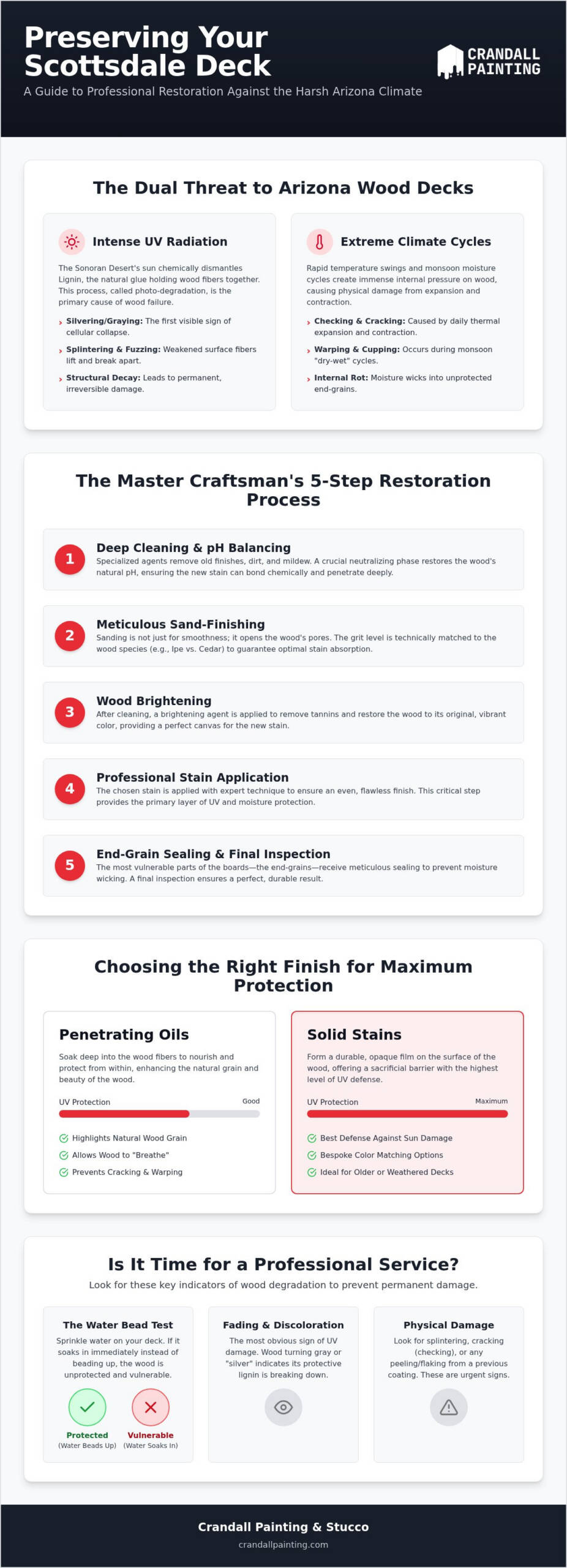
The science behind wood failure in our region is primarily driven by photo-degradation. When ultraviolet rays strike unprotected wood, they chemically dismantle lignin, the natural “glue” that binds cellulose fibers together. As this bond weakens, the wood begins to “silver” or turn gray. While some might find this weathered look charming, it’s actually the visible evidence of the wood’s cellular structure collapsing. A high-quality wood stain acts as a sacrificial barrier, absorbing these rays before they can reach the organic components of the wood. By investing in professional preservation, you aren’t just changing the color of your boards; you’re reinforcing their internal integrity.
Thermal expansion and contraction also play a critical role in the lifespan of Scottsdale woodwork. Our region experiences significant diurnal temperature swings, where the wood can heat up to over 150 degrees in the direct sun and then cool rapidly at night. This constant movement causes “checking” or small cracks to form along the grain. Professional staining provides the necessary flexibility to allow the wood to breathe and move without tearing the fibers apart. This disciplined approach to maintenance is a vital strategy for anyone looking to sustain high-end property values in a volatile environment.
The Impact of UV Radiation on Scottsdale Woodwork
Ultraviolet radiation in the Sonoran Desert is exceptionally intense, often bleaching natural pigments within months of exposure. This oxidation process weakens the surface, making it susceptible to “fuzzing” and deep splintering that can’t be easily sanded away. Professional-grade stains utilize trans-oxide pigments that provide a microscopic shield against this damage. UV-driven wood oxidation is the primary threat to Arizona decks, necessitating a proactive preservation strategy to prevent permanent structural decay.
Moisture Management in an Arid Climate
It’s a common misconception that moisture isn’t a threat in our dry climate. In reality, the “dry-wet” cycle during the monsoon season is devastating to timber. When heavy rains hit sun-baked wood, moisture is rapidly absorbed into the thirsty pores. As the sun returns and the water evaporates, the resulting internal pressure causes the wood to warp, cup, and crack. Our wood restoration and staining techniques focus on deep penetration to prevent this cycle. We pay meticulous attention to sealing the end-grains, which are the most vulnerable points for moisture wicking and internal rot.
The Master Craftsman’s Process: A Five-Step Restoration
A superior finish is never accidental; it’s the result of a disciplined, methodical approach to restoration. While many providers focus solely on the final coat, a true master craftsman understands that the longevity of a deck staining service depends entirely on what happens before the brush ever touches the wood. We follow a rigorous five-step protocol designed to revitalize the timber’s cellular health and ensure maximum pigment adhesion. This process moves beyond surface-level aesthetics to address the fundamental biology of the wood.
The journey begins with a deep cleaning and pH balancing phase. Over time, wood develops high alkalinity and trapped tannins that can interfere with stain chemistry. We utilize specialized neutralizing agents to restore the wood to its natural state. Once neutralized, we transition to sand-finishing. The choice of grit level is a technical decision based on the specific wood species. For dense hardwoods like Ipe, a specific grit is necessary to open the pores without damaging the surface. Conversely, softer woods like Cedar require a different approach to ensure the stain can reach the depth required for true Wood Preservation. This mechanical preparation ensures the wood is “thirsty” and ready to receive the protective oils.
Meticulous Surface Preparation
Successful restoration begins with the total removal of previous, failed coatings. This step is non-negotiable for luxury finishes, as any residual film will prevent the new stain from penetrating the wood grain. We utilize professional-grade cleaners that effectively strip away debris and grayed fibers without compromising the wood’s structural integrity. This process is detailed further in our guide on Restoring Natural Beauty: Wood Restoration Phoenix. By creating a pristine canvas, we ensure the new finish bonds at a molecular level.
Precision Application and Finishing
The method of application is where craftsmanship truly shines. While high-volume sprayers are efficient for coverage, they often leave the stain sitting on the surface rather than inside it. We prioritize hand-brushing or a “spray-and-back-brush” technique to force the pigments deep into the grain. This manual effort ensures a uniform finish and prevents the common DIY pitfalls of lap marks or pooling. It’s a labor-intensive process that yields a more durable and vibrant result.
Timing is equally critical in the desert. We never perform staining in the direct Scottsdale midday sun, as excessive heat causes the product to flash-dry before it can penetrate. Instead, we work with the shadows and temperature windows to apply a “wet-on-wet” coat. This ensures maximum saturation, allowing the wood to absorb the full benefit of the protective resins. If you’re ready to see how this level of detail can transform your outdoor space, consider reviewing our full range of wood restoration and staining services. The process concludes with a meticulous final inspection and a controlled curing period to guarantee a bespoke result that stands as a testament to quality workmanship.
Choosing the Right Finish: Penetrating Oils vs. Solid Stains
Selecting the perfect finish is a delicate balance between the raw beauty of the timber and the level of armor required. For a high-end deck staining service, this choice is never generic. It’s a sophisticated architectural decision that defines the character of your outdoor space. Penetrating oils are often the preferred choice for new, premium wood because they nourish the fibers from within. Unlike film-forming coatings that sit on top, these oils migrate into the wood’s cellular structure, replacing natural resins lost to the desert sun.
According to the USDA Forest Service’s research on Finishes for Wood Decks, penetrating finishes are generally superior for decks because they don’t trap moisture or eventually peel. In the Scottsdale area, we also navigate modern VOC regulations. While traditional oil-based stains offer deep saturation, high-performance water-based hybrids now provide a refined alternative. These products meet environmental standards while delivering the rich, “wet” look that homeowners expect from a master craftsman.
The Aesthetic of Natural Wood Grain
Owners of luxury estates in Paradise Valley frequently opt for transparent or semi-transparent stains. These are ideal for showcasing the exotic grain patterns of Ipe, Redwood, or Western Red Cedar. These finishes act as a functional “sunscreen” by using trans-oxide pigments that block UV rays while remaining nearly invisible to the eye. This approach preserves the inherent luxury of the material without masking its history. You can explore how we tailor these finishes for local estates in our guide on The Art of Wood Staining in Scottsdale Properties.
Maximum Protection with Solid Finishes
There are specific scenarios where a semi-solid or solid stain is the more disciplined choice for long-term value. If a deck is older or has suffered significant weathering, a solid finish provides a uniform, opaque look that masks surface imperfections. This provides the highest level of UV blockage available. It’s a strategic choice for high-traffic commercial areas or expansive south-facing residential decks that endure the full force of the Phoenix heat. At Crandall Painting & Stucco, we avoid standard retail products in favor of high-end formulations engineered specifically for breathability. Choosing the right deck staining service ensures that the product selected matches both your aesthetic goals and the technical needs of your property’s specific microclimate.
Evaluating Your Deck: When is it Time for a Service?
Maintaining a luxury estate requires a keen eye for the subtle shifts in material health. A high-end deck doesn’t collapse in a single season; instead, it offers quiet signals that its protective barrier is failing. For Scottsdale homeowners, recognizing these signs early is the difference between a routine restoration and a costly structural replacement. A professional deck staining service is most effective when applied at the first sign of vulnerability, ensuring the timber remains resilient against the desert’s extreme fluctuations.
The most reliable diagnostic tool for any homeowner is the Water Bead Test. To perform this, simply pour a small amount of water onto various areas of the deck, particularly high-traffic zones and spots in direct sunlight. If the water beads and sits on the surface, your current sealant is still performing its duty. If the water soaks into the wood within seconds, the internal fibers are exposed and thirsty for protection. This simple test serves as a critical indicator that your deck’s defensive layer has been compromised by UV exposure and heat.
Beyond the bead test, look for these visual red flags that indicate it’s time for professional intervention:
- Graying and Silvering: This is a sign of lignin breakdown and deep-seated oxidation, as we explored in previous sections.
- Alligatoring: This occurs when old, film-forming stains crack and peel in a pattern resembling reptile scales, indicating the coating has lost its flexibility.
- Splintering and Checking: Small vertical cracks along the grain are a sign of stress from the dry-wet cycle, allowing moisture to reach the core.
Identifying Early Signs of Wood Stress
It’s easy to mistake surface desert dust for permanent damage. However, true wood stress manifests as deep-seated oxidation that cannot be washed away with a garden hose. Checking, or the development of small cracks along the wood grain, is a primary concern in our arid climate. When these cracks appear, they provide a pathway for moisture to reach the core of the board, leading to internal rot during the monsoon season. The Water Bead Test is an essential diagnostic tool that allows homeowners to verify the integrity of their wood’s surface tension with a single splash of water.
Seasonal Considerations in Phoenix
Timing is a fundamental component of a successful restoration. We recommend scheduling a professional assessment in the early spring or late fall to avoid the complications of the monsoon humidity and the peak summer heat. Curing is a chemical process that requires stable, moderate temperatures to ensure the stain bonds correctly. Staining during the height of July can cause the product to dry too quickly, leading to a shallow finish that lacks durability. Preparing your property before the extreme dry season begins is a hallmark of disciplined estate management. For more insights on total property care, view our Exterior Painting Scottsdale: The 2026 Guide.
If your deck has failed the water bead test or shows signs of silvering, it’s time to consult with a master craftsman. Request a professional evaluation to secure your outdoor investment today.
The Crandall Difference: Bespoke Deck Staining and Restoration
At Crandall Painting & Stucco, we view every project as a significant investment in your lifestyle and property value. Our deck staining service is designed for the discerning homeowner who demands more than a superficial coat of color. We approach wood restoration with the precision of a master craftsman, focusing on the transformative power of quality workmanship. This “white-glove” philosophy ensures that every detail, from the initial cleaning to the final curing, is handled with meticulous care and professional mastery. We don’t just apply a product; we renew the wood’s natural elegance while providing a disciplined defense against the elements.
A Legacy of Excellence in Scottsdale
Established in 2004, we’ve spent over two decades refining our techniques to meet the unique challenges of the Sonoran Desert. Our deep roots in the local community give us an unparalleled understanding of the Phoenix environment and its effect on high-value assets. We cater specifically to the sophisticated architectural styles found in DC Ranch and Desert Mountain, where exterior woodwork is a defining feature of the estate. Our expertise in decorative arts and precision touch-ups allows us to perform complex restorations that standard contractors simply cannot match. Choosing a local expert ensures your home receives the specialized attention required for our specific climate.
Your Consultation with a Wood Restoration Expert
A professional evaluation with a Crandall expert is a methodical and transparent process. We begin with a high-level vision of transformation, moving into a technical assessment of your deck’s current condition. We evaluate the wood species, previous treatment history, and specific UV exposure patterns to recommend a bespoke solution. This thoroughness guides you toward a confident decision, ensuring that the materials and methods we select provide the greatest long-term value. We take immense pride in acting as a trusted local guide, helping you preserve the structural integrity and aesthetic beauty of your home.
By choosing a partner who understands the specific environmental nuances of Scottsdale, you’re securing a result that remains vibrant for years to come. Schedule your professional deck staining consultation today to begin the process of elite wood preservation and property renewal.
Securing the Longevity of Your Outdoor Architectural Assets
Your outdoor living space is a vital extension of your home’s architectural narrative. Preserving its elegance requires more than a superficial treatment; it demands a disciplined approach to wood health and environmental defense. By understanding the science of UV protection and the necessity of a meticulous restoration process, you’ve taken the first step toward securing your investment. A premier deck staining service doesn’t just improve appearance. It reinforces the structural integrity of the timber against the unique stresses of the Scottsdale climate, ensuring your deck remains a durable masterpiece rather than a weathered liability.
Since 2004, Crandall Painting & Stucco has specialized in the care of high-end estates throughout Scottsdale and Paradise Valley. Our dual expertise in wood restoration and decorative arts allows us to provide a level of precision that standard providers cannot replicate. We’re committed to delivering a white-glove experience that respects the value of your property and the quality of your lifestyle. We view every board and grain as a testament to our dedication to craftsmanship and professional mastery.
Don’t wait for the desert sun to compromise your deck’s elegance. Request a Bespoke Deck Staining Consultation today to begin your property’s transformation. We look forward to helping you maintain a beautiful, resilient outdoor sanctuary for years to come.
Frequently Asked Questions
How often should a deck be stained in the Scottsdale climate?
In our intense desert environment, horizontal wood surfaces typically require a professional deck staining service every two to three years. The extreme UV radiation and rapid thermal shifts accelerate the degradation of protective resins more quickly than in milder regions. Vertical elements like railings or pergolas often maintain their integrity for up to five years, but we recommend an annual inspection to catch early signs of silvering.
Can you stain a deck that has been previously painted or solid-stained?
It is entirely possible to transition a painted or solid-stained deck back to a natural finish, provided the existing film is completely removed. Our restoration process involves stripping and sanding the timber down to its raw fibers to ensure the new stain can penetrate the grain deeply. This meticulous preparation is essential for achieving a bespoke, high-end result that won’t flake or peel.
What is the best type of stain for the intense Arizona sun?
High-performance penetrating stains enriched with trans-oxide pigments offer the most robust defense against the Sonoran Desert’s radiation. These formulations act as a microscopic shield, blocking harmful rays while allowing the wood to breathe and move. We often recommend semi-transparent finishes for premium woods like Ipe or Cedar, as they provide significant protection without masking the timber’s inherent architectural beauty.
How long does the professional deck staining process take to complete?
A comprehensive deck staining service typically spans three to five days depending on the deck’s size and condition. This timeline allows for deep cleaning, a mandatory drying period, precise mechanical sanding, and the careful application of the finish. We prioritize a methodical pace to ensure each layer cures correctly, particularly during the temperate windows of spring and fall when conditions are optimal.
Is it necessary to sand the deck before every staining service?
Mechanical sanding is a non-negotiable step in our master craftsman protocol to ensure long-term durability. Even if the wood appears clean, dead fibers and surface pollutants can block the absorption of protective oils. By lightly sanding the surface, we open the wood’s pores and create a pristine canvas. This disciplined attention to detail ensures the finish saturates the grain rather than sitting on the surface.
What happens if I wait too long to stain my wood deck?
Delaying maintenance leads to irreversible wood degradation, often manifesting as deep “checking” or structural cracks. Once the sun dismantles the internal lignin, the wood becomes brittle and highly susceptible to internal rot during the monsoon season. Regular preservation is significantly more cost-effective than the total replacement of high-value architectural timber that has been allowed to weather beyond the point of professional restoration.
How long should I wait to use my deck after the staining is finished?
We recommend waiting at least 24 to 48 hours before allowing light foot traffic on the newly treated surface. For heavy patio furniture or decorative planters, it’s best to wait a full 72 hours to ensure the protective resins have completely cured. This patience protects your investment from scuffing or imprinting, allowing the finish to reach its maximum hardness and defensive potential.
Do you provide wood repair services along with staining?
Our team provides expert wood restoration and refinishing as a core component of our service philosophy. We address structural issues like splintering, minor rot, or warped boards before the staining process begins. This holistic approach ensures that the final result is both aesthetically pleasing and structurally sound, reflecting our commitment to the long-term value and beauty of your Scottsdale estate.