
What if the very architectural elements that define your estate’s character are quietly deteriorating under the relentless Arizona sun? You’ve likely noticed your once-vibrant mahogany doors turning a ghostly gray, or perhaps you’ve spotted the first hairline fractures in your hand-hewn vigas. It’s a frustrating reality for homeowners who value the warmth and prestige that natural timber brings to a luxury property. Investing in professional exterior wood restoration scottsdale is about more than just aesthetics; it’s a critical act of preservation for your home’s structural integrity and long-term market value.
This guide will show you how expert restoration techniques can reclaim the rich, deep tones of your wood and provide a robust shield against the most intense UV environment in the country. We’ll explore the science of desert-specific wood care, the latest shift toward natural matte finishes, and the essential maintenance steps that ensure your home remains a masterpiece of the Sonoran landscape. Discover how to transform weathered surfaces back into the stunning focal points they were always meant to be while securing the legacy of your architectural investment.
Key Takeaways
- Understand how high-altitude UV radiation and extreme thermal expansion specifically target and degrade the structural integrity of desert wood features.
- Learn to identify early warning signs of finish failure, such as subtle surface graying or brittle fibers, before they lead to permanent wood damage.
- Discover the specialized multi-step process for professional exterior wood restoration scottsdale, ensuring deep penetration and long-lasting protection.
- Explore the benefits of high-solid content stains and natural matte finishes that complement the modern aesthetic of luxury Scottsdale estates.
- Recognize why master-level craftsmanship is vital for preserving the architectural heritage and market value of high-end properties in the Sonoran Desert.
The Science of Wood Degradation in the Scottsdale Climate
While homeowners in other regions might worry about fungal rot or excessive rain, the Sonoran Desert presents a far more aggressive adversary. In Scottsdale, the primary threat is abiotic degradation, a process where the sun literally dismantles the cellular structure of your home’s most valuable architectural features. Understanding The Science of Wood Preservation is the first step in defending your estate’s value. Standard products designed for the humid East Coast or the damp Northwest often fail here within months. They simply aren’t formulated to withstand our specific “solar oven” effect.
UV Radiation: The Silent Destroyer of Wood Grain
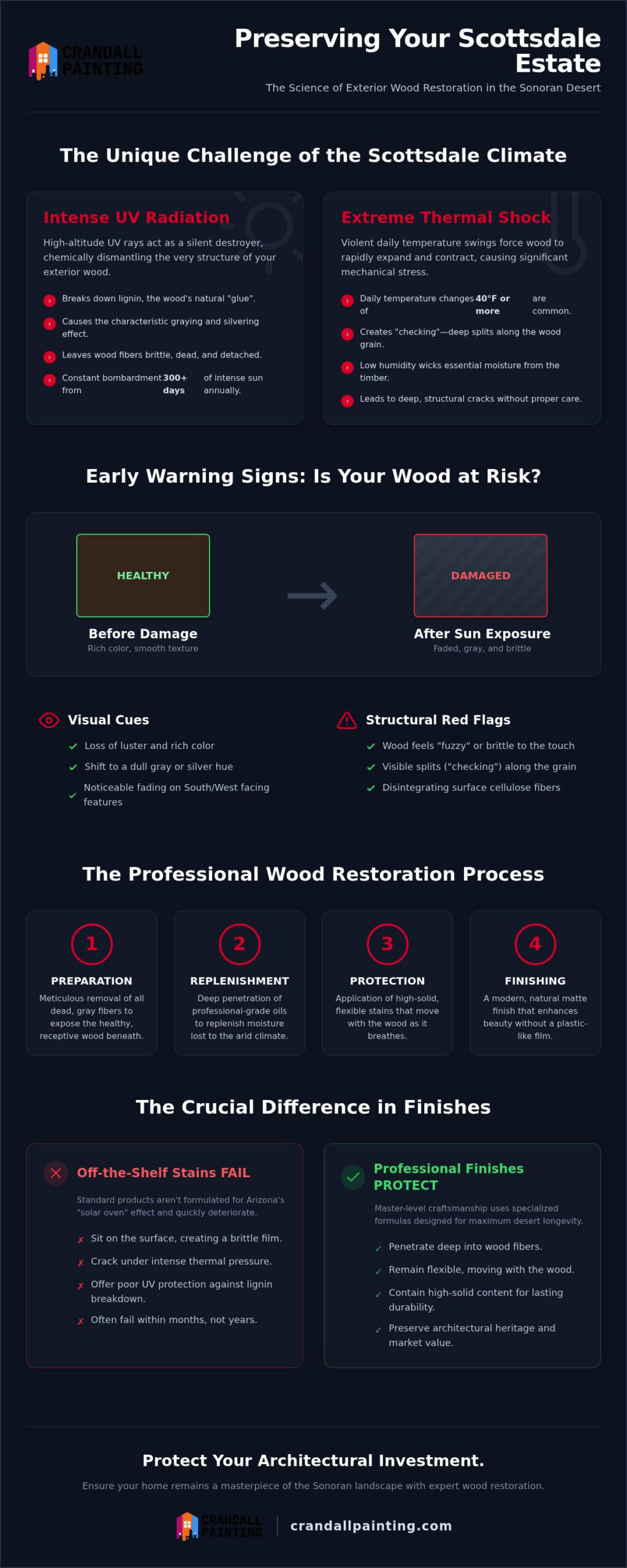
High-altitude UV radiation in Arizona acts as a chemical catalyst that breaks down lignin, the natural polymer that binds wood fibers together. When lignin degrades, the wood loses its structural “glue,” leading to the characteristic silvering or graying effect that many mistake for a simple color change. This graying is a sign that the surface fibers are dead and detached. With over 300 days of intense sunshine annually, Scottsdale wood features experience a constant bombardment that bleaches natural pigments and leaves the surface brittle. Effective exterior wood restoration scottsdale requires the meticulous removal of these dead fibers to reach the healthy, receptive wood beneath.
Thermal Shock and Low Humidity Challenges
The desert is a land of extremes. Temperature swings of 40 degrees or more in a single day are common, creating a cycle of violent expansion and contraction. When the thermometer hits 110 degrees, wood fibers expand; as the temperature drops to 70 degrees at night, they contract rapidly. This repetitive mechanical stress causes “checking,” a phenomenon where the wood splits along the grain. Scottsdale’s exceptionally low humidity exacerbates this by wicking moisture from deep within the timber. Without professional-grade oils to replenish this lost moisture, these small checks quickly turn into deep, structural cracks.
Most off-the-shelf stains fail because they sit on the surface, creating a brittle film that cracks under this thermal pressure. To maintain the integrity of your property, you need specialized wood restoration services that utilize high-solid, penetrating formulas. These professional treatments are designed to remain flexible, moving with the wood as it breathes in the desert heat. Investing in exterior wood restoration scottsdale ensures that your home’s beams, doors, and vigas remain supple and protected against the harsh environmental realities of our region.
Identifying Signs Your Wood Features Need Professional Restoration
Recognizing the early indicators of finish failure is essential for preserving the custom woodwork that defines a luxury Scottsdale residence. While the desert sun works slowly, the transition from a pristine architectural feature to a compromised asset can happen with surprising speed. Homeowners often overlook subtle shifts in texture and color, yet these are the very signals that the protective barrier has been breached. Early detection not only maintains the aesthetic brilliance of your estate but also prevents the need for invasive, costly structural repairs.
Evaluating Fading and Discoloration
The first sign of distress is typically a loss of luster, followed by a shift toward a dull gray or silver hue. This isn’t merely a cosmetic change; it’s the result of photo-oxidation. Photo-oxidation is the chemical process where intense UV light breaks down the wood’s organic components, leaving the surface fibers dead and detached. Because of our geographical positioning, south-facing and west-facing wood features fail significantly faster than those in the shade. You should pay close attention to custom entry doors and pergolas in these high-exposure areas. Expert Controlling Wood Decay strategies emphasize that once this graying occurs, the wood’s ability to shed water and resist heat is almost entirely gone.
Structural Red Flags in Desert Woodwork
Beyond color, the physical texture of the timber provides critical clues. Run your hand along a beam or viga; if it feels “fuzzy” or brittle, the cellulose fibers are disintegrating. In Scottsdale’s arid climate, we also watch for “checking,” which are deep splits that run parallel to the wood grain. While small checks are a natural part of wood’s character, deep cracks allow extreme heat to penetrate the core of the timber, drying it out from the inside. This is particularly dangerous for vigas, where cosmetic neglect can eventually lead to structural instability. If you notice your varnish is peeling or flaking like parchment, the bond between the coating and the wood has completely failed.
When these signs appear, it’s time to move beyond simple cleaning. A master-level approach to exterior wood restoration scottsdale involves more than just a new coat of stain; it requires stabilizing these cracks and rejuvenating the wood’s internal moisture. If you are seeing these red flags on your property, a professional assessment of your wood restoration needs can help secure your home’s architectural legacy before the damage deepens. Taking action now ensures that your home’s exterior remains as refined and resilient as the lifestyle it supports.
The Professional Wood Restoration Process for Arizona Estates
Restoring high-value architectural timber in the desert requires a methodical, multi-stage approach that respects the delicate nature of sun-damaged wood. Unlike standard painting projects, exterior wood restoration scottsdale demands a commitment to artisanal precision. We don’t believe in short-cuts like high-pressure power washing, which can tear into soft, desert-stressed fibers and cause permanent gouging. Instead, we follow a disciplined sequence designed to rejuvenate the wood from within while creating a flawless aesthetic finish.
Meticulous Surface Preparation
The foundation of a lasting finish is the absolute removal of dead, gray cellulose fibers. We employ precision sanding techniques to reach the healthy, receptive wood beneath. For custom entry doors and intricate carvings, hand-sanding is often the only way to preserve fine details without rounding off sharp architectural edges. Following the mechanical removal of debris, we use specialized chemical cleaners to lift deep-seated contaminants. This is followed by a neutralizing agent to ensure the wood’s pH balance is perfectly tuned. A balanced surface is vital; it ensures the subsequent stains and sealants bond chemically rather than just sitting on the surface.
Artisanal Staining and Refinishing
Once the grain is open and receptive, we apply specialized conditioners that act as a “primer” for moisture. These formulas penetrate deep into the timber to restore the flexibility lost to years of low humidity. Achieving a rich, even color across varied grain patterns requires a Master Craftsman’s eye. We utilize advanced staining techniques that highlight the wood’s natural character rather than masking it under a heavy, opaque film. By applying multiple layers of high-solid content stains, we build a formidable UV barrier that shields the wood from the Scottsdale sun’s relentless energy.
Our team often integrates decorative painting expertise into this stage, using subtle touch-ups and faux finishing to ensure every beam and viga looks unified and pristine. This meticulous attention to detail transforms weathered structures back into the crowning jewels of your estate’s exterior. By choosing a comprehensive wood restoration strategy, you’re not just improving curb appeal. You’re making a long-term investment in the durability and elegance of your property.
Selecting the Best Finishes for Maximum Desert Longevity
Choosing a finish for a Scottsdale estate is a high-stakes decision where chemistry meets artistry. In our unique environment, the heat isn’t just a weather condition; it’s a constant chemical catalyst that accelerates the breakdown of inferior coatings. Many homeowners are misled by generic labels promising “all-weather” protection, only to see those finishes flake away within a single summer. Successful exterior wood restoration scottsdale relies on selecting professional-grade products that remain flexible and breathable under the intense Sonoran sun.
High-Solid and UV-Rated Stains
The secret to desert durability lies in the “solids” content of a stain. Solids are the resins and pigments that remain on the wood after the solvents evaporate; they’re the actual physical barrier against the elements. We prioritize high-solid formulas because they provide a denser shield against UV penetration. While dye-based stains offer beautiful clarity, they lack the molecular weight to resist bleaching. Instead, we utilize trans-oxide pigments. Trans-oxide pigments act as a microscopic suit of armor, reflecting UV rays before they can reach the delicate lignin beneath. These pigments provide the “sunscreen” your wood needs to maintain its rich, warm honey or walnut tones without turning gray.
Topcoats and Sealants for High-Value Features
For high-touch, high-value features like custom mahogany entry doors or ornate gates, we often recommend marine-grade finishes. These spar urethanes are engineered for the harshest maritime environments, offering exceptional UV resistance and flexibility. However, for larger surfaces like pergolas or siding, penetrating sealants are often superior to film-forming coatings. Film-forming sealants tend to “bake” in 110-degree heat, becoming brittle and eventually cracking. Penetrating oils, however, soak into the grain to nourish the wood from within, allowing it to expand and contract without the risk of peeling.
Current trends for 2026 favor low-sheen, matte finishes that celebrate the wood’s natural texture over high-gloss alternatives. These natural-look oils are not only aesthetically sophisticated but also easier to maintain. To prevent total finish failure, we recommend a “refresh” coat every 18 to 24 months for south-facing exposures. This proactive approach is far more cost-effective than a full restoration. If you’re ready to upgrade your home’s protection, reach out for a professional wood staining and refinishing consultation to ensure your architectural features endure for decades.
Why Master Craftsmanship is Vital for Scottsdale Wood Restoration
In the exclusive enclaves of DC Ranch and Paradise Valley, a home’s exterior is a statement of refined taste and architectural legacy. Entrusting these high-value assets to a general contractor can be a costly mistake. There’s a fundamental difference between a standard painter and a restoration specialist. While a painter might focus on surface aesthetics, a specialist in exterior wood restoration scottsdale understands the deep chemical needs of desert timber. We don’t just apply a coating; we perform a methodical preservation of the wood’s structural and visual integrity.
Choosing professional preservation offers a significantly higher long-term ROI than frequent, low-quality repairs. Cheap stains and rushed preparation lead to finish failure within a single season, forcing you into a cycle of constant maintenance. By contrast, master-level craftsmanship uses superior materials and labor-intensive techniques that extend the life of your wood by years. This disciplined approach protects your investment and ensures your property maintains its luxury status in a competitive market.
Bespoke Solutions for Unique Architectural Elements
Traditional Southwestern architecture relies on features like hand-hewn vigas, ornate corbels, and massive custom entry doors to create its distinctive character. These elements require a nuanced touch to ensure the restoration matches the original intent of the architect. Whether we’re refining the intricate grain of a mahogany door or stabilizing the core of a structural beam, our process is tailored to the specific species and condition of the wood. For a broader perspective on how these techniques apply across the valley, you can refer to our Wood Restoration Phoenix guide for broader regional context.
The Crandall Commitment to Excellence
Crandall Painting & Stucco leverages decades of local environmental knowledge to provide a “white-glove” experience for our discerning clients. We understand that a restoration project on a luxury estate requires more than just technical skill; it requires a respect for the property and a commitment to meticulous cleanliness. Our team acts as a trusted partner, guiding you through the transformation of your home’s exterior with quiet confidence and professional mastery.
Every project we undertake is viewed as a significant investment in your lifestyle and property value. We ensure that the final result not only protects against the sun but also enhances the deep, rich beauty that only natural wood can provide. If you’re ready to secure the future of your home’s most valuable architectural features, we invite you to schedule your professional wood restoration consultation today. Experience the transformative power of true master craftsmanship.
Securing the Architectural Legacy of Your Scottsdale Estate
Preserving wood in the desert isn’t just about aesthetics; it’s a vital defense against the Sonoran sun’s relentless energy. We’ve explored how high-altitude UV radiation dismantles wood lignin and why specialized trans-oxide pigments act as essential sunscreen for your home. From identifying the first signs of surface graying to the artisanal application of penetrating oils, professional exterior wood restoration scottsdale ensures your property remains a refined masterpiece. Every beam and viga deserves a strategy that respects its natural character while providing a robust shield against the elements.
Crandall Painting & Stucco brings over 20 years of local expertise to the Phoenix metro area, specializing in the meticulous care of Scottsdale’s finest estates. We understand the precise requirements for Southwestern features like vigas and corbels, offering a white-glove service that prioritizes both beauty and longevity. When you’re ready to rejuvenate your home’s exterior and secure its market value, we invite you to Request a Bespoke Wood Restoration Consultation. Your estate’s architectural heritage is a legacy worth protecting, and we’re here to ensure it endures for decades to come.
Frequently Asked Questions
How often does exterior wood need to be restored in Scottsdale?
Every two to four years is the standard interval for exterior wood restoration scottsdale to maintain a pristine finish. However, south and west-facing features often require a maintenance coat every 18 to 24 months due to intense UV exposure. Regular “refresh” coats prevent the total breakdown of the lignin and protect the architectural integrity of the wood. Consistent maintenance is far more cost-effective than a complete restoration once the finish has fully failed.
Can gray, sun-damaged wood actually be restored to its original color?
Professional restoration can reclaim the wood’s vibrant natural tones even after significant sun damage. The process involves meticulously removing the dead, oxidized surface fibers through precision sanding and chemical cleaning. Once the healthy, receptive wood is revealed, specialized high-solid stains and trans-oxide pigments are applied to saturate the grain. This process doesn’t just mask the damage; it physically rejuvenates the timber to its original warmth, luster, and architectural beauty.
What is the best time of year for wood restoration in Arizona?
Late autumn, winter, and early spring are the ideal seasons for wood care in the desert. During these months, the moderate temperatures and lower UV intensity allow stains and sealants to cure slowly and evenly. We avoid the extreme heat of mid-summer, as temperatures above 100 degrees can cause finishes to flash-dry on the surface. This prevents proper penetration into the grain and leads to premature peeling or uneven color.
Is it better to stain or paint exterior wood features in the desert?
Staining is generally superior for preserving the natural beauty and structural health of desert wood. Unlike paint, which forms a brittle film that can bake and crack in the sun, penetrating stains allow the wood to breathe. This flexibility is essential during the violent thermal expansion cycles common in Scottsdale. Stains also highlight the unique grain patterns of luxury woods like mahogany or cedar rather than obscuring them under opaque layers.
How long does the professional wood restoration process take?
A typical project for a luxury residence usually spans three to five days. This timeline accounts for the meticulous surface preparation, cleaning, neutralizing, and the application of multiple coats. Each layer requires specific drying times to ensure a proper bond and a flawless finish. Larger estates with extensive vigas or wrap-around pergolas may require additional time to maintain our high standards of detail and white-glove craftsmanship.
Do you restore vigas and structural beams on Southwestern-style homes?
We specialize in the preservation of authentic Southwestern architectural elements like vigas, corbels, and latillas. These features are often the most vulnerable to sun damage because of their exposed ends and horizontal surfaces. Our team uses specialized techniques to stabilize checking and protect the core of these structural timbers. Professional exterior wood restoration scottsdale ensures these iconic elements remain a point of pride and a valuable asset for your property.
What is the difference between wood staining and wood restoration?
Staining is the simple application of color, while restoration is a comprehensive rejuvenation process. Restoration includes identifying finish failure, precision sanding to remove dead fibers, and deep conditioning to replenish lost moisture. While a painter might just “re-stain” over damaged wood, a restoration specialist addresses the underlying health of the timber. This master-level approach ensures the new finish bonds properly and lasts significantly longer in our harsh climate.
How can I tell if my wood is rotting or just sun-damaged?
Sun damage typically presents as a silvery-gray color and a “fuzzy” or brittle surface texture. Rot, which is less common in our arid climate, manifests as soft, spongy wood that crumbles when poked with a screwdriver. Sun damage is an abiotic breakdown of the lignin, whereas rot involves biological decay. If you’re unsure, our expert team can perform a detailed assessment of your home’s exterior wood features to determine the best path forward.