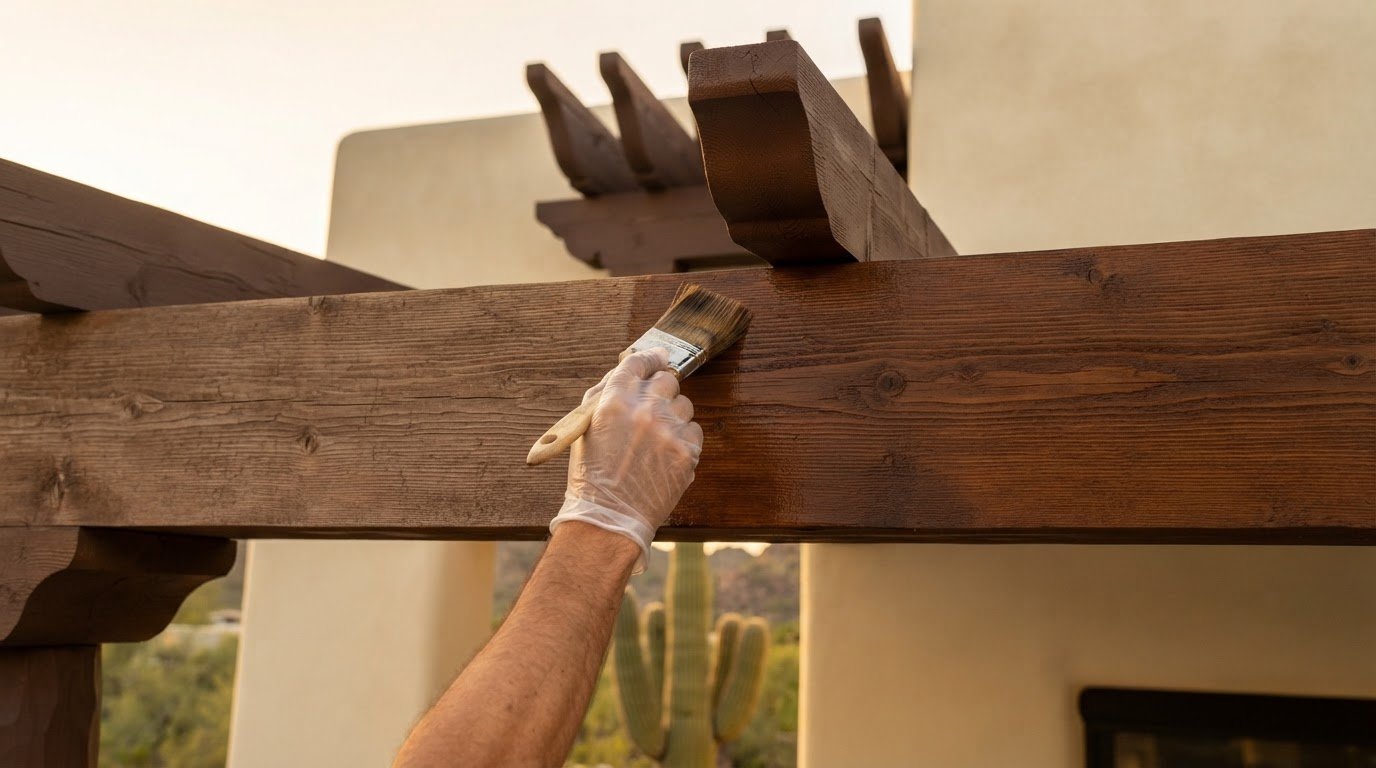

In Desert Mountain homes, vigas are exposed beams that project through stucco walls or support porches and patios, while latillas are smaller wood slats between beams on ceilings. Wood restoration for vigas and latillas in Desert Mountain starts with identifying whether the wood needs refinishing or has damage that calls for replacement. Arizona’s intense sun, moisture entering beam pockets, and wood-damaging insects can all contribute to deterioration.
This distinctive timberwork helps give a home its character, so preserving its appearance matters alongside addressing visible wear. This article explains how vigas and latillas are used, why they can deteriorate in Arizona, and what an inspection can reveal about their condition. You’ll also learn how finish matching can help restoration complement the home’s materials and architectural style.
Key Takeaways
- Vigas and latillas have distinct roles in traditional woodwork; recognizing them helps clarify what needs attention.
- Sealed, treated vigas in Arizona may last 20-40 years, depending on exposure, but visible wear alone doesn’t determine whether a beam is sound.
- Look for deterioration such as cracking, softness, or discoloration, then use an inspection to distinguish surface wear from deeper damage.
- Matching the stain and finish to the surrounding wood helps restoration feel cohesive while protecting the home’s architectural character.
Why Do Vigas Fail in Arizona?
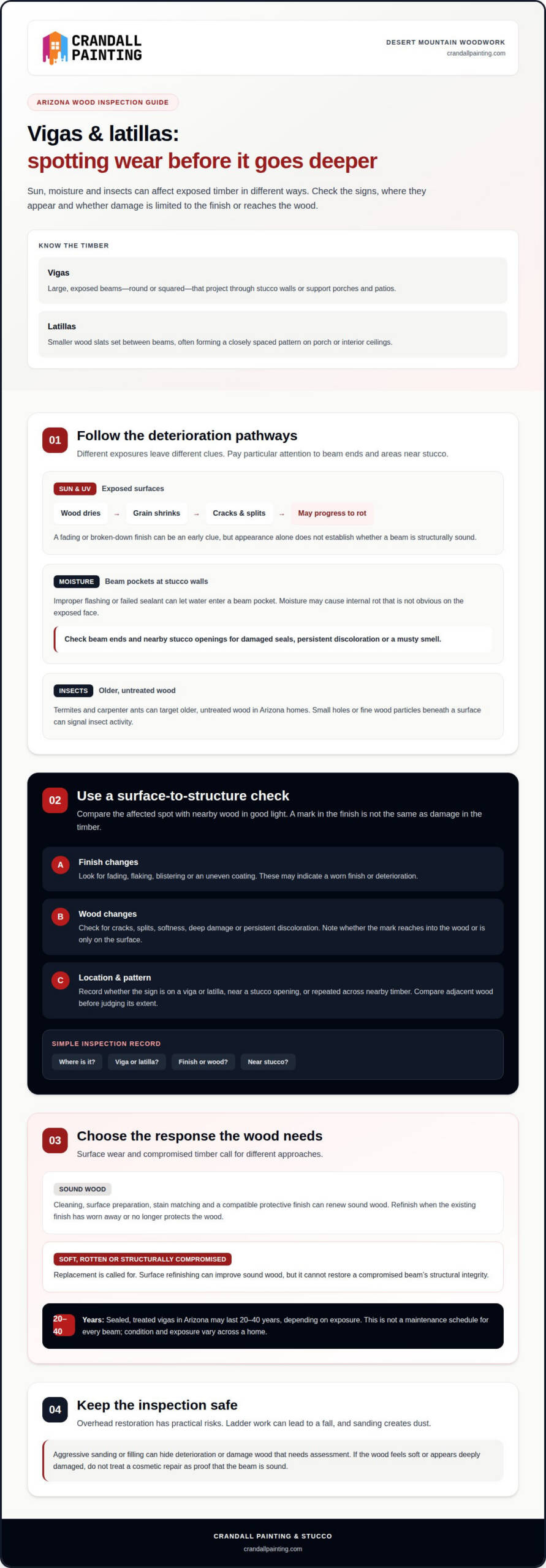
Sealed, treated vigas in Arizona may last 20-40 years, depending on exposure. That range is not a schedule for every beam. A viga facing direct sun and weather can deteriorate sooner than one protected beneath a deep patio cover. The wood’s condition, existing finish, and exposure all influence how long it remains serviceable.
Arizona’s intense sun and ultraviolet exposure dry exposed wood. As moisture leaves, the grain can shrink, crack, and split; continued damage can progress to rot. A fading finish may be an early sign that a beam needs attention, but appearance alone cannot establish its structural condition. Inspect sun-facing surfaces and beam ends for changes in texture, cracks, and finish breakdown.
Clean vigas and latillas when dust and debris accumulate. Check the finish as part of routine visual care, then reseal or refinish when it has worn away or no longer protects the wood. Exposure varies across a Desert Mountain home, so use the condition of each surface, rather than a fixed calendar interval, to guide maintenance.
Water can enter a beam pocket when flashing is improper or old sealant has failed. The resulting moisture may cause internal rot that isn’t obvious on the exposed face. Termites and carpenter ants can also target older, untreated wood in Arizona homes. Pay particular attention to beam ends at stucco walls, where damaged seals or concealed moisture can affect the wood unseen.
DIY restoration carries practical risks: reaching overhead beams by ladder can lead to a fall, and sanding creates dust. Aggressive sanding or filling can also hide deterioration or damage wood that needs assessment. Soft, rotten, or structurally compromised wood calls for replacement, which is safer and more cost-effective than restoring that viga. Surface refinishing can improve sound wood, but it cannot restore a compromised beam’s structural integrity.
Sun-driven drying can lead directly from weather exposure to visible damage: wood may crack and split, and continued surface damage can progress to rot. This helps explain why vigas do not all deteriorate at the same pace; exposed wood takes the effects of Arizona’s intense sun more directly than sheltered wood.
What Exactly Are Vigas and Latillas?
In Desert Mountain homes, vigas are large, exposed beams, round or squared. They project through exterior stucco walls or support porch and patio structures. Latillas are smaller wood slats installed between beams. They appear on porch or interior ceilings, creating a closely spaced timber pattern. Their different sizes and positions help identify which woodwork needs attention.
A viga’s exposed end may extend beyond a stucco wall, while another supports a covered patio. Latillas sit between larger beams, often repeating across a ceiling. This distinction matters during inspection: check the beam ends, visible faces, and smaller slats between them. A single worn section can stand out against otherwise consistent woodwork.
Look beyond ordinary differences in grain or color. A finish that flakes, blisters, or looks uneven may indicate deterioration or a failing coating. Dark marks, persistent discoloration, or a musty smell near a beam pocket can point to moisture concerns. Small holes or fine wood particles beneath a surface can signal insect activity. These signs warrant closer attention, especially near stucco openings.
Check each surface in good light, comparing a viga with nearby beams and latillas. Note whether a mark is only in the finish or extends into the wood. Surface scratches and faded stain differ from areas that feel soft or show deep damage. A discolored patch beside a wall opening deserves attention because the surrounding wood may conceal further deterioration.
- Finish change: Flaking or blistering across one latilla may suggest coating failure.
- Surface change: A soft or deeply damaged viga needs more than cosmetic attention.
- Possible pests: Holes or fine particles beneath a beam call for careful assessment.
- Localized marks: Compare the affected spot with adjacent wood before judging its extent.
For Desert Mountain woodwork, recording each affected location helps distinguish isolated wear from a broader pattern. Note whether the sign appears on a viga, a latilla, or both, and whether it is near stucco. That record gives an inspection a clear starting point.
Staining and finish matching
A considered finish preserves the character of exposed wood and helps it sit naturally within the home. Restoration balances surface preparation, color selection, and protection.
Restoration and Refinishing Steps
Restoration and refinishing renew sound wood through preparation, stain matching, and protective finishing. The sequence matters: uneven preparation can leave a viga visibly different from nearby latillas.
Begin by assessing the wood and existing coating. Remove dirt and loose finish, then prepare the surface without obscuring the grain. Test a stain on a discreet area or matching offcut. Compare it with surrounding beams in the same light before treating the full surface.
After selecting the color, apply the stain evenly and finish with a compatible protective coat. Follow the product label for application and drying instructions. This process for exposed vigas and latillas helps avoid abrupt differences between refreshed surfaces and original woodwork.
Preservatives, Stains, and Sealers
Preservatives, stains, and sealers play different roles in a wood finish system. Choosing compatible products for exposed Arizona wood matters because strong sun can wear finishes and alter the appearance of unprotected surfaces.
Choose an exterior wood preservative and stain or sealer labeled for outdoor use. For Desert Mountain’s high-UV conditions, look for label guidance on ultraviolet protection. Match the product to the wood and existing coating; incompatible layers can affect adhesion and appearance.
A transparent finish emphasizes natural grain, while a tinted stain changes the wood’s tone. Test the intended product on a small, discreet section first. Check the color beside nearby beams, latillas, and ceiling materials, since different wood surfaces may absorb stain differently.
Follow the selected product’s label for preparation and reapplication. A sealer cannot correct uneven stain or disguise damaged wood. Careful testing and product compatibility help create a consistent finish across exposed beams and smaller ceiling slats.
Viga and latilla inspection
A careful inspection separates finish wear from damage to the wood itself. Examine each exposed beam and ceiling slat individually, then note its location, condition, and relationship to nearby stucco. A map or photographs can help track whether a mark is isolated or appears across several surfaces.
Start with the exposed faces and ends of each viga. Compare color, grain, and surface firmness with adjacent beams. Look closely where a beam enters a stucco wall, since moisture can collect inside a pocket while the exterior looks sound. Inspect latillas along their length, especially where they meet larger beams or ceiling edges.
Record findings by location instead of grouping every mark as general wear. For example, note a split at a patio beam end separately from finish loss on an interior ceiling slat. Include visible holes, dark patches, lifted coatings, and soft areas. These details help distinguish cosmetic refinishing from concerns requiring deeper assessment.
Damaged wood may be repairable when the problem is limited to the surface. A soft, rotten, or structurally compromised viga should be replaced rather than cosmetically refinished. The wood’s condition and structural integrity determine whether repair is appropriate. An inspection sets the scope for wood restoration for vigas and latillas in Desert Mountain homes.
For wood restoration for vigas and latillas in Desert Mountain, review the property’s applicable HOA or architectural guidelines before changing an exterior finish or replacing a beam. These documents can guide decisions about visible repairs, colors, and replacements, helping align proposed work with the property’s requirements.
- Beam ends: Compare exposed wood with the area beside stucco.
- Latilla joints: Look for changes where slats meet beams.
- Surface condition: Record soft spots separately from coating wear.
If inspection reveals damaged stucco around a beam pocket, stucco repair can address the surrounding surface as part of the project.
Crandall Painting & Stucco: Exterior Painting
Crandall Painting & Stucco can help bring exposed wood and surrounding exterior finishes into a cohesive, carefully considered condition. When vigas and latillas are sound and ready for finish work, wood staining and refinishing can renew their appearance while preserving the home’s architectural character. Exterior painting and stucco repair can also address nearby surfaces, helping the renewed woodwork sit naturally against its surroundings.
The right scope depends on what an inspection reveals. Finish work suits sound wood, while soft, rotten, or structurally compromised beams need replacement rather than cosmetic refinishing. Once the wood’s condition and desired finish are clear, contact Crandall Painting & Stucco to discuss your exterior painting or wood staining and refinishing project.
Plan a Cohesive Finish for Your Home
Think of exposed timber as part of a broader design decision, not an isolated surface. The finish you choose can influence how vigas and latillas relate to stucco, exterior colors, and the interior palette. A considered plan helps keep future work aligned with the home’s architectural character.
For wood restoration for vigas and latillas in Desert Mountain, Crandall Painting & Stucco offers wood staining and refinishing alongside related painting work. Its services also include exterior painting, stucco repair, and interior painting, supporting a coordinated approach across connected surfaces. Share the areas you want to address and the appearance you hope to preserve when discussing your project.
A thoughtful next step can turn a maintenance concern into a clear plan for your home’s finishes. Contact Crandall Painting & Stucco to discuss your project and move forward with confidence.
Frequently Asked Questions
What are vigas and latillas, and what wood species are commonly used in Desert Mountain homes?
Vigas are larger exposed wood members, while latillas are smaller slats set between beams; the terms describe their architectural roles, not a particular species. The wood used in an existing Desert Mountain home depends on its original construction. Before choosing a stain, review project records or have the wood identified, since matching a finish by color alone can produce a noticeably different result.
How do professionals inspect vigas and latillas for rot, insect damage, cracking, and UV deterioration?
A professional inspection examines visible faces, beam ends, undersides, and wall entry points, then records suspected decay, insect evidence, cracks, and coating breakdown separately. For example, a crack continuing beneath a finish differs from a surface-only split. Location-labeled photographs help homeowners track findings and provide a clear starting point for deciding whether the next step is finish work or further structural evaluation.
How can homeowners find qualified contractors for viga and latilla restoration near Desert Mountain, Scottsdale?
Desert Mountain and Scottsdale homeowners can turn to Crandall Painting & Stucco for wood restoration and wood staining and refinishing. Its services also include exterior painting and stucco repair for projects involving nearby surfaces. When describing your project, identify which beams or slats need attention and share the visible concerns. This helps frame a focused conversation about the restoration work your home needs.