
What if the best nursery color is the one that feels restful in daylight and after dark? For Phoenix homes, interior painting for bedrooms and nurseries in Phoenix can start with soft, adaptable hues and finishes suited to each room’s use. Low-VOC paints can help reduce environmental impact and improve indoor air quality.
It’s natural to want a nursery that feels gentle and inviting while coordinating with the rest of your home. Planning interior painting for bedrooms and nurseries in Phoenix means considering color, sheen, and paint selection together, rather than choosing a shade in isolation.
This guide covers nursery color schemes, practical finish choices, and considerations when selecting low-VOC paint. You’ll also learn how lighting, furnishings, and surface preparation affect interior painting for bedrooms and nurseries in Phoenix.
Key Takeaways
- Choose nursery colors by considering the room’s natural light and the atmosphere you want to create.
- Match wall and furniture finishes to how each surface will be used and maintained.
- Learn how low-VOC paint can support indoor air quality while reducing environmental impact.
- Understand what careful preparation and professional interior painting can bring to a Phoenix bedroom or nursery project.
Nursery color schemes and project inspiration
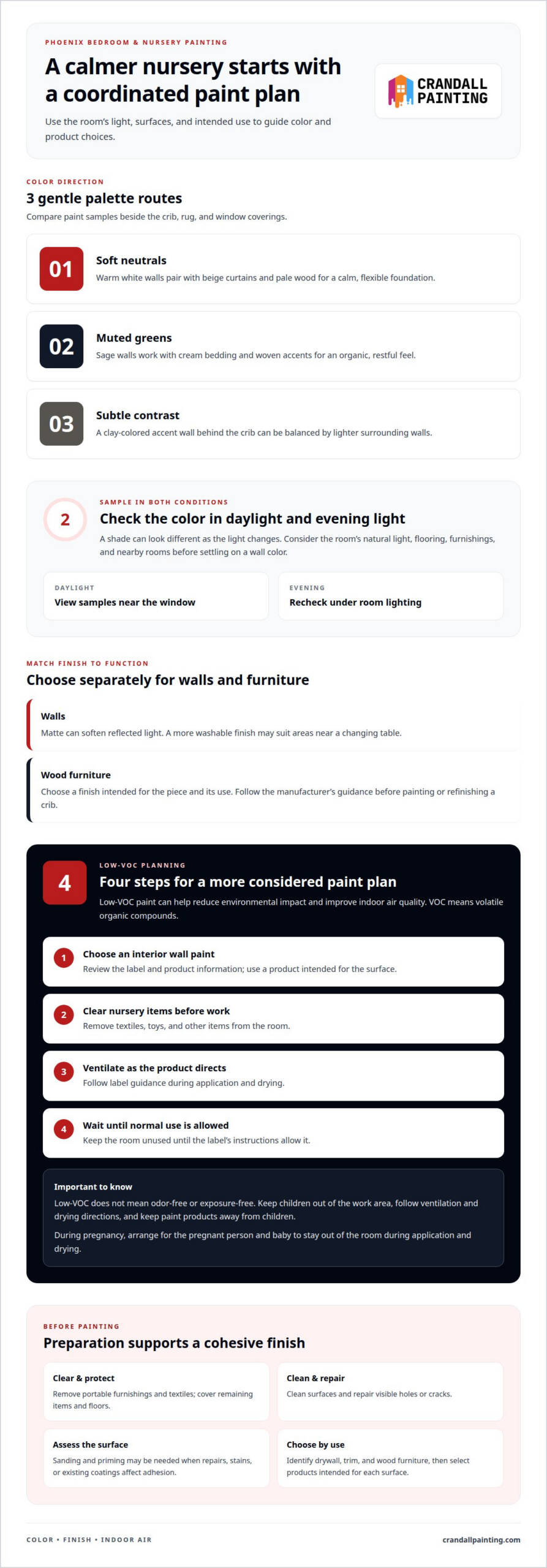
A nursery palette can feel composed without relying on traditional pink or blue. For interior painting for bedrooms and nurseries in Phoenix, consider daylight, flooring, and furnishings before choosing a wall color. Warm white, muted green, or soft clay can create a versatile backdrop. Compare samples beside the crib, rug, and window coverings to see how each shade works in the room.
Build the palette around one main wall color, then add contrast through smaller details. Warm white walls, for example, pair naturally with sage bedding and light wood furniture. Pale blue can work with cream textiles and natural oak. These combinations define the room while keeping the overall effect gentle and coordinated.
- Soft neutrals: Pair warm white walls with beige curtains and pale wood for a calm, flexible foundation.
- Muted greens: Combine sage walls with cream bedding and woven accents for an organic, restful feel.
- Subtle contrast: Use a clay-colored accent wall behind the crib, balanced by lighter surrounding walls.
Before choosing an accent wall, identify the room’s focal point. The wall behind a crib or changing table can anchor the palette, while quieter walls keep the space balanced. A painted arch or simple color block adds distinction without covering every surface. Keep the shape clear and coordinate its color with bedding or a rug.
Consider how the nursery connects with nearby bedrooms and hallways. Repeating a warm neutral from an adjoining room creates continuity, while a distinct green or blue gives the nursery its own character. In Phoenix, view samples in both daylight and evening lighting. A shade can look different as the light changes.
Finish the palette by coordinating paint with practical room details. Blackout curtains and gentle lighting can support a restful sleep environment, while restrained wall colors keep the room visually cohesive. For interior painting for bedrooms and nurseries in Phoenix, choose colors that complement furnishings you plan to keep, rather than a temporary accessory.
Choosing safe paints and finishes for nursery walls and furniture
Consider wall coatings and furniture finishes separately. Living With Lolo says it carefully chooses paints and finishes for nursery walls and furniture to create a safe environment for babies. Product selection is part of the room plan, not an afterthought. Identify each surface, such as drywall, trim, or a wooden dresser, and select products intended for that surface and interior use.
Read the manufacturer’s label for application directions, ventilation guidance, and drying instructions. Store paint and finishing products away from children, and keep children out of the work area during application. Wall paint and a coating for a wooden crib or dresser may differ, so don’t assume one product suits every surface. Follow the instructions for each material.
Finish affects appearance and upkeep. A matte wall finish can soften reflected light, while a more washable finish may suit areas near a changing table. For furniture, choose a finish appropriate to the piece and its intended use. Don’t paint or refinish a crib without following the manufacturer’s guidance for that item.
Preparation shapes the final result. Before painting a bedroom or nursery, remove portable furnishings and textiles, cover remaining items and floors, clean surfaces, and repair visible holes or cracks. Sanding and priming may be needed if repairs, stains, or an existing coating affect adhesion. Clear the work area and protect nursery items from dust and paint.
DIY painting avoids labor charges, while professional work includes surface preparation and paint application. The project scope depends on room size, surface condition, paint selection, and preparation. Crandall Painting & Stucco provides a free, no-obligation estimate, with price upon request.
For a nursery with drywall repairs, detailed trim, or several surfaces requiring careful preparation, professional interior painting can help create a cohesive finish. Discuss the room’s surfaces, intended use, and preferred products when planning the work.
Low-VOC paints and indoor air quality
Low-VOC paint can help reduce environmental impact and improve indoor air quality. VOC means volatile organic compounds, which some products release into indoor air. For a Phoenix nursery, compare paint labels and product information before choosing a finish. Look for clear application, ventilation, and drying guidance rather than relying on a color name or marketing phrase alone.
Low-VOC does not mean odor-free or exposure-free. Formulations and application instructions vary, so read the product label. A nursery wall, closet, and trim may require different coatings. Choose products intended for each surface, then follow their ventilation and cleanup directions. Keep containers closed and away from children when work pauses.
During pregnancy, consider exposure to paint vapors during application and drying. Arrange the work so the pregnant person and baby stay out of the room, and follow the product’s ventilation instructions. Low-VOC labeling alone doesn’t replace these precautions.
To plan painting around indoor air quality, use these steps:
- Choose a low-VOC paint intended for interior walls, and review its label.
- Remove nursery textiles, toys, and other items before work begins.
- Ventilate the space as the product directions specify during application and drying.
- Keep the room unused until the label’s instructions allow normal use.
Ventilation matters because paint vapors can remain in the work area during application and drying. In Phoenix, plan around the room’s windows, doors, and ventilation options. Follow the paint manufacturer’s directions rather than assuming a particular window position or short airing period is sufficient. Keep the nursery separate from adjacent rooms where practical.
Low-VOC selection is one part of a considered painting plan, alongside surface preparation and careful application. Repairing and priming a patched wall before its finish coat, for example, helps create a consistent surface. Follow the product’s ventilation and drying guidance when deciding when the nursery can return to use.
Nursery interior painting services
A nursery painting plan should cover surface preparation, paint application, drying, and room ventilation. In Phoenix, permit needs depend on the scope: painting differs from projects that alter walls or building systems.
Painting, Drying, and Ventilation Time
A bedroom schedule involves more than applying paint. Surface repairs, primer, the number of coats, and each product’s drying directions affect when the room is ready. Review the label for recoat instructions and ventilation guidance, then plan around those requirements. A repaired wall, for example, needs preparation before its finish coat, extending the work beyond painting alone.
Keep the nursery clear during application and follow the paint manufacturer’s instructions before returning furniture, bedding, or toys. Completion time depends on the room’s condition, chosen products, and drying conditions.
Choosing a Licensed and Insured Contractor
For a Phoenix project, assess licensing and insurance through current documentation, rather than relying on a verbal assurance. Also review the written scope: it should describe preparation, repairs, surfaces to be painted, and the agreed finish. These details help clarify what the project includes and who is responsible for each part.
Look for a clear plan covering protection of floors and furnishings, treatment of damaged drywall, and cleanup. A nursery with a patched wall, detailed trim, or an accent area benefits from a scope that identifies those details.
Phoenix heat and dust make surface conditions worth considering during application. Dust can settle on fresh paint, while heat may affect how it applies and dries. A careful plan includes clean surfaces and follows the product label’s recommended application conditions.
Warranty and guarantee terms should be read in writing, not inferred from a conversation. Review the coverage period, covered workmanship or materials, exclusions, and how concerns are handled; those terms define the actual promise.
For a nursery project, plan your interior painting project around its surfaces, repairs, finish, and ventilation needs.
Crandall Painting & Stucco: Interior Painting
Crandall Painting & Stucco provides interior painting for bedroom and nursery projects that need careful preparation and a cohesive finish. Turn to the company when you’re ready to plan colors, surfaces, repairs, and paint application. If a nursery wall has dents or cracks, drywall repair can address those imperfections as part of preparing for paint.
For a polished result, the project plan can account for the selected color, existing wall condition, trim, and the room’s intended use. Share which surfaces you want painted and any visible damage so the scope can reflect the room’s needs. The next step is to discuss your bedroom or nursery project with Crandall Painting & Stucco.
Shape a Room That Grows With Your Family
A nursery can suit the present while remaining adaptable as your child’s needs change. Choose a palette and finish that work with furnishings you plan to keep, and consider how the room connects with the rest of your home. A thoughtful plan gives you direction before work begins.
For interior painting for bedrooms and nurseries in Phoenix, start by defining the room’s priorities: its atmosphere, surfaces, and preparation needs. Crandall Painting & Stucco also offers exterior painting and stucco repair for broader home projects, alongside interior work. Plan each project around the surfaces and finishes you want to address.
When you’re ready to discuss your room, contact Crandall Painting & Stucco. A considered plan can help turn your color ideas into a nursery that feels personal, composed, and ready for what comes next.
Frequently Asked Questions
Need Help with Your Nursery Painting Project?
Yes. Crandall Painting & Stucco offers interior painting for Phoenix nursery projects, including rooms needing coordinated finishes or wall preparation. Share the room’s surfaces, visible damage, preferred colors, and whether trim is included to clarify the project scope. Request a free, no-obligation estimate and describe the result you want, such as a calm backdrop or painted feature wall. Price upon request.
Which low-VOC or zero-VOC paints are safest for nurseries and bedrooms?
Choose an interior paint whose label and manufacturer information clearly describe its VOC content and intended use. “Zero-VOC” and “low-VOC” labels can help narrow options, but they don’t replace product-specific application, ventilation, and drying instructions. Consider the surface too: wall paint may not suit furniture or trim. For a nursery dresser, select a coating intended for that material and follow its directions.
What paint colors and finishes work best for bedrooms and nurseries in Phoenix?
Choose colors and finishes by evaluating the room’s daylight and furnishings. Phoenix sunlight can make a sample look different from its appearance under evening bulbs, so view a painted sample in both conditions before deciding. For a bedroom with textured walls, a lower-sheen finish can create a softer look. For frequently touched areas, consider a finish intended for easier cleaning. Match the choice to the surface and upkeep needs.
How do DIY and professional bedroom painting compare in cost and results?
DIY painting avoids labor charges, while professional work includes surface preparation and application. Project scope depends on room size, surface condition, paint selection, and preparation. Crandall Painting & Stucco offers a free, no-obligation estimate, with price upon request.