
What if the heavy texture on your Scottsdale estate walls wasn’t a design obstacle to be hidden, but rather the essential foundation for a museum-quality masterpiece? Many homeowners view their existing drywall as a limitation that forces them into flat, uninspired paint choices. It’s natural to worry that adding depth will lead to messy glaze pooling or a dated look that feels stuck in the previous century. However, when you utilize the right faux painting techniques for textured walls, these surfaces become a sophisticated canvas for light and shadow.
You’ll discover how to transform standard wall textures into bespoke architectural features using professional-grade finishing methods. We’ll explore the shift toward nature-inspired palettes and matte finishes that define the luxury aesthetic of 2026. This guide provides a methodical look at achieving a multi-dimensional finish that enhances architectural depth and increases your property value. From color drenching to artisanal tonal washes, you’ll learn how to achieve a polished, high-end result that reflects true craftsmanship and meticulous attention to detail.
Key Takeaways
- Understand how translucent glazes interact with wall peaks and valleys to create sophisticated architectural depth instead of messy pooling.
- Learn to identify your specific surface, whether knockdown or skip trowel, to select the most compatible faux painting techniques for textured walls.
- Discover the three most requested artisanal finishes that harmonize with Scottsdale’s unique desert light and modern design standards.
- Gain insight into the Master Craftsman’s preparation methods that protect your investment and ensure a flawless, professional result.
What is Faux Painting for Textured Walls?
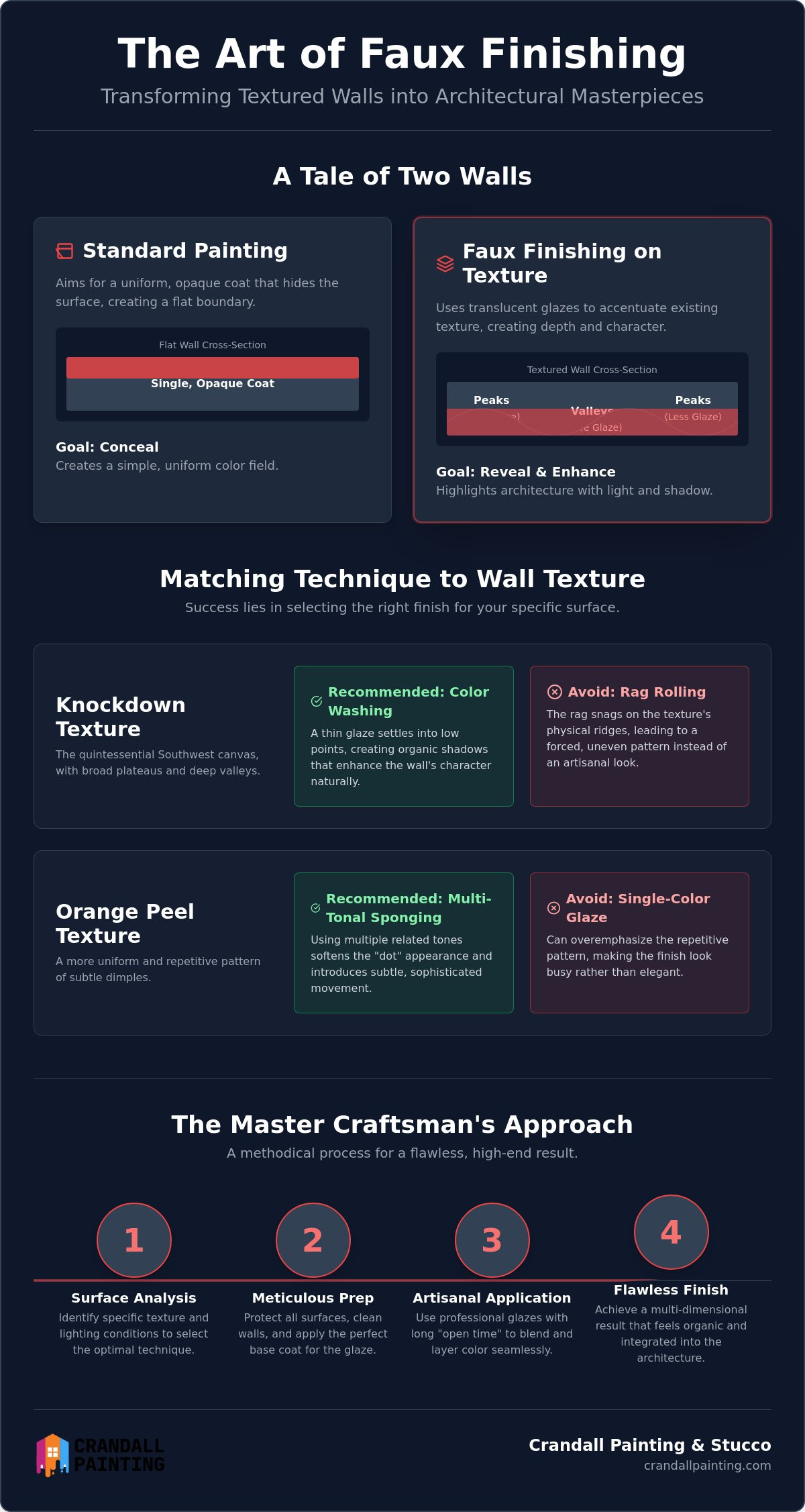
At its core, Faux painting or faux finishing on a textured surface is the art of using translucent glazes to accentuate the physical peaks and valleys of a wall. Unlike standard interior painting, which aims for a uniform, opaque coat, these techniques rely on the interplay between light and layered pigment. In many Scottsdale estates, the wall isn’t just a flat boundary but a three-dimensional element. When you apply faux painting techniques for textured walls, you’re essentially highlighting that architecture through a process of sophisticated layering.
The rules of engagement change entirely when a wall isn’t smooth. On a flat surface, the artist must create the illusion of depth; on a textured wall, the depth already exists. The challenge lies in controlling how the glaze behaves. Professional artisans use the texture’s “valleys” to capture more pigment, creating natural shadows, while the “peaks” receive less material, acting as highlights. This results in a finish that feels organic and integrated rather than sitting on top of the surface like a heavy mask. This modern approach is a far cry from the aggressive 1990s “ragging” or “sponge painting” looks. Today’s aesthetic is about subtlety, using multiple thin layers to create a soft, luminous glow that feels like it has been there for decades.
The Role of Translucent Glazes
Success in this medium depends on the quality of the glaze. Professional-grade glazes are engineered with a long “open time,” which is the duration the material remains wet and workable on the wall. This allows the craftsman to manipulate the color, blending it perfectly into the texture without leaving harsh lap marks. Because the glaze is translucent, the base coat “glows” through the top layer, providing a depth that standard latex paint simply cannot replicate. To see how these specialized materials are applied to bespoke projects, you can explore the range of our services that cover everything from decorative painting to meticulous touch-up work.
Southwest Architectural Context
Textured walls are a defining characteristic of high-end Arizona architecture. From sprawling Mediterranean villas to contemporary desert estates, textures like skip trowel and knockdown provide a sense of weight and permanence. These surfaces are deeply rooted in the Tuscan and Spanish Colonial styles so prevalent in Scottsdale. By applying a faux finish, you’re leaning into that regional heritage. The goal is to create “movement” on the wall, a visual vibration that mimics the natural weathering of stone or the soft patina of an old-world plaster. It transforms a standard drywall surface into a high-value architectural asset that complements the unique desert light found in the Southwest.
Matching Techniques to Your Specific Wall Texture
Selecting the right finish requires an intimate understanding of how your wall was originally constructed. A “one size fits all” mentality is the most common reason for failed decorative projects. When you ignore the physical depth of the surface, you risk creating a look that feels cluttered or unintentionally messy. Each surface, from the heavy ridges of a knockdown finish to the subtle dimples of orange peel, responds differently to pigment. Before committing to a full room, we always recommend testing your chosen faux painting techniques for textured walls on a sample board that mimics your specific wall profile. This step allows you to see how the sheen, whether a velvety matte or a soft satin, interacts with the local light.
The choice of sheen is just as critical as the color itself. Matte finishes are the standard for 2026 because they absorb light, allowing the colors to feel grounded and sophisticated. Satin or semi-gloss sheens, while durable, can often make heavy textures feel “busy” or overly shiny, which detracts from the artisanal quality of the work. Proper evaluation ensures the final result feels like an integrated part of the home’s architecture rather than a temporary surface treatment.
The Best Techniques for Knockdown Texture
Knockdown texture is the quintessential Southwest canvas. Its broad, flat plateaus and deep recessed valleys make it the perfect candidate for color washing. This technique involves applying a thin glaze that naturally settles into the lower points, creating organic shadows that emphasize the wall’s character. You should avoid mechanical patterns like rag rolling on this surface. The physical ridges of the knockdown often snag the rag, leading to uneven distribution that looks forced rather than artisanal.
Enhancing Orange Peel Surfaces
Orange peel surfaces present a more uniform, repetitive pattern. To elevate this look, we often utilize sponging with multiple tonal shifts. This softens the “dot” appearance and introduces a sense of natural movement. Another sophisticated option is frottage, where we use paper or plastic to manipulate the wet glaze. This creates organic, stone-like veins that effectively disguise the factory-applied texture beneath, giving the wall a more custom, hand-crafted feel.
Artisanal Approaches for Skip Trowel and Plaster
For estates featuring skip trowel or hand-applied plaster, the goal is to enhance the existing craftsmanship. Venetian plaster overlays can add actual mineral depth, while metallic waxes can be delicately applied to the high points for a touch of exclusivity. Antiquing remains a popular choice for these surfaces. By using a darker glaze in the deep recesses, you can simulate the natural aging of an old-world villa. If you are unsure which approach fits your home’s architecture, exploring professional decorative painting options can provide the clarity needed for a successful transformation.
The Top 3 Faux Painting Techniques for Textured Walls
In the unique architectural landscape of Scottsdale, the intense desert light dictates the success of any decorative project. Bright afternoon sun can flatten a wall’s appearance or, conversely, make aggressive patterns feel overwhelming. The most effective faux painting techniques for textured walls prioritize subtle movement over high contrast. By selecting a palette that draws from the surrounding desert, such as warm clays, muted sages, and deep ochres, you create a home that feels like an extension of the landscape. At Crandall Painting & Stucco, we specialize in three specific methods that offer the longevity and aesthetic depth required for high-value estates.
The 2026 design trends favor nature-inspired palettes and matte finishes that ground a room. Achieving this look on a textured surface requires a disciplined approach to pigment application. Rather than saturating the wall with a single heavy coat, we build the finish through thin, purposeful layers. This methodical process ensures the wall retains its architectural integrity while gaining a bespoke, hand-crafted character. You can see how these techniques integrate into a broader design vision by exploring our professional decorative painting services.
Professional Color Washing (The ‘Old World’ Look)
Color washing is the premier choice for creating a soft, aged patina on heavy Southwest textures. We utilize the “X-stroke” method, applying glaze in loose, overlapping motions that allow the pigment to settle naturally into the texture’s recesses. Feathering the edges of each section is vital to avoid visible lap marks on the expansive walls typical of luxury floor plans. For the most sophisticated result, we recommend layering three distinct shades of the same hue. This creates a luminous quality that shifts beautifully as the sun moves across the room, mimicking the natural weathering of stone.
Sophisticated Sponging for Modern Interiors
Modern sponging has evolved far beyond the repetitive patterns of the past. We use natural sea sponges exclusively; their irregular, organic pores create more breathable patterns than synthetic alternatives. The “damp sponge” rule is strictly followed to control glaze transfer. By keeping the sponge nearly dry, we can build a “cloud” effect where translucent layers overlap. This results in a soft, velvety texture that feels contemporary and refined, perfectly suited for the clean lines of a modern Scottsdale estate.
Metallic Glazing and Iridescent Finishes
For an exclusive atmosphere in dining rooms or foyers, metallic glazing adds a layer of understated luxury. We use a dry-brushing technique to catch only the highest peaks of the texture with gold, silver, or copper pigments. When light hits these metallic particles, the wall gains a subtle shimmer that changes depending on your vantage point. It’s a precise application that requires a disciplined hand to ensure the effect remains elegant. This technique is particularly effective at highlighting the unique hand-troweled details found in high-end desert architecture.
The Master Craftsman’s Approach: Preparation and Execution
A professional result depends entirely on the condition of the substrate. While standard paint might hide minor imperfections, the translucent nature of glazes used in faux painting techniques for textured walls actually draws the eye toward hairline cracks or corner chips. This is why we treat every project with a “foundation-first” philosophy. We utilize specialized tools like 4-inch chip brushes for their ability to carry glaze into deep crevices and natural sea sponges for their organic footprint. On large-scale estate walls, we always work in pairs. One artisan applies the material while the other follows immediately to manipulate the finish, ensuring a seamless transition across the entire surface without visible boundaries.
Surface Preparation and Drywall Integrity
Before any pigment touches the wall, the drywall must be structurally flawless. We meticulously inspect the surface for structural inconsistencies that could disrupt the flow of the glaze. For those starting with damaged or aging surfaces, securing Expert Drywall Repair in Phoenix, AZ is a mandatory first step. Once repairs are cured, we apply a high-quality base coat in a satin or eggshell sheen. This specific sheen provides the necessary “slip” for the glaze to move freely across the texture before it begins to set.
The Glazing Process: Timing and Technique
Scottsdale’s low humidity presents a unique challenge for artisans because paint dries exceptionally fast in our arid climate. We compensate by mixing a bespoke glaze-to-paint ratio that extends the “open time,” allowing us to maintain a wet edge across large architectural spans. We typically choose between the additive method, where color is built up slowly in layers, and the reductive method, where glaze is applied and then wiped away to reveal the texture’s peaks. For the heavy knockdown found in many local estates, the reductive method is often superior for creating natural, believable depth.
Sealing and Protecting the Artistry
Once the artistry is complete, protection is vital for high-traffic areas like corridors and grand foyers. We recommend a clear topcoat in a dead-flat or low-luster finish to preserve the modern matte aesthetic while providing a scrubbable surface. This protective layer ensures the depth of the finish remains vibrant and resists the fading effects of intense desert sunlight. To achieve this level of precision and longevity in your own home, you can consult with our master painters to explore our full range of decorative painting options.
Why Hire a Professional for Faux Finishing in Scottsdale?
The distinction between a casual hobbyist and a master craftsman becomes immediately apparent when you view a finished wall under the unforgiving Arizona sun. While many resources suggest simple DIY steps, the reality of applying faux painting techniques for textured walls across a grand estate requires a level of precision that only comes with decades of experience. Professional execution isn’t just about the final color; it’s about the scale and consistency of the pattern across twenty-foot foyers and complex architectural alcoves. A professional artisan understands how to balance the intensity of the pigment so it enhances the room without becoming a distraction.
Investment in high-end decorative painting is an investment in your property’s long-term value. A poorly executed faux finish can look dated or messy, often requiring expensive removal or skim-coating to fix. In contrast, a professionally applied finish serves as a permanent architectural feature that adds a sense of history and luxury to the home. Our consultation process brings a designer’s eye to your specific wall textures, ensuring that the chosen finish harmonizes with your flooring, cabinetry, and the unique desert light. We’ve built a long-standing legacy in Custom Faux Finishing Arizona, serving as a trusted partner for homeowners who demand excellence.
The Crandall Painting & Stucco Standard
Our commitment to a “white-glove” service means your home is treated with the utmost respect from the first drop cloth to the final inspection. We have extensive experience navigating the specific architectural demands of high-end residential projects in Paradise Valley, Carefree, and North Scottsdale communities. This regional expertise is vital, as we understand how local environmental factors like heat and low humidity affect material performance. Every project begins with bespoke glaze formulation and custom color matching to ensure your walls are entirely unique. Our specialized knowledge in faux painting techniques for textured walls allows us to manipulate light and shadow in ways that a standard roller or brush cannot achieve.
Transforming Your Space Today
Choosing a professional finish ensures your walls remain beautiful and durable for years to come. Professional-grade glazes and protective topcoats are engineered for longevity, resisting the scuffs and fading that often plague entry-level materials. We invite you to view our portfolio of decorative arts to see how we’ve transformed standard drywall into museum-quality surfaces. If you’re ready to elevate your home’s interior with an artisanal touch, we’re here to guide you through the process. Explore our custom painting services to begin your home’s transformation with a team that views every wall as a significant work of art.
Elevate Your Scottsdale Estate with Artisanal Mastery
Textured walls offer a unique opportunity to create architectural interest that flat surfaces simply can’t match. By selecting the correct faux painting techniques for textured walls, you transform standard drywall into a multi-dimensional feature that captures the essence of desert luxury. We’ve explored how matching the right glaze to your specific surface profile ensures a sophisticated, modern look rather than a dated relic of the past. Success lies in the balance of technical preparation and creative execution.
Since 2004, Crandall Painting & Stucco has specialized in the meticulous care of Scottsdale’s most prestigious homes. Our family-owned approach combines technical expertise in drywall restoration with the refined artistry of decorative painting. This dual mastery ensures your walls are structurally sound before the first layer of glaze is ever applied. We invite you to Schedule a Professional Faux Finishing Consultation to see how our commitment to artisanal quality can enhance your property’s value. Your home deserves a finish that reflects your standard of excellence and provides lasting beauty for years to come.
Frequently Asked Questions
Can you faux paint over heavy knockdown texture?
Yes, knockdown texture is an ideal canvas for professional color washing. The broad plateaus and deep valleys allow translucent glazes to settle naturally, creating an organic depth that mimics old-world plaster. This specific surface requires a disciplined “reductive” or “additive” approach rather than mechanical rolling. By manipulating the glaze within the texture’s recesses, we ensure the final finish looks intentional and artisanal rather than accidental.
What is the best faux finish for orange peel walls?
Sponging with multiple tonal shifts is often the most effective method for orange peel surfaces. This technique softens the repetitive “dot” pattern and introduces a sense of natural movement. Frottage is another excellent option for this texture; it uses manipulated paper or plastic to create stone-like veins. These faux painting techniques for textured walls effectively disguise the uniform factory appearance of the drywall, providing a more custom, hand-crafted feel.
Does faux painting make a room look smaller or darker?
A professionally executed faux finish should enhance the sense of space rather than diminish it. While heavy, opaque glazes can feel oppressive, modern trends focus on luminous, translucent layers that interact with light. By using nature-inspired palettes that reflect Scottsdale’s unique desert light, we create a feeling of openness. The resulting architectural depth actually expands the room’s visual boundaries, making the walls feel more substantial and integrated.
How do I clean faux-painted textured walls without damaging the glaze?
Gentle cleaning with a soft, damp cloth and mild, non-abrasive soap is the safest approach for preserving the finish. Because many decorative techniques utilize delicate glazes, you should avoid harsh chemicals or aggressive scrub brushes that can strip the pigment. For high-traffic areas, we recommend applying a professional-grade clear topcoat in a matte finish. This provides a durable, scrubbable barrier that protects the underlying artistry from daily wear and tear.
Is faux finishing more expensive than standard interior painting?
Faux finishing requires a higher investment than standard painting due to the specialized materials and intensive labor involved. Standard painting typically involves one or two coats of opaque color. In contrast, artisanal techniques involve building multiple translucent layers to achieve a bespoke look. This methodical process demands a higher level of mastery and significantly more time to execute correctly, reflecting the craftsmanship required for high-value estate interiors.
How long does a professional faux finish project typically take?
A typical project for a single accent wall or room generally takes between three and five days to complete. This timeline accounts for essential steps like surface preparation, base coat curing, and the precise application of multiple glaze layers. Larger projects or complex finishes, such as metallic dry-brushing, require additional time. This ensures the artisan can maintain consistency across the entire architectural span without rushing the delicate drying process.
Can faux painting hide existing cracks or damage in my drywall?
Faux painting is not a substitute for proper drywall repair and will often highlight existing flaws rather than concealing them. Translucent glazes naturally settle into hairline cracks and chips, making them more visible to the eye. We always perform thorough drywall restoration before beginning the decorative process. This “foundation-first” approach ensures the surface is flawless, allowing the final finish to look professional, polished, and durable.
Do I need to sand my textured walls before applying a faux finish?
You should generally avoid sanding existing texture unless the goal is to remove it entirely for a smooth finish. The physical depth of the texture is the foundation for the glaze to catch and create shadow. Instead of sanding, we focus on meticulous cleaning and priming to ensure proper adhesion. If the texture is excessively sharp or damaged, we perform minor touch-ups to create a receptive canvas for the pigment.