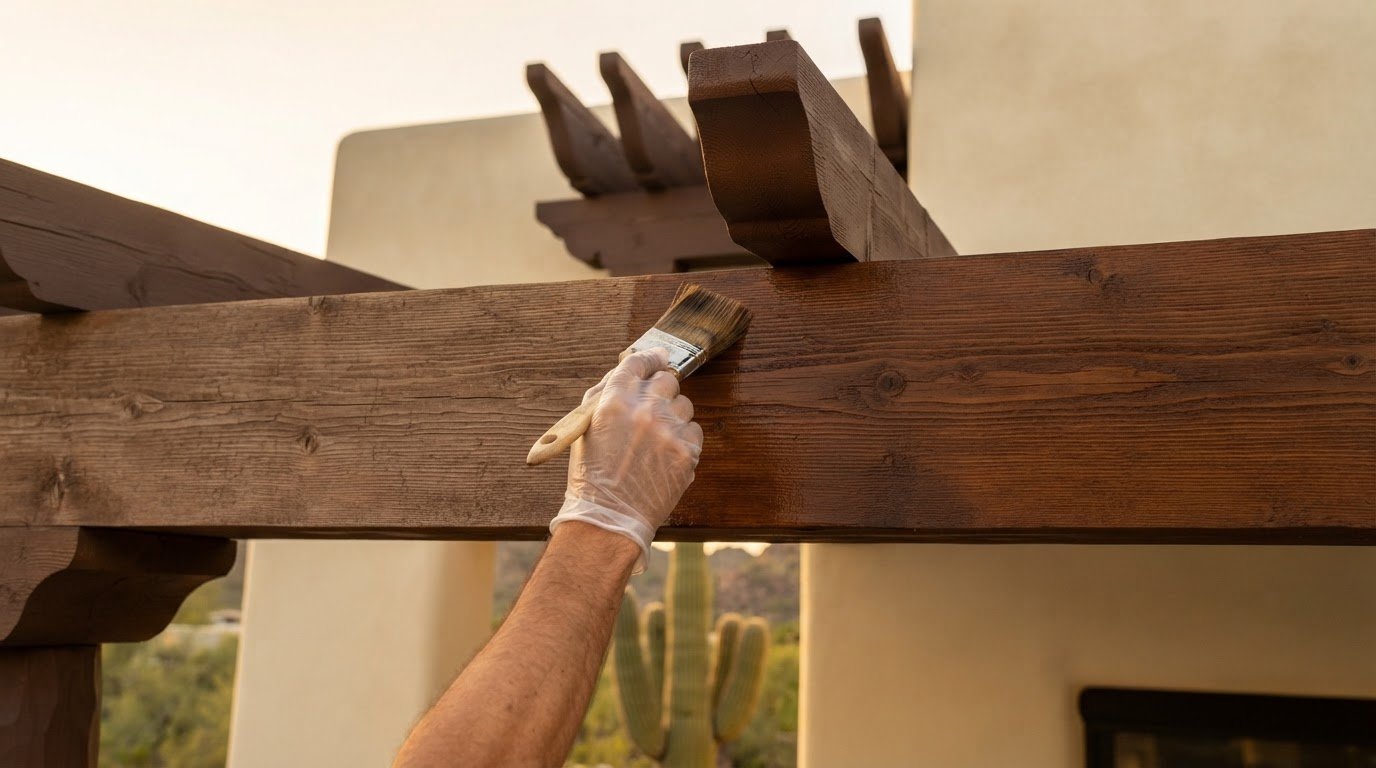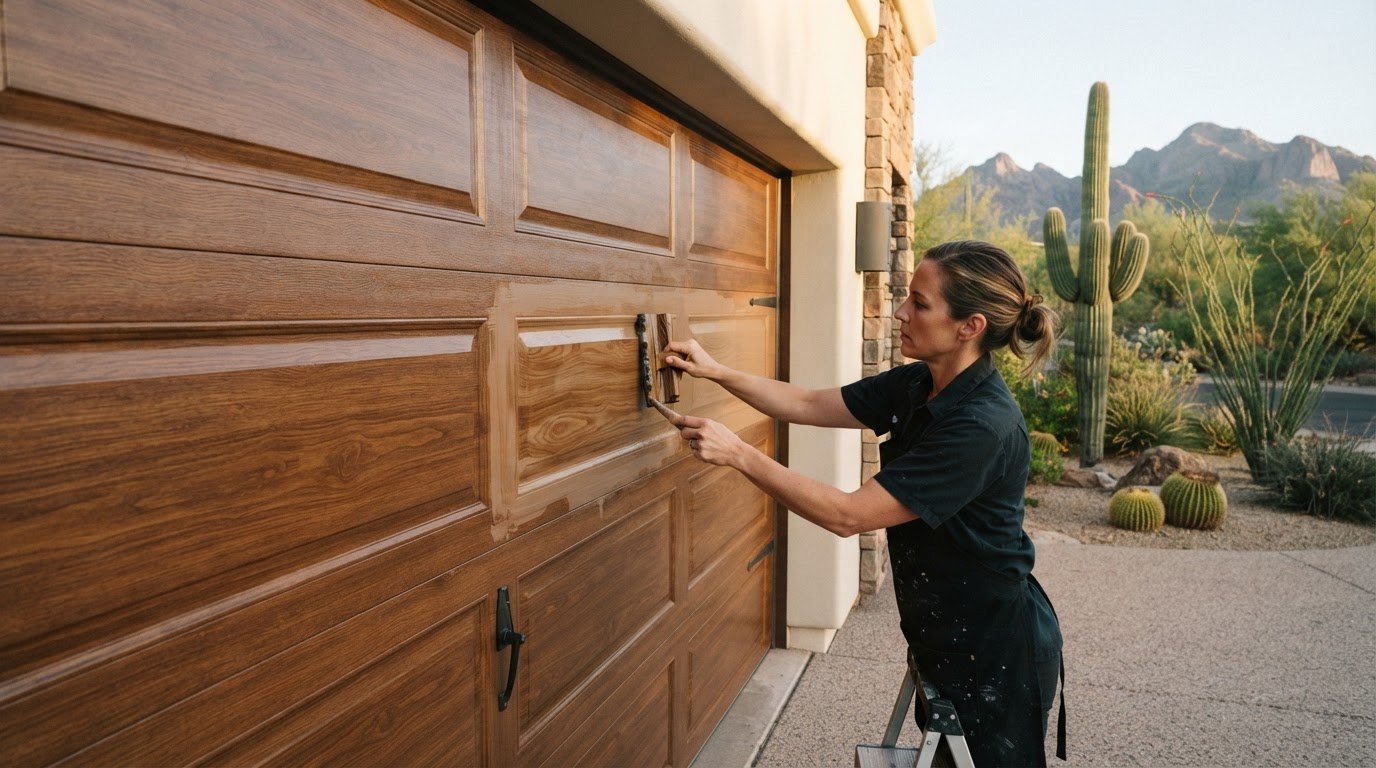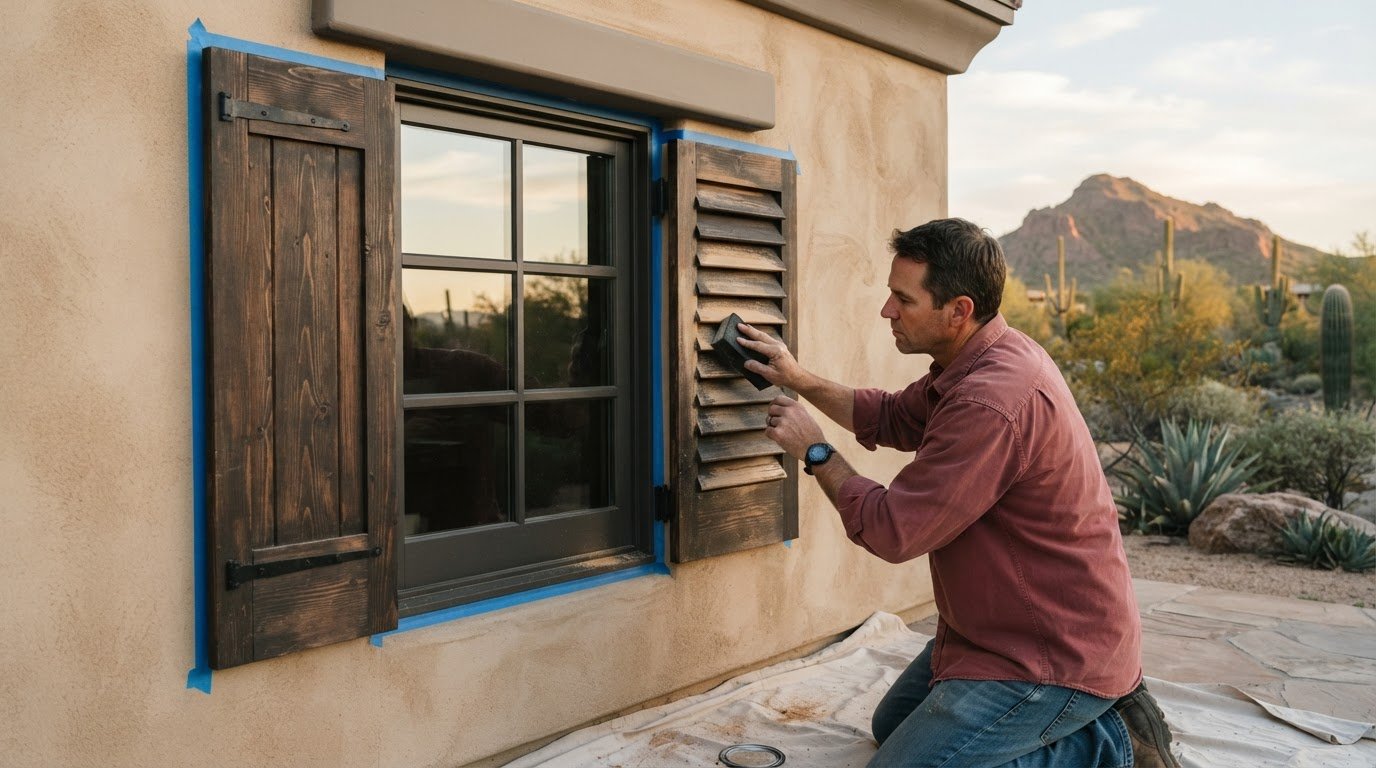

A garage door can take on the character of wood without being made of it. Faux painting for garage doors in Phoenix creates a wood-look finish, while real wood doors in Arizona may need to be re-stained and re-sealed yearly. The right faux finish depends on the look you want and the door’s existing surface.
A convincing finish can add warmth and visual detail to a home’s facade, but the result depends on thoughtful color and grain choices. If you’re considering a wood-inspired appearance, start by considering which effects suit your door and how its exposure to the local climate affects the finish.
This guide covers faux wood looks, factors that shape the finish and project scope, and service for Phoenix-area homeowners. Crandall Painting & Stucco’s Faux Finishing & Touch-Up service can transform a garage door with careful attention to its surface and the surrounding architecture.
Key Takeaways
- Explore the wood-look finish effects that can give a garage door a warmer, more tailored appearance.
- See how the door’s surface and the home’s architectural style influence the finish approach.
- Understand why Arizona’s climate matters when weighing faux finishes against the upkeep of real wood.
- Learn how professional faux finishing and touch-up can help create a cohesive exterior look.
Faux painting service area around Phoenix
For homeowners in Phoenix and nearby communities, a faux wood finish can refresh a garage door without changing its structure. Crandall Painting & Stucco serves Scottsdale, Phoenix, Paradise Valley, Carefree, DC Ranch, Desert Mountain, and Scottsdale Mountain. Your property’s location helps determine whether the project falls within the company’s service area.
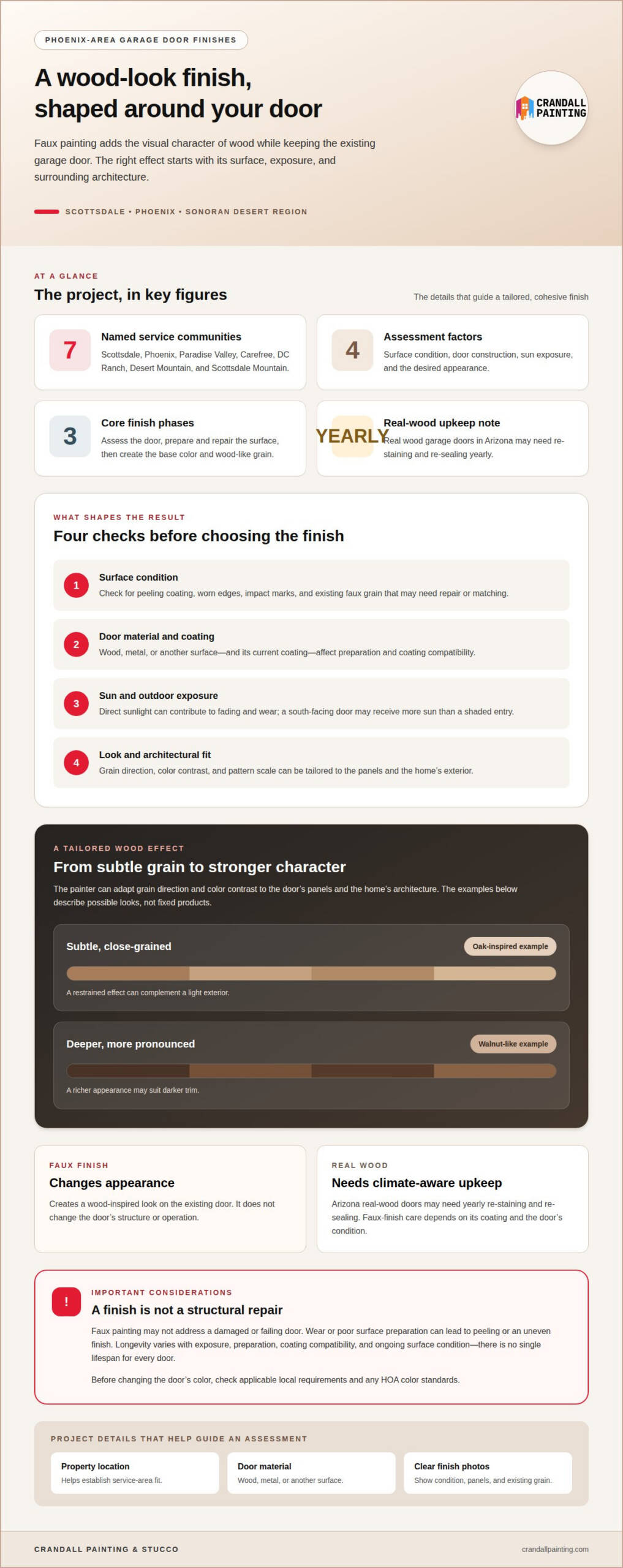
Location also shapes maintenance needs. Arizona’s sun and outdoor exposure can affect painted surfaces, so a professional assesses the door’s condition and existing coating before planning repairs or touch-ups. Real wood garage doors in Arizona may need to be re-stained and re-sealed yearly. A faux-painted surface is different, and its care depends on the coating and the door’s condition.
For a Phoenix-area property, an on-site assessment can focus on practical details such as:
- Surface condition: peeling paint, worn edges, impact marks, or an older faux grain pattern.
- Door construction: whether the surface is wood, metal, or another material, and how it is currently coated.
- Exposure: which panels receive direct sunlight and show fading first.
- Appearance: how the door’s color and grain should relate to the home’s exterior.
How can a professional maintain or repair a faux-painted garage door? First, the professional assesses the damage and prepares the affected area. Then they recreate the color and grain so the repair blends with the surrounding finish. A scuffed panel, for example, may need more careful matching than a small mark along an edge.
These steps help determine whether a focused touch-up can address visible wear or whether broader refinishing makes more sense. When discussing the project, share your property location, door material, and clear photos of the finish. This information helps Crandall Painting & Stucco understand the door’s condition and the work involved.
Faux wood garage door finishes
A faux wood finish can add visual warmth while preserving the existing garage door. The right effect depends on the door’s surface, the home’s exterior, and the level of detail you want.
Materials for Phoenix Conditions
The coating needs to suit the door’s material and existing finish, as well as its exposure to Phoenix sun and heat. A south-facing door, for example, may receive more direct sunlight than a shaded entry. Color choice, coating compatibility, and a sound underlying surface all influence how the finish looks and wears. Consider these factors when assessing the door.
Preparation and Painting Steps
Before painting, a professional checks for peeling coating, worn areas, and damage that could disrupt the faux grain. The surface is cleaned and prepared, and any needed repairs are addressed before the finish is applied. The painter then establishes a base color and creates wood-like variation and grain. The finished look should flow across the panels, edges, and areas around the hardware.
Faux wood looks range from subtle, close-grained patterns to more pronounced wood character. A restrained oak-inspired effect, for example, can complement a light exterior, while a deeper walnut-like appearance may suit darker trim. These describe possible looks, not fixed products. The painter can tailor the grain direction and color contrast to the door’s panels and the home’s architecture.
Risk versus replacement: Faux painting changes appearance, not the door’s structure or operation. It may not address a damaged or failing door, and wear or poor surface preparation can lead to peeling or an uneven finish.
Permits and HOA approval: Requirements depend on local rules and the property’s association documents. Before changing the door’s color, review applicable Phoenix-area requirements and any HOA color standards.
Finish life: Phoenix sun and heat can contribute to fading and wear. Longevity depends on exposure, preparation, coating compatibility, and the surface’s ongoing condition, so no single lifespan applies to every door.
For a coordinated exterior refresh, discuss professional exterior painting alongside the garage door finish.
Which Phoenix painters specialize in faux garage door finishes?
In Phoenix, look for a painter whose decorative work includes faux finishing, not only uniform exterior coatings. For homeowners considering faux painting for garage doors in Phoenix, the distinction matters because broad panels make uneven grain or abrupt color changes easy to notice. A specialist considers the full door, including panel edges, recesses, and the transitions between sections.
Faux painting for garage doors in Phoenix calls for careful control of layered tones and grain. The painter develops the effect to suit the door’s design, rather than repeating an identical pattern across every panel. Grain marks, for instance, can vary in length and contrast while following a consistent direction. This detail helps the finish feel integrated with the door rather than like a flat decorative overlay.
The door’s construction also shapes the approach. A metal door with shallow panel lines offers a different canvas from a wood door with visible texture. A professional assesses the existing coating and surface condition, then considers how the faux effect will look against nearby exterior colors. Strong sunlight can make mismatched tones more noticeable, so balance matters across the entire door.
- Decorative technique: Look for layered tones and grain variation, not simply a brown coating.
- Panel treatment: Consider whether the design accounts for edges, recesses, and hardware.
- Surface awareness: The finish plan should respond to the door material and current condition.
- Design coordination: Grain scale and color should complement the home’s exterior palette.
A useful project conversation starts with the specific door and the look you want. A reference image can clarify whether you prefer understated grain or more pronounced wood character. The painter can then shape the decorative effect around the panel layout, surface, and surrounding architecture, so the finished door feels intentional as part of the home’s exterior.
What materials and paints are best for faux painting garage doors in Phoenix’s climate?
The right paint system depends on the garage door’s material, existing coating, and sun exposure. In Phoenix, a door facing direct afternoon sun has different exposure from one shaded by a porch. A professional assesses these factors before selecting compatible base and finish coatings for the faux wood effect.
Compatibility matters more than choosing paint by its label alone. Metal, wood, and previously coated doors can require different preparation and coating choices. For example, a painted metal door needs a system suited to its existing surface, while bare or previously stained wood requires its own assessment. The finish layers must also work with the prepared base so the color and grain look consistent.
Color and sheen shape the appearance and how the door looks outdoors. A warm medium brown can suggest natural wood, while a deeper tone creates stronger contrast against light stucco. The sheen should suit the home’s exterior and the desired effect. A professional can consider samples alongside nearby trim, masonry, and the entry door before finalizing the palette.
Surface preparation is part of material selection, not an afterthought. The painter identifies peeling areas, chalky residue, exposed substrate, and previous repairs. Each condition affects the suitable preparation and coating choices. Applying faux grain over an unstable or incompatible layer can undermine the finish, however carefully the decorative pattern is created.
- Door material: Identify whether the surface is wood, metal, or another substrate.
- Existing coating: Assess adhesion, wear, and compatibility before choosing layers.
- Exposure: Note direct sun, shade, and visible fading across panels.
- Appearance: Coordinate the base color, grain contrast, and sheen with the exterior.
For a tailored finish, discuss your garage door’s faux finish with a painting professional and share its material, current condition, and preferred wood tone. These details help guide coating selection for the specific surface and design.
Crandall Painting & Stucco: Faux Finishing & Touch-Up
Crandall Painting & Stucco provides Faux Finishing & Touch-Up for homeowners seeking a more refined garage door appearance. Choose this service when the existing finish needs attention or you want a decorative effect that complements the home’s exterior. The right approach depends on the door’s condition and the style you have in mind.
For a broader exterior refresh, Exterior Painting can address related painted surfaces, while Stucco Repair can help when damaged stucco affects the surrounding facade. These services can support a cohesive look without treating every surface as the same project. Share your preferred finish and the garage door’s current condition to start a focused conversation.
Contact Crandall Painting & Stucco to discuss your garage door finish.
Make the Garage Door Part of a Considered Exterior
A garage door can shape a home’s first impression, so treat its finish as part of a broader design decision. Faux painting for garage doors in Phoenix can add distinctive wood-inspired character to the facade while keeping the existing door in place. Consider how the finish relates to the home’s trim, entry, and overall palette before settling on a direction.
For a coordinated property refresh, Crandall Painting & Stucco also offers Exterior Painting, Stucco Repair, and Interior Painting. These services can help create a consistent visual approach across connected surfaces and spaces.
When you’re ready to discuss a finish that suits your home, contact Crandall Painting & Stucco. A considered next step can bring your vision into focus.
Frequently Asked Questions
What faux painting styles work best for garage doors?
Subtle wood graining and layered tones can create a natural-looking garage door finish. A restrained grain pattern suits a contemporary home, while stronger contrast can complement a more traditional exterior. The right choice depends on the door’s panel design and surrounding materials. Coordinating the faux finish with the entry door, for example, can make the facade feel intentional without making the features identical.
What does faux wood garage door painting look like before and after?
Before painting, a garage door may have a plain, faded, or uneven surface. Afterward, its panels can show a wood-inspired base tone with added grain and color variation, creating a more textured appearance. The change depends on the original surface and chosen design. Even a simple, flat door can gain the impression of depth through carefully placed grain details.