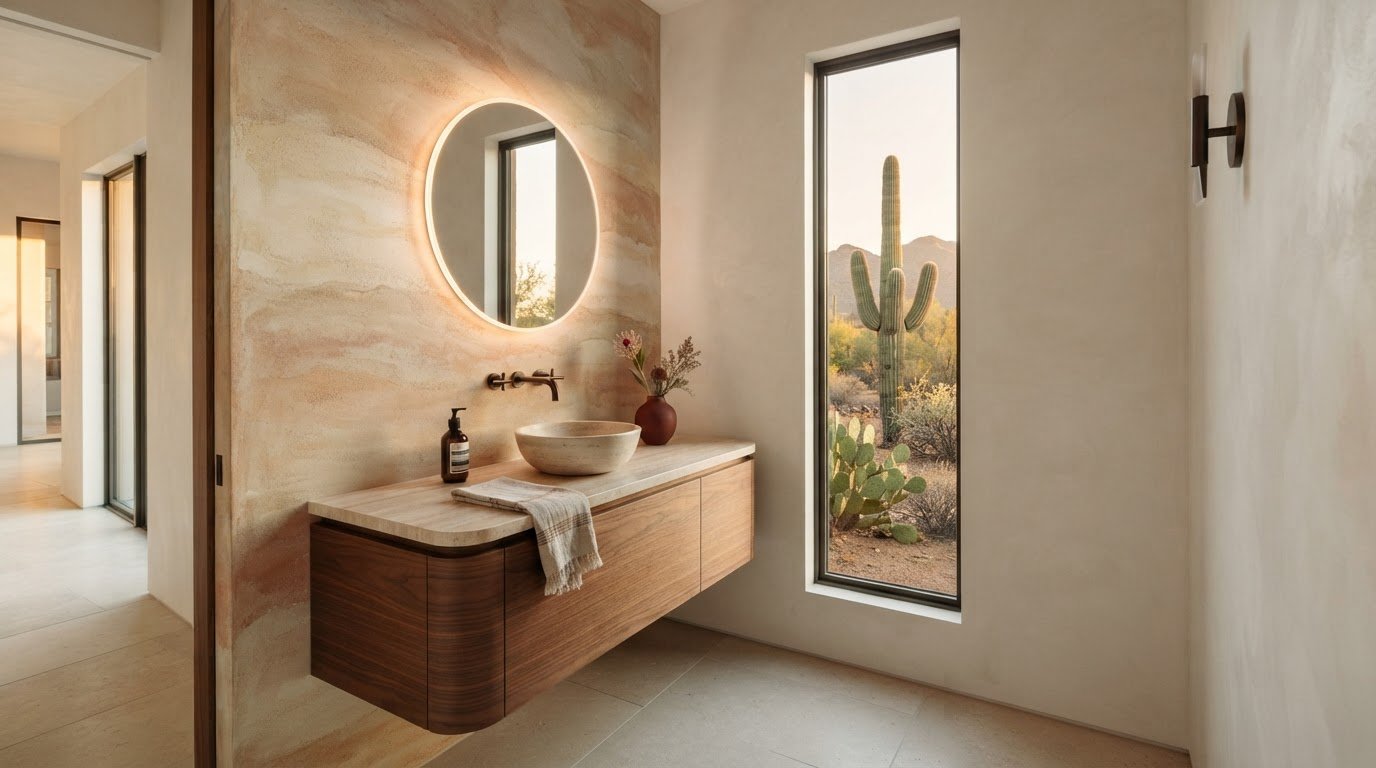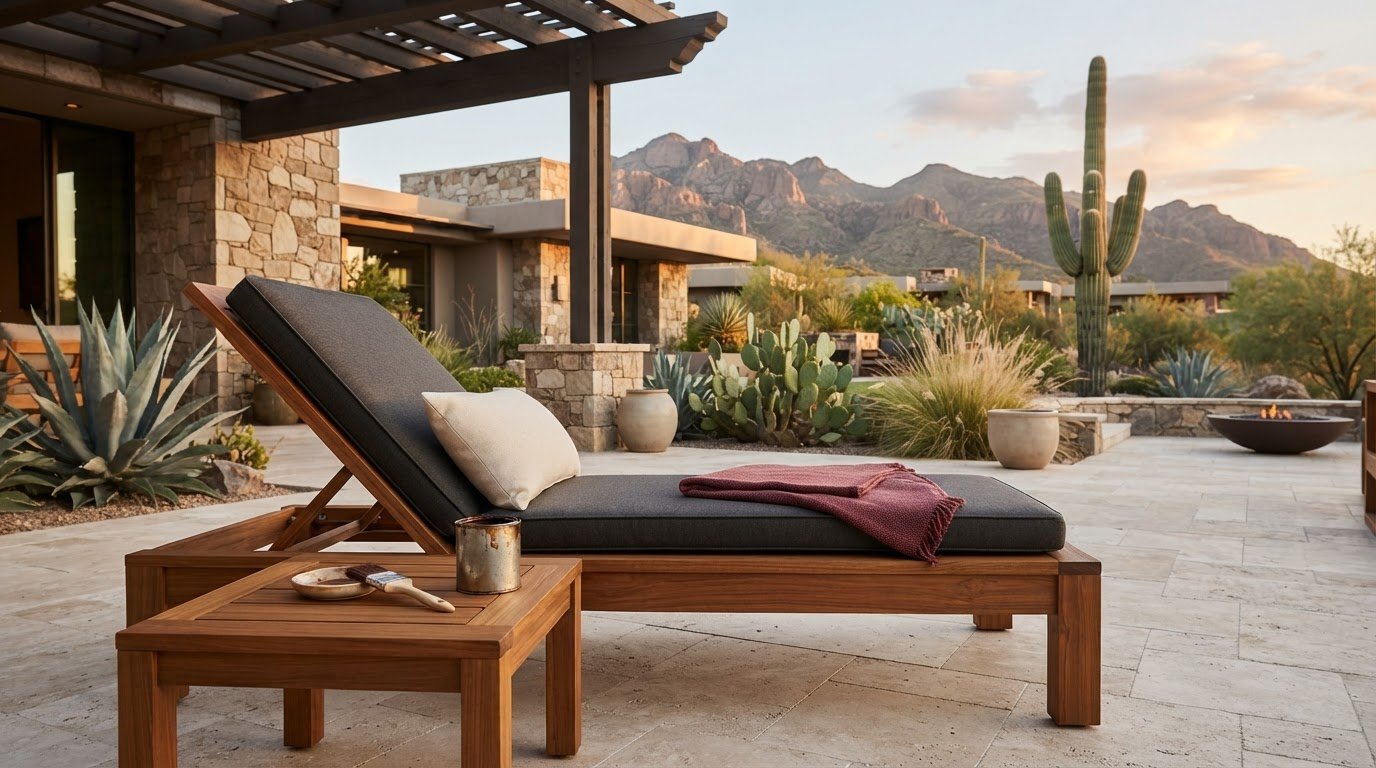

Warm wood can soften the crisp lines of desert contemporary design. Wood staining for luxury homes in Paradise Valley works best when the stain complements nearby stone, plaster, and other natural materials while letting the grain remain part of the home’s character. The result is an accent that feels connected to both the architecture and its desert setting.
It’s easy to focus on stain color alone, but surrounding finishes and room lighting also shape how wood looks. A tone that feels balanced beside stone may read quite differently on cabinetry, beams, doors, or built-ins.
This article explains how to choose warm, harmonious stain tones, pair them with natural materials, and consider sheen and grain in a desert contemporary home. It also covers how preparation and finishing help create a cohesive look across indoor and outdoor wood accents.
Key Takeaways
- Compare stain tones with the home’s stone, plaster, and natural light to create warmth without distracting from the architecture.
- Account for strong sun and dry conditions when planning exterior wood care, since exposure influences how finishes age.
- Choose exterior stain and protective finish based on the wood, its exposure, and the appearance you want to maintain.
- For help with wood staining and refinishing or related exterior painting, Crandall Painting & Stucco can support a cohesive finish for your home.
Which wood stain colors and finishes are popular in luxury homes in Paradise Valley?
Paradise Valley’s desert contemporary homes often pair warm wood accents with natural stone. Choose stains that reveal the grain and complement the stone’s undertones. Honey-toned oak can soften pale limestone, while medium walnut can add definition beside cream plaster. Aim for considered contrast, not identical wood color across every surface. Match the stain to the home’s materials, architecture, and natural light.
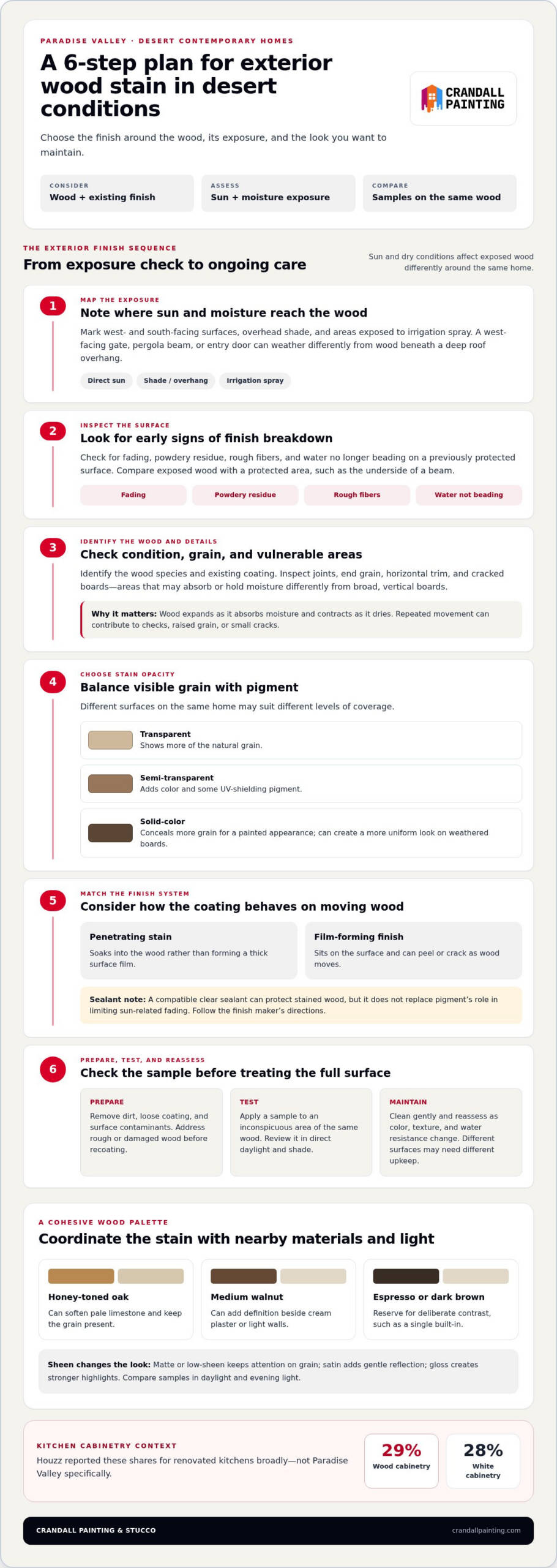
For kitchen cabinetry, wood is a compelling choice alongside painted finishes. Houzz reported that wood cabinetry was the top cabinet color in renovated kitchens at 29%, while white accounted for 28%. Those figures describe renovated kitchens broadly, not Paradise Valley specifically. They nevertheless illustrate how natural wood can hold its own beside a clean, light palette. A sample beside the actual countertop and backsplash helps reveal undertones before a finish is selected.
Sheen changes how stained wood looks. Matte or low-sheen finishes keep attention on the grain and suit understated cabinetry or ceiling beams. Satin offers a gentle reflection that can define millwork, while gloss creates stronger highlights and can draw attention to a feature such as a front door. Compare samples in both daylight and evening light, as lighting affects perceived color.
- Light warm tones: Pair natural oak with pale stone or warm plaster for a restrained, open look.
- Medium browns: Use walnut-like tones to ground cabinetry, doors, or ceiling beams against light walls.
- Deeper stains: Reserve espresso or dark brown accents for deliberate contrast, such as a single built-in.
Coordinate adjacent finishes without making them identical. For example, a medium-brown island can complement lighter perimeter cabinets, while low-sheen beams carry the palette overhead. Test the stain on the same wood species and surface you plan to finish, since grain and absorption affect the result. Sampling first helps warm accents work with stone, plaster, and the home’s desert contemporary character.
How does Arizona’s intense sun and dry climate affect exterior wood staining and durability?
In Paradise Valley, direct sun can fade stain and weather exposed wood over time. Ultraviolet exposure breaks down surface fibers, so color may lose richness and the grain can look worn. A west-facing gate, pergola beam, or entry door receives a different pattern of sun than wood beneath a deep roof overhang. Assess each surface individually instead of assuming the stain will age uniformly around the home.
Dry air and changing moisture levels also affect wood. Wood expands as it absorbs moisture and contracts as it dries; repeated movement can contribute to checks, raised grain, or small cracks. These changes can disrupt the finish and expose vulnerable areas to water. Pay particular attention to end grain, joints, and horizontal ledges, which may absorb or hold moisture differently from broad, vertical boards.
Watch for early surface changes. Fading, powdery residue, rough fibers, or water no longer beading on a previously protected surface can indicate that the finish needs attention. Compare sun-exposed areas with protected spots, such as the underside of a beam. The contrast can help show how exposure, rather than the wood’s original color, is affecting its appearance.
- Map exposure: Note west- and south-facing surfaces, overhead shade, and areas exposed to irrigation spray.
- Inspect details: Examine joints, end grain, horizontal trim, and cracked boards for finish breakdown.
- Prepare carefully: Remove loose, failing finish and address rough or damaged wood before recoating.
- Maintain consistently: Clean gently and reassess the finish as its color, texture, and water resistance change.
Durability depends on the wood’s condition, sun exposure, preparation, and finish. A protected soffit and an exposed patio post may need different preparation or maintenance. For project-specific guidance, consider how the existing finish is holding up on each exterior surface.
What stains and sealants work best for exterior wood exposed to Phoenix-area UV and heat?
For sunny Paradise Valley surfaces, choose an exterior stain by balancing grain visibility with pigment. Transparent stain shows more natural grain; semi-transparent stain adds color and some UV-shielding pigment. Solid-color stain conceals more grain and looks painted. A pergola beam and decorative gate may suit different opacity levels, even on the same home.
Penetrating stains soak into wood rather than forming a thick surface film. Film-forming finishes sit on top and can peel or crack as the wood moves. Either type relies on sound preparation and compatibility with the existing coating. A clear sealant can protect stained wood, but it does not replace pigment’s role in limiting sun-related fading.
- For visible grain: Consider a pigmented, semi-transparent exterior stain on cedar or another suitable wood.
- For stronger color coverage: A solid stain can create a more uniform look on weathered boards.
- For added surface protection: Select a compatible exterior sealant, following the finish maker’s directions.
Before choosing a finish system, identify the wood species, existing coating, and sun exposure. A south-facing post in full sun has different demands from a shaded soffit. Test the stain on an inconspicuous area of the same wood. The sample shows how grain, age, and absorption affect the color. Review it in both direct daylight and shade before treating the full surface.
Preparation matters as much as product choice. Remove dirt, loose coating, and surface contaminants, then let the wood dry as directed by the finish manufacturer. Apply stain in suitable conditions rather than to a hot surface in direct afternoon sun. Heat can affect application and drying, while uneven preparation can produce patchy color. Follow the product label for recoating and curing.
Use compatible stain and sealant products, and keep their care instructions for future maintenance. Inspect exposed rails, gates, and beams for fading, peeling, or worn protection. Recoat according to the surface condition, not an assumed universal schedule. This helps preserve the intended appearance while accounting for Phoenix-area exposure.
How should homeowners choose a qualified wood staining contractor in Paradise Valley
Start with a clear scope for each wood surface. A front door, shaded soffit, and sun-exposed pergola beam face different conditions. The written plan should identify the wood, existing finish, preparation needs, and intended appearance. For wood staining for luxury homes in Paradise Valley, these details align expectations and help avoid assuming one treatment suits the entire property.
Choose a process that accounts for the home’s materials and exposure. The work should include a surface assessment, careful preparation, and finish selection suited to the wood. A sample on the same species lets homeowners review color and grain before application across a larger area. This is especially useful when coordinating stained features with natural stone, plaster, cabinetry, or architectural beams.
- Surface assessment: Identify the wood type, damaged areas, old coating, and exposure on each elevation.
- Preparation plan: Define how dirt, loose finish, rough grain, and minor surface defects will be addressed.
- Finish selection: Match stain opacity and sheen to the desired appearance and exterior conditions.
- Sample review: Evaluate a test area in daylight and shade before approving the finished color.
For example, a plan for a gate and patio ceiling should distinguish exposed boards from sheltered ones. It should also explain how adjoining stone, stucco, glass, and landscaping will be protected. Sequencing matters: preparation, stain application, drying, and any protective finish should follow product directions. For wood staining for luxury homes in Paradise Valley, a surface-by-surface plan makes the decisions easier to assess.
Compare project plans by how clearly they describe the work, not by broad assurances. A useful proposal explains how existing coatings will be handled, how damaged wood will be addressed, and what finish appearance the work aims to achieve. It should also clarify how scope changes are communicated. These details help homeowners understand the planned work before it begins.
Use these criteria to organize your project details, then discuss the wood surfaces and finish you have in mind with Crandall Painting & Stucco.
Crandall Painting & Stucco: Exterior Painting
Crandall Painting & Stucco provides wood staining and refinishing to complement a home’s materials and design. The service suits gates, beams, entry doors, and other wood accents that need renewed color or a cohesive finish alongside exterior painting. Where wood and stucco meet, stucco repair can address damaged surfaces as part of the broader exterior project.
Discuss the wood’s current condition, the finish you want, and how each surface relates to the home’s stone, stucco, and architecture. This gives you a practical starting point for planning the work and its intended appearance.
Contact Crandall Painting & Stucco to discuss your wood staining project.
Shape a finish plan for the home you want to live in
Let wood accents support a consistent design direction rather than treating every surface as a separate decision. A finish palette can connect the front entry, interior millwork, and outdoor living areas while preserving the character of each space. For wood staining for luxury homes in Paradise Valley, consider how these details will look beside the materials and colors already defining your home.
Before work begins, identify the wood features that matter most to the overall impression. A clear priority list helps guide decisions about which finishes to refresh and how stained details should relate to surrounding surfaces. It also provides a focused starting point for planning a broader update.
Crandall Painting & Stucco provides wood staining and refinishing, along with exterior painting, stucco repair, and interior painting. These services can address connected surfaces as part of a considered home refresh.
Contact Crandall Painting & Stucco to discuss your project and take the next step toward a home that feels beautifully cohesive.
Frequently Asked Questions
What wood staining services are available for luxury homes in Paradise Valley, Arizona?
Crandall Painting & Stucco provides wood staining and refinishing, as well as wood restoration for Paradise Valley homes. These services can refresh interior features such as doors and built-ins or restore the appearance of exterior wood accents. The right scope depends on the wood’s condition and the finish you want, whether you’re updating one feature or coordinating several details.
How often should interior and exterior wood be restained in Paradise Valley?
Recoat exterior wood when its condition calls for it. Check for fading, peeling, roughness, or reduced water resistance rather than following a universal schedule.