
Can a painted finish capture stone’s warmth without looking artificial or competing with your home’s architecture? That’s the central question behind faux painting to look like stone Scottsdale homeowners explore. A convincing result depends less on copying one exact stone and more on coordinating color, pattern, and visual depth with the property, the surface, and the surrounding materials.
It’s reasonable to wonder whether a faux finish can feel convincing, especially when a surface has imperfections or the design needs to complement an established interior or exterior. A stone-look finish can suggest veining, tonal variation, and depth, but it remains a crafted painted interpretation, not natural stone or veneer. The right choice depends on the look you want, the condition and location of the surface, and whether you need a painted effect or actual stone material.
This guide compares stone-look faux painting with other finish options and explains how surface condition, color, pattern, lighting, and architectural context shape the result. You’ll also find practical ways to plan a custom Scottsdale project, from gathering useful references to considering pattern scale. Crandall Painting & Stucco provides decorative painting and custom faux finishing, coordinating the design with a property’s existing finishes and architecture.
Key Takeaways
- Understand how a stone-look faux finish uses applied color, pattern, and visual depth to suggest stone without becoming masonry.
- See how tonal variation, veining, mottling, contrast, and pattern scale influence whether the result feels subtle or more pronounced.
- Compare faux painting with natural stone, stone veneer, and standard paint by considering appearance, physical material, design flexibility, and project needs.
- Plan faux painting to look like stone Scottsdale projects by defining the desired look and bringing surface, architectural, and adjacent-material context into the design conversation.
- Learn how Crandall Painting & Stucco approaches custom faux finishing with attention to surface preparation and coordination with a property’s architecture.
Faux Painting to Look Like Stone in Scottsdale: What the Finish Can Achieve
A stone-inspired faux finish can bring depth and character to a wall or architectural feature without adding stone blocks or veneer. It uses applied color and pattern to suggest the variation, veining, and visual dimension associated with stone. A faux stone finish is a decorative painted surface designed to evoke stone; natural stone is a physical material quarried and installed as part of the surface.
This distinction helps set expectations. Faux painting can create a tailored impression, from softly mottled color to a more defined stone-like pattern, but it does not reproduce the physical depth or material qualities of masonry. For a broader overview of the decorative approach, see What is Faux Painting?
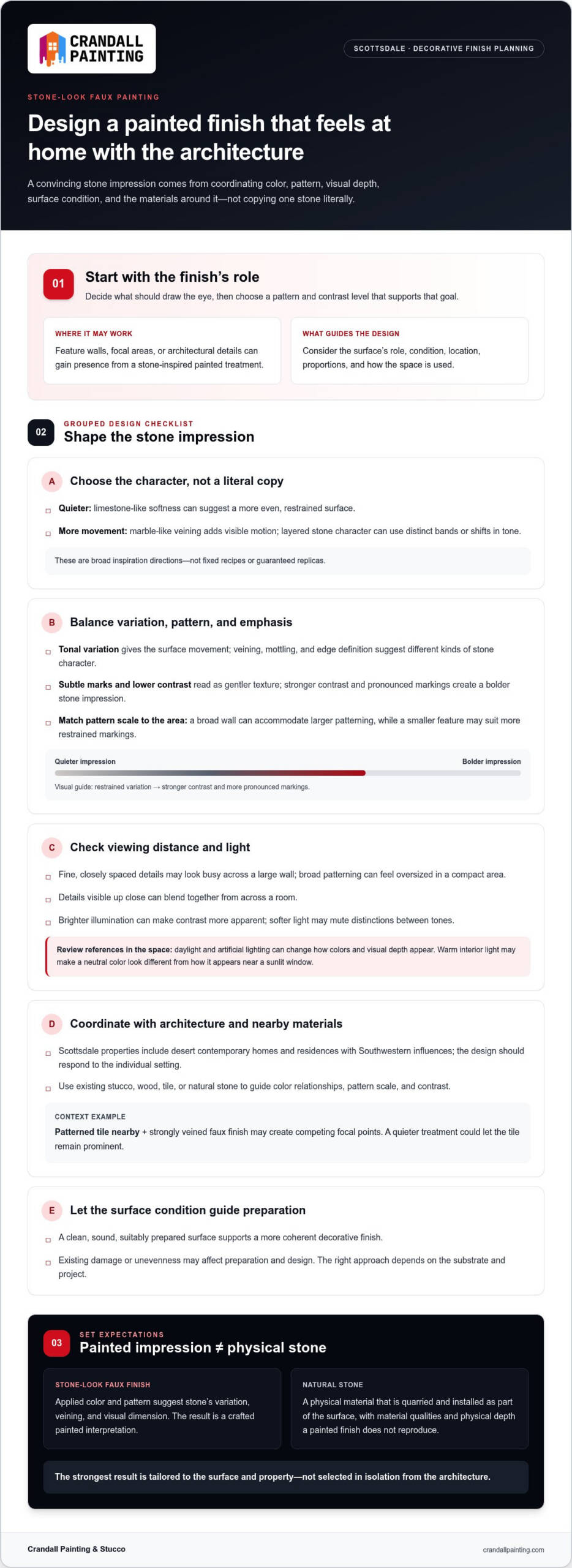
In Scottsdale, faux painting to look like stone can help give a feature wall more presence, add interest to a focal area, or draw attention to an architectural detail. The strongest starting point is the surface’s role in the room or exterior. Decide what should draw the eye, then choose a pattern and level of contrast that support that goal instead of selecting a stone effect in isolation.
Where a stone-inspired faux finish can work
Interior feature walls and focal areas are common contexts for a stone-inspired treatment. Other surfaces may also be considered according to their condition, location, and intended use. Think about the proportions of the area: a broad, open wall can accommodate larger patterning, while a smaller feature may look more balanced with restrained markings. Viewing distance matters too. Details that read clearly up close can blend together from across a room, and natural or artificial light can change how color and visual depth appear throughout the day. The surface and how the space is used should guide the design and preparation.
How Scottsdale architecture can shape the design
Scottsdale properties range from desert contemporary homes to residences with Southwestern influences, so no single stone look suits every setting. A tailored design considers the architecture and nearby materials together. Existing stucco, wood, tile, or natural stone can help guide the finish’s color relationships, pattern scale, and degree of contrast.
For example, a strongly veined painted feature beside patterned tile may create competing focal points. A quieter treatment could let the tile remain prominent. In another setting, a more defined pattern may help a broad wall feel intentional alongside simple finishes. These are design considerations, not fixed rules. Reviewing the surface in context helps create a finish that feels integrated rather than applied as an afterthought.
Stone-Look Faux Painting Techniques: How Color, Pattern, and Depth Shape the Result
A convincing stone impression comes from the relationship between several visual choices, not color alone. Tonal variation gives a surface movement, while veining, mottling, and edge definition suggest different kinds of stone character. A restrained combination can read as gentle texture; stronger contrast and more pronounced markings create a bolder, more recognizable stone impression.
Layered shifts in color, pattern, and emphasis create the visual depth that makes a painted surface feel stone-inspired. The balance should suit the surface size and viewing distance. Fine, closely spaced details may look busy across a large wall, while broad patterning can feel oversized in a compact area. Lighting also matters: brighter illumination can make contrast more apparent, while softer light may mute distinctions between tones.
Choose a stone reference without copying it literally
Begin with the qualities you want to evoke. Limestone-like softness can suggest a quieter, more even surface. Marble-like veining introduces more visible movement, while a layered stone character may call for distinct bands or shifts in tone. These are broad inspiration categories, not fixed recipes or guaranteed replicas. Relate the direction you choose to nearby flooring, tile, wood, stucco, and natural stone so the finish complements the materials already defining the space.
For a helpful comparison of painted stone effects with physical stone options, see Faux Stone vs. Natural Stone and Veneer. The visual goal for faux painting to look like stone Scottsdale projects should be tailored to the property, rather than copied from a reference image without adjustment.
Why surface preparation and lighting matter
Color and pattern are easier to plan when the underlying surface is understood. A clean, sound, suitably prepared surface supports a more coherent decorative finish, while existing damage or unevenness may affect the preparation and design. The right approach depends on the substrate and project, so let the surface condition guide planning rather than assuming one method fits every wall.
Review references in the actual space, considering both daylight and the artificial lighting used after dark. A warm interior light, for example, may make a neutral color appear different from how it looks near a sunlit window. Crandall Painting & Stucco provides decorative painting and custom faux finishing, coordinating surface preparation and finish choices with the property’s character. Explore decorative painting services as part of planning a tailored finish.
Faux Stone Finish vs. Natural Stone, Stone Veneer, and Standard Paint
Each finish brings a different balance of visual character, physical material, and project scope. Faux stone painting creates a stone-inspired appearance on a painted surface. Natural stone and veneer add actual stone material, while standard paint primarily refreshes color. The right choice depends on the desired effect and what the surface and property call for, not on one option being universally better.
| Option | Appearance | Physical material | Design flexibility | Project considerations |
|---|---|---|---|---|
| Stone-look faux finish | Painted color and pattern suggest stone character and visual depth. | Decorative finish applied to an existing surface; it isn’t installed stone. | Color, contrast, and pattern can be tailored to the setting. | Surface condition, preparation, lighting, and execution influence the result. |
| Natural stone | Shows the distinctive variation and relief of the selected stone. | Physical stone installed as part of the project. | Appearance is shaped by the material and how it is arranged. | Involves material selection and installation considerations suited to the property. |
| Stone veneer | Adds the appearance and physical presence of stone cladding. | Stone or manufactured stone material attached to a surface. | Selection depends on available material and installation layout. | Requires planning for the surface and installation scope. |
| Standard paint | Refreshes or changes color without necessarily suggesting stone. | Paint on the existing surface. | Offers color choice, typically with less pattern complexity. | Surface preparation and paint selection remain relevant to the project. |
When a painted stone effect may suit the project
A faux finish may suit a project where the goal is a tailored stone-inspired appearance on an existing surface, such as a focal wall or architectural detail. It can coordinate visually with stucco, wood, tile, or installed stone without adding stone material to the painted surface. For faux painting to look like stone Scottsdale homeowners should weigh the intended pattern and overall design alongside the surface’s condition. This is a decorative finish, not a substitute for structural work, masonry, or a project that requires physical stone.
When installed stone or a simpler finish may be the better fit
Choose installed stone or veneer when the design calls for actual material, physical relief, or construction that a painted finish cannot provide. If the goal is a calmer surface with minimal pattern, standard paint or a restrained painted treatment may be a better visual fit. Compare options by desired appearance, existing surface, project scope, and how the finish will relate to the property’s architecture. Durability and maintenance depend on the materials, preparation, location, and conditions of the specific project, so don’t assume they are identical across finish types.
Planning a Scottsdale Stone-Look Faux Painting Project
A clear plan helps a stone-inspired finish feel intentional rather than artificial. Start with the area you want to transform, then consider its architecture, existing materials, lighting, and the character you want the painted surface to suggest. For faux painting to look like stone Scottsdale properties, coordinating color, pattern scale, and contrast with the setting is more useful than trying to reproduce a reference image exactly.
Prepare a clear visual brief
Identify the focal area and the mood you want it to create. Should the finish feel quiet and softly varied, or should veining and contrast make it a stronger visual feature? Gather a few reference images, along with photographs or samples of nearby stucco, tile, wood, and natural stone. Compare the references with the room or exterior in its actual light. Describe the qualities you like, such as gentle tonal shifts or layered patterning, as inspiration rather than a request for an exact replica.
Understand the project sequence and scope
A considered project moves through a connected sequence: discuss the design direction, assess the surface, determine preparation needs, apply the decorative finish, and review how the result reads in context. Scope depends on the surface and level of detail in the design. A sound, even wall and a surface needing repair present different preparation considerations, so the plan should reflect the existing conditions rather than assume a standard approach.
Crandall Painting & Stucco provides custom faux finishing and touch-up as part of its decorative painting work for residential and commercial properties. The work is coordinated with the architecture and surrounding materials, with attention to surface condition and execution. That coordination matters: a pattern that feels balanced beside one material may compete with another, and lighting can change how color and contrast appear.
- Define the goal: Choose the focal area and describe the desired mood and degree of contrast.
- Gather context: Share room or exterior views, adjacent material references, and inspiration images.
- Review the surface: Let its condition and intended use inform preparation and project scope.
- Align the finish: Coordinate color, pattern scale, and visual emphasis with the property.
For a closer look at Crandall’s painting and restoration services, explore how decorative work can be considered alongside the property’s existing finishes. Bringing the visual goal and surface details together is a practical first step toward a refined stone-inspired result.
Commissioning Stone-Look Faux Painting with Crandall Painting & Stucco
A successful stone-inspired finish should feel connected to the property, not simply applied to a wall. Crandall Painting & Stucco provides decorative painting and custom faux finishing for residential and commercial properties in Scottsdale and the Phoenix metro area, including Paradise Valley, Carefree, DC Ranch, Desert Mountain, and Scottsdale Mountain. Each project is shaped around the intended look, the surface, and the architectural setting, with attention to how the finish relates to surrounding materials.
What a considered custom finish should address
Before work begins, clarify where the finish will go and what you want it to contribute. A focal wall may call for a different level of pattern and contrast than an architectural detail. Nearby stucco, wood, tile, or natural stone can inform the color direction, while the surface’s condition helps determine the preparation and scope involved.
Useful project references include photographs of the space, examples of stone character you admire, and notes about what should feel subtle or prominent. These references guide the design conversation without implying an exact replica. The finish and work plan are tailored to the property, balancing the visual goal with the surface and its context.
Take the next step toward a tailored finish
Comparing painted effects with installed stone and standard paint can help clarify whether a decorative finish suits your priorities. If you’re considering faux painting to look like stone Scottsdale, bring together your preferred visual direction, the project location, and a sense of how the finish should sit alongside the property’s existing materials. Crandall’s custom faux finishing helps shape those details into a considered project.
Explore Crandall’s painting and restoration services to see how decorative painting can fit into a property’s finishes and project scope.
Bring a Stone-Inspired Vision to Your Scottsdale Property
A refined stone-look faux finish begins with a clear design goal. Color, pattern scale, contrast, and coordination with the property’s existing materials all shape whether the result feels integrated or overly artificial. Comparing faux painting with natural stone, veneer, and standard paint can help you choose an approach that suits both the surface and the character you want to create.
For faux painting to look like stone Scottsdale homeowners can feel confident about, the design should respond to the actual surface, lighting, and architecture. Crandall Painting & Stucco provides faux finishing and decorative painting for residential and commercial projects in Scottsdale and the Phoenix metro area, including Paradise Valley, Carefree, DC Ranch, Desert Mountain, and Scottsdale Mountain. As a family-owned and operated business established circa 2004, the company approaches each finish with attention to craftsmanship and the property’s context.
Ready to explore a tailored direction? Discuss a custom stone-inspired finish for your Scottsdale property with Crandall Painting & Stucco and take the next step toward a finish that feels considered, distinctive, and at home in your space.
Frequently Asked Questions
Can faux painting really make a wall look like stone?
Yes. Decorative painting can evoke stone through carefully considered color, pattern, and visual depth. It remains a painted finish, not installed stone, and shouldn’t be expected to match a natural material exactly. The impression depends on the design, surface condition, lighting, and execution. For faux painting to look like stone Scottsdale homeowners should first define the character they want, such as softly varied tones or more noticeable veining.
What surfaces can be painted to look like stone?
Walls and selected architectural details may suit a stone-inspired finish, depending on the surface, its condition, location, and intended use. Not every substrate is appropriate for every finish. Existing marks or uneven areas can affect preparation and the visual result. Considering the surface alongside the design goal helps establish a practical project scope without assuming one preparation method fits every property.
Is faux stone painting a good fit for a Scottsdale home?
It may be a good fit if you want a stone-inspired decorative effect that relates to your home’s architecture and existing materials. Scottsdale’s varied residential styles call for choices tailored to each property rather than a single prescribed look. Light, color palette, and pattern scale all influence how the finish reads. Consider the surface and the result you want together before settling on a design direction.
How do I choose a stone look that will suit my home?
Start with the focal area, your home’s architectural style, nearby finishes, and the level of contrast you prefer. Compare reference images with the actual room or exterior, paying attention to how daylight and artificial lighting affect color. Broad directions, such as softly layered stone or pronounced veining, can help communicate your taste. Treat images as inspiration, not a promise of an exact copy, and tailor the design to your property.
Does faux painting look like real stone up close?
Faux painting creates a visual effect; it doesn’t have the physical depth or material properties of natural stone. How convincing the impression feels depends on viewing distance, lighting, pattern, and craftsmanship. Up close, the painted nature of the surface may be more apparent than from across a room. A thoughtfully designed finish can suggest stone character, but it remains decorative painting rather than actual stone.
How should I prepare for a stone-look faux painting project?
Begin by identifying the area, the stone character you’re drawn to, and the materials surrounding it. Gather a few reference images and note how light changes in the space during the day. The surface’s condition and the design influence preparation needs and overall scope. Discussing the design alongside the surface helps establish a coherent plan based on the property’s actual conditions.
How do I get started with faux painting in Scottsdale?
Clarify the area you want to transform and the visual direction you have in mind, then discuss the property, surface, and surrounding finishes with Crandall Painting & Stucco. The company provides decorative painting and custom faux finishing for residential and commercial settings in Scottsdale and the Phoenix metro area, including Paradise Valley, Carefree, DC Ranch, Desert Mountain, and Scottsdale Mountain. Explore the decorative painting services and start a project conversation about your goals and scope.