
What makes a door finish feel right for your home? It starts with the door’s material, its exposure to sun, and the architecture around it. With door painting scottsdale homeowners can refresh an entry, but strong sun and dust make careful finish selection and preparation especially important.
Before changing a door, consider whether paint, stain, or refinishing best suits its surface and the look you want. Paint creates a defined, opaque color, while stain and refinishing can preserve more of the wood’s grain. If preparation does not address the door’s existing coating and condition, even a thoughtful color choice may look uneven.
This guide explains how to compare finishes, assess a door’s material and condition, and plan a professional painting project. You’ll also learn what to consider around trim, hardware, and nearby surfaces, and how painting and wood restoration can help renew a door with attention to detail.
Key Takeaways
- For door painting in Scottsdale, the door’s material, existing coating, and sun exposure all help determine the right finish and preparation.
- Compare paint, stain, and refinishing based on the appearance you want, how much wood grain to show, and the door’s condition.
- A professional project moves from surface assessment and finish selection to preparation, application, and a final review.
- Plan the door’s color and finish alongside the trim, hardware, and nearby surfaces for a cohesive result.
- Crandall Painting & Stucco is a family-owned painting and restoration company serving Scottsdale and the Phoenix metro area.
Door Painting in Scottsdale: What a Professional Finish Can Change
A front door is one of the first details visitors see, so a faded, dated, or mismatched finish can affect the whole entry. Door painting refreshes the surface with a color selected for the door’s material, condition, and setting. It can sharpen the entrance and complement the home’s architecture while giving the door a more considered appearance.
A successful paint job depends on both the finish and the preparation behind it. A straightforward color update, a stronger connection to surrounding materials, and a more distinctive focal point each call for different choices. The paint itself also affects appearance and performance; for a basic overview, explore what paint is made of.
Which doors can benefit from a painted finish?
Front and entry doors are highly visible, so their color and sheen can shape the home’s first impression. Interior doors are part of the everyday view, while doors to garages, patios, or utility areas may need to coordinate with nearby rooms or exterior details. Look at the door alongside its trim, walls, stone, and other surrounding materials rather than choosing a color in isolation.
The existing surface is another important factor. A painted door with a sound, even coating has a different starting point from one with peeling or uneven areas. Bare and stained wood require a separate design decision: opaque paint creates a uniform field of color, while stain or refinishing can keep more of the grain visible. Choose based on the door’s condition and the appearance you want, not simply its current color.
Why Scottsdale conditions matter for exterior doors
Strong sun and dust are practical considerations when planning exterior door painting in Scottsdale. A door in direct sunlight faces different exposure from one beneath a shaded entry, and dust on the surface can interfere with preparation. Assessing the door’s location and condition helps guide both the work and the finish choice. Not every exterior door needs the same approach.
Planning also means considering how the door fits the rest of the exterior, from its color relationship with the home to the condition of nearby surfaces. For more context on exterior finishes and home restoration in the area, see the Scottsdale exterior painting guide. A well-planned door project refreshes a prominent feature while respecting the home’s overall character.
How Door Material and Existing Finish Shape the Painting Process
Start with an assessment, not a paint color. The door’s material, previous coating, current condition, and intended appearance all influence preparation. A smooth, clean surface provides a more even foundation for a new finish. Worn or failing areas need attention before repainting. The work should suit the actual door rather than follow the same preparation routine for every surface.
Identify the existing finish before choosing paint, because the surface helps determine which preparation and finish options are appropriate. A sound coating may be suitable for a refresh after cleaning and other necessary preparation. Peeling, damaged, or visibly uneven areas need closer assessment so the new work addresses the surface instead of simply covering its flaws.
Painting wood doors without overlooking their character
An opaque painted finish can work well when the design calls for a defined color or a more uniform look. If visible grain and natural variation are central to the door’s appeal, stain or refinishing may be a better fit. Consider both the wood’s condition and the appearance you want. For more on renewing wood while preserving its character, explore this wood restoration guide.
A stained wood door deserves particular thought before you switch to paint. An opaque finish changes how the grain appears, while restoration work can focus on the wood’s existing character. Neither option suits every door. The door’s design, surrounding materials, and intended look should guide the decision.
Preparing previously painted or weathered doors
Preparation begins with inspecting the full door, including its edges and detailed areas where wear can be easy to overlook. Cleaning removes dust and surface residue, and further preparation depends on what the inspection reveals. A stable, even coating is not the same starting point as peeling paint or visible damage. Weathered or failing areas need careful assessment before a new finish is planned.
No single product or method suits every door. Wood type, existing coatings, and surface wear can all affect the preparation, while a smooth, clean base supports a more consistent-looking finish. The American Coatings Association offers broader information about industry best practices in the paint and coatings field. For work tailored to the door’s surface and condition, explore Crandall’s painting and restoration services.
Painted or Stained Door? Compare the Scottsdale Finish Options
The right finish depends on the look you want and what the door’s surface can support. Paint provides an opaque, defined color; stain and refinishing can keep the wood grain and variation visible. No finish is automatically right for every Scottsdale home. Consider the door’s condition and existing coating, the home’s architecture, and the materials around the entry.
| Finish | Visible wood character | Color and design effect | Surface considerations |
|---|---|---|---|
| Paint | Usually concealed by opaque coverage | Creates a defined color that can coordinate with trim or the exterior palette | Existing coating and surface condition guide preparation |
| Stain | Grain remains visible | Adds or shifts wood tone while retaining natural variation | Wood condition and prior coatings influence the result |
| Refinishing | Designed to renew the appearance of suitable wood | Can refresh the existing wood character rather than create an opaque color field | The approach depends on the current finish and condition |
When a painted door is the better visual fit
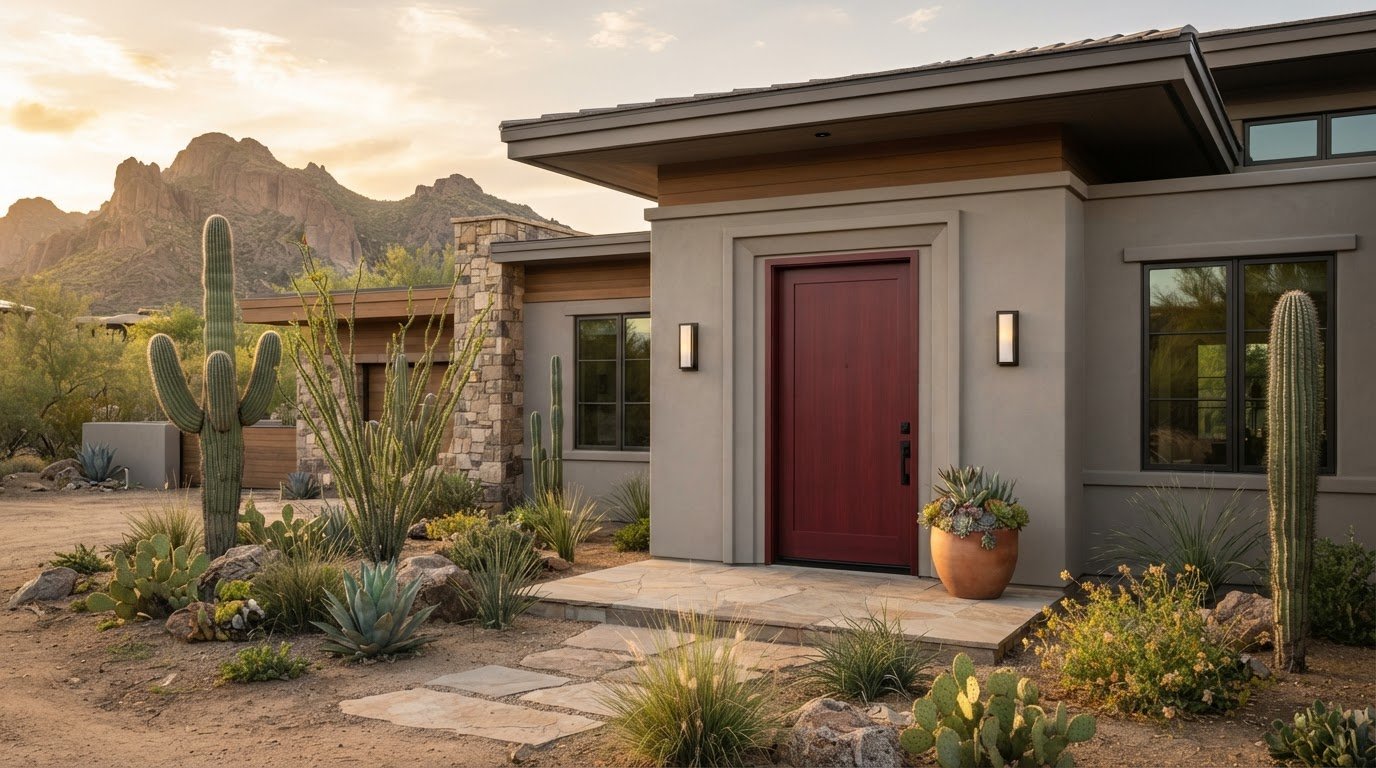
An opaque finish can turn an entry into a focal point or create a quieter connection with nearby trim. For example, you might choose a door color that echoes an architectural detail, or a more uniform shade that sits comfortably within the exterior palette. In door painting scottsdale projects, consider color in context: stucco, stone, wood features, and the home’s architectural lines all affect the overall impression. A bold shade may suit one façade but compete with another, so there is no universal color choice.
Painting does mean that less of the wood grain will show. That can be the right design choice when you want a clean, consistent color. If the wood’s character is a valued feature, weigh whether keeping it visible matters more than full color coverage.
When staining or refinishing may better preserve wood
Stain and refinishing are worth considering when the grain, tone, and natural variation are central to a door’s appeal. Stain can shift the wood’s color while keeping its character visible; refinishing focuses on renewing the existing wood appearance. The right restoration approach depends on the wood’s condition and its current coating. A door with worn or layered finishes may need a different assessment from one with a sound surface.
If older coatings are involved, the EPA provides information on lead-safe work practices for renovation, repair, and painting. Crandall’s wood staining and restoration services can help shape an approach around the door’s condition and the look you want. The best finish is one that respects both the existing surface and the character you want to bring to your home.

What to Expect During a Professional Scottsdale Door-Painting Project
A well-planned door project brings together a suitable finish, preparation matched to the surface, and attention to nearby trim and hardware. For door painting scottsdale homeowners can expect a sequence of decisions guided by the door and its setting, rather than a one-size-fits-all approach.
Planning the finish and protecting surrounding details
The process starts by assessing the door’s material, existing coating, and condition. Then the desired color and sheen can be considered alongside the door’s style, surrounding trim, and nearby finishes. Hardware and adjacent surfaces also belong in the plan. Careful handling helps keep the transition between the finished door and its surroundings neat. Discussing these details brings the visual goal and the surface’s practical needs together.
The project may also involve related painting or restoration work, depending on the door and the desired result. Crandall’s professional painting and restoration services bring door work into a broader approach to caring for painted and wood surfaces.
From surface preparation to final review
After selecting a finish, preparation is guided by the door’s material and existing coating. The surface is inspected and cleaned, with additional preparation determined by its condition. Dust-conscious planning and attention to edges and nearby trim help keep the work area and visible transitions in view. The preparation method should fit the door rather than follow a universal formula.
The finish is applied to the prepared surface. Even-looking coverage and careful work around panels, edges, and other visible details contribute to a polished appearance. A final review compares the result with the agreed finish, including the consistency of the coverage and the transitions around the door and surrounding areas.
- Assess: Consider material, coating, condition, and exposure.
- Plan: Align color and sheen with the door, trim, hardware, and home.
- Prepare and apply: Clean and prepare according to the surface, then apply the selected finish with attention to detail.
- Review: Look over coverage and visible edges for consistency with the intended appearance.
Each stage supports the next. To discuss a door refresh in the context of your home’s surfaces and desired finish, explore Crandall’s painting and restoration services.
Choose Crandall Painting for Door Painting in Scottsdale
A door’s finish should feel connected to the home around it. Crandall Painting & Stucco provides door painting for Scottsdale homeowners, whether the goal is a crisp painted entry, a renewed wood appearance, or a finish that complements nearby architectural details.
Crandall Painting & Stucco is a family-owned and operated painting and restoration company serving Scottsdale and the Phoenix metro area. Its services include painting, wood staining and refinishing, and wood restoration. That range allows the project to be planned around the door’s material and the look you want, rather than treating every door as a simple color change.
Craftsmanship that considers the whole home
A door is part of a larger composition. Its color and finish interact with trim, stucco, stone, wood details, and the home’s architectural style. For an exterior door, exposure to strong sun and dust also informs how the surface is assessed and prepared. Crandall Painting & Stucco’s work in the area keeps these details in view when planning the finish and scope.
Careful work means attending to the door’s visible details and its relationship with surrounding surfaces. If you want to conceal the grain with an opaque color, painting may suit the design. If the wood’s character is central to the look, staining or refinishing may be more appropriate. Crandall Painting & Stucco brings these options together so the approach can reflect both the existing door and the home’s style.
Plan your door-painting project with Crandall
Begin with a clear description of the door: whether it is interior or exterior, its current finish, any visible wear, and what you hope to change. You might want a more defined color, a refreshed natural wood appearance, or a finish that coordinates more closely with the trim and exterior palette. These details help focus the project discussion on the home’s surfaces and your design goals.
Crandall Painting & Stucco tailors project guidance to the door and its setting, with attention to the desired appearance and the work needed to support it. Whether your Scottsdale door calls for painting, wood refinishing, or restoration, the next step is a conversation about your priorities. Contact Crandall Painting & Stucco to discuss your door-painting project.
Give Your Door a Finish That Feels at Home
A thoughtful door refresh begins with the surface, not simply the color. Consider the door’s material and existing finish, then choose paint for an opaque look or staining and refinishing when preserving visible wood character matters. For exterior doors, Scottsdale sun exposure and dust are also part of the preparation plan.
With door painting scottsdale homeowners can shape a finish around the entry, the home’s architecture, and the door’s condition. Careful preparation and attention to edges and surrounding details help create a polished, cohesive appearance.
Crandall Painting & Stucco is a family-owned painting and restoration company serving Scottsdale and the Phoenix metro area. Its painting, wood staining, refinishing, and restoration services offer ways to renew a door in keeping with the look you envision.
Ready to plan your project? Discuss your Scottsdale door-painting project with Crandall. A considered approach can help your door feel like a natural part of your home.
Frequently Asked Questions
How much does it cost to paint a door in Scottsdale?
Cost depends on the door’s size, material, current condition, preparation needs, and selected finish. A straightforward repaint is different from work involving peeling coatings, detailed panels, or a change from stain to opaque paint. Crandall tailors door-painting projects to the surfaces and goals involved. The company serves Scottsdale and Phoenix, including Paradise Valley, Carefree, DC Ranch, Desert Mountain, and Scottsdale Mountain. If you searched for “cottsdale,” you may have meant Scottsdale.
How long does professional door painting take?
The time required depends on the door’s condition, preparation needs, selected finish, and application and drying process. A door in sound condition may require a different scope from one with worn or peeling coating. Exterior conditions can also affect the work. Crandall considers the specific door and project scope when planning a Scottsdale painting project, rather than applying one standard duration to every job.
Can a stained wood door be painted?
Yes. A stained wood door can be painted when its surface is assessed and prepared appropriately. An opaque finish covers the visible grain, so consider whether you want a uniform color or prefer to retain the wood’s natural character. Existing coatings and the wood’s condition influence preparation. Crandall’s painting, wood staining, and refinishing services help shape the approach around the door and the appearance you envision.
Is painting or staining better for an exterior wood door?
Neither option is universally better. The right choice depends on the wood, its condition, its exposure, and the look you want. Paint creates an opaque color that can coordinate with the home’s exterior, while stain keeps more of the grain visible. Scottsdale’s strong sun and dust are practical factors when planning an exterior finish. Assessing the surface helps determine which direction best suits the door.
What preparation does a door need before painting?
A door needs inspection and cleaning before its preparation requirements can be determined. Sound existing paint may call for a different approach from worn, uneven, or peeling areas. The material, previous coating, and desired finish all matter. Preparation should address the door’s actual condition instead of following one universal method. Attention to edges, panels, and nearby trim also helps create a neat, even-looking finish.
Can you paint a front door without changing its frame?
Yes. You can paint the door and leave the frame as it is. The plan should account for the frame, trim, hardware, and adjacent surfaces so the door can be finished neatly without including those details in the color change. Consider whether the existing frame complements the new door color. Planning these transitions helps the refreshed entry feel intentional and cohesive.
What happens if an exterior door’s paint is peeling?
Peeling paint should be assessed before repainting, since applying a new finish over loose or damaged coating can leave an uneven result. The surface needs preparation suited to its material and coating condition. For an exterior door, sun and dust exposure also matter when planning the work. Crandall’s painting and restoration services address the door’s visible condition and intended finish. Contact Crandall Painting to plan the right approach for your door.